


Description
The 0660L-14A is a 660 nm red diode laser designed for fluorescence-based applications such as imaging and sorting. This laser is commonly used in various scientific and industrial fields.
It comes with an FC/PC connector by default, but alternative fiber terminations can be arranged upon request. For non-standard connector options and the associated fiber, please consult the Integrated Optics sales team.
0660L-14A 660 nm: Laser Diode (MM Fiber | 90mW)
Specifications
| Laser Type: | Continuous Wave (CW), Modulated |
|---|---|
| Fiber Type: | Single Mode |
| Wavelength: | 660 nm |
| Output Power: | 90 mW |
| Spectral Line Width FWHM: | 0.7 nm |
| Power Stability: | 0.5 % |
| Intensity Noise: | 0.25 % |
| Modulation Bandwidth: | 10 MHz |
| Input Voltage: | 5 VDC |
| External Power Supply Requirement: | +5 V DC, 1.5 A |
| Fiber Length: | 1 m |
| Optimum Heatsink Temperature: | 20 °C |
| Warm-up Time: | 0.5 min |
| Temperature Stabilization: | Internal TEC |
| Overheat Protection: | Yes |
| Transversal Modes: | Multiple |
| Storage Temperature: | -10 to +50 ℃ |
| Dimensions: | 50 x 30 x 18 mm |
Got questions about specs? Use the inquiry form to ask.
 Download Data Sheet

Features
- 660 nm red diode laser optimized for fluorescence – Ideal for fluorescence imaging, cell sorting, flow cytometry, confocal microscopy, and other bio-photonics applications requiring a stable red excitation source around 660 nm.
- High spectral quality with narrow linewidth – Central wavelength 657–663 nm with typical 0.7 nm FWHM spectral linewidth (down to 0.2 nm min), supporting efficient excitation of common fluorophores and precise spectroscopic work.
- Up to 110 mW fiber-coupled output power – Typical output power of 90 mW (up to 110 mW max) delivered through multimode fiber, comparable to leading 660 nm OEM diode modules used in life science and industrial systems.
- Excellent power stability for long measurements – Typical long-term power stability of 0.1% RMS and 0.5% peak-to-peak over 8 hours at constant body temperature, reducing baseline drift in time‑critical measurements.
- Low intensity noise – Intensity noise typically 0.25% RMS (20 Hz – 20 MHz), enabling high signal-to-noise ratio in sensitive detection setups such as photon counting and precision imaging.
- Multimode fiber-coupled output for easy integration – Delivered by default with MM fiber and FC/PC connector for plug-and-play coupling into existing systems, microscopes, and fiber delivery lines; other fiber terminations available on request.
- Automatic power control (APC) continuous-wave operation – Integrated electronics maintain constant output power in CW mode, compensating for temperature and diode ageing effects for more consistent performance.
- High-speed modulation capability – Supports up to 10 MHz modulation bandwidth, suitable for fast on/off gating, intensity modulation, and synchronization with scanning or timing electronics in OEM instruments.
- Integrated TEC temperature stabilization – Internal thermoelectric cooler (TEC) tightly stabilizes the laser temperature, improving wavelength stability, power stability, and noise performance versus non‑stabilized diode lasers.
- Compact OEM-friendly form factor – Small footprint of approx. 50 × 30 × 18 mm and low weight (~0.12 kg), comparable to compact OEM diode modules used in handheld and benchtop instruments where space is limited.
- Simple 5 V DC power input – Operates from a single +5 V DC supply (typical requirement 1.5 A), easily powered from standard laboratory supplies or embedded system power rails.
- Low power consumption – Typical electrical power consumption around 2 W (max. 10 W), minimizing thermal load and simplifying system-level thermal management.
- Built-in overheat protection – Integrated safety electronics continuously monitor temperature and provide overheat protection, improving reliability in OEM deployments and demanding duty cycles.
- Optimized for simple heat-sinking – Typical heat-sinking requirement of about 1 °C/W with an optimum heat sink temperature of 15–30 °C, enabling straightforward mounting on small aluminum or copper plates.
- Fast warm-up time – Typical 0.5 minute warm-up from cold start (max 1 minute) for quick system start-up and reduced downtime between measurements.
- UART / USB control interface – Digital UART/USB interfaces allow convenient integration with PCs, microcontrollers, and embedded systems for monitoring, control, and automation, similar to advanced OEM laser platforms.
- Adjustable optical power range – Optical power can be tuned from near 0% to 100% of nominal output, offering flexibility for different samples and detectors (note: specified performance is guaranteed at factory preset power).
- Rugged fiber delivery – Supplied with approximately 1 m fiber length (0.95–1.1 m), providing a robust and flexible beam delivery path for integration into optical tables, instruments, and industrial setups.
- Designed for OEM integration – Compact, lightweight, and electrically simple design makes this laser well-suited for OEM medical, analytical, and industrial systems requiring reliable 660 nm excitation.
Applications
- Fluorescence Microscopy
Excitation of common red fluorophores (e.g., Cy5.5, Alexa Fluor 660, ATTO 647N) in widefield and confocal fluorescence microscopes for cell and tissue imaging, fixed and live‑cell assays, and high‑content screening. - Flow Cytometry and Cell Sorting
Illumination source for benchtop and in‑line flow cytometers and FACS instruments using 633–660 nm excitation channels for immunophenotyping, DNA/RNA staining, viability assays, and rare‑cell detection. - Fluorescence Spectroscopy
Stable excitation in fluorometers and spectrofluorometers for steady‑state and time‑resolved fluorescence measurements, quantum yield determination, and fluorophore characterization in the red spectral range. - Confocal and Multi‑Modal Imaging Systems
Integration into modular confocal heads, spinning‑disk systems, and multimodal imaging platforms where 660 nm helps reduce background autofluorescence and complements blue/green excitation lines. - Microplate Readers and Bioanalytical Instruments
Light source for fluorescence-based microplate readers, point‑of‑care diagnostic analyzers, and lab‑on‑chip systems performing ELISA, immunoassays, nucleic acid assays, and protein quantification with red‑emitting dyes. - DNA / RNA and Protein Gel Documentation
Excitation of nucleic acid and protein stains compatible with 660 nm in gel imagers and documentation systems, benefiting from the laser’s narrow linewidth and high power stability for quantitative imaging. - Optogenetics and Neuroscience Research
Stimulation of red‑shifted opsins and fluorescent reporters in in‑vitro and in‑vivo optogenetic experiments, fiber‑coupled delivery into brain tissue, and precise intensity modulation via the UART/USB control interface. - Fiber‑Based Endoscopy and In‑Vivo Imaging
Use in multimode fiber endoscopes and minimally invasive imaging probes for small‑animal research, where compact size, internal TEC stabilization, and Class 3B output enable deep‑tissue red excitation. - Raman Spectroscopy (Red‑Excited)
Excitation source for Raman measurements where 660 nm helps mitigate fluorescence background relative to shorter wavelengths, suitable for materials characterization, chemical identification, and biosensing. - Optical Coherence Tomography (Specialized Red Systems)
Integration into custom red/visible OCT and interferometric setups requiring a narrow‑band, fiber‑delivered source near 660 nm for axial resolution optimization in specific biological and material samples. - Holography and Interferometry
Use in digital holography, speckle interferometry, and surface metrology where a stable, single‑color red source is needed for phase measurements, deformation analysis, and non‑contact vibrometry. - Machine Vision and Industrial Imaging
Structured‑light projection and bright‑field or dark‑field illumination for high‑resolution inspection, alignment, and defect detection on reflective or colored surfaces using red light to enhance contrast. - Positioning, Alignment, and Metrology
Fiber‑delivered beams for precision alignment in optical benches, semiconductor tools, and photonics assembly lines, taking advantage of compact dimensions and excellent long‑term power stability. - Spectrophotometry and Reference Light Sources
Use as a stable 660 nm reference in calibration of spectrometers, detectors, and imaging sensors, as well as for characterization of optical filters, coatings, and fiber components in the red spectral region. - Optical Communication and Fiber Component Testing
Source for continuity checks, insertion‑loss measurements, and characterization of multimode fibers and passive components designed for operation near 650–670 nm in short‑reach optical links. - Education and Photonics Laboratories
Demonstrations of laser diode physics, fiber coupling, modulation, and noise measurements in university and R&D labs, where USB/UART control and visible output wavelength simplify experimental setups. - Biomedical Sensors and Point‑of‑Care Devices
Integration into compact diagnostic cartridges and wearable or portable biosensors requiring low‑noise, fiber‑delivered red excitation for fluorescence, absorbance, or scattering‑based detection. - Surface Plasmon Resonance (SPR) and Label‑Free Sensing
Illumination source for SPR and related label‑free optical biosensors configured for operation around 660 nm, providing stable intensity for kinetic binding measurements and refractive‑index monitoring.
Frequently Asked Questions
What is the wavelength of the laser diode module?
The wavelength of the laser diode module is 660nm.
What is the output power of the laser diode module?
The output power of the laser diode module is up to 90mW.
What type of fiber connector does the laser diode module have?
The laser diode module has an SMA connector.
What is the warranty period for the laser diode module?
The laser diode module comes with a 12-month warranty.
What are the applications of the laser diode module?
The laser diode module can be used in laser diffraction particle analysis, confocal microscopy, food sorting, and flow cytometry.
Got more questions? Use the inquiry form to ask the supplier directly.
Similar Products
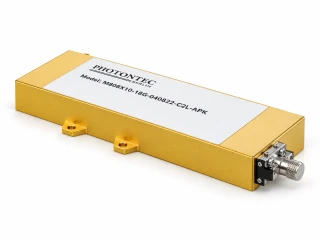
980nm 150W Fiber-Coupled Diode Laser
PhotonTec Berlin GmbH
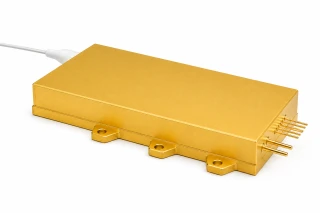
793nm 135W Fiber-Coupled Diode Laser
PhotonTec Berlin GmbH
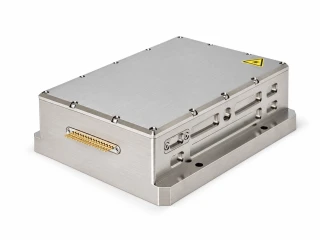
Green 520nm 30W Fiber-Coupled Diode Laser
PhotonTec Berlin GmbH
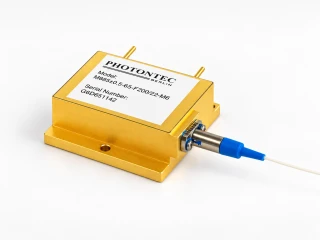
885nm Wavelength-Stablized Fiber-Coupled Diode Laser
PhotonTec Berlin GmbH

878.6nm 90 W Wavelength-Stabilized Fiber Coupled Diode Laser
PhotonTec Berlin GmbH

10G DFB Pigtail Laser Diode Module
Shenzhen Box Optronics Technology Co.,Ltd.
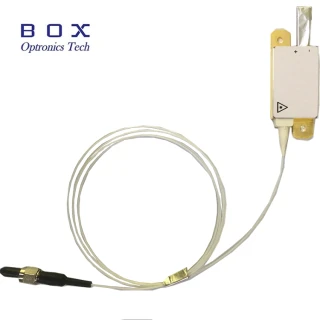
878.6nm 15W Fiber Coupled Stabilized Wavelength Diode Laser
Shenzhen Box Optronics Technology Co.,Ltd.
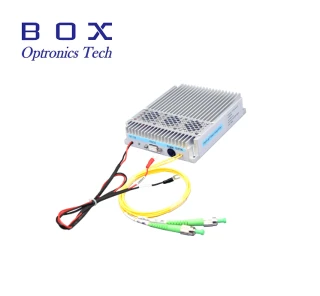
Multi-module High Power Fiber Pump Laser Source
Shenzhen Box Optronics Technology Co.,Ltd.

1064nm Multimode Fiber High-Power Pump Source
Shenzhen Box Optronics Technology Co.,Ltd.

976nm 350W Fiber Coupled Diode Laser
Shenzhen Box Optronics Technology Co.,Ltd.

808nm Multimode Fiber High-Power Pump Source
Shenzhen Box Optronics Technology Co.,Ltd.

520nm 50W Fiber Coupled Diode Laser
Hangzhou Brandnew Technology Co., Ltd.
Thank You!
Your inquiry has been received.
Create an account by adding a password
Why create an account?
- Auto-complete inquiry forms
- View and manage all your past messages
- Save products to your favorites
- Close your account anytime — no hassle