


Description
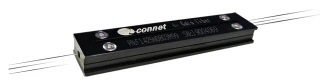
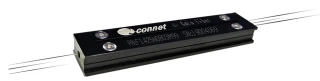
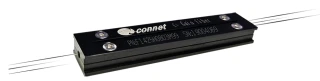
The Athermal Packaged Fiber Bragg Grating (FBG) is a precision-engineered optical sensing component designed to deliver stable and reliable performance in environments where temperature fluctuations are a concern. Unlike standard FBGs, this athermal variant incorporates a specialized packaging sleeve that effectively compensates for the inherent temperature coefficient of the fiber grating. By utilizing materials with carefully selected thermal properties, the device minimizes wavelength drift caused by temperature changes, ensuring consistent and accurate signal reflection.
This advanced encapsulation technique results in excellent temperature stability, with the FBG maintaining a low temperature coefficient—typically around 1 pm/°C—across a broad operational range from -10°C to 60°C. Such stability is crucial for applications requiring long-term reliability and minimal recalibration, such as distributed sensing, structural health monitoring, and precision wavelength referencing in optical networks.
The Athermal Packaged FBG is particularly well-suited for use in Dense Wavelength Division Multiplexing (DWDM) systems, where it serves as a wavelength reference or channel filter. Its low insertion loss, high channel isolation, and minimal polarization dependent loss (PDL) make it an ideal choice for both regional and long-haul optical communication networks. The device supports a wide center wavelength range (1460–1610 nm) and is compatible with standard single-mode fibers (SMF-28 or equivalent), ensuring seamless integration into existing fiber optic infrastructures.
Designed for versatility, the FBG is available with various optical connectors and customizable pigtail lengths, allowing for easy adaptation to specific installation requirements. Its robust construction and wide operating temperature range (-40°C to +85°C) further enhance its suitability for deployment in demanding industrial, telecommunication, and sensing environments.
Athermal Packaged Fiber Bragg Grating FBG Sensor Low Insertion Loss
Specifications
| Center Wavelength Range: | 1460 – 1610 nm |
|---|---|
| FBG Length: | Not Specified |
| Reflectivity: | >1% |
| Center Wavelength: | 1460~1610 nm |
| Bandwidth (FWHM): | >0.2 nm |
| Insertion Loss: | <0.2 dB |
| SLSR: | >15 dB |
| PDL: | <0.1 dB |
| Wavelength Shift: | <80 pm/℃ (-5℃~+70℃) |
| Fiber Type: | SMF-28 or Compatible |
| Dimension: | 5.5*64 mm |
| Pigtail Length: | 1 m (Typical), or Custom |
| Optical Connector: | Bare Fiber, FC/APC, SC/APC, or Custom |
| Operating Temperature: | -40~+85 ℃ |
Got questions about specs? Use the inquiry form to ask.
 Download Data Sheet

Features
- Athermal Packaged Fiber Bragg Grating (FBG): Advanced packaging compensates for temperature-induced wavelength drift, ensuring stable performance across varying environments.
- Ultra-Low Insertion Loss: Insertion loss less than 0.2 dB, minimizing signal attenuation for high-performance optical networks.
- Excellent Channel Isolation: Superior channel isolation with SLSR greater than 15 dB, reducing crosstalk and enhancing signal integrity.
- Wide Center Wavelength Range: Available in 1460 nm to 1610 nm, suitable for a broad range of DWDM applications.
- High Temperature Stability: Maintains wavelength shift of less than 80 pm/°C over -5°C to +70°C; operational from -40°C to +85°C for reliable use in harsh environments.
- Low Polarization Dependent Loss (PDL): PDL less than 0.1 dB, ensuring consistent performance regardless of polarization state.
- Flexible Channel Spacing: Supports both 100G and 50G channel spacing for versatile deployment in dense wavelength division multiplexing (DWDM) networks.
- Customizable Options: Available with bare fiber, FC/APC, SC/APC connectors, and customizable pigtail lengths to meet specific installation requirements.
- Compact Design: Small form factor (5.5 mm x 64 mm) allows easy integration into various optical systems.
- High-Quality Fiber Compatibility: Utilizes SMF-28 or compatible fibers for broad compatibility with industry-standard optical networks.
- Long-Term Reliability: Excellent long-term temperature characteristics ensure stable operation and minimal maintenance.
- Ideal for Multiple Applications: Perfect for regional and long-haul DWDM networks, wavelength referencing, and precision sensing applications.
Applications
- Dense Wavelength Division Multiplexing (DWDM) Networks: Ideal for use in regional and long-haul DWDM systems, enabling high-capacity data transmission by providing stable wavelength references and channel spacing.
- Wavelength Reference Modules: Serves as a precise wavelength reference in optical communication systems, ensuring accurate channel alignment and system calibration.
- Optical Add-Drop Multiplexers (OADM): Used in OADM devices for selective channel dropping and adding, improving network flexibility and scalability.
- Optical Channel Monitoring: Enables real-time monitoring of individual channels in fiber optic networks, supporting network management and fault detection.
- Temperature-Insensitive Sensing: Suitable for environments with fluctuating temperatures, such as industrial automation, due to its athermal packaging and minimal wavelength drift.
- Fiber Optic Sensors: Utilized in strain, pressure, and structural health monitoring applications where stable wavelength performance is critical.
- Laser Stabilization: Provides a stable reference for laser wavelength locking in scientific and industrial laser systems.
- Telecommunications Infrastructure: Enhances the reliability and performance of backbone and metropolitan area networks by maintaining channel integrity under varying environmental conditions.
- Research and Development: Used in laboratories and R&D centers for optical component testing, calibration, and prototyping of advanced photonic systems.
- Medical and Biomedical Sensing: Applied in medical diagnostics and monitoring systems where precise and stable optical measurements are required.
- Military and Aerospace Applications: Suitable for deployment in harsh environments due to its robust temperature compensation and long-term stability.
- Oil & Gas and Energy Sector: Used for distributed sensing in pipelines, refineries, and power plants, providing reliable data in challenging temperature conditions.
Frequently Asked Questions
What is an Athermal Packaged Fiber Bragg Grating (FBG)?
How does the athermal packaging of the FBG compensate for temperature changes?
What are the main applications of Athermal Packaged FBGs?
What are the key specifications of the Athermal Packaged FBG?
What fiber types and connectors are available for the Athermal Packaged FBG?
How does the Athermal Packaged FBG compare to standard FBGs in terms of temperature stability?
What is the typical pigtail length and can it be customized?
Got more questions? Use the inquiry form to ask the supplier directly.
Similar Products


Your inquiry has been received.
Create an account by adding a password
Why create an account?
- Auto-complete inquiry forms
- View and manage all your past messages
- Save products to your favorites
- Close your account anytime — no hassle