


Description
Ascentta's photodiode is widely used for the detection of the existence, intensity, position and color of light. Ascentta's photodiode designed to work in 1250-1650nm wavelength range.
Ascentta also supports multimode and PM configuration of photodiode.
Ascentta Single Mode Fiber Photodiode (1250-1650nm)
Specifications
| Diode Type: | Other |
|---|---|
| Wavelength Of Operation (Typical): | 1250 nm |
| Max Frequency Response: | Other / Not specified |
| Package Type: | Custom Package |
| Built-In Amplifier: | Not Specified |
| Manufacturer Part Number (MPN): | PPD-PIN-IGA-3.00-T46-5523-L-10-FA |
| FindLight SKU: | FL-23270 |
Got questions about specs? Use the inquiry form to ask.
 Download Data Sheet

Features
- Single mode SMF-28 fiber
- Compact design
- large active area available
- Quick response
Applications
- Light measurements
- Medical instruments
- Optical communications
- Sustainable energy such as solar cells
Export & Trade Information
| ECCN: | EAR99 |
|---|---|
| HTS Code: | 9027.90.8400 |
| Estimated US Tariff: | 0% |
Frequently Asked Questions
What is the Ascentta single-mode fiber-pigtailed photodiode and what wavelength range does it cover?
The Ascentta single-mode fiber-pigtailed photodiode is an InGaAs PIN photodiode with an integrated single‑mode fiber pigtail, designed for direct optical-to-electrical conversion in fiber‑optic systems. It operates over a wide wavelength range from 1250 nm to 1650 nm, making it suitable for common telecom bands (O-, E-, S-, C-, and L‑bands) including 1310 nm and 1550 nm applications such as optical receivers, test equipment, and monitoring ports.
What are the key electrical and optical performance specifications of this InGaAs PIN photodiode?
Key performance parameters include:
- Wavelength range: 1250–1650 nm
- Responsivity (Vr = –5 V): ≥ 0.85 A/W at 1310 nm, ≥ 0.9 A/W at 1550 nm
- Dark current (Vr = –5 V, 25 °C): ≤ 1.0 nA
- Active area: 300 µm
- Bandwidth (R = 50 Ω, Pin = 10 dBm, small signal): ≥ 0.4 GHz
- Capacitance (Vr = –5 V, f = 1 MHz): ≤ 6 pF
- Maximum reverse voltage: 20 V
- Maximum forward current: 6 mA
- Return loss at 1550 nm, 23 °C: ≥ 45 dB
- Maximum input optical power: 5 mW
These values put it in line with similar InGaAs fiber‑pigtailed PIN photodiodes used for low‑noise, medium‑speed optical detection around 1.3 µm and 1.55 µm.
What fiber type, connector options, and pigtail length are available for this fiber-pigtailed photodiode?
The standard configuration uses single‑mode fiber compatible with telecom systems, specifically SMF‑28 with either 250 µm or 900 µm coating:
- Fiber type: B = SMF‑28, 250 µm; L = SMF‑28, 900 µm; X = other custom fibers on request
- Connector options: NE = none (bare fiber), FA = FC/APC, FC = FC/PC, SA = SC/APC, SC = SC/PC; X = other connector types available on request (e.g., LC, E2000) depending on customization
- Standard fiber length: 10 = 1.0 m, 15 = 1.5 m; X = other custom lengths
These options are comparable to typical single‑mode InGaAs photodiodes listed on FindLight and other vendors, and Ascentta can customize the fiber/connector to match existing systems.
What are the package options and mechanical dimensions of the photodiode module?
The device is offered in a compact TO‑can style package suitable for integration into optical modules and instruments. The ordering code provides:
- Package type: T46 = TO‑46 can (X = others on request)
- Package dimensions: 5523 = Φ 5.5 mm × L 23 mm can (X = others on request)
This form factor is common for fiber‑pigtailed InGaAs photodiodes and is compatible with standard mounts and heatsinks used in optical receivers and test setups. Detailed drawings and package dimensions are typically available from Ascentta upon request for mechanical design and PCB layout.
What are the operating and storage temperature ranges for this photodiode, and is it suitable for telecom and industrial environments?
The specified temperature ranges are:
- Operating temperature: 0 °C to +70 °C
- Storage temperature: –40 °C to +85 °C
These ranges are typical for non‑hermetic or semi‑hermetic telecom‑grade components and are suitable for most indoor telecom, datacom, and laboratory environments. For outdoor, extended‑temperature, or harsh industrial applications, Ascentta can be contacted to discuss hermetic packaging or custom designs, similar to how other InGaAs PIN photodiode suppliers offer extended‑temperature variants.
How do I bias and use this fiber-pigtailed PIN photodiode in an optical receiver circuit?
This device is a PIN photodiode that requires an external bias and a transimpedance or load resistor. Typical usage guidelines, in line with similar InGaAs photodiodes, are:
- Apply a reverse bias (commonly around –5 V) within the maximum rating of –20 V.
- Use a suitable load or transimpedance amplifier (TIA) with 50 Ω or higher input, depending on bandwidth and sensitivity requirements.
- Keep the forward current below 6 mA and do not exceed 5 mW input optical power to avoid damage.
- For best bandwidth and noise performance, minimize parasitic capacitance and keep lead lengths short.
- Maintain ESD precautions and use proper grounding to protect the diode.
Ascentta can provide application notes or recommended circuit topologies upon request, similar to documentation from other optical detector manufacturers.
How do I order a custom configuration of the Ascentta PPD fiber-pigtailed photodiode?
The ordering code for this product is structured to specify material, active area, package, mechanical dimensions, fiber type, fiber length, and connector. For example:
- PPD–PIN–IGA–3.00–T46–5523–B–10–FA would describe an InGaAs PIN photodiode with 300 µm active area in a TO‑46 (Φ 5.5 × 23 mm) package, SMF‑28 fiber with 250 µm coating, 1.0 m length, and FC/APC connector.
Parameters marked “X = Others” (material, active area, package, dimensions, fiber type, length, connector) can be customized. To order or discuss non‑standard configurations (different active area, fiber type, connector style, or package), contact Ascentta at sales@ascentta.com or via their website, providing your required wavelength range, speed, fiber/connector type, and mechanical constraints.
Got more questions? Use the inquiry form to ask the supplier directly.
Similar Products
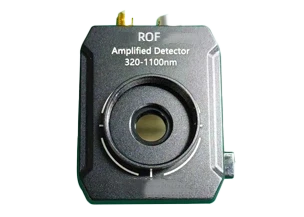
ROF PR 11M B Silicon Adjustable Gain Photodetector 11MHz 320nm - 1100nm
BEIJING ROFEA OPTOELECTRONICS CO,. LTD.
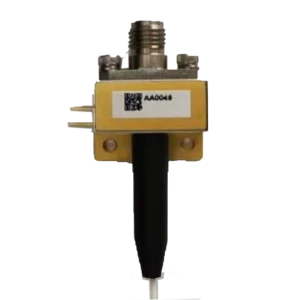
ROF 1550nm InGaAs Photoreceiver High Speed InGaAs Photodiode
BEIJING ROFEA OPTOELECTRONICS CO,. LTD.
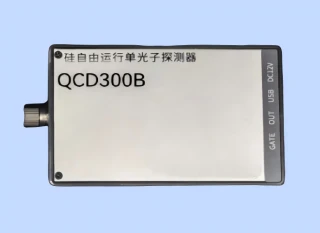
R-QCD300B-S-3 Silicon Free Running Single Photon Detector USB FC UPC
BEIJING ROFEA OPTOELECTRONICS CO,. LTD.
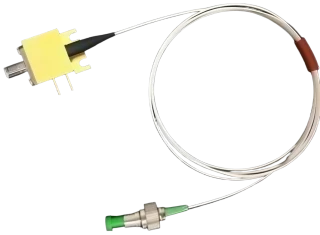
ROF-PD-70 Ultrawideband 70GHz PIN Photodetector 1550nm Fiber
BEIJING ROFEA OPTOELECTRONICS CO,. LTD.
ROF-PD 10GHz High Speed Fiber Photodetector Light Detection Module
BEIJING ROFEA OPTOELECTRONICS CO,. LTD.

CoolCAD CCSiCUVPL265 A SiC Ultraviolet Linear Photodiode 200 - 375nm
CoolCAD Electronics, Inc.
CCSiCUVPL02A SiC Ultraviolet Linear Photodiode 200 to 375 nm
CoolCAD Electronics, Inc.
CoolCAD CCSiCUVPL01 SiC Ultraviolet Linear Photodiode 200-375nm Bare Die
CoolCAD Electronics, Inc.

EQ Photonics GmbH - EUV Photodiode - SXUV100TF135
EQ Photonics

PVI-5-1x1-TO39-NW-36 Uncooled IR Photovoltaic Detector
VIGO Photonics

HgCdTe (MCT) Photovoltaic Detector
VIGO Photonics

InAs Photovoltaic Detector
VIGO Photonics
Thank You!
Your inquiry has been received.
Create an account by adding a password
Why create an account?
- Auto-complete inquiry forms
- View and manage all your past messages
- Save products to your favorites
- Close your account anytime — no hassle