


Description
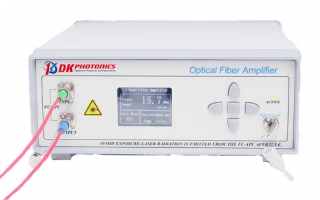
The MARS series 1.0 µm high power pulse fiber amplifiers from Connet Laser are engineered specifically for demanding short‑pulse applications, with pulse widths down to 10 ns and repetition rates up to 1 MHz. Based on advanced ytterbium‑doped double‑clad fiber amplifier technology, these units deliver high peak powers up to 10 kW while maintaining excellent beam quality and pulse integrity. This makes them an ideal choice for applications where a compact, efficient, and reliable pulsed amplification stage is required at typical wavelengths of 1053 nm, 1064 nm, or 1083 nm.
Unlike many generic pulsed fiber amplifiers that compromise between efficiency and nonlinear performance, the MARS series is optimized to minimize nonlinear effects such as self‑phase modulation and stimulated Brillouin scattering. The amplification chain is carefully designed to prevent spectral broadening and temporal distortion of the input pulses, ensuring that the output closely preserves the original pulse shape and spectrum. This is particularly important in coherent detection, high‑resolution fiber sensing, and precision material processing, where spectral purity and temporal fidelity translate directly into measurement accuracy and process quality.
The product line covers both single‑mode (MFAS‑Yb‑10xx‑PL) and polarization‑maintaining (MFAP‑Yb‑10xx‑PL) configurations, providing flexibility for systems that require either high spatial mode quality or strict polarization control. The PM versions are especially well suited for coherent beam combining, interferometric sensing, and polarization‑sensitive LIDAR and LADAR systems. Typical output power is around 10 W average with peak powers up to 10 kW, beam quality M² less than 1.2, and polarization extinction ratios of about 20 dB for PM models, placing these amplifiers in the performance class commonly used in advanced industrial and scientific platforms worldwide.
Thermal management plays a critical role in the long‑term stability of high‑power fiber amplifiers. The MARS series incorporates a proprietary thermal treatment approach and efficient air‑cooling design to maintain stable operation over extended periods. Combined with an intelligent high‑speed protection circuit that continuously monitors both input and output power, the system can react rapidly to abnormal conditions, helping to safeguard the internal components, the seed laser, and downstream optics. This level of protection aligns the MARS amplifiers with best‑in‑class pulsed fiber systems used in harsh industrial and field environments.
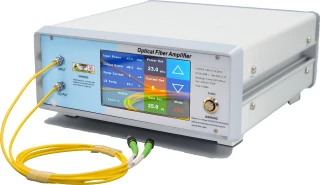
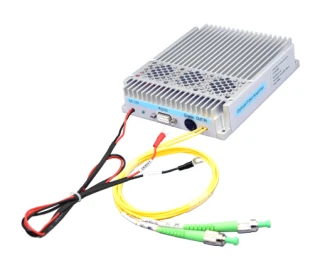
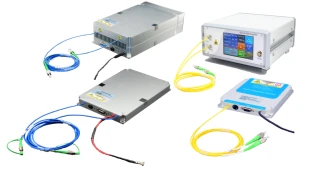
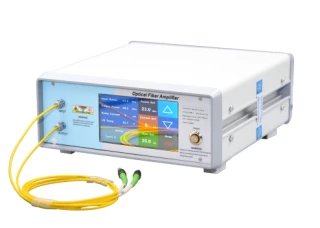
For system integrators and OEMs, the MARS series is available in multiple mechanical formats, including benchtop, rackmount, and module‑level packages. The standard configuration provides an output fiber length of at least 1 m with FC/APC connectivity (other connector types are available), simplifying integration into existing optical setups. Output power can be tuned within a defined range, enabling users to optimize average and peak power for specific tasks such as range‑resolved LIDAR, distributed fiber sensing, laser micro‑machining, or non‑linear optics experiments. The amplifiers operate from a standard AC mains input and are designed for reliable performance over a broad environmental temperature range.
Thanks to their combination of high peak power, short‑pulse capability, robust isolation, and stable optical performance, MARS series 1.0 µm high power pulse fiber amplifiers serve as a versatile backbone for a wide variety of applications. Typical uses include fiber Bragg grating interrogation, distributed acoustic or temperature sensing, time‑of‑flight and Doppler LIDAR/LADAR, biomedical diagnostics, and precision laser processing. Research laboratories and R&D teams also benefit from the amplifiers’ tunability, repeatable performance, and compatibility with common ytterbium seed lasers operating across the 1035–1083 nm range. Overall, the MFAS‑Yb‑10xx‑PL and MFAP‑Yb‑10xx‑PL models provide a compact, efficient, and application‑ready solution for modern short‑pulse photonic systems.
1.0um High Power Pulse Fiber Amplifier
Specifications
| Amplifier Type: | EDFA - Erbium-Doped Fiber Amplifier |
|---|---|
| Wavelength Range: | 1035 – 1083 nm |
| Max Output Power: | 37 dBm |
| Nominal Gain: | 30 dB |
| Output Fiber Type: | Single Mode |
| Typical Operating Wavelength: | 1053 nm / 1064 nm / 1083 nm |
| Wavelength Range (min): | 1035 nm |
| Average Output Power (max): | 10 W |
| Peak Output Power (typ): | 10 kW |
| Pulse Width (min): | 1 ns |
| Pulse Width (typ): | 10 ns |
| Pulse Width (max): | 50 ns |
| Repetition Rate (min): | 30 kHz |
| Repetition Rate (max): | 1000 kHz |
| Operating Mode: | Pulse |
| Output Power Tunable Range: | 10–100 % |
| Output Polarization (MFAS-Yb-10xx-PL): | Single-mode (SM), random polarization |
| Output Polarization (MFAP-Yb-10xx-PL): | Polarization-maintaining (PM), linear polarization |
| Polarization Extinction Ratio (PER): | 20 dB |
| Output Power Stability (8 Hours): | ±1 % |
| Beam Quality M2: | < 1.2 |
| Input Light Isolation (min): | 30 dB |
| Output Light Isolation (min): | 30 dB |
| Length Of The Output Fiber (min): | 1 m |
| Optical Connectors: | FC/APC (other options available) |
| Power Supply: | 220 VAC |
| Power Consumption (typ): | 150 W |
| Operating Temperature (min): | 0 ℃ |
| Operating Temperature (max): | 35 ℃ |
| Storage Temperature (min): | -40 ℃ |
| Storage Temperature (max): | +85 ℃ |
| Dimension: | 420(L) × 485(W) × 150(H) mm |
| Cooling Mode: | Air-cooled |
| High Peak Output: | up to 10 kW |
| Short Pulse Amplifying Example: | 10 ns / 1 MHz |
Got questions about specs? Use the inquiry form to ask.
 Download Data Sheet

Features
- High Peak Output Power up to 10 kW – Optimized double‑cladding Yb-doped fiber design delivers up to 10 kW peak power at 1.0 μm, ideal for demanding pulsed applications such as LIDAR, fiber sensing, and precision laser processing.
- Short Pulse Amplification (< 50 ns) – Engineered specifically for short pulses (e.g. 10 ns @ 1 MHz), maintaining pulse integrity with minimal temporal distortion for time‑resolved measurements and high‑resolution ranging systems.
- 1.0 μm Operating Wavelengths (Ytterbium Band) – Typical center wavelengths at 1053 nm, 1064 nm and 1083 nm, covering key lines used in industrial laser processing, coherent combining experiments, and advanced sensing.
- Single‑Mode (SM) and Polarization‑Maintaining (PM) Versions –
- MFAS‑Yb‑10xx‑PL: Single‑mode output for high beam quality and efficient fiber delivery.
- MFAP‑Yb‑10xx‑PL: Polarization‑maintaining output with high PER for coherent detection, interferometry and coherent beam combining.
- Excellent Beam Quality (M² < 1.2 typ.) – Near‑diffraction‑limited output supports tight focusing, long standoff distances, and high spatial resolution in micro‑machining and remote sensing applications.
- High Stability and Reliability – Proprietary thermal management and robust optical design ensure stable operation over extended periods; typical power stability is within ±1–2% over 8 hours after warm‑up at 25 °C.
- Optimized to Minimize Nonlinear Effects – Advanced fiber layout and large‑mode‑area double‑clad fibers suppress SPM, SBS and other nonlinearities, avoiding spectral broadening and preserving the input pulse spectrum.
- Output Power Tunable – Adjustable output power (via front‑panel or remote control, depending on configuration) allows easy optimization for different targets, materials and experimental conditions, extending component lifetime and application flexibility.
- High-Speed Protection and Monitoring – Integrated fast‑response protection circuitry continuously monitors input and output signals, providing automatic shutdown or power reduction under fault conditions to protect the amplifier and connected equipment.
- Random or Linear Polarization Options – Randomly polarized SM output for general‑purpose use, or linearly polarized PM output with high polarization extinction ratio for polarization‑sensitive systems such as coherent LIDAR and interferometric sensors.
- Flexible Form Factors: Benchtop, Rack, and Module –
- Benchtop (B) version for laboratory use with intuitive front‑panel controls.
- Rack‑mount and OEM module options for system integration and volume deployment.
- Industrial‑Grade Electrical and Thermal Design – Operates from standard AC mains (e.g. 220 VAC) with air‑cooled architecture, reducing infrastructure requirements and simplifying installation in labs and industrial environments.
- FC/APC Fiber Output (Other Connectors Available) – Standard FC/APC output with several meters of delivery fiber; alternative connectors and fiber types are available for easier integration into existing optical setups.
- Long Output Fiber Length – Supplied with > 1 m output fiber (typical lengths larger, per configuration) to facilitate routing inside optical tables, racks, or field‑deployed systems without additional splicing.
- Wide Repetition Rate Compatibility – Supports pulse repetition rates from tens of kHz up to ~1 MHz, covering most Q‑switched and pulsed fiber laser sources in industrial, scientific, and sensing environments.
- Broad Application Coverage – Optimized for:
- Fiber sensing (distributed and point sensors, Φ‑OTDR, BOTDA, etc.).
- LIDAR & LADAR (range‑finding, 3D mapping, autonomous navigation).
- Biological and medical research (photoacoustic imaging, tissue interactions, pump–probe setups).
- Laser processing (micro‑drilling, marking, scribing, thin‑film patterning).
- R&D and coherent combination (high‑power coherent beam combining, nonlinear optics experiments).
- Custom Configurations Available – Wavelength, power level, fiber type, connector style, and mechanical form factor can be tailored for OEM integrations and specialized research requirements.
Applications
- Fiber Optic Sensing (DAS, DTS, DSS) – Amplification of nanosecond probe pulses in distributed acoustic, temperature, and strain sensing systems, including pipeline monitoring, perimeter security, structural health monitoring of bridges, tunnels, and railways.
- LIDAR & LADAR for Remote Sensing – High-peak-power 1.0 µm source for time‑of‑flight and coherent LIDAR/LADAR, used in atmospheric monitoring, wind profiling, topographic mapping, and long‑range 3D imaging.
- Industrial Laser Ranging & Positioning – Short‑pulse amplification for high‑precision distance measurement, alignment, and object positioning in factory automation, robotics, and logistics.
- Laser Material Processing – 1.0 µm pulse amplification for fine micromachining, thin‑film patterning, surface cleaning, scribing, trimming, drilling, and marking of metals, semiconductors, and polymers.
- Surface Texturing & Functionalization – Generation of high‑peak‑power pulses to create micro‑ and nano‑scale surface structures for friction control, hydrophobicity, and optical functionalization.
- Nonlinear Optics Pump Source – Pumping of nonlinear crystals and photonic crystal fibers for frequency conversion (SHG to 532 nm, OPO/OPA, supercontinuum generation) where narrow spectral broadening and high peak power are critical.
- Coherent Beam Combining – Polarization‑maintaining (PM) configuration for coherent combination experiments and scaling of 1.0 µm pulse energy in advanced laser architectures.
- Master Oscillator Power Amplifier (MOPA) Systems – Use as the power amplification stage for 1053/1064/1083 nm seed lasers in MOPA configurations requiring short (<50 ns) pulses and up to 10 kW peak power.
- Scientific Research & Development – Flexible platform for laboratory studies in ultrafast and short‑pulse fiber photonics, nonlinear propagation in double‑clad fibers, pulse shaping, and high‑peak‑power fiber laser development.
- Atomic, Molecular & Optical (AMO) Physics – Amplified 1.0 µm pulses near 1064 nm and 1083 nm for optical pumping, trapping, and precision spectroscopy of atoms and ions, as well as pump‑probe experiments.
- Interferometry & Coherent Detection – Single‑mode (SM) output for high‑coherence interferometric measurements, heterodyne detection schemes, and coherent optical sensing setups.
- Optical Communication Test & Simulation – Short‑pulse, high‑peak‑power source for simulating nonlinear effects, testing components, and characterizing high‑power behavior in specialty fibers and photonic devices at 1.0 µm.
- Biological & Medical Research – Pump source for nonlinear bio‑imaging modules, photoacoustic generation in tissue phantoms, optical elastography, and development of 1.0 µm‑based diagnostic prototypes (research use).
- Photoacoustic & Ultrasonic Wave Generation – High‑peak‑power nanosecond pulses for creating localized photoacoustic signals in solids, liquids, and biological samples for imaging and material characterization.
- Laser-Induced Breakdown Spectroscopy (LIBS) – Use as an excitation and pre‑amplification source around 1.0 µm in LIBS and related plasma‑based spectroscopy systems for material identification.
- Remote Sensing and Environmental Monitoring – LIDAR‑based detection of aerosols, clouds, and pollutants; terrain mapping and vegetation profiling using short, energetic pulses with stable output.
- Defense & Security Systems (R&D) – Integration in prototype range finders, target designation, obstacle detection, and active imaging systems that rely on compact, robust, eye‑safer‑region (near‑IR) pulse amplifiers.
- Optical Coherence & Timing Distribution – Amplification of timing reference pulses in large‑scale scientific facilities and synchronization networks where low nonlinear distortion and spectral purity are required.
- Laser Seeding & Injection Locking – Short‑pulse amplification of master oscillators used to seed bulk or fiber power stages, including Nd:YAG/Nd:YVO₄ systems and other 1.0 µm class lasers.
- Education & Training Platforms – Use in university and institute laboratories as a robust, turn‑key 1.0 µm pulse amplifier to demonstrate double‑clad fiber amplification, high‑peak‑power operation, and LIDAR/sensing concepts.
Frequently Asked Questions
What is the Connet MARS series 1.0 µm high power pulse fiber amplifier and what are the MFAS-Yb-10xx-PL and MFAP-Yb-10xx-PL models?
What are the key optical performance specifications of the MARS 1.0 µm pulse fiber amplifiers?
Which wavelengths, pulse formats, and polarizations are supported by the MFAS-Yb-10xx-PL and MFAP-Yb-10xx-PL amplifiers?
What applications are these 1.0 µm high power pulse fiber amplifiers suitable for compared with similar products?
How is the output power controlled and how stable is the amplifier output over time?
What are the main mechanical, electrical, and interface features of the benchtop MARS amplifiers?
How do I select the right configuration and order a customized MARS series fiber amplifier?
Got more questions? Use the inquiry form to ask the supplier directly.
Similar Products


Your inquiry has been received.
Create an account by adding a password
Why create an account?
- Auto-complete inquiry forms
- View and manage all your past messages
- Save products to your favorites
- Close your account anytime — no hassle