


Description
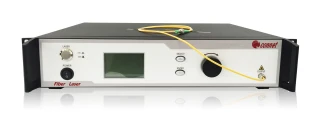
The Connet VENUS / VLSS-980-B series is a high‑stability, 980 nm single‑mode pump laser source designed specifically for demanding fiber‑optic research and amplifier pumping applications. Built around one or two high‑power, wavelength‑stabilized laser diodes with fiber Bragg grating (FBG) locking in the 980 nm band, this benchtop source typically operates near 975 nm and delivers output powers configurable up to 1400 mW. Its robust internal design combines advanced automatic temperature control (ATC), automatic power control (APC), optimized thermal management, and carefully engineered optomechanics to ensure outstanding power stability and long‑term reliability in both laboratory and system integration environments.
The output of the VENUS / VLSS-980-B series is available through high‑quality single‑mode or polarization‑maintaining (PM) fiber, terminated with an FC/APC connector to minimize back‑reflection into the pump diode. A high‑definition LCD on the front panel provides clear, real‑time readout of output power and operating status, while intuitive controls enable easy adjustment of the output power from 0 to 100% with coarse and fine tuning modes. This plug‑and‑play architecture allows users to quickly set up and operate the laser source without complex alignment or software configuration, making it ideal for daily experimental work, device characterization, and system testing.
For applications such as erbium‑doped fiber amplifiers (EDFA), erbium‑ytterbium‑doped fiber amplifiers (EYDFA), and ytterbium‑doped fiber amplifiers, pump diode protection is critical due to amplified spontaneous emission (ASE) and potentially harmful back‑reflected light. The VENUS / VLSS-980-B series integrates dedicated ASE feedback protection and optional enhanced pump‑protection schemes tailored to different fiber laser and amplifier architectures. This protection strategy, combined with an output isolation level typically around 30 dB (for ASE feedback), helps minimize the risk of pump failure and extends the operational lifetime of the device compared with conventional 980 nm pump modules lacking such safeguards.
With a narrow spectral width (typically around 0.5 nm FWHM) and a side‑mode suppression ratio on the order of 20 dB, the source provides spectrally clean pump light well suited to high‑gain, low‑noise amplifier designs. The high power stability (on the order of 1% under nominal lab conditions after warm‑up) supports applications where gain fluctuations directly impact system performance, such as high‑power and low‑noise EDFAs, mode‑locked fiber lasers in the 1.0 μm and 1.5 μm bands, and precision test and measurement setups. Typical output power configurations, such as 400 mW, 600 mW, or other custom levels within the 90–1400 mW range, can be specified to match the requirements of new designs or to retrofit existing amplifier platforms.
From an integration standpoint, the compact benchtop housing (approximately 340 mm × 240 mm × 100 mm) and universal 100–240 VAC input make the VENUS / VLSS-980-B series straightforward to deploy in standard optical laboratories and 19‑inch rack environments. The system is designed to operate reliably over a 0 to +50 °C ambient temperature range, with storage down to –40 °C, supporting both permanent setups and mobile or field‑lab configurations. For automated test benches or remote operation, an RS‑232 communication interface and control software can be provided on request, enabling computer‑based monitoring, power control, and scripting within larger photonics test systems.
In comparison with typical 980 nm pump laser sources used for EDFA and fiber‑laser pumping worldwide, the VENUS / VLSS-980-B series combines high output power, narrow linewidth, FBG‑locked wavelength, integrated ASE/back‑reflection protection, and user‑friendly desktop operation in a single package. This positions it as a versatile tool for researchers and engineers who need a stable, configurable, and reliable 980 nm pump for amplifier development, mode‑locked laser seeding, and other advanced fiber‑optic experiments where stability, spectral purity, and operational safety of the pump source are essential.
VENUS SERIES 980nm High Stability Single-mode Pump Laser Source
Specifications
| Center Wavelength: | 980 nm |
|---|---|
| Output Power: | 0.6 W |
| Output Mode: | Continuous Wave (CW), Single Frequency |
| Spectral Linewidth: | 0.5 nm |
| Output Power Stability: | 0.9% ~ 1.0% |
| Output Fiber Type: | SMF-28, PMF |
| Output Fiber Length: | 1 m |
| Interface: | RS-232, USB 2.0, USB 3.0, Other / Not-specified |
| Cooling: | Air Cooled |
| Electrical Requirements: | 110V - 60Hz, 115V - 50Hz, 115V - 60Hz, 120V - 60Hz, 127V - 50Hz, 127V - 60Hz, 220V - 50Hz, 230V - 50Hz, 230V - 60Hz, 240V - 50Hz |
| Part No.: | VLSS-980-B |
| Output Power: | 90-1400 mW |
| Peak Operating Wavelength: | 970-985 nm |
| Spectral Width (FWHM): | 0.5-1 nm |
| SMSR: | 20 dB |
| Output Isolation: | 30 dB |
| Stability Of Output Power: | 1 % |
| Output Power Tunable Range: | 0-100 % |
| Output Power Tunable Mode: | Coarse/Fine |
| Output Fiber Type: | SMF or PMF |
| Length Of Output Fiber: | >1 m |
| Output Fiber Connector: | FC/APC |
| Operating Voltage: | 100-240 VAC |
| Power Consumption: | 10 W |
| Operating Temperature: | 0 to +50 ℃ |
| Storage Temperature: | -40 to +85 ℃ |
| Dimension: | 340(L)×240(W)×100(H) mm |
Got questions about specs? Use the inquiry form to ask.
 Download Data Sheet

Features
- High-Stability 980 nm Pump Laser Source – Precision benchtop single-mode pump laser operating in the 980 nm band (typ. 974/976 nm), ideal for fiber amplifier pumping and research applications.
- Adjustable High Output Power up to 1400 mW – Continuously tunable output power from 0–100% (coarse/fine control), with typical output options (e.g., 400 mW, 600 mW, 1400 mW) to match diverse amplifier and laboratory needs.
- Single-Mode or Polarization-Maintaining Fiber Output – Available with high-quality SMF or PMF output to support both standard and polarization-sensitive systems such as PM EDFA/EYDFA/YDFA setups.
- FBG Wavelength-Locked Pump Diodes – Uses one or two high-power pump laser diodes with fiber Bragg grating (FBG) wavelength stabilization for narrow spectral width (typ. 0.5 nm) and excellent long-term wavelength stability.
- Excellent Spectral Purity – Typical full-width at half-maximum (FWHM) ≤ 0.5 nm and side-mode suppression ratio (SMSR) ≥ 20 dB, ensuring clean pump spectra and reduced noise transfer to downstream amplifiers.
- Integrated ASE Feedback Protection – Built-in protection scheme against amplified spontaneous emission (ASE) and back-reflected light, significantly reducing the risk of pump diode damage in EDFA, EYDFA, and Ytterbium-doped fiber amplifiers.
- High Output Power Stability (≤ 1%) – Proprietary ATC (Automatic Temperature Control) and APC (Automatic Power Control) circuitry, combined with optimized thermal and mechanical design, ensure output power stability better than 1% after warm-up.
- High Output Isolation (~30 dB) – Integrated optical isolator provides high isolation against back reflections, improving reliability and lifetime in demanding lab and test environments.
- High-Definition LCD Display – Real-time display of output power and operating status on a clear LCD screen for easy monitoring and precise operation.
- User-Friendly Front Panel Interface – Simple and intuitive controls with coarse and fine power adjustment for fast setup and accurate optimization in laboratory experiments.
- RS232 Remote Control Option – Optional RS232 communication interface and control software for remote operation, system integration, automation, and data logging in test setups and OEM platforms.
- Plug-and-Play Benchtop Design – Compact desktop unit (approx. 340 × 240 × 100 mm) with integrated power supply and ready-to-use interface, minimizing installation time for research labs and production lines.
- Standard FC/APC Fiber Connector – Delivered with FC/APC output connector to minimize back reflection; other connector options are available on request for easy integration into existing optical setups.
- Wide Operating Voltage and Low Power Consumption – Universal AC input (100–240 VAC) and low power consumption (~10 W), suitable for global use and 24/7 operation in lab environments.
- Broad Operating Temperature Range – Reliable performance from 0 to +50 °C operating temperature and -40 to +85 °C storage temperature, supporting stable use in standard laboratory and light industrial conditions.
- Optimized for Fiber Amplifier Pumping – Specifically designed for high-power, low-noise EDFA, EYDFA, and Ytterbium-doped fiber amplifier pumping, as well as mode-locked fiber lasers in the 1.0 μm and 1.5 μm bands.
- Ideal for Test & Measurement and R&D – Stable, low-noise, and easy-to-operate source for optical communication experiments, component characterization, nonlinear optics, and general photonics research.
- Configurable Output Power and Wavelength – Custom output power levels and operating center wavelengths (e.g., 974 nm, 976 nm) can be specified to match particular fiber types, gain media, and system designs.
- Enhanced Reliability and Lifetime – Carefully engineered thermal management, pump protection schemes, and isolation are comparable to leading 980 nm pump laser sources on the market, ensuring long-term reliable operation.
- Flexible Ordering Options – Available as benchtop or module package with selectable feedback protection, allowing tailoring to different system architectures and integration requirements.
Applications
- High-Power Erbium-Doped Fiber Amplifier (EDFA) Pumping
Stable 980 nm single-mode output (up to 1400 mW) for use as the primary pump source in C-band and L-band EDFAs for telecom, CATV, metro, and long-haul optical communication links. - High-Power, Low-Noise EDFA Modules and Systems
Low-RIN, wavelength-locked pump for building low-noise pre-amplifiers, booster amplifiers, in-line amplifiers, and custom gain blocks for DWDM and high-capacity transmission systems. - Er/Yb Co-Doped and Er-Doped Fiber Lasers
Pump source for Er/Yb co-doped fiber lasers and oscillators in the 1.5 µm band, enabling narrow-linewidth and high-stability CW and pulsed laser operation. - Ytterbium-Doped Fiber Amplifier (YDFA) and Fiber Laser Pumping
980 nm pump for Yb-doped fiber amplifiers and lasers operating around 1.0 µm (e.g., 1030–1080 nm) in industrial, medical, and scientific systems. - Mode-Locked Fiber Lasers at 1.0 µm and 1.5 µm
Pumping of femtosecond and picosecond mode-locked fiber lasers for ultrafast spectroscopy, frequency comb generation, optical sampling, and time-resolved measurements. - Seed and Master Oscillator Pumping
Stable pump for low-power seed lasers and master-oscillator stages in MOPA (Master Oscillator Power Amplifier) fiber systems requiring low noise and excellent stability. - Raman Fiber Laser and Raman Amplifier Pumping
Pump source in cascaded Raman fiber lasers and discrete or distributed Raman amplifiers where a stable 980 nm pump improves gain flatness and noise performance. - Optical Communication Component Testing
Laboratory pump source for testing EDFAs, YDFAs, isolators, WDMs, couplers, filters, Bragg gratings, and other passive and active fiber-optic components under realistic pump conditions. - Optical Network R&D and System Prototyping
Use in R&D labs and engineering environments for prototyping optical links, testbeds, and new amplifier or laser architectures in telecom and datacom systems. - Characterization of Rare-Earth-Doped Fibers
Pumping of experimental Er-, Yb-, Er/Yb-, and other rare-earth-doped fibers to measure gain, absorption, saturation characteristics, and thermal behavior. - Nonlinear Fiber Optics Experiments
Stable single-mode 980 nm pump for studying nonlinear effects (SPM, XPM, FWM, SBS, SRS) in specialty fibers, photonic crystal fibers, and highly nonlinear fibers. - Supercontinuum Generation Pre-Pump
Pumping of intermediate fiber stages or pre-amplifiers in supercontinuum generation setups where a clean, stable 980 nm source is required before nonlinear broadening. - Fiber Bragg Grating (FBG) and Filter Testing
Use as a narrow-band pump source to characterize pump-wavelength FBGs, wavelength-selective reflectors, and other filters optimized around 974–976 nm. - Quantum Communication and Quantum Optics Setups
Pumping of fiber-based parametric sources, quantum frequency converters, and specialty doped fibers in quantum key distribution (QKD) and quantum information experiments requiring highly stable pump power. - Optical Sensing and Distributed Sensing Systems
Pump source in fiber sensor systems (e.g., FBG-based strain/temperature sensors, distributed acoustic or temperature sensing) where stable pump power improves measurement accuracy and dynamic range. - Metrology and Precision Measurement
Use in optical frequency references, interferometric setups, and precision timing systems that employ fiber amplifiers or lasers internally pumped at 980 nm. - Biomedical and Bio-Photonics Research
Pumping of fiber-based laser sources used in multiphoton microscopy, OCT subsystems, and other bio-photonic instruments that incorporate 1.0 µm or 1.5 µm fiber lasers or amplifiers. - Spectroscopy and Chemical Sensing
Pumping of narrow-linewidth fiber lasers used in gas sensing, absorption spectroscopy, and trace detection in the 1.0 µm and 1.5 µm spectral regions. - Education and Training in Photonics
Robust bench-top pump source for university labs and teaching facilities to demonstrate fiber amplifiers, fiber lasers, nonlinear optics, and optical communication principles. - General Laboratory Fiber-Optic Experiments
Flexible, plug-and-play 980 nm pump laser for a wide range of custom optical experiments, test and measurement tasks, and system evaluations requiring tunable, highly stable single-mode or PM fiber output.
Frequently Asked Questions
What is the Connet VENUS VLSS-980-B 980 nm high-stability single-mode pump laser source used for?
What are the key specifications and performance features of the VLSS-980-B 980 nm pump laser?
How is the output power of the Connet VLSS-980-B controlled and monitored?
What pump protection and ASE feedback protection options are available for this 980 nm pump laser source?
How do I specify the exact wavelength, output power, and package when ordering the VLSS-980-B?
What are the power supply, operating temperature, and physical dimensions of the desktop unit?
Can the Connet VENUS 980 nm pump laser be computer controlled or integrated into automated test systems?
Got more questions? Use the inquiry form to ask the supplier directly.
Similar Products



Your inquiry has been received.
Create an account by adding a password
Why create an account?
- Auto-complete inquiry forms
- View and manage all your past messages
- Save products to your favorites
- Close your account anytime — no hassle