


Description
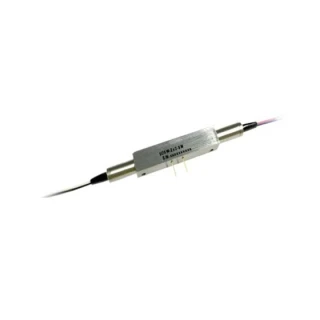
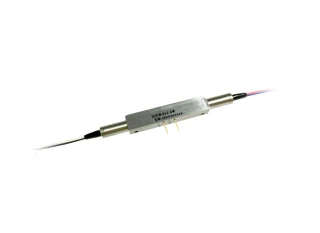
4x4 (T-Type) fiber optic switch connects optical channels by directing or blocking an incoming optical signal into the output fiber. This is achieved using a patent pen- ding opto-mechanical configuration and activated via an electrical control signal. Latching version preserves the selected optical path after the drive signal has been removed, while the non-latching versions default to either the open or closed state when power is removed. The switch has integrated electrical position sensors. The new material based advanced design significantly reduces moving part position sensitivity, offering unprecedented high stability as well as unmatched low cost.
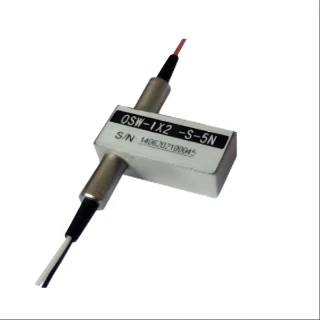
4x4 (T-Type) Mechanical Optical Switch
Specifications
| Number Of Ports: | 2 – 4 |
|---|---|
| Wavelength Range: | 850 – 1650 nm |
| Insertion Loss (typical): | 0.8 dB |
| Return Loss: | 30 dB |
| Wavelength Range (nm): | 850 & 1310, 1260 to 1650 |
| Insertion Loss (dB): | ≤0.8, ≤1.0 |
| Return Loss (dB): | ≥30, ≥50 |
| Crosstalk (dB): | ≥35, ≥55 |
| WDL (dB): | ≤0.30, ≤0.40 |
| PER@PM (dB): | >16 |
| PDL (dB): | ≤0.1 |
| TDL (dB): | ≤0.3 |
| Repeatability (dB): | ±0.05 |
| Power Supply (V): | 3.0 or 5.0 |
| Lifetime (Cycle): | 10^7 |
| Switching Time (ms): | ≤15 |
| Power Handling (mW): | ≤500 |
| Operating Temperature (°C): | -20 to +70 |
| Storage Temperature (°C): | -40 to +85 |
| Weight (g): | 18 |
| Dimension (mm): | (L)53 × (W)37.5 × (H)10 (±0.2) |
Got questions about specs? Use the inquiry form to ask.
 Download Data Sheet

Features
- Low Insertion Loss: Ensures minimal signal loss for efficient performance.
- Wide Wavelength Range: Compatible with a broad spectrum of wavelengths from 1260 to 1650 nm.
- Low Crosstalk: Provides high isolation between channels, ensuring clear signal transmission.
- High Stability and Reliability: Designed for consistent performance and long-term use.
- Epoxy-free on Optical Path: Eliminates potential contamination and ensures high-quality signal transmission.
- Latching and Non-latching Options: Offers flexibility in maintaining or changing the optical path state.
Applications
- Metropolitan Area Network
- R&D in Laboratory
- System Monitoring
- Configurable OADM
Frequently Asked Questions
What are the key features of this optical switche?
What applications are optical switches suitable for?
What is the wavelength range for the OSW-1×4T model?
What is the insertion loss specification for the OSW-1×4T model?
What are the operating and storage temperature ranges for this optical switche?
What is the power handling capacity of this optical switche?
Got more questions? Use the inquiry form to ask the supplier directly.
Similar Products


Your inquiry has been received.
Create an account by adding a password
Why create an account?
- Auto-complete inquiry forms
- View and manage all your past messages
- Save products to your favorites
- Close your account anytime — no hassle