


Description
ArmD® UV-HC and ArmD® NIR-HC hard polymer-clad fibers offer high numerical apertures to suit a broad range of applications, from remote illumination to photodynamic therapy. This high-quality fiber is a cost-effective alternative to silica/silica fibers. Explore our range of jacket types and sizes, including customizable options crafted to precisely meet your specifications.
ArmD® UV-HC/NIR-HC
Specifications
| Wavelength Range: | 350 – 2200 nm |
|---|---|
| Fiber Core Material: | Silica |
| Wavelength / Spectral Range: | 350 – 2200 nm |
| Numerical Aperture (NA): | 0,37 ± 0,02 | 0,48 ± 0,02 | 0.50±0,02 | 0,52±0,02 | 0,57±0,02 | 0,62±0,02 |
| Operating Temperature: | -40 to +150 °C |
| Core Diameter: | 100 to 2000 µm |
| OH Content (ArmD™ HUV): | high (> 700 ppm) |
| OH Content (ArmD™ HWF): | low (< 1 ppm) |
| Standard Prooftest: | 100 kpsi |
| Minimum Bending Radius (short-term Mechanical Stress): | 50 × cladding diameter |
| Minimum Bending Radius (during Use With High Laser Power): | 150 × core diameter |
| Jacket (ETFE): | -40 to +150°C |
| Jacket (Nylon): | -40 to +100°C |
Got questions about specs? Use the inquiry form to ask.
 Download Data Sheet

Features
- High numerical apertures (0.37, 0.48, 0.52, 0.57)
- High fiber strength
- Reduced static fatigue
- Lower microbend losses
- Biocompatible materials
- Sterilizable by ETO and other methods
- Manufactured at ISO 9001 compliant facility
- Radiation resistant high concentricity
- Cost effective (compared to silica/silica fibers)
- Easy termination with no pistoning effect
Applications
- Medical
- Medical diagnostics
- Laser delivery
- Photodynamic Therapy
- Industrial / Scientific
- Spectroscopy
- Remote illumination
- Sensors
- Laser welding / soldering / marking
- Laser delivery
- Photolithography
- Nuclear plasma diagnostics
- Analytical instruments
- Laser diode pigtailing
- Pyrometry
- Semiconductor capital equipment
Frequently Asked Questions
What are the advantages of using Optran®HUV?
The advantages of using ArmD® UV-HC/NIR-HC include its cost-effectiveness compared to silica/silica fibers, high concentricity, all dielectric non-magnetic design, step-index profile, biocompatible material, and sterilizability using ETO and other methods.
What are the applications of Optran®HUV?
ArmD® UV-HC/NIR-HC can be used for medical diagnostics, laser delivery, photodynamic therapy, spectroscopy, remote illumination, sensors, laser welding/soldering/marking, photolithography, nuclear plasma diagnostics, analytical instruments, laser diode pigtailing, pyrometry, and semiconductor capital equipment.
What are the attenuation values of Optran®HUV?
The attenuation values of ArmD® UV-HC/NIR-HC vary depending on the wavelength, and can be found in the datasheet provided.
What are the features of Optran®HUV?
ArmD® UV-HC/NIR-HC features high numerical apertures, high fiber strength, reduced static fatigue, lower microbend losses, biocompatible materials, sterilizability by ETO and other methods, radiation resistance, high concentricity, and cost-effectiveness compared to silica/silica fibers.
What is Optran®HUV?
ArmD® UV-HC/NIR-HC is a hard polymer-clad fiber that offers high numerical apertures for a wide range of applications, from remote illumination to photodynamic therapy.
Got more questions? Use the inquiry form to ask the supplier directly.
Similar Products
Optran® PWF – Low-OH Fiber with Silicone Cladding (350-2200 nm)
Ceramoptec
Optran® PUV – High-NA Fiber with Silicone Cladding (350-2200 nm)
Ceramoptec
Optran® WFNS – Low-OH Silica Fibers for VIS-NIR (300–2400 nm)
Ceramoptec
Optran® WF – Low-OH Silica Fibers for VIS-NIR (700–2400 nm)
Ceramoptec
Optran® UVNS – Non-Solarizing UV Fiber (190–1200 nm)
Ceramoptec
Optran® UV – High-OH UV Fiber (220–1200 nm)
Ceramoptec
Optran® UVWFS – Broadband Low-OH Fiber (200-2000nm)
Ceramoptec
Optran® HWF – High Numerical Aperture VIS-NIR Optical Fiber
Ceramoptec
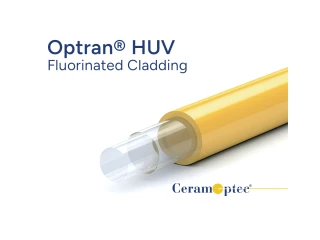
Optran® HUV – High-NA UV Fiber (350-2200 nm)
Ceramoptec
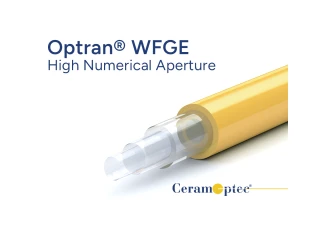
Optran® WFGe – Germanium-Doped Fiber (400–2400 nm)
Ceramoptec
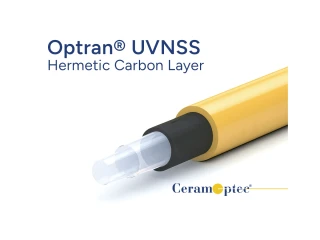
Optran® UVNSS – Solarization-Resistant High-OH Fiber (190–700 nm)
Ceramoptec
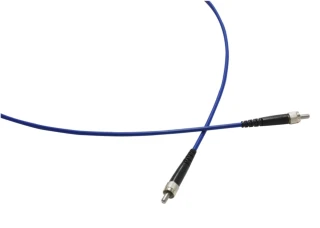
High-Performance Multimode Optical Fibers for Visible, UV, and NIR Transmission
Evolve Sensing
Thank You!
Your inquiry has been received.
Create an account by adding a password
Why create an account?
- Auto-complete inquiry forms
- View and manage all your past messages
- Save products to your favorites
- Close your account anytime — no hassle