
Description
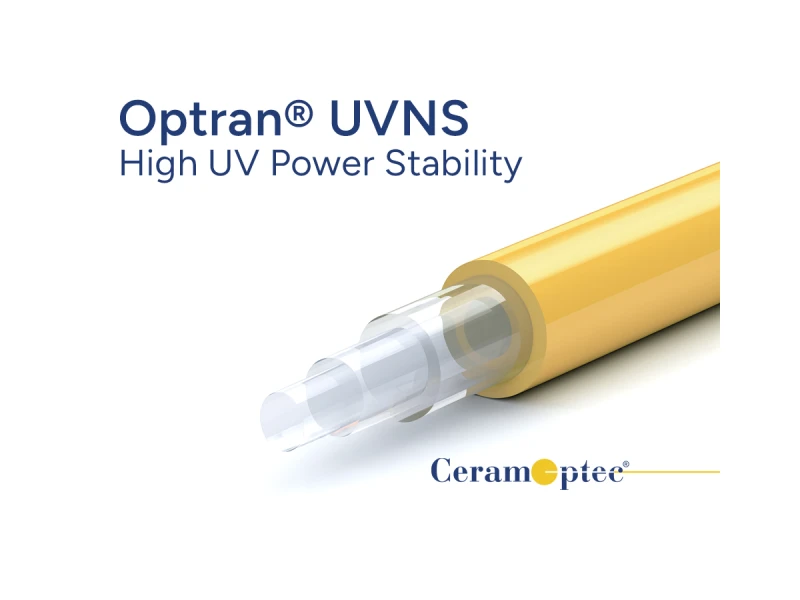
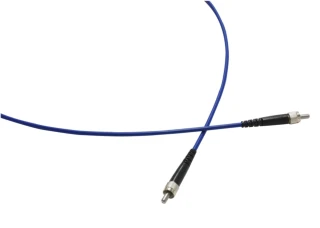
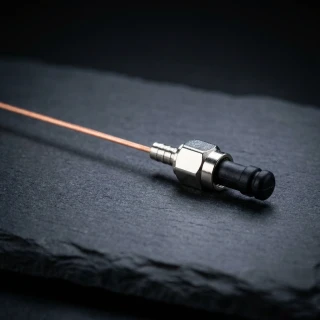
Optran® UVNS optical fibers are multimode fibers with a silica core and fluorine-doped cladding, designed for light transmission in the 190–1200 nm spectral range. These fibers are optimized for use in UV applications with increased resistance to solarization compared to standard UV fiber types.
While the initial attenuation characteristics of Optran® UVNS and Optran® UV fibers are comparable, differences in preform manufacturing result in improved performance under higher UV power levels or prolonged UV exposure.
The fiber design provides defined numerical aperture values and stable light guidance across the UV, visible, and near-infrared spectral range. Optran® UVNS fibers are available in a range of core diameters and configurations for integration into optical systems.
These fibers are used in applications where UV stability under higher radiation exposure is required, while maintaining compatibility with broadband transmission requirements.
Optran® UVNS – Non-Solarizing UV Fiber (190–1200 nm)
Specifications
| Core Diameter: | Not Specified |
|---|---|
| Wavelength Range: | 190 – 1200 nm |
| Cable Length: | Not Specified |
| Fiber Core Material: | Silica |
| Numerical Aperture (NA): | 0.12 ± 0.02 | 0.22 ± 0.02 | 0.28 ± 0.02 or customized |
| Operating Temperature: | -190 to +350°C |
| Core Diameter: | 50 to 3000 μm |
| Standard Core / Cladding Ratios: | 1 : 1.04 | 1 : 1.06 | 1 : 1.1 | 1 : 1.15 | 1 : 1.2 | 1 : 1.25 | 1 : 1.4 or customized |
Got questions about specs? Use the inquiry form to ask.
 Download Data Sheet

Features
- Numerical Aperture (NA):
- 0.12 ± 0.02
- 0.22 ± 0.02
- 0.28 ± 0.02
- or customized options available
- Core Diameter: 50 to 3000 μm to meet specific needs.
-
OH Content: Optran® UVNS: High (> 700 ppm)
- Standard Core/Cladding Ratios:
- 1:1.04
- 1:1.06
- 1:1.1
- 1:1.15
- 1:1.2
- 1:1.25
- 1:1.4
- or customized ratios
- Standard Prooftest:
- 100 kpsi (nylon, ETFE, acrylate jacket)
- 70 kpsi (polyimide jacket)
- Minimum Bending Radius:
- 50 × cladding diameter (short-term mechanical stress)
- 150 × core diameter (during use with high laser power)
- Jacket Options:
- Polyimide: -190 to +350°C
- ETFE: -40 to +150°C
- Nylon: -40 to +100°C
- Acrylate: -40 to +85°C
Applications
- Spectroscopy
- Medical Diagnostics
- Medical Technology
- Laser Delivery Systems
Frequently Asked Questions
What does “UVNS” mean?
How does Optran® UVNS differ from standard UV fibers?
Does Optran® UVNS eliminate solarization effects completely?
How does Optran® UVNS differ from Optran® UVNSS?
Got more questions? Use the RFQ form to ask the supplier directly.
Similar Products
Need pricing for this product? Send a quick inquiry
Your inquiry has been received.
Create an account by adding a password
Why create an account?
- Auto-complete inquiry forms
- View and manage all your past messages
- Save products to your favorites
- Close your account anytime — no hassle