
Description
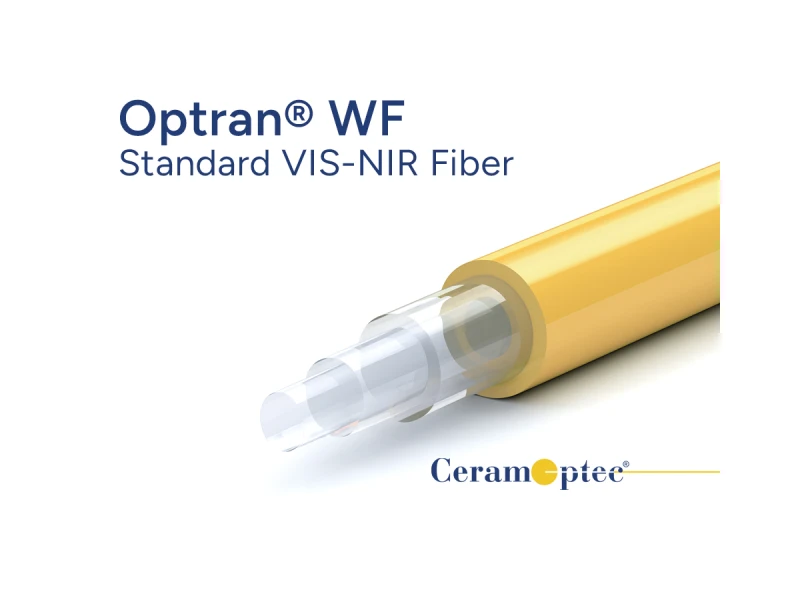
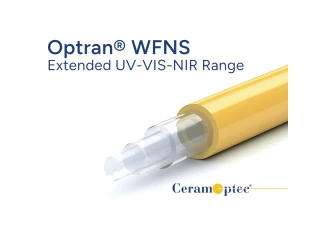
Optran® WF fibers are designed for light transmission in the NIR spectral rangeand are commonly used in NIR Laser Applicarions. Optran® WFNS extends theusable spectral range down to 300 nm, enabling applications that requiretransmission from the UV to the near-infrared.
Optran® WF fibers are low-OH fibers with a hydroxyl content typically below 1 ppm, with lower levels available upon request. They are used in applications focusing on the visible and near-infrared wavelength range and represent a standard fiber type for VIS/NIR transmission within the specified spectral range.
The fibers are available with numerical apertures ranging from approximately 0.12 ± 0.02 to 0.28 ± 0.02 and can be configured with different buffer and jacket materials including silicone, hard polymer, polyimide, ETFE, nylon, and acrylate.
Standard proof test levels include up to 100 kpsi (nylon, ETFE, acrylate) and 70 kpsi (polyimide). The fibers can be used in spectroscopy, analytical instrumentation, optical sensing, and measurement systems operating in the VIS/NIR wavelength range.
Optran® WF – Low-OH Silica Fibers for VIS-NIR (700–2400 nm)
Specifications
| Core Diameter: | Not Specified |
|---|---|
| Wavelength Range: | 700 – 2400 nm |
| Cable Length: | Not Specified |
| Fiber Core Material: | Silica |
| Numerical Aperture (NA): | 0.12 ± 0.02 | 0.22 ± 0.02 | 0.28 ± 0.02 or customized |
| Operating Temperature: | -190 to +350°C |
| Core Diameter: | 30 to 3000 μm |
| Standard Core / Cladding Ratios: | 1 : 1.04 | 1 : 1.06 | 1 : 1.1 | 1 : 1.15 | 1 : 1.2 | 1 : 1.25 | 1 : 1.4 or customized |
| OH Content: | low (< 1 ppm) |
| OH Contents < 0.25 Ppm: | available upon request |
Got questions about specs? Use the inquiry form to ask.
 Download Data Sheet

Features
- Numerical Aperture (NA):
- 0.12 ± 0.02
- 0.22 ± 0.02
- 0.28 ± 0.02
- or customized to meet specific needs.
- High Operating Temperature: Operates efficiently from -190 to +350°C.
- Variety of Core Diameters: Available in sizes ranging from 30 to 3000 μm to suit diverse applications.
- Standard Core/Cladding Ratios:
- 1:1.04
- 1:1.06
- 1:1.1
- 1:1.15
- 1:1.2
- 1:1.25
- 1:1.4
- or customize as needed.
- Low OH Content: Optran® WF fibers have low OH content (< 1 ppm), with options for even lower OH content (< 0.25 ppm) available upon request.
- Prooftest Standards:
- 100 kpsi (Nylon, ETFE, Acrylate)
- 70 kpsi (Polyimide)
- Minimum Bending Radius:
- 50 × cladding diameter (for short-term mechanical stress)
- 50 × core diameter (for high laser power use)
- Durable Jacket Options: Polyimide (-190 to +350°C), ETFE (-40 to +150°C), Nylon (-40 to +100°C), and Acrylate (-40 to +85°C).
- Fluorine-Doped Silica Cladding: Ensures high-quality performance and durability
- Tailored to your specific needs
Applications
-
Spectroscopy
-
Analytical instrumentation
- Medical Diagnostics
-
Optical sensing
-
Measurement systems
-
VIS/NIR light transmission
- Laser Delivery Systems
- Low Power astronomy Applications
Frequently Asked Questions
How does Optran® WF differ from Optran® WFNS?
What does “low-OH” mean in the context of Optran® WF?
When should Optran® WF be selected?
Is Optran® WF suitable for UV applications?
Got more questions? Use the inquiry form to ask the supplier directly.
Similar Products
Your inquiry has been received.
Create an account by adding a password
Why create an account?
- Auto-complete inquiry forms
- View and manage all your past messages
- Save products to your favorites
- Close your account anytime — no hassle