
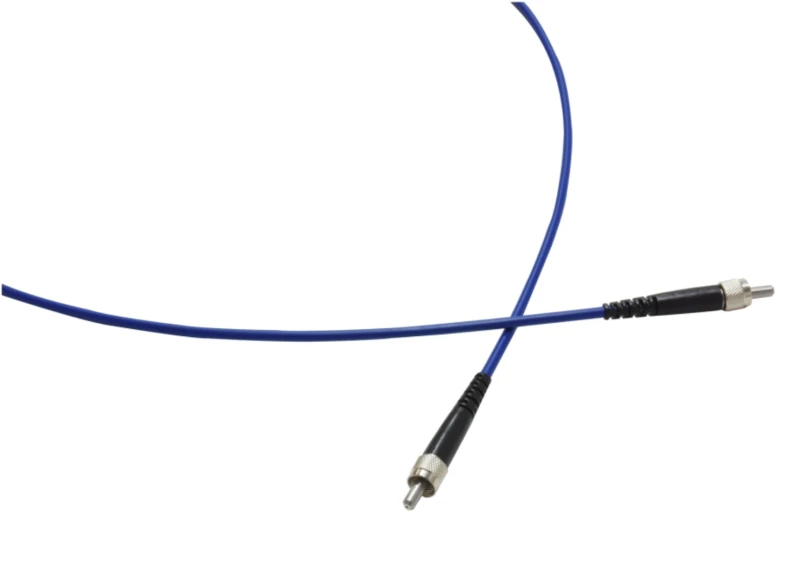
Description
The Optical Fiber Series includes high-performance multimode optical fibers designed for laser delivery, spectroscopy, sensing, biomedical instrumentation, and industrial photonics applications requiring reliable light transmission across UV, visible, and near-infrared wavelengths.
Available in multiple core diameters, numerical apertures, and coating configurations, these multimode fibers support efficient optical coupling, high-power laser transmission, and broadband light delivery for scientific and industrial systems. The fibers are suitable for integration into spectroscopy platforms, laser processing equipment, medical devices, optical sensors, machine vision systems, and analytical instrumentation.
Engineered for low-loss optical transmission and flexible system integration, the multimode optical fiber series supports demanding applications ranging from precision measurement and semiconductor inspection to laser machining and biomedical imaging.
What Is the Difference Between Multimode and Single-Mode Optical Fibers?
Multimode optical fibers have larger core diameters than single-mode fibers, allowing multiple propagation modes of light to travel through the fiber simultaneously. This makes multimode fibers easier to couple with light sources such as LEDs, broadband lamps, and many industrial lasers.
Compared to single-mode fibers, multimode fibers are typically used for shorter transmission distances but provide advantages in alignment tolerance, light collection efficiency, and high-power optical delivery. They are widely used in spectroscopy, sensing, biomedical systems, and industrial laser applications.
High-Performance Multimode Optical Fibers for Visible, UV, and NIR Transmission
Specifications
| Core Diameter: | 600 um |
|---|---|
| Wavelength Range: | 200 – 2200 nm |
| Cable Length: | 1 m |
| Fiber Core Material: | Silica |
| UV-VIS Waveband Optical Fibers: | 200 - 1100 nm |
| UV-VIS Short Optical Fibers: | 200 - 1100 nm |
| VIS-IR Waveband Optical Fibers: | 400 - 2200 nm |
| VIS-IR Short Optical Fibers: | 400 - 2200 nm |
| Customized Y-type, Multicore, And Dip Probe Fibers: | Various ranges |
| Core Diameter Options: | Varies by model (e.g., 400 μm, 600 μm, 1000 μm) |
| Cladding Diameters: | Varies by model (e.g., 630 μm, 660 μm, 1220 μm) |
| Core Material: | Fused Silica |
| Numerical Aperature: | Varies by model (e.g., 0.22, 0.37) |
| Connector Type: | SMA905 |
| Fiber Configuration Options: | Single fiber, Y-type fiber, Multicore fiber, Dip probe fiber |
| Jacket Material: | Varies by model (e.g., stainless steel, PVC) |
Got questions about specs? Use the inquiry form to ask.
 Download Data Sheet

Features
- High speed 1024-pixel CMOS sensor
- High transmission in UV-VIS (200–1100 nm) and VIS-IR (400–2200 nm) ranges
- Fused silica core for superior optical performance
- Multimode step-index design
- SMA-905 connectors for universal compatibility
- Multiple assembly lengths (standard: 1 m; short: 25.4 mm, 40 mm, 0.3 m, 2 m, etc.)
- Options for high or low OH ion concentration
- Numerical aperture options: 0.22 or 0.37
- Robust mechanical and bending properties
- Stainless steel or PVC jacket options
- Custom configurations available
Applications
- Spectroscopy and Spectral Analysis
Ideal for UV-VIS and VIS-IR spectroscopy in laboratory, industrial, and field environments. Compatible with Evolve and other SMA-905 spectrometers for precise spectral measurements across 200–2200 nm. - Process Monitoring and Quality Control
Used in real-time process monitoring in pharmaceuticals, food & beverage, petrochemicals, and semiconductor manufacturing for inline and at-line spectral analysis. - Environmental Sensing
Enables detection and quantification of pollutants, water quality parameters, and atmospheric gases using portable or fixed spectroscopic systems. - Biomedical and Life Sciences
Supports non-invasive diagnostics, tissue analysis, fluorescence, and absorbance measurements in medical research and clinical laboratories. - Material Identification and Characterization
Facilitates rapid identification of raw materials, polymers, and composites using reflectance, transmission, or absorbance spectroscopy. - Optical Fiber Sensing
Suitable for distributed temperature, strain, and pressure sensing in civil engineering, aerospace, and energy sectors. - Laser Delivery and Coupling
Efficiently transmits laser light for alignment, calibration, and illumination in scientific and industrial setups. - Fluorescence and Raman Spectroscopy
Optimized for high-sensitivity fluorescence and Raman signal collection in chemical analysis, forensics, and pharmaceutical applications. - Remote and In Situ Measurements
Enables remote sampling in hazardous, confined, or hard-to-reach environments using custom lengths and robust jacketing options. - OEM Integration and Custom Instrumentation
Easily integrated into custom analytical instruments, process analyzers, and optical benches due to SMA-905 compatibility and customizable configurations. - Solar and Photovoltaic Testing
Used for spectral response and efficiency measurements of solar cells and photovoltaic modules. - Colorimetry and Light Source Characterization
Measures color, intensity, and spectral output of LEDs, lamps, and other light sources for R&D and quality assurance. - Fiber Optic Probes and Dip Probes
Supports immersion and contact measurements in liquids, powders, and solids with Y-type, multicore, and dip probe fiber options. - Educational and Research Laboratories
Provides a versatile platform for teaching and research in optics, photonics, and analytical chemistry. - Telecommunications and Data Transmission Testing
Useful for optical signal routing, coupling, and loss measurements in fiber optic communication systems.
Frequently Asked Questions
What wavelength ranges do the Optical Fiber Series cover?
What are the core diameter options available for these optical fibers?
What types of connectors are used with the Optical Fiber Series?
What are the jacket material options for these fibers?
Can the Optical Fiber Series be customized?
What is the numerical aperture (NA) range for these fibers?
What is the transmission performance of the Optical Fiber Series?
Got more questions? Use the inquiry form to ask the supplier directly.
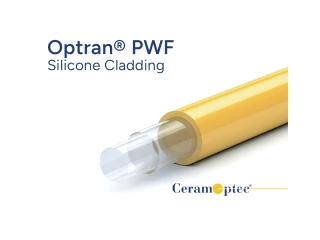
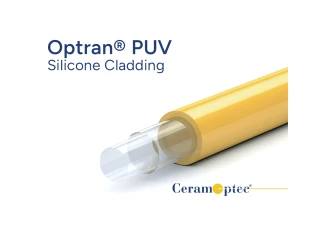
Similar Products
Your inquiry has been received.
Create an account by adding a password
Why create an account?
- Auto-complete inquiry forms
- View and manage all your past messages
- Save products to your favorites
- Close your account anytime — no hassle