


Description
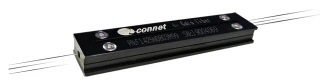
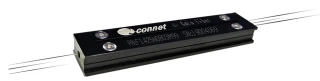
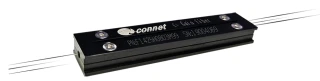
The FBG Array from DK Photonics is a high-performance fiber optic sensing solution featuring multiple Bragg gratings inscribed along a single optical fiber. Designed for long-distance, multi-point monitoring applications, this array eliminates the need for fiber splicing, significantly enhancing system reliability and simplifying installation.
With customizable grating characteristics and spacing, the FBG Array offers flexibility for diverse sensing applications across industries. Each grating can be tailored for reflectivity, bandwidth, and length, with minimum spacing down to 10 mm and high spacing accuracy of ≤1 mm. Options for recoating materials, fiber type, and terminations (including FC/APC, FC/UPC, or E2000) allow seamless integration into a wide range of setups.
Engineered for high stability, the FBG Array operates across a broad temperature range of -40°C to +120°C, making it suitable for harsh environments. Whether used in aerospace engineering, structural health monitoring, or power grid strain analysis, this array ensures dependable, real-time sensing performance.
Custom Fiber Bragg Grating FBG Array for Distributed Sensing Monitoring
Specifications
| Center Wavelength Range: | 1510 – 1590 nm |
|---|---|
| FBG Length: | 15 mm, 10 mm, 5 mm, 3 mm |
| Reflectivity: | >90%, 30 - 99%, 30 - 70% |
| Wavelength Tolerance: | ±0.5 nm |
| Bandwidth (@ –3 DB): | ≤0.7 (3/5 mm), ≤0.3 (10/15 mm) |
| SLSR (Side Lobe Suppression): | ≥15 dB |
| Minimum Grating Spacing: | 10 mm |
| Spacing Accuracy: | ≤1 mm |
| Recoating Material: | Acrylate or Polyimide |
| Proof Test Strength: | ≥100 Kpsi |
| Fiber Type: | SMF-28e or Polyimide Fiber (OFS BF04446) |
| Fiber Termination: | Bare Fiber, FC/UPC, FC/APC, E2000 |
| Pigtail Length: | Customized |
| Operating Temperature: | -40 to +120 °C |
Got questions about specs? Use the inquiry form to ask.
 Download Data Sheet

Features
- No Splicing Points: Ensures superior signal integrity and minimizes insertion loss for enhanced system performance.
- Customizable Grating Characteristics & Spacing: Tailor center wavelength, reflectivity, grating length, and spacing to meet specific application requirements.
- High Stability & Reliability: Engineered for long-term operation in demanding environments, offering consistent performance over time.
- Long Fiber Distance Capability: Supports distributed and multi-point sensing over extended fiber lengths, ideal for large-scale monitoring.
- Wide Wavelength Range: Available center wavelengths from 1510 nm to 1590 nm with tight wavelength tolerance (±0.5 nm).
- High Reflectivity Options: Choose from ≥70%, ≥75%, or ≥90% reflectivity for optimal signal strength and application flexibility.
- Narrow Bandwidth: Bandwidth as low as ≤0.3 nm at –3dB, enabling precise wavelength discrimination and high-resolution sensing.
- Excellent Side Lobe Suppression Ratio (SLSR): SLSR ≥15 dB for reduced cross-talk and improved signal clarity.
- Accurate Grating Spacing: Minimum spacing of 10 mm with spacing accuracy ≤1 mm for precise sensor placement.
- Robust Fiber Options: Available with SMF-28e or polyimide fiber (OFS BF04446) for compatibility with a wide range of environments, including high temperature and harsh conditions.
- Flexible Recoating Materials: Choose between acrylate or polyimide recoating for added protection and durability.
- High Mechanical Strength: Proof tested to ≥100 Kpsi for reliable deployment in field applications.
- Versatile Termination Options: Supplied as bare fiber or with FC/UPC, FC/APC, or E2000 connectors for easy integration.
- Customizable Pigtail Length: Adaptable to installation requirements for seamless system integration.
- Wide Operating Temperature Range: Reliable operation from -40°C to +120°C, suitable for extreme environments.
- Ideal for Distributed Sensing: Perfect for structural health monitoring, power transmission load monitoring, aerospace engineering, and wavelength reference applications.
Applications
- Distributed Sensing Measurement: Ideal for structural health monitoring in civil engineering, bridges, tunnels, dams, and buildings by enabling multi-point strain and temperature sensing along a single fiber.
- Wavelength Reference: Used as a stable wavelength reference in optical communication systems, ensuring precise calibration and performance of wavelength division multiplexing (WDM) networks.
- Aerospace Engineering: Suitable for real-time monitoring of strain, temperature, and vibration in aircraft structures, spacecraft, and satellites, enhancing safety and reliability.
- Load Monitoring for Power Transmission: Enables accurate load and temperature monitoring in power lines, substations, and transformers, supporting predictive maintenance and grid reliability.
- Oil & Gas Pipeline Monitoring: Provides distributed sensing for detecting leaks, temperature changes, and structural integrity in pipelines, ensuring environmental safety and operational efficiency.
- Railway and Transportation Infrastructure: Used for continuous monitoring of rail tracks, tunnels, and bridges to detect deformation, cracks, and temperature variations, improving maintenance and safety.
- Wind Turbine and Renewable Energy Monitoring: Monitors blade strain, tower integrity, and temperature in wind turbines and other renewable energy structures for optimized performance and reduced downtime.
- Medical Applications: Integrated into smart medical devices and catheters for real-time temperature and pressure monitoring during minimally invasive procedures.
- Industrial Process Control: Facilitates multi-point temperature and strain monitoring in manufacturing processes, chemical plants, and refineries for enhanced process control and safety.
- Geotechnical and Seismic Monitoring: Used for early detection of landslides, earthquakes, and ground movement by embedding FBG arrays in soil, rock, and concrete structures.
- Telecommunications: Employed in optical networks for channel monitoring, signal routing, and as filters in dense wavelength division multiplexing (DWDM) systems.
- Research and Development: Provides a versatile platform for experimental setups in photonics, materials science, and sensor technology development.
Frequently Asked Questions
What is an FBG Array and how does it work?
What are the main applications of the DK Photonics FBG Array?
What are the key features of the DK Photonics FBG Array?
What customization options are available for the FBG Array?
What are the technical specifications of the DK Photonics FBG Array?
How does the FBG Array improve system stability and reliability?
What fiber termination and recoat options are available for the FBG Array?
Got more questions? Use the inquiry form to ask the supplier directly.
Similar Products


Your inquiry has been received.
Create an account by adding a password
Why create an account?
- Auto-complete inquiry forms
- View and manage all your past messages
- Save products to your favorites
- Close your account anytime — no hassle