
Description
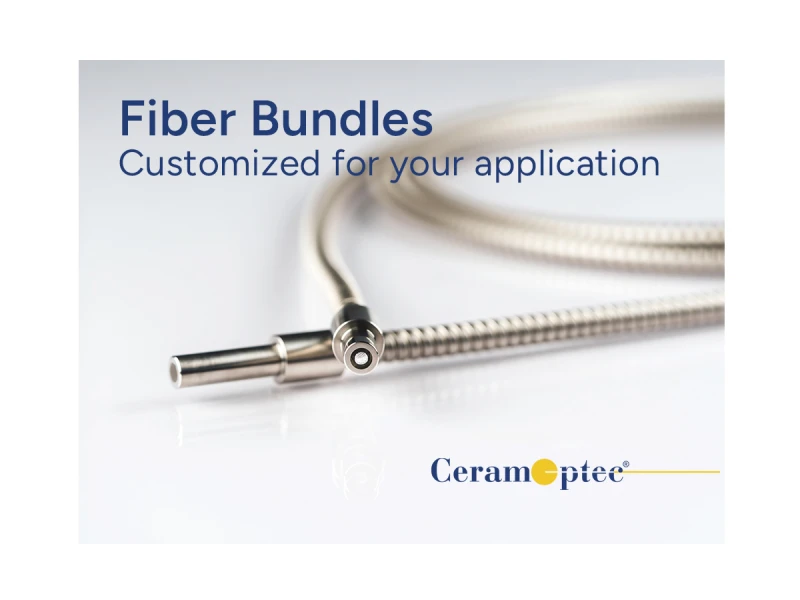
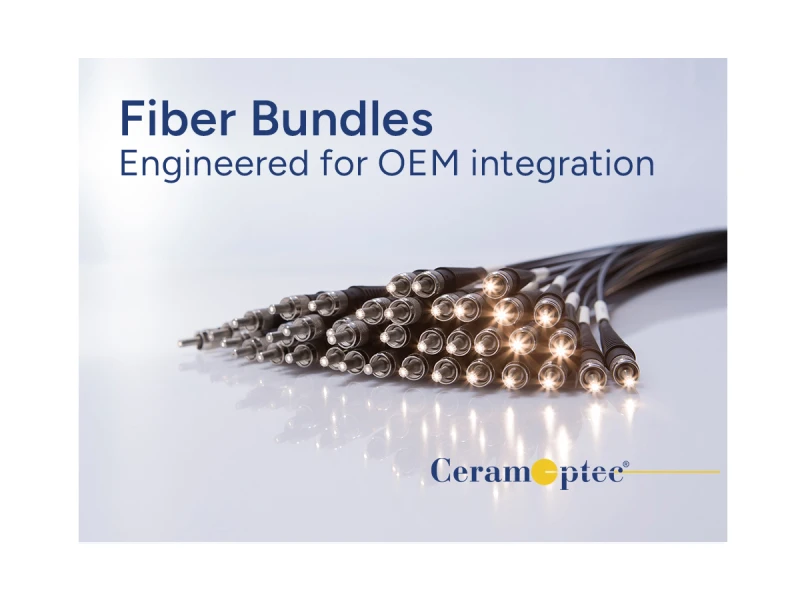
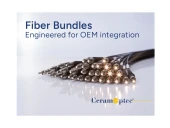
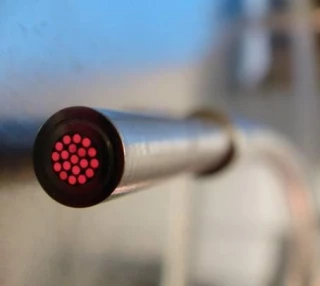
Custom fiber bundles based on Optran® optical fibers are designed for applications requiring the transmission, collection or distribution of light across multiple optical channels. Bundles consist of multiple optical fibers arranged within a common structure and are configured according to application-specific optical, mechanical and geometrical requirements.
Fiber bundles can be manufactured using all Optran® fiber types, including UV, VIS-NIR and broadband fibers with different OH levels and numerical apertures. The achievable spectral range and transmission characteristics depend on the selected fiber type.
Detailed specifications, including attenuation behavior and material properties, are available in the corresponding Optran® fiber listings (e.g. UV, UVNS, UVNSS, WF, WFNS, HUV, HWF, PUV, PWF, WFGe).
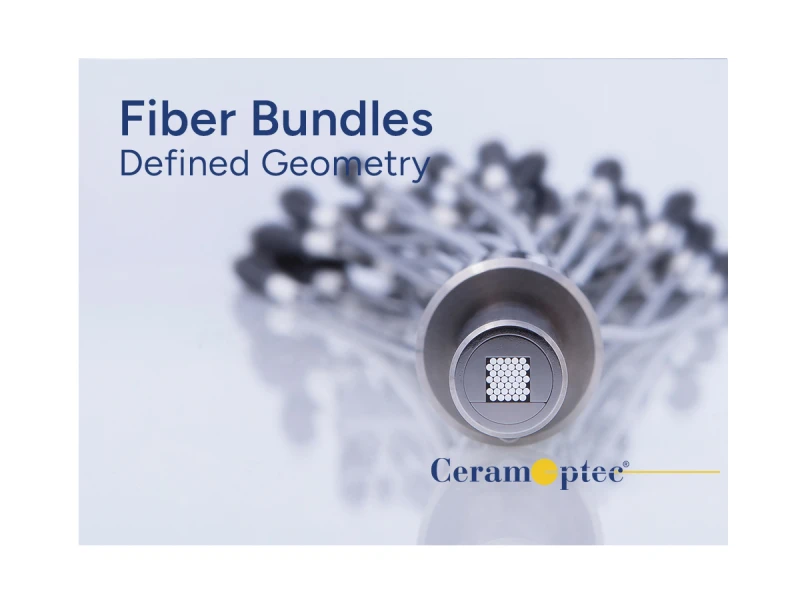
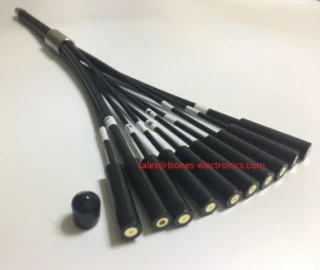
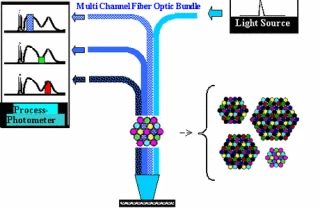
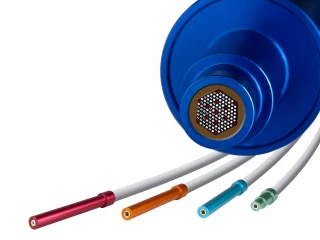
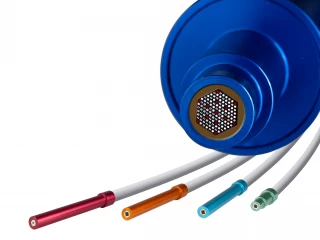
Bundle configurations can be adapted to different system architectures, including compact bundle geometries for light transmission, spatially resolved light collection or distribution into multiple individual fiber channels. Depending on system requirements, assemblies can be realized as structured bundles, multi-leg configurations or with individual fiber breakout for separate routing of individual fibers.
A wide range of customization options is available, including number of fibers, fiber arrangement, bundle geometry, cable length and connectorization. Protective tubing and jacketing materials such as stainless steel, PTFE or polymer coatings can be selected based on environmental and mechanical requirements.
Fiber end preparation can be adapted to the application, including polishing and application-specific end-face geometries for optimized optical coupling and system integration.
Optran® fiber bundles are developed and manufactured with control over the complete process chain, from preform manufacturing and fiber drawing to final assembly. This enables alignment of fiber design and assembly parameters with application requirements, ensuring consistent optical performance and reproducibility.
Fiber bundles can be configured for applications involving elevated optical intensities. Design parameters such as fiber type, core diameter and bundle configuration are selected based on system-specific optical conditions.
Typical applications include spectroscopy systems, analytical instrumentation, medical and life science devices, semiconductor processing and industrial sensing systems.
Custom Fiber Bundles - Optran® Multi-Fiber Optical Assemblies
Specifications
| Wavelength Range: | 0.19 – 2.4 um |
|---|
Got questions about specs? Use the inquiry form to ask.
 Download Data Sheet

Features
-
Custom multi-fiber bundle assemblies based on Optran® optical fibers
-
Compatible with all Optran® fiber types (UV, VIS-NIR, broadband, high-NA)
-
Spectral performance defined by selected fiber type (typ. ~190–2400 nm)
-
Configurable number of fibers and bundle geometries
-
Bundle configurations for transmission, collection or light distributionOptions for individual fiber breakout or multi-leg assemblies
-
Core diameters and numerical apertures selectable per fiber type
-
Connectorization options (SMA, FC, ST or application-specific interfaces)
-
Custom protective tubing (e.g. stainless steel, PTFE, polymer coatings)
-
Application-specific fiber end preparation and polishing
-
Design adaptable to mechanical and environmental requirements
-
Configurable for elevated optical intensity applications
-
Step-index fiber designs with defined transmission characteristics
Applications
- Laser Power Delivery in Industrial Manufacturing – High-power fiber optic cables for cutting, welding, drilling, ablation, surface treatment, cladding, and additive manufacturing in automotive, aerospace, shipbuilding, microelectronics, and metal fabrication industries.
- UV Curing and Photolithography – UV-transmitting fibers (e.g. Optran® UV, UVNS, UVNSS, UVWFS) for broadband UV and DUV delivery in photoresist exposure, PCB manufacturing, semiconductor lithography, 3D printing, and precision adhesive curing.
- Spectroscopy and Metrology – Low-OH and high-OH silica fibers for transmission, reflection, and fluorescence spectroscopy in the UV–VIS–NIR range, including process spectroscopy, chemical analysis, color measurement, Raman spectroscopy, and metrology systems.
- Medical Diagnostics and Therapeutics – Customized medical fibers, probes, and bundles for endoscopy, laparoscopy, dentistry, dermatology, photodynamic therapy (PDT), laser surgery, lithotripsy, tissue ablation, and minimally invasive imaging.
- Biomedical Imaging and Microscopy – High-NA, low-attenuation fibers and fiber bundles for confocal microscopy, fluorescence imaging, optical coherence tomography (OCT), endomicroscopy, and in vivo diagnostics.
- Process Monitoring and Industrial Sensing – Robust silica fibers and cables for temperature, strain, pressure, and position sensing in harsh industrial environments, supporting distributed temperature sensing (DTS), Bragg grating sensors, and real-time process control.
- Harsh Environment and High-Temperature Applications – Metal coated silica fibers and specialized jackets for high-temperature measurements, vacuum environments, furnaces, turbines, reactors, and other chemically or mechanically aggressive settings.
- Machine Vision and Illumination – Fiber bundles and fused-end bundles for bright, uniform illumination in inspection systems, quality control, line-scan cameras, robotics vision, and automated optical inspection (AOI) in production lines.
- Laser Delivery for Research Laboratories – All-silica and GeO₂-doped fibers (e.g. Optran® WF, WFGE) for flexible beam delivery from UV to NIR in physics, chemistry, and life science labs for spectroscopy, pump–probe experiments, laser cooling, trapping, and nonlinear optics.
- Telecommunications and Data Transmission (Short-Haul) – Specialty multi-core and non-circular core fibers for short-distance, high-bandwidth data links, signal routing, and research in mode-division or space-division multiplexing.
- Laser Pumping and Fiber Laser Systems – High-NA, large-core fibers for diode laser pumping, delivery of pump light to solid-state or fiber lasers, and integration into OEM laser modules and amplifier systems.
- Sensor Probes and Fiber-Optic Instruments – Fiber probes for pH, oxygen, chemical concentration, and fluorescence-based sensors in biotech, environmental monitoring, pharmaceutical processing, and food & beverage industries.
- Non-Destructive Testing (NDT) and Structural Health Monitoring – Fiber-based sensing and illumination in ultrasonic testing, crack detection, composite inspection, and long-term structural monitoring of bridges, tunnels, pipelines, and wind turbines.
- Safety and Security Systems – Safety Fiber and specialty cables for perimeter security, intrusion detection, fire and flame monitoring, hot-spot detection in tunnels and conveyor systems, and secure signal transmission immune to electromagnetic interference.
- Aerospace and Defense – Radiation-tolerant and robust fibers for avionics, guidance systems, directed energy beam delivery, IR countermeasures, target designation, and fiber-based gyroscopes in aircraft, satellites, and defense platforms.
- Robotics and Automation – Flexible, rugged fiber cables and bundles for laser processing heads, robot-mounted sensors, vision systems, and precise illumination in automated assembly and material handling systems.
- Scientific & Analytical Instrumentation – Fiber assemblies integrated into spectrometers, fluorimeters, monochromators, and OEM analytical devices for environmental analysis, material characterization, and quality control.
- Solar, Lighting, and Illumination Systems – Light guides and fiber bundles for daylighting, decorative and architectural lighting, medical light sources, and coupling high-intensity lamps or LEDs to remote illumination points.
Frequently Asked Questions
What types of Optran® industrial optical fibers are available and how do they differ?
How do I choose between low‑OH and high‑OH all‑silica Optran® fibers for my wavelength range?
What application advantages do Optran® fibers offer compared to standard multimode silica fibers?
What jacket and coating options are available for Optran® silica fibers, and how do I select the right one?
Can Optran® fibers be supplied as complete cables, bundles, or probes ready for integration?
What manufacturing technologies are used for Optran® all‑silica preforms, and why is this important?
In which industries and applications are Optran® industrial fibers and assemblies typically used?
Got more questions? Use the inquiry form to ask the supplier directly.
Similar Products
Your inquiry has been received.
Create an account by adding a password
Why create an account?
- Auto-complete inquiry forms
- View and manage all your past messages
- Save products to your favorites
- Close your account anytime — no hassle