
Description
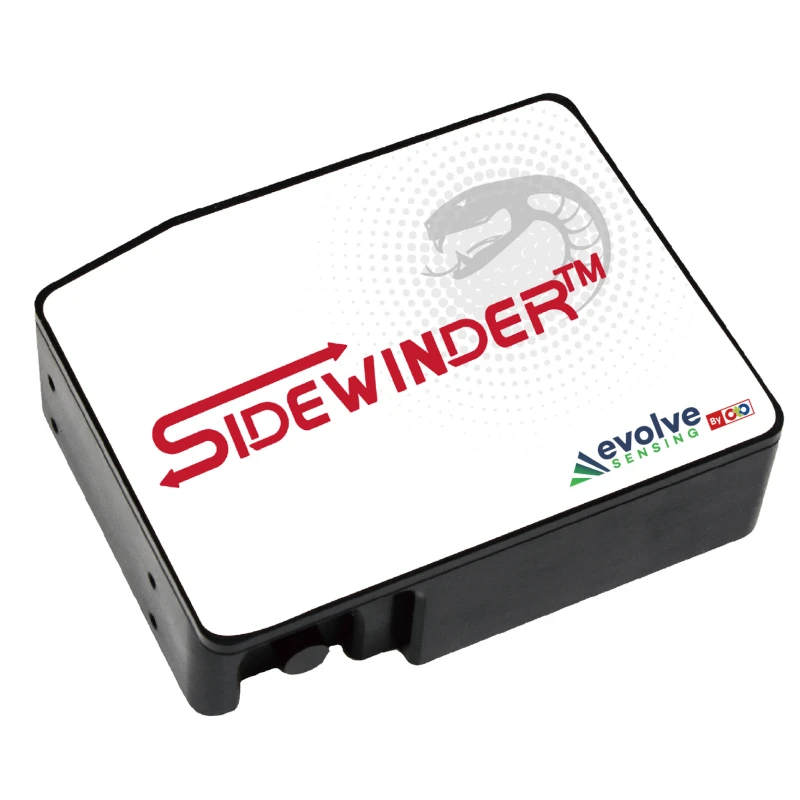
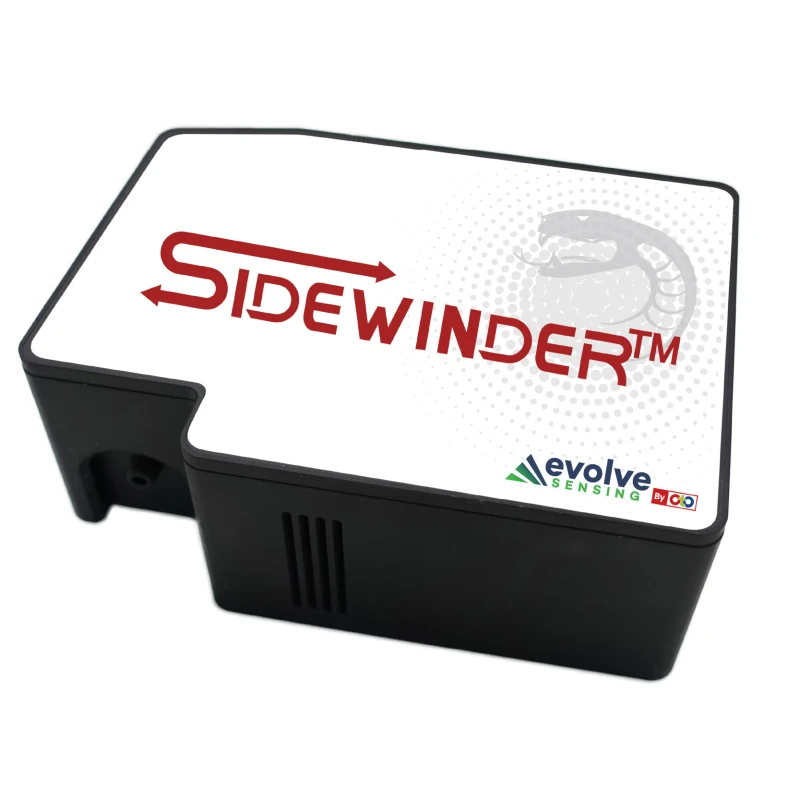
The SideWinderNIR Spectrometer from Evolve Sensing is a compact, high-performance near‑infrared (NIR) spectrometer engineered for demanding long‑wavelength applications in the 900–2500 nm range. Built on a robust Czerny–Turner optical platform and using high‑sensitivity InGaAs linear array sensors, it delivers laboratory‑grade spectral performance in a rugged housing that is well suited for industrial and OEM environments. With model‑dependent wavelength configurations and multiple grating options, the SideWinder can be tailored to precise measurement tasks from short‑wave NIR to extended long‑wave NIR, offering a flexible alternative to bulkier benchtop analyzers.
The spectrometer is available in non‑cooled and thermoelectrically cooled (TEC) variants, including 1‑stage and 2‑stage TEC configurations. This allows users to optimize noise performance, dark stability, and measurement precision for their specific operating conditions. Uncooled models offer a cost‑effective solution for moderate ambient environments, while the 1‑stage and 2‑stage TEC versions are ideal for low‑signal or thermally challenging applications where long‑term baseline stability and low dark noise are critical. Across the SideWinder family, pixel formats from 128 up to 512 pixels enable a balance between spectral resolution and signal‑to‑noise ratio over wide spectral spans.
Designed to bridge the gap between research‑grade spectroscopy and field‑ready instrumentation, the SideWinderNIR demonstrates optical resolution on the order of 2–22 nm (depending on slit and grating selection), supporting both high‑resolution measurements over a narrower band and broader coverage for wide‑range material identification. Signal‑to‑noise ratios up to 6000, dynamic range up to 13000, and low dark noise figures make it well suited for quantitative NIR spectroscopy, chemometric modeling, and process analytics. Typical thermal stability better than 0.1–0.2 nm/°C helps maintain peak positions and calibration integrity even under varying ambient conditions, reducing the need for frequent recalibration that is common with less stable designs.
The SideWinderNIR is optimized for applications such as NIR spectroscopy, optical metrology, and material characterization across a variety of sectors. In industrial and R&D settings, it supports film thickness measurement, coatings and polymer analysis, and differentiation of fabrics and textiles through their characteristic NIR signatures. In food, feed, and agricultural processes, the extended NIR coverage enables rapid, non‑destructive analysis of moisture, fat, protein, and other quality parameters directly on‑line or at‑line. Pharmaceutical and biochemical users can leverage its sensitivity and stability for raw material identification, blend uniformity checks, and process analytical technology (PAT) implementations. Environmental monitoring, soil characterization, and other sensing tasks also benefit from the wide wavelength range and stable baseline performance.
Compared with many compact NIR spectrometers in this class, which often restrict coverage to around 1700 or 2100 nm and may rely on less robust optical layouts, the SideWinder stands out for combining a full 900–2500 nm capability with a rugged Czerny–Turner bench and multiple cooled InGaAs configurations. This allows it to compete with larger laboratory instruments while maintaining a footprint suitable for OEM integration. Integration times from 100 µs up to 24 s (model dependent) offer flexibility for both high‑throughput measurements in bright conditions and long‑exposure acquisitions of weak signals. Low stray light levels (typically below 0.1–0.45%, depending on model) further enhance measurement fidelity when dealing with sharp spectral features or high dynamic range samples.
For systems integrators and OEMs, the SideWinderNIR is engineered to be a drop‑in spectral engine. USB 2.0 connectivity simplifies communication with embedded PCs and control electronics, while six programmable digital I/O lines allow synchronization with light sources, shutters, triggers, and other automation components. The compact mechanical envelope, with models starting around 110 × 86 × 32.4 mm and approximately 0.9 kg in weight, enables straightforward integration into benchtop analyzers, inline gauges, portable instruments, and custom measurement heads. Combined with its strong thermal and mechanical robustness against vibration and environmental fluctuations, this makes the SideWinderNIR a practical choice for long‑term deployment in both laboratory and harsh industrial settings.
Whether the goal is to build a dedicated process analyzer, expand a laboratory NIR spectroscopy capability, or embed a reliable spectral module into a commercial product, the SideWinderNIR Spectrometer offers a mature, hig<
SideWinder NIR Series Spectrometer
Specifications
| Wavelength Range (reflectance): | 900 – 2500 nm |
|---|---|
| Resolution: | 2 nm |
| Dimensions: | 110 × 86 × 32.4 mm (SW5) / 130 × 96 × 58.3 mm (SW8/SW9) |
| Detector Type: | InGaAs linear array (128/256/512 px) |
| Cooling: | 1‑stage or 2‑stage TEC (model dependent) |
| Signal-to-Noise Ratio (SNR): | 2000–6000 (model dependent) |
| Thermal Stability: | < 0.1–0.2 nm / °C (model dependent) |
| A/D Resolution: | 16-bit |
| Integration / Scan Time Range: | 100 µs – 24 s (model dependent) |
| Minimum Scan Time: | 0.0001 s |
| Dynamic Range: | 6000–13 000 (model dependent) |
| Stray Light: | < 0.1–0.45 % (model dependent) |
| Interfaces: | USB 2.0 (480 Mbps), 6× GPIO, UART, PWM control |
| Connector Type: | SMA905 fiber |
| Power Requirements: | +5 V DC @ 300–480 mA (USB) (+1.3–2.2 A TEC) |
| Operating Temperature: | 0 °C – 50 °C |
| Storage Temperature: | –30 °C – 70 °C |
| Environmental Limits: | 0–90% RH, non‑condensing |
| A/D Converter Type: | 16‑bit ADC |
| Weight: | 0.9 kg |
Got questions about specs? Use the inquiry form to ask.
 Download Data Sheet

Features
- Wide NIR Spectral Coverage (900–2500 nm) – Model-dependent wavelength ranges from 900 nm to 2500 nm support long‑wave NIR applications including moisture, protein, fat, and polymer analysis in a single compact instrument.
- High-Performance InGaAs Linear Array Sensors – Uses high-sensitivity InGaAs detectors (128, 256, or 512 pixels) optimized for low noise and excellent responsivity in the 0.9–2.5 µm region, ideal for demanding analytical and OEM systems.
- Czerny–Turner Optical Design for Superior Stability – Rugged Czerny–Turner spectrograph architecture minimizes optical drift and ensures stable performance against temperature changes, vibration, and environmental stress, outperforming many compact grating-based modules.
- Flexible Cooling Options (Uncooled and TEC-Cooled) – Available with uncooled, 1‑stage TEC, or 2‑stage TEC InGaAs arrays to balance sensitivity, dark noise, and power consumption for laboratory, industrial, and portable OEM integration.
- High Signal-to-Noise Ratio up to 6000 – SNR up to 6000 (model and gain dependent) enables precise quantitative NIR spectroscopy, even for weak or highly scattering samples.
- Large Dynamic Range up to 13,000 – High and low gain modes with dynamic range up to 13,000 allow accurate detection of both strong and weak spectral features in a single scan, minimizing saturation and improving analytical robustness.
- Configurable Optical Resolution (≈2–22 nm) – Resolution is slit and grating dependent, enabling optimization between spectral resolution and signal throughput for specific process, lab, or OEM needs.
- Excellent Thermal Stability (<0.1–0.2 nm/°C) – Spectral drift is limited to less than 0.1–0.2 nm per °C (model dependent), critical for long-term unattended monitoring and precise wavelength calibration in industrial environments.
- Low Stray Light (<0.1–0.45%) – Carefully engineered optics and baffling deliver low stray light levels, improving baseline stability and accuracy in multicomponent analysis and chemometric models.
- Fast, Programmable Integration Times – Integration time range from 100 µs up to 24 s (or up to 200–300 ms for selected models) supports both rapid in-line measurements and high SNR laboratory acquisitions.
- High-Speed USB 2.0 Interface – Standard USB 2.0 connectivity provides straightforward integration into PCs, embedded controllers, and OEM electronics with reliable high-throughput data transfer.
- 6x Programmable Digital I/O Lines – Multiple user-configurable digital I/Os simplify system-level integration for triggering sources, synchronizing with external devices, and building closed-loop process control systems.
- Optimized Dark Noise Performance – Low dark noise values (as low as 5–11 counts avg., gain dependent) combined with TEC cooling on selected models enhance low-light performance and measurement repeatability.
- Multiple Grating and Model Configurations – A family of models (e.g., SW2520, SW2560, SW2570, SW2860, SW2870, SW2930, SW2960, SW2970) and multiple grating options tailor spectral range, resolution, and throughput to specific applications.
- Rugged, Compact Form Factor – Durable housing (approx. 110 × 86 × 32.4 mm or 130 × 96 × 57.65 mm, ~0.9 kg) designed for harsh industrial environments, OEM integration, and space-constrained systems.
- Industrial Operating Temperature Range – Designed for reliable operation from 0°C to +50°C, supporting real-world factory, field, and outdoor measurement scenarios.
- Ideal for Process and Quality Control – Suited for NIR spectroscopy, film thickness and coating inspection, raw material ID, process analytics, and at-line or in-line quality monitoring in food, pharma, polymer, textile, and chemical industries.
- Versatile Application Coverage – Supports food and feed analysis, pharmaceutical content uniformity, biochemical sensing, fabric and polymer classification, environmental and agricultural monitoring, and general optical metrology.
- OEM-Ready Design – Robust mechanical design, digital I/O, standard USB interface, and a broad model range make the SideWinder NIR a strong platform for OEM instruments, portable analyzers, and custom integrated solutions.
- Stable Long-Term Measurements – Combination of optical stability, thermal control, low stray light, and high dynamic range ensures consistent spectra over time, facilitating reliable chemometric calibration and reduced maintenance.
Applications
- Near-Infrared Spectroscopy & Optical Metrology
- High-precision NIR spectral analysis from 900–2500 nm for R&D and QA laboratories
- Characterization of optical components, coatings, filters, and fibers in the NIR
- Measurement of reflectance, transmittance, and absorbance of solids, liquids, and films
- Calibration and verification of NIR light sources, LEDs, and laser diodes in the SWIR band
- Film Thickness & Coating Inspection
- Inline and offline thin-film thickness measurement on glass, polymer, and metal substrates
- Monitoring of industrial coatings, paints, and adhesives via NIR spectral signatures
- Quality control of barrier layers, anti-reflective coatings, and multilayer laminates
- Roll-to-roll web inspection for uniformity and defect detection in coated films
- Materials Identification & Polymer Analysis
- Rapid identification of plastics, textiles, and composite materials by NIR fingerprinting
- Sorting and recycling of polymers (e.g., PE, PP, PET, PVC, PS) using inline NIR sensing
- Determination of polymer grade, filler content, and additives in manufacturing
- Analysis of fibers, yarns, and technical fabrics for composition and moisture content
- Food & Agricultural Product Analysis
- Non-destructive measurement of moisture, protein, fat, sugar, and starch in grains and foods
- Quality grading of cereals, oilseeds, coffee, cocoa, nuts, and forage
- Inline monitoring of milling, mixing, and drying processes in food production
- Assessment of fruit and vegetable ripeness, internal defects, and dry matter content
- Detection of foreign materials and contaminants in agricultural raw materials
- Pharmaceutical & Biochemical Analysis
- Raw material identification (RMID) and verification of APIs and excipients
- Content uniformity and blend homogeneity monitoring in solid dosage forms
- Process Analytical Technology (PAT) for granulation, drying, coating, and tableting
- Monitoring of solvent content, water activity, and residual moisture
- Bioprocess monitoring of key analytes (e.g., nutrients, metabolites, biomass) in fermentation and cell culture
- Environmental Monitoring & Remote Sensing
- Soil characterization (moisture, organic matter, carbon content) using field or laboratory NIR
- Monitoring of water quality parameters (e.g., dissolved organics, turbidity with appropriate sampling)
- Detection of hydrocarbons, oils, and industrial pollutants based on NIR absorption features
- Vegetation and crop health assessment via reflectance spectroscopy in the 900–2500 nm band
- Support for airborne or ground-based hyperspectral and multispectral systems as an OEM spectrometer core
- Process Control & Inline Quality Monitoring
- Real-time NIR process monitoring in chemical, petrochemical, and polymer plants
- Control of drying, curing, and polymerization based on in-situ spectral feedback
- On-line measurement of blend ratios, composition, and concentration in multicomponent streams
- Closed-loop control systems using NIR spectra for improved yield and reduced waste
- Integration into industrial inspection lines for pass/fail classification and sorting
- Industrial Sorting & Recycling
- Automated plastic and textile sorting by type and composition
- Separation of black and dark materials using extended-range InGaAs coverage to 2500 nm (model dependent)
- Identification of wood species, paper grades, and composite panels in recycling streams
- Metal, glass, and slag differentiation when combined with appropriate sampling optics
- OEM Integration & Embedded Systems
- Integration into handheld and portable NIR analyzers for field use
- Embedded spectroscopic modules for process machinery, industrial sensors, and smart instruments
- Use as the spectrometer engine in multi-channel or multi-point NIR measurement systems
- Customization for dedicated analyzers (e.g., moisture meters, fuel analyzers, grain analyzers)
- Machine vision and robotics platforms requiring NIR or SWIR spectral data for decision making
- Mining, Minerals & Geology
- Mineralogical analysis of ores and rocks via characteristic NIR/SWIR absorption features
- Core scanning and drill cuttings evaluation for exploration geology
- On-site grade control and sorting of ore based on composition
- Assessment of clays, carbonates, etc.
Frequently Asked Questions
What is the SideWinder NIR spectrometer and what wavelength range does it cover?
What are common applications of the SideWinder NIR spectrometer in industry and research?
What performance specifications should I consider when selecting a SideWinder model for my application?
What is the difference between uncooled and TEC‑cooled SideWinder InGaAs detectors, and when should I choose each?
How does the SideWinder NIR spectrometer connect to a system and is it suitable for OEM integration?
What resolution and grating options are available, and how do they affect my NIR measurements?
How stable is the SideWinder spectrometer with respect to temperature and environmental changes?
Got more questions? Use the inquiry form to ask the supplier directly.
Similar Products
Your inquiry has been received.
Create an account by adding a password
Why create an account?
- Auto-complete inquiry forms
- View and manage all your past messages
- Save products to your favorites
- Close your account anytime — no hassle