
Description
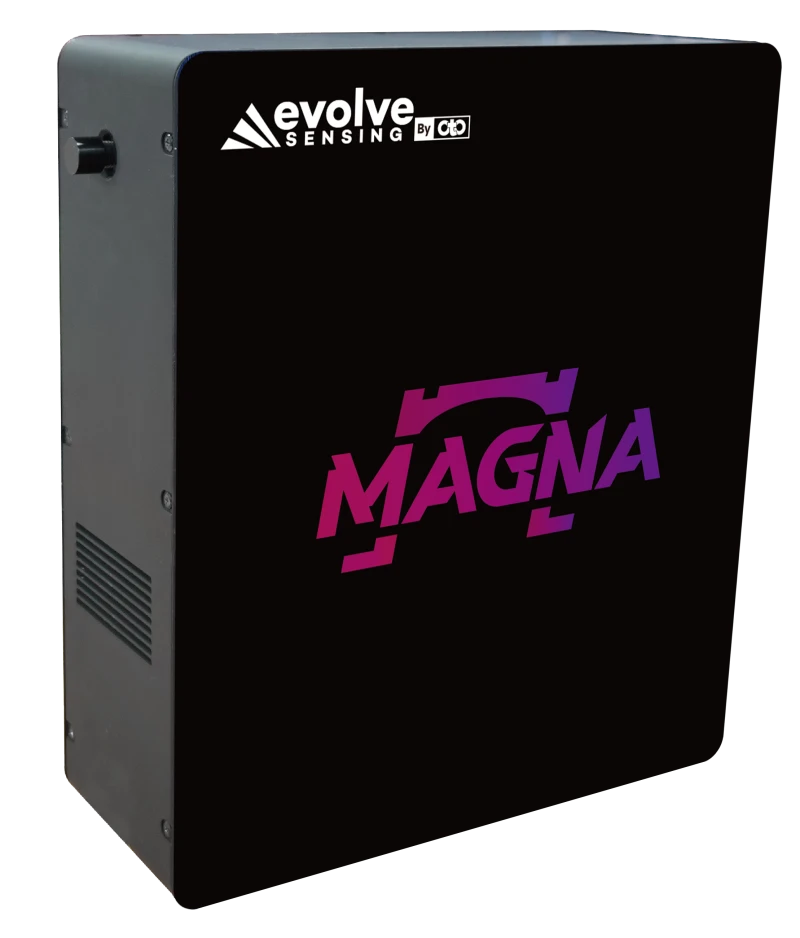
The Magna (MN) and Magna-NIR (MN-NIR) Spectrometers from Evolve Sensing are advanced, high-resolution instruments engineered for demanding spectroscopic applications across the visible and near-infrared (NIR) spectral ranges. Designed with a robust TRT-Czerny–Turner optical architecture and precision reflection gratings, these spectrometers deliver exceptional wavelength stability, ultra-low stray light, and reliable long-term performance. Their thermoelectrically cooled (TE-cooled) sensors—CCD for visible and InGaAs for NIR—ensure superior thermal management, resulting in high signal-to-noise ratios and consistent measurement accuracy even in challenging environments.
The Magna Series stands out for its modularity and adaptability, offering customizable wavelength ranges and configurations to suit a wide variety of research, industrial, and OEM integration needs. The VIS models (MN1060S / MN1110S) cover customizable ranges within 400–1000 nm, while the NIR models (MN2870S / MN6870ES) span 900–1700 nm. This flexibility makes the Magna Series ideal for applications such as chlorophyll fluorescence analysis, laser diode and VCSEL/LED characterization, and other precision optical measurements where both sensitivity and stability are critical.
Compact and rugged, the Magna spectrometers are designed for easy integration into laboratory setups and industrial systems. Their USB-powered operation, with optional Ethernet connectivity, streamlines installation and data transfer, while onboard flash memory ensures reliable storage of calibration coefficients for wavelength, linearity, and intensity corrections. The spectrometers feature a high dynamic range and fast integration times, supporting both rapid and highly sensitive measurements. With a choice of fiber interfaces (SMA905 or FC/PC), multiple slit widths, and advanced onboard electronics for external control and triggering, the Magna Series offers a comprehensive solution for modern spectroscopy challenges.
Built to withstand rigorous use, the Magna spectrometers operate reliably across a wide temperature and humidity range, with a durable housing that resists thermal and hydro stress. Their precision engineering and advanced cooling technology ensure minimal dark noise and outstanding thermal stability, making them a preferred choice for researchers and engineers seeking reliable, high-performance spectroscopic instrumentation.
Magna High-Resolution Series Spectrometer
Specifications
| Wavelength Range (reflectance): | 400 – 1700 nm |
|---|---|
| Resolution: | 0.3 nm |
| Dimensions: | 199 × 170 × 64.5 mm |
| Detector Type: | Back-thinned CCD (2048 px, TE-cooled); InGaAs (512 px, TE-cooled) |
| Cooling: | Thermoelectric (single-stage TEC, 0 °C nominal) |
| Signal-To-Noise Ratio (SNR): | Up to 4900:1 (single/averaged) |
| Thermal Stability: | < 0.002 nm / °C |
| A/D Resolution: | 16-bit |
| Integration / Scan Time Range: | 6 µs – 65 s (model dependent) |
| Minimum Scan Time: | 0.000006 s |
| Average Minimum Scan Time: | 0.002 s |
| Dynamic Range: | Up to 10,000 : 1 |
| Stray Light: | < 0.2 % |
| Interfaces: | USB 2.0 / 3.0, GPIO, UART, PWM, Ethernet |
| Connector Type: | SMA905 / FC-PC fiber input |
| Power Requirements: | 5 V DC, 330–350 mA (USB) + up to 2 A (TEC) |
| Operating Temperature: | 0 °C – 50 °C |
| Storage Temperature: | –30 °C – 70 °C |
| Environmental Limits: | 0 – 85 % RH, non-condensing |
| A/D Converter Type: | 16-bit ADC |
| Weight: | 1.8 kg |
Got questions about specs? Use the inquiry form to ask.
 Download Data Sheet

Features
- High-Resolution TRT-Czerny–Turner Optical Design: Delivers outstanding spectral resolution and harmonic suppression for precise measurements.
- Thermoelectrically Cooled Sensors: TE-cooled CCD (VIS) and InGaAs (NIR) sensors ensure superior thermal stability, low noise, and reliable long-term operation.
- Wide Wavelength Coverage: Customizable models for both visible (400–1000 nm) and near-infrared (900–1700 nm) ranges, supporting diverse applications.
- Exceptional Spectral Stability: Industry-leading wavelength stability of <0.002 nm/°C for consistent, repeatable results.
- Ultra-Low Stray Light: Stray light levels below 0.2% for high measurement accuracy, even in challenging conditions.
- High Signal-to-Noise Ratio (SNR): SNR up to 4900 and dynamic range up to 10,000 for excellent sensitivity and detection limits.
- Flexible Integration Times: Adjustable integration times from microseconds to 65 seconds (model dependent) for optimal signal acquisition.
- Modular & Customizable: Configurable grating, sensor, and slit width options to match specific application requirements.
- Advanced Connectivity: USB 2.0 High-Speed (480 Mbps) standard; optional Ethernet connectivity (MN6870ES model).
- Comprehensive I/O Support: External 8–16 pin I/O for GPIO, trigger, UART, PWM, and lamp control for seamless system integration.
- Onboard Calibration Memory: Built-in Flash memory stores wavelength, linearity, and intensity calibration coefficients for plug-and-play accuracy.
- Compact & Rugged Design: Durable housing with high thermo-hydro tolerance, ideal for laboratory and OEM environments.
- Versatile Fiber Interface: Supports SMA905 or FC/PC fiber connectors for flexible sample coupling.
- Low Dark Noise: Average dark noise of 7–13 e⁻ (gain-dependent) for enhanced low-light performance.
- Efficient Power Options: USB-powered (330–350 mA @ +5 VDC) with optional TEC power via DC jack for enhanced cooling.
- Wide Environmental Tolerance: Operates from 0–50°C and 0–90% RH (non-condensing); storage from
Applications
- Laser Diode and VCSEL Characterization
Ideal for precise wavelength and spectral width measurements of laser diodes, VCSELs, and other semiconductor lasers in R&D and quality control. - LED and Solid-State Lighting Testing
Enables accurate spectral analysis of LEDs and lighting systems for color rendering, binning, and efficiency optimization. - Chlorophyll Fluorescence and Plant Physiology
Used in agricultural research and environmental monitoring to assess plant health, photosynthetic activity, and stress responses via chlorophyll fluorescence measurements. - Raman Spectroscopy
Suitable for Raman applications requiring high sensitivity and low stray light, such as material identification, chemical analysis, and pharmaceutical quality control. - Absorbance and Transmission Spectroscopy
Supports quantitative analysis of liquids, solids, and thin films in chemistry, biology, and materials science. - Optical Coating and Filter Characterization
Measures transmission and reflection spectra of optical coatings, filters, and components for quality assurance and R&D. - Biomedical and Life Sciences
Applied in tissue spectroscopy, blood analysis, and fluorescence-based diagnostics due to high sensitivity and stability. - Process Monitoring and Inline Quality Control
Integrates into industrial systems for real-time monitoring of production lines, ensuring consistent product quality in pharmaceuticals, food, and specialty chemicals. - Environmental Sensing and Water Quality Analysis
Detects pollutants, organic compounds, and trace elements in water and air through absorbance and fluorescence measurements. - Solar Cell and Photovoltaic Testing
Evaluates spectral response, quantum efficiency, and performance of solar cells and photovoltaic materials. - Color Measurement and Calibration
Provides precise colorimetric data for display calibration, paint formulation, and textile manufacturing. - Forensic and Security Applications
Used in forensic labs for substance identification and counterfeit detection via spectral fingerprinting. - Academic Research and Teaching
Serves as a versatile tool in university laboratories for spectroscopy education, research projects, and instrument development. - OEM Integration
Compact, rugged design and flexible I/O make it suitable for integration into custom analytical instruments and portable field devices.
Frequently Asked Questions
What are the Magna Series spectrometers designed for?
What is the optical design used in the Magna Series spectrometers?
What are the available models and their wavelength ranges?
What are the main features of the Magna Series spectrometers?
What are the power requirements for the Magna Series spectrometers?
What are the environmental operating conditions for the Magna Series spectrometers?
What types of sensors are used in the Magna Series spectrometers?
Got more questions? Use the inquiry form to ask the supplier directly.
Similar Products
Your inquiry has been received.
Create an account by adding a password
Why create an account?
- Auto-complete inquiry forms
- View and manage all your past messages
- Save products to your favorites
- Close your account anytime — no hassle