
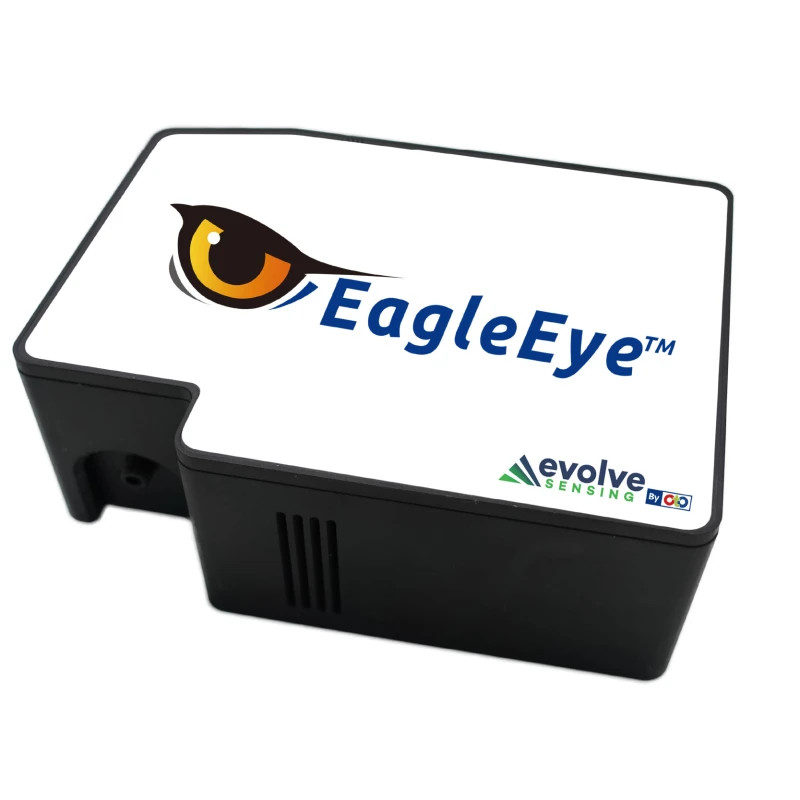
Description
The EagleEye UV-Vis-NIR Spectrometer from Evolve Sensing is a high-sensitivity, precision instrument designed for demanding spectroscopic applications across the ultraviolet, visible, and near-infrared spectrum. Leveraging a thermoelectrically cooled (TEC) back-thinned CCD sensor, the EagleEye Series delivers exceptional spectral resolution and stability, making it ideal for both laboratory research and industrial environments. The advanced Czerny–Turner optical design ensures accurate wavelength calibration and minimizes stray light, resulting in reliable and repeatable measurements even under challenging conditions.
Engineered for robustness, the EagleEye spectrometer maintains consistent performance in the face of thermal fluctuations, vibrations, and mechanical shocks. This stability is crucial for long-term monitoring and quality control applications, where measurement drift can compromise data integrity. The spectrometer’s compact footprint and rugged construction make it suitable for integration into OEM systems, as well as for use in field deployments and process monitoring setups.
With a broad wavelength range spanning from 180 nm to 1100 nm (model dependent), the EagleEye Series covers a wide array of applications, including UV-Vis-NIR spectroscopy, fluorescence analysis, semiconductor and thin-film inspection, material identification, and reflectance studies. The high signal-to-noise ratio, low stray light, and excellent thermal stability ensure precise optical analysis, while the flexible integration time (from 5 ms to 65 s) accommodates both rapid and high-sensitivity measurements. Multiple grating options and a 16-bit A/D converter further enhance the instrument’s versatility and dynamic range.
Connectivity is streamlined with both USB and Ethernet interfaces, facilitating easy integration into various laboratory and industrial systems. The EagleEye’s user-centric design, combined with its high-performance specifications, positions it as a reliable solution for researchers, engineers, and OEM partners seeking accurate and stable spectroscopic measurements across the UV, visible, and NIR regions.
EagleEye UV-VIS Series Spectrometer
Specifications
| Wavelength Range (reflectance): | 180 – 1100 nm |
|---|---|
| Resolution: | 0.2 nm |
| Dimensions: | 130 × 96 × 58.3 mm |
| Detector Type:: | Back-thinned CCD (Hamamatsu S11850 or S16011), 2048 px |
| Cooling: | Thermoelectric (TEC) |
| Signal-to-Noise Ratio (SNR): | 500 |
| Thermal Stability: | < 0.015–0.04 nm / °C (model dependent) |
| A/D Resolution: | 16-bit |
| Integration / Scan Time Range: | 5 ms – 65 s |
| Minimum Scan Time: | 0.005 s |
| Dynamic Range: | 4000–5000 (model dependent) |
| Stray Light: | < 0.04–0.45 % (model dependent) |
| Interfaces: | USB 2.0, 8‑pin I/O (6 GPIO, UART TX/RX, ext. trigger) |
| Connector Type: | SMA905 fiber |
| Power Requirements: | USB +5 V @ ~330 mA; TEC +5 V @ ~500 mA (DC jack) |
| Operating Temperature: | 0 °C – 50 °C |
| Storage Temperature: | –30 °C – 70 °C |
| Environmental Limits: | 0–90 % RH non-condensing |
| A/D Converter Type: | 16-bit ADC |
| Weight: | 0.88 kg |
Got questions about specs? Use the inquiry form to ask.
 Download Data Sheet

Features
- Czerny–Turner optical design with 2nd & 3rd order rejection for low stray light
- High-sensitivity back-thinned TEC CCD sensor for UV–NIR performance
- Hamamatsu 2048-pixel linear array sensor (EE2113: S16011; EE2063: S11850)
- 32-bit RISC controller for precise and stable operation
- Integration time: 5 ms – 65 s (depending on sensor)
- Optical resolution: 0.2 – 10.5 nm, depending on slit and grating
- USB 2.0 high-speed (480 Mbps) communication
- 8-pin I/O connector with 6 programmable digital I/O lines, UART TX/RX, and external trigger
- Up to 4,000 spectra buffering for continuous acquisition
- Flash ROM storage for wavelength, linearity, and intensity calibration data
- TEC-cooled sensor maintains stable temperature (20–25°C below ambient)
- Supports Matlab™, LabVIEW™, and SpectraSmart software
Applications
- UV-Vis-NIR Spectroscopy: Ideal for high-resolution spectral analysis across ultraviolet, visible, and near-infrared wavelengths (180–1100 nm), supporting a wide range of scientific and industrial applications.
- Fluorescence Spectroscopy: Enables sensitive detection and characterization of fluorescence emissions for research in chemistry, biology, and medical diagnostics.
- Light Source Characterization: Accurately measures the spectral output of LEDs, lasers, and other light sources for quality assurance and R&D.
- Semiconductor and Thin-Film Inspection: Provides precise spectral data for monitoring and quality control in semiconductor manufacturing, thin-film deposition, and photovoltaic production.
- Material Identification and Reflectance Analysis: Supports rapid and non-destructive identification of materials and analysis of surface reflectance in fields such as forensics, geology, and material science.
- Process Monitoring and Quality Control: Delivers real-time, stable spectral measurements for in-line process monitoring in pharmaceuticals, food & beverage, chemical processing, and environmental monitoring.
- OEM Integration: Compact, robust design and versatile interface options (USB, Ethernet) make it suitable for integration into custom analytical instruments, industrial automation systems, and portable devices.
- Environmental and Remote Sensing: Reliable performance under varying thermal, vibration, and shock conditions makes it suitable for field deployments in environmental monitoring, atmospheric studies, and remote sensing applications.
- Life Sciences and Biomedical Research: High sensitivity and low noise performance support applications in DNA/RNA quantification, protein analysis, and tissue spectroscopy.
- Color Measurement and Quality Assurance: Used in colorimetry and quality control for paints, textiles, plastics, and other manufactured goods requiring precise color matching and consistency.
- Laser and Optical Component Testing: Facilitates spectral analysis of lasers, filters, and optical coatings for R&D and manufacturing quality assurance.
- Educational and Research Laboratories: Provides a versatile platform for teaching and advanced research in physics, chemistry, materials science, and engineering.
Frequently Asked Questions
What is the EagleEye Spectrometer?
What are the main features of the EagleEye Spectrometer?
What models are available for the EagleEye Spectrometer and their wavelength ranges?
How does the EagleEye Spectrometer ensure measurement reliability?
What software is compatible with the EagleEye Spectrometer?
What are the power requirements for the EagleEye Spectrometer?
What are the environmental operating conditions for the EagleEye Spectrometer?
Got more questions? Use the inquiry form to ask the supplier directly.
Similar Products
Your inquiry has been received.
Create an account by adding a password
Why create an account?
- Auto-complete inquiry forms
- View and manage all your past messages
- Save products to your favorites
- Close your account anytime — no hassle