
Description
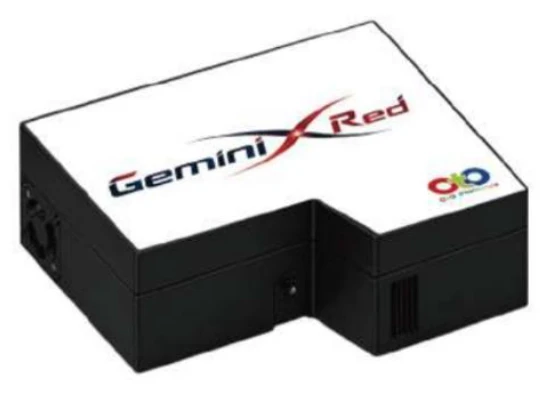
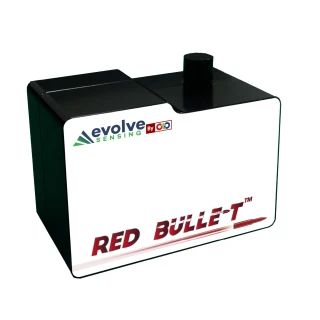
The Gemini‑Red Series is a high‑performance broadband near‑infrared (NIR) spectrometer engineered for demanding industrial, scientific, and OEM integration applications. Covering the complete 900–2500 nm range with a single optical input, it consolidates what traditionally requires two separate instruments into one compact, thermally stabilized platform. Its dual‑band optical design offers continuous coverage from the short‑wave NIR to the extended NIR, making it well suited for applications ranging from process analytics and quality control to advanced materials characterization and remote sensing.
At the core of the Gemini‑Red is an integrated dual‑channel architecture: one channel optimized for 900–1700 nm and a second for 1600–2500 nm. Both channels share a common SMA905 fiber input, simplifying system design and alignment while ensuring consistent sampling conditions across the full spectrum. Each band is detected by an independent 256‑pixel InGaAs array with dual‑stage thermoelectric cooling, providing low dark noise, enhanced signal stability, and reliable operation in environments where temperature and background conditions can vary. This arrangement delivers high sensitivity across the entire NIR band, including wavelengths where detector performance often starts to roll off in traditional single‑array systems.
The optical bench is designed to offer configurable resolution from approximately 2.3 nm up to 17 nm, depending on the selected slit width. This allows users to optimize between spectral resolution and throughput for different tasks, such as resolving fine absorption features in chemical or pharmaceutical analysis versus maximizing signal in low‑light or high‑speed production environments. Typical performance with a 50 µm slit enables resolving power suitable for chemometric models, materials identification, and multicomponent analysis in complex mixtures. Low stray light further supports accurate quantification, particularly in broadband measurements where out‑of‑band leakage can compromise results.
A key advantage of the Gemini‑Red platform is the ability to configure independent integration time and gain for each spectral channel. This is particularly valuable when dealing with samples whose absorption, scattering, or reflectance characteristics vary significantly across the NIR range. Users can run the short‑wavelength and long‑wavelength channels under different exposure conditions yet acquire them through the same optical path, balancing signal levels and avoiding saturation while still maintaining measurement speed. High and low gain modes, combined with favorable single‑measurement signal‑to‑noise ratio and dynamic range, support both trace‑level detection and robust operation in high‑signal conditions.
Designed with real‑world deployment in mind, the Gemini‑Red includes Ethernet, USB, and GPIO interfaces for flexible system integration. Ethernet connectivity enables remote operation, distributed sensing networks, and integration into process control architectures, while USB support simplifies benchtop use and laboratory workflows. GPIO lines provide hardware‑level triggering, synchronization with external light sources or motion stages, and efficient incorporation into automated test stands and production environments. The fiber‑coupled SMA905 input allows users to connect a range of foreoptics, probes, and sampling accessories, from reflection and transmission probes to integrating spheres and flow cells.
The broadband 900–2500 nm coverage opens up a wide spectrum of application possibilities. In semiconductor inspection and electronics manufacturing, the extended NIR range can be used to probe band‑gap related features, wafer and package uniformity, and materials used in advanced device stacks. In environmental and geological sensing, the instrument’s reach into the 2.5 µm region enables characterization of minerals, clays, and organics that exhibit diagnostic absorption features beyond 2000 nm. For agriculture and food analysis, the dual‑band coverage supports robust chemometric models for moisture, protein, fat, fiber, and other key quality parameters in grains, dairy, meats, and processed foods, helping facilitate non‑destructive, real‑time quality control.
The Gemini‑Red is equally well suited for general material analysis and research, where broadband NIR spectra are used to study polymers, textiles, coatings, pharmaceuticals, and specialty chemicals. It can serve as the spectral engine for online process analytical technology (PAT) systems, enabling continuous monitoring of blending, drying, and formulation steps.
Gemini Red Dual Band 900 to 2500 nm Broadband NIR Spectrometer
Specifications
| Wavelength Range (reflectance): | 900 – 2500 nm |
|---|---|
| Resolution: | 2.3 nm |
| SNR (Single Measurement, High Gain, Long-Wavelength Channel): | 2200 |
| Shipping Availability: | Q4 2026 |
| Weight: | <4 kg |
| Dimensions: | 210 (L) × 180 (W) × 75.5 (H) mm |
| Dark Noise (Average, Low Gain, Long-Wavelength Channel): | 5.5 |
| Dark Noise (Average, Low Gain, Short-Wavelength Channel): | 5 |
| Dark Noise (Average, High Gain, Long-Wavelength Channel): | 8.5 |
| Dark Noise (Average, High Gain, Short-Wavelength Channel): | 8 |
| Dynamic Range (Single Measurement, Low Gain, Long-Wavelength Channel): | 12000 |
| Dynamic Range (Single Measurement, Low Gain, Short-Wavelength Channel): | 13000 |
| Dynamic Range (Single Measurement, High Gain, Long-Wavelength Channel): | 7000 |
| Dynamic Range (Single Measurement, High Gain, Short-Wavelength Channel): | 8000 |
| SNR (Single Measurement, Low Gain, Long-Wavelength Channel): | 4300 |
| SNR (Single Measurement, Low Gain, Short-Wavelength Channel): | 4500 |
| Product: | Gemini-Red Series Broadband NIR Spectrometer |
| SNR (Single Measurement, High Gain, Short-Wavelength Channel): | 3200 |
| Data Interface: | Ethernet / USB / GPIO |
| Stray Light: | <0.2% |
| Integration Time Control: | Independent for each spectral channel |
| Integration Time Range: | 6 µs–24 s |
| Number Of Pixels Per Array: | 256 |
| Sensor: | Dual 256-pixel InGaAs arrays (dual-stage TEC cooling) |
| Fiber Input Interface: | SMA905 |
| Input Port: | SMA905 fiber optic connector |
| Typical Resolution With 50 µm Slit: | 4.2–4.4 nm |
| Optical Resolution: | 2.3–17 nm (25–200 µm slit widths) |
| Spectral Channels: | 900–1700 nm and 1600–2500 nm |
Got questions about specs? Use the inquiry form to ask.
 Download Data Sheet

Features
- Ultra-Broadband NIR Coverage (900–2500 nm)
Dual-band optical design delivers continuous near-infrared coverage from 900 to 2500 nm, enabling a single instrument to address applications that typically require multiple spectrometers. - Single Optical Input with Dual Spectral Channels
A shared SMA905 fiber-optic input feeds two distinct spectral channels (900–1700 nm and 1600–2500 nm), simplifying system integration while providing seamless measurements across the full NIR range. - High-Performance Dual InGaAs Detector Arrays
Equipped with dual 256‑pixel InGaAs arrays, each dedicated to one band, the Gemini‑Red delivers optimized sensitivity, low noise, and high linearity over both short- and long-wavelength regions. - Dual-Stage TEC Cooling for Low Noise and High Stability
Advanced dual-stage thermoelectric cooling minimizes dark current and thermal noise, improving signal-to-noise ratio (SNR) and wavelength stability for demanding laboratory and industrial environments. - Flexible Optical Resolution (2.3–17 nm)
Selectable slit widths from 25–200 µm support resolutions from 2.3 to 17 nm; a typical configuration with a 50 µm slit provides ~4.2–4.4 nm resolution, allowing you to balance throughput and spectral detail. - Optimized SNR and Dynamic Range
High- and low-gain modes provide tailored performance for varying signal levels, with single-measurement SNRs up to 4500 and dynamic ranges up to 13,000, enabling accurate quantification from weak to strong signals. - Independent Channel Control
Each spectral channel supports independent integration time and gain (6 µs to 24 s), allowing fine optimization of exposure and sensitivity across different wavelength regions in a single measurement sequence. - Low Stray Light for Reliable Quantification
System stray light below 0.2% helps ensure accurate absorbance and reflectance measurements, improving model robustness in chemometric and multivariate analysis workflows. - High-Speed Measurements with Wide Integration Range
An integration-time range from 6 µs to 24 s supports both high-throughput, rapid scanning and long-exposure measurements for low-light or highly absorbing samples. - Industrial-Grade Connectivity
Standard Ethernet, USB, and GPIO interfaces streamline integration into laboratory setups, OEM systems, production lines, and remote or distributed sensing platforms. - Compact, Robust Form Factor
With dimensions of 210 (L) × 180 (W) × 75.5 (H) mm and weight under 4 kg, the Gemini‑Red offers broadband NIR performance in a compact, rugged package suitable for field deployment and space‑constrained installations. - Broad Application Versatility
Engineered for semiconductor inspection, environmental and geological sensing, agriculture and food analysis, and general material characterization, as well as broadband NIR R&D and OEM integration. - Fiber-Optic Ready for Flexible Sampling
The SMA905 fiber interface provides compatibility with a wide range of probes, reflection heads, transmission cells, and process interfaces used across NIR spectroscopy applications. - Pre-Order Availability with Early Pricing
Shipping expected in Q4 2026, with pre-order discounts of 10% off list price, offering early adopters access to a broadband NIR platform designed for current and next‑generation sensing solutions.
Applications
- Semiconductor inspection and process control – Inline and at-line monitoring of silicon wafers, compound semiconductors, epitaxial layers, photoresists, and thin films using 900–2500 nm absorption features for thickness, uniformity, and defect analysis.
- Wafer bonding and die attach quality control – Detection of voids, delamination, and contamination in bonded wafers and packaged devices through NIR transmission/reflectance imaging and point measurements.
- Semiconductor packaging materials characterization – Evaluation of mold compounds, underfills, encapsulants, and adhesives to monitor cure state, filler content, and moisture uptake in production.
- Environmental monitoring and remote sensing – Field and lab measurements of soils, rocks, vegetation, and water quality using the full 900–2500 nm range for mineralogy, organic content, and contamination signatures.
- Geological core and drill cuttings analysis – Non-destructive logging of cores for clay minerals, carbonates, sulfates, and hydrocarbon indicators, enabling rapid mineral mapping in exploration and mining.
- Mining and ore grade control – Conveyor and belt-line NIR inspection of ores for real-time sorting and grade estimation based on characteristic short-wave and extended NIR absorption bands.
- Agricultural crop and plant phenotyping – Assessment of water stress, nutrient status, and disease through leaf and canopy spectra across 900–2500 nm, supporting breeding programs and precision agriculture.
- Food quality and safety analysis – Rapid, non-destructive determination of moisture, protein, fat, sugar, and fiber in grains, dairy, meat, oils, and processed foods using chemometric models.
- Feed and forage characterization – On-site measurement of nutritional parameters (protein, NDF, ADF, lignin, dry matter) in animal feeds and forages to optimize rations and quality control.
- Pharmaceutical and nutraceutical process analytics (PAT) – In-line and at-line monitoring of blend uniformity, tablet and capsule content uniformity, moisture, and coating thickness throughout manufacturing.
- Raw material identification (RMID) – Rapid verification of incoming pharmaceutical, cosmetic, and food ingredients by comparing NIR spectra against validated libraries.
- Polymers, plastics, and composites analysis – Identification of polymer types, additives, fillers, and degradation states; monitoring cure and crystallinity in composites and high-performance materials.
- Recycling and materials sorting – 900–2500 nm spectral coverage for automated sorting of plastics, textiles, paper, and multilayer packaging in recycling facilities, including challenging dark or filled materials.
- Coatings, paints, and adhesives characterization – Monitoring solvent and water content, cure kinetics, binder chemistry, and layer uniformity in industrial coating and adhesive processes.
- Chemical process monitoring – Real-time tracking of concentration, conversion, and impurity levels in petrochemicals, specialty chemicals, lubricants, and polymers using transmission, transflectance, or reflectance setups.
- Oil, fuels, and lubricants analysis – Determination of octane/cetane indices, aromatics content, oxidation, contamination, water content, and degradation state in fuels and oils via broadband NIR signatures.
- Photovoltaics and solar materials characterization – Spectral assessment of bandgap-related features, coating layers, and encapsulants in silicon and thin-film PV modules across the extended NIR.
- Battery and energy storage research – Study of electrolyte composition, binder and solvent content, and aging indicators in electrodes and separators where vibrational overtones lie in the 900–2500 nm region.
- Textile and fiber identification – Differentiation of natural and synthetic fibers (cotton, wool, polyester, nylon, viscose, blends) and assessment of moisture and finishing treatments in textiles.
- Paper, pulp, and wood products analysis – Measurement of moisture, lignin, cellulose, and coating chemistry in paper, board, and wood to control drying, pressing, and finishing processes.
- Building materials and construction products – Evaluation of moisture and binder content in concrete, gypsum, insulation, roofing materials, and asphalt for quality control and durability assessment.
Frequently Asked Questions
What is the Gemini-Red broadband NIR spectrometer and what wavelength range does it cover?
How does the dual-band design with a single SMA905 input work, and what are the advantages?
What optical resolution and slit options are available for the Gemini-Red NIR spectrometer?
What are the main applications of the Gemini-Red broadband NIR spectrometer?
What are the detector performance specifications (SNR, dynamic range, and noise) for Gemini-Red?
How are integration time, gain, and interfaces configured on the Gemini-Red spectrometer?
What are the mechanical specifications, availability, and ordering information for Gemini-Red?
Got more questions? Use the inquiry form to ask the supplier directly.
Similar Products

Your inquiry has been received.
Create an account by adding a password
Why create an account?
- Auto-complete inquiry forms
- View and manage all your past messages
- Save products to your favorites
- Close your account anytime — no hassle