

Description
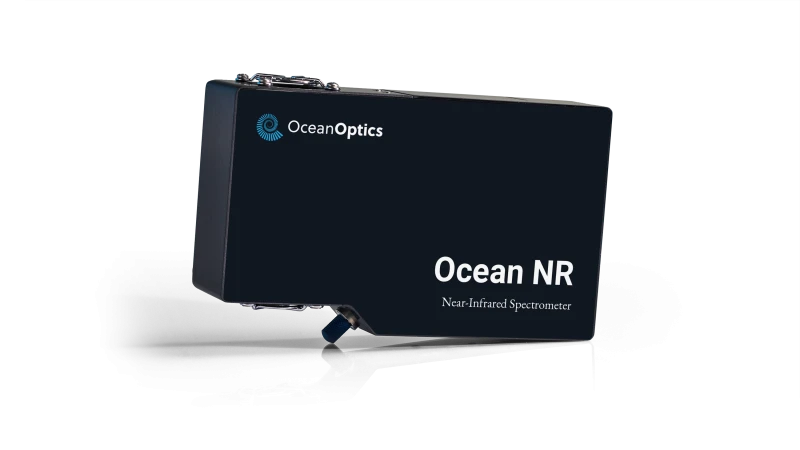
The Ocean NR Series spectrometers are high‑performance near‑infrared (NIR) instruments engineered for demanding analytical, industrial, and research environments. Covering wavelength ranges from 900 nm up to 2500 nm, these compact fiber‑optic spectrometers are optimized for applications that require precise identification of subtle spectral features in complex or low‑light samples. With optical resolution as fine as approximately 2.7–2.85 nm (FWHM), the NR Series supports accurate peak discrimination, enabling users to distinguish closely spaced spectral bands that are critical for chemical, physical, or material characterization.
Designed to offer a strong balance of signal‑to‑noise ratio, dynamic range, and sensitivity, the Ocean NR Series competes effectively with other advanced NIR spectrometers commonly used in process monitoring, quality control, and research spectroscopy. Models such as the NR‑512‑1.7 (900–1700 nm), NR‑512‑2.2 (900–2200 nm), and NR‑512‑2.5 (900–2500 nm) cover the key NIR regions used for organic compound analysis, moisture quantification, polymer and textile inspection, and pharmaceutical or food authentication. This broad spectral coverage allows one instrument series to address a wide set of tasks that might otherwise require multiple, narrower‑band systems.
Each NR spectrometer is built around a stabilized optical bench and a cooled detector platform, with thermoelectric cooling to as low as -25 °C (model dependent) to significantly reduce dark noise and improve measurement stability over long integration times. This level of thermal management is particularly valuable in NIR spectroscopy, where small changes in temperature can affect detector performance and baseline stability. By maintaining a controlled detector temperature, the NR Series delivers consistent, repeatable results even in challenging environments or when operating continuously in process lines.
High‑gain configurations available for select NR models further extend sensitivity for low‑signal applications, such as measurements of highly absorbing materials, weakly reflecting surfaces, or dilute solutions. Compared to many general‑purpose spectrometers, this enhanced sensitivity and cleaner baseline facilitate the detection of low‑intensity spectral features that are essential for advanced chemometric modeling and multivariate analysis. Whether used for non‑destructive testing, inline monitoring, or laboratory assay development, the NR Series provides data quality that supports both qualitative identification and precise quantitative predictions.
The Ocean NR Series is well suited for rapid measurements in dynamic settings, with integration times ranging from 1 ms to 120 s to accommodate both high‑speed and high‑sensitivity modes. This flexibility makes the instruments versatile tools for conveyor‑based inspection, real‑time process control, and time‑resolved studies where acquisition speed and repeatability are critical. In many NIR applications, cleaner spectra and faster response allow users to shorten analysis workflows, reduce sample preparation, and achieve higher throughput without compromising accuracy.
For system designers and integrators, the NR Series combines robust performance with a compact footprint, simplifying integration into OEM assemblies, laboratory instrumentation, and automated process systems. Order‑sorting filters tailored to each model help suppress higher‑order diffraction artifacts, resulting in more reliable intensity readings across the specified wavelength range. This attention to optical design and noise reduction ensures that users working in areas such as agriculture, food and beverage, petrochemicals, polymers, and pharmaceuticals can trust the NR Series for long‑term, stable NIR monitoring and analytical measurements.
Ocean NR-512-2.5 Compact Spectrometer
Specifications
| Wavelength Range (reflectance): | 900 – 2500 nm |
|---|---|
| Resolution: | 2.7 nm |
| Product Series: | Ocean NR Series spectrometers |
| Model: | NR-512-2.5 |
| Wavelength Range (NR-512-2.5): | 900-2500 nm |
| Integration Time: | 1 ms - 120 s |
| Signal-To-Noise Ratio (SNR): | up to 10000 (model and version dependent) |
| Entrance Aperture (slit): | 25 μm (other sizes available) |
| Thermal Stability: | thermoelectric cooling to -25 °C for low dark current (model dependent) |
| Order-sorting (NR-512-1.7): | Longpass filter (transmits >830 nm) installed |
| Order-sorting (NR-512-2.2): | Improved order sorting filter (OD>4) |
| Sensitivity Options: | High gain configurations available in 1.7 and 2.2 models |
Got questions about specs? Use the inquiry form to ask.
 Download Data Sheet

Features
- High‑Performance NIR Spectral Coverage – Three models cover extended near‑infrared ranges for maximum application flexibility:
• NR‑512‑2.5: 900–2500 nm
Ideal for material identification, process analytics, quality control, and research across a broad NIR window. - Superior Optical Resolution for Precise Peak Discrimination – Optical resolution as low as ~2.7–2.85 nm FWHM (model dependent) enables accurate separation of closely spaced spectral features, supporting demanding applications such as chemical fingerprinting, moisture/protein/fat analysis, and subtle compositional changes.
- Outstanding Signal‑to‑Noise Ratio and Dynamic Range – SNR up to 10,000:1 (model/version dependent) and a wide dynamic range provide clean, high‑quality spectra over both weak and strong signals, improving quantification accuracy and confidence in low‑signal environments.
- Wide Integration Time Range for Flexible Measurements – Adjustable integration times from 1 ms to 120 s allow optimization for fast‑moving industrial processes, low‑light samples, or strongly absorbing materials without sacrificing data quality.
- Thermoelectrically Cooled Detector for Thermal Stability – Integrated TE cooling (to approximately –25 °C, model dependent) significantly reduces dark current and thermal noise, ensuring excellent baseline stability and reproducibility in long measurements or fluctuating ambient conditions.
- High‑Gain Configurations for Detecting Weak Signals – Optional high‑gain versions (NR‑512‑1.7 and NR‑512‑2.2) enhance sensitivity in low‑reflectance, low‑concentration, or highly absorbing samples, enabling lower limits of detection and more reliable results in challenging NIR applications.
- Optimized Order‑Sorting Optics – Integrated order‑sorting filters minimize second‑order and stray‑light artifacts:
• NR‑512‑1.7: Built‑in longpass filter (transmits >830 nm)
• NR‑512‑2.2: Enhanced order‑sorting filter with OD > 4
This leads to more accurate spectra and improved quantitative performance across the full NIR range. - Configurable Entrance Slit for Application Tuning – Standard 25 μm entrance slit (other slit sizes available) allows users to balance resolution, throughput, and sensitivity according to specific measurement needs.
- Engineered for Complex and Low‑Light Samples – Designed for demanding NIR tasks such as pharmaceutical verification, food and agricultural analysis, polymer and textile identification, and process monitoring, where subtle spectral differences and low signal levels require high‑performance instrumentation.
- Fast, High‑Throughput Measurements – Short minimum integration times and efficient optical design support high‑speed acquisitions, making the NR Series suitable for real‑time monitoring, inline or at‑line measurements, and samples moving on conveyor belts.
- Cleaner Data for Authentication and Quality Control – The combination of low noise, high SNR, and high gain options delivers cleaner spectra, improving the reliability of chemometric models for authentication, sorting, grading, and specification compliance.
- Robust, Stable Platform for Lab and Industry – Compact, rugged spectrometer design integrates easily with NIR light sources, probes, and sampling accessories commonly used in research labs, pilot lines, and industrial environments, ensuring dependable performance in continuous or intermittent operation.
- Compatible with Advanced Software and Chemometrics – High‑quality, low‑noise spectra are ideal for use with multivariate analysis and chemometric packages for quantitative and qualitative NIR models, supporting PAT (Process Analytical Technology) and advanced R&D workflows.
- Scalable from R&D to Production – The same core NR hardware can be applied from feasibility studies in the lab to fully integrated OEM or inline systems, helping reduce method transfer issues and speeding scale‑up.
- Trusted Global Support Network – Backed by Ocean Optics’ worldwide technical support and application expertise in spectroscopy, helping users quickly configure, deploy, and optimize the NR Series for specific NIR applications.
Applications
- Pharmaceutical and Biopharmaceutical Analysis
- Identification and authentication of raw materials and active pharmaceutical ingredients (APIs) using NIR spectral fingerprints
- Blend uniformity monitoring in tablets, capsules, and powders directly on production lines
- Moisture, content uniformity, and API concentration analysis in solid and semi-solid dosage forms
- Real-time process analytical technology (PAT) for granulation, drying, coating, and lyophilization control
- Non-destructive inspection of packaged products for quality assurance and counterfeit detection
- Food, Feed, and Beverage Quality Control
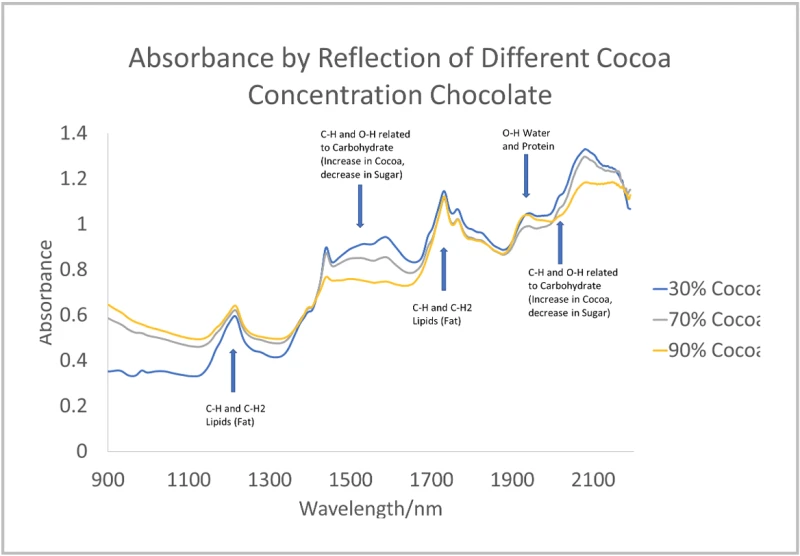
- Measurement of moisture, fat, protein, sugar, and fiber content in grains, dairy, meat, and processed foods
- Authentication and adulteration detection in oils, honey, spices, wine, spirits, and juices
- Online quality monitoring on conveyor belts for sorting and grading fruits, vegetables, and nuts
- Feed formulation and nutrient verification in animal feed and pet food
- Fermentation monitoring and process control in brewing and beverage production
- Agriculture, Forestry, and Soil Analysis
- Assessment of soil organic matter, moisture, and nutrient content (N, P, K) using reflectance NIR
- Plant health and stress monitoring through leaf and canopy spectral signatures
- Characterization of biomass, lignin, and cellulose content in energy crops and forestry products
- Grain and seed quality testing for protein, oil, and moisture in breeding and production programs
- In-field and laboratory measurements for precision agriculture decision support
- Polymer, Plastics, and Chemical Analysis
- Identification and sorting of plastics (e.g., PE, PP, PET, PVC, PS) in recycling and waste management
- Polymer composition and additive analysis (plasticizers, stabilizers, fillers)
- Curing, crystallinity, and degree-of-polymerization monitoring in production processes
- Detection of contaminants and off-spec materials in resins, films, and molded parts
- Online monitoring of chemical reactions, solvent mixtures, and blending processes
- Petrochemical, Oil & Gas, and Energy Applications
- Characterization of crude oils, fuels, and lubricants by NIR spectral profiling
- Measurement of octane, cetane, aromatics, and other key fuel parameters
- Monitoring of refinery processes and blending operations (gasoline, diesel, biofuels)
- Water and contaminant detection in oils, fuels, and hydraulic fluids
- Analysis of syngas, biogas, and process streams in energy production
- Environmental Monitoring and Remote Sensing
- Quantification of organic and inorganic pollutants in water using NIR absorption
- Characterization of natural waters (DOC, turbidity-related spectral features)
- Soil and sediment analysis for remediation and environmental assessment
- Air and stack monitoring when coupled with appropriate sampling systems and probes
- Portable and handheld system integration for field-based spectral measurements
- Biomedical, Clinical, and Life Sciences
- Non-destructive analysis of tissues, biofluids, and biomaterials in the NIR region
- Monitoring water, lipids, and protein bands for tissue characterization and research
- Real-time monitoring of cell cultures and bioprocesses via NIR spectroscopy
- Analysis of pharmaceutical excipients and formulation components in R&D
- Optical diagnostics research, including spectroscopy-based sensor development
- Industrial Process Control and Inline Monitoring
- Inline and at-line NIR process monitoring in manufacturing, enabled by high SNR and fast integration times
- Control of mixing, blending, and homogenization processes in chemicals, food, and pharmaceuticals
- Conveyor-based quality inspection of powders, granules, pellets, and web materials
- Thickness, coating uniformity, and composition monitoring of films and laminates
- Feedback and control loops in automated production environments using real-time spectra
- Materials Science and Advanced Research
- Characterization of optical, electronic, and functional materials across 900–2500 nm
- Study of bandgaps, overtones, and combination bands in novel inorganic and organic materials
- Spectral analysis of ceramics, glasses, composites, and nanomaterials
- Temperature- and time-resolved studies where thermoelectric cooling and high dynamic range are critical
Frequently Asked Questions
What is the Ocean NR Series NIR spectrometer and what wavelength ranges are available?
What are typical applications of the Ocean NR NIR spectrometers in industry and research?
How does the Ocean NR spectrometer achieve high sensitivity and low noise in low‑light NIR measurements?
What are the key performance specifications of the Ocean NR NIR spectrometers (resolution, integration time, SNR)?
How do I choose between the NR-512-1.7, NR-512-2.2, and NR-512-2.5 models for my NIR application?
Can the Ocean NR spectrometers be used for high‑speed or inline process measurements?
What thermal management and order‑sorting features does the Ocean NR spectrometer include, and why are they important?
Got more questions? Use the inquiry form to ask the supplier directly.
Similar Products
Your inquiry has been received.
Create an account by adding a password
Why create an account?
- Auto-complete inquiry forms
- View and manage all your past messages
- Save products to your favorites
- Close your account anytime — no hassle