

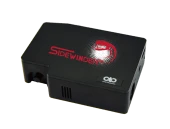
Description
The high-end spectrometers of the SW series cover the NIR range from 900 – 2500 nm. Their wide span of applications in industry and science range e.g. from chemical analysis, biophotonics to Raman spectroscopy. An internal ring buffer allows synchronous measurement and readout in continuous 24/7 operation. The robust opto-mechanical design enables the use in portable applications and under harsh environmental conditions.
EQ Photonics GmbH - IR Spectrometer - SW-Series
EQ Photonics
Specifications
| Wavelength Range (reflectance): | 900 – 2500 nm |
|---|---|
| Resolution: | 2.5 nm |
| Spectral Range (SW 5 Series): | 900–1700 nm |
| Spectral Range (SW 8 Series): | 900–1700 nm |
| Spectral Range (SW 9 Series): | 910–2200 nm or 900–2500 nm |
| Sensor Type: | InGaAs linear sensor |
| Controller: | 32-bit RISC controller |
| Power Supply: | USB powered |
| PC Interface: | USB |
| I/O Lines: | 6 I/Os for external interface extension |
| Cooling (SW 8 Series): | TE cooling |
| Cooling (SW 9 Series): | TE cooling |
| Ferrule Length (max.): | 9.812 mm |
| Defect Pixel Rate (SE2560, SW2570, SW2860, SW2870): | ≤ 1% |
| Defect Pixel Rate (SW2520): | ≤ 2% |
| Defect Pixel Rate (SW2930, SW2960, SW2970, SW6934): | ≤ 5% |
| Fiber Connector Type: | SMA905 (per international standard) |
Got questions about specs? Use the inquiry form to ask.
 Download Data Sheet

Features
- Good shock and vibration resistance
- TEC controlled temperature stability
- NIR InGaAs sensor
- Easy connected via SMA fiber
- Continuous trigger function
- Z5 CPU integrated
- SpectraSmart readout and evaluation software
- SDK and libraries
- Large on-board buffer
- Memory for up to 4000 spectra
- USB and UART interface
- Stray light calibration – optional
- Intensity calibration – optional
- Linearity calibration
- No moving parts
Applications
- Optical characterization of light sources
- Laser characterization
- LED testing
- Filter characterization
- Display testing
- Colorimetry
- Fluorescence spectroscopy
- Water analysis
- Gas analysis
- Differential optical absorption spectroscopy (DOAS)
- Continuous Emission Monitoring Systems (CEMS)
- Ellipsometry
- Blood analysis
- OCT
- Colour analysis
- Thin-film measurement
- Raman spectroscopy
- Reflection spectroscopy
- Absorption spectroscopy
- Emission spectroscopy
- Concentration
- Material identification
- LIBS
Frequently Asked Questions
What is the OtO Photonics SW (SideWinder) Series spectrometer and what wavelength ranges does it cover?
The OtO Photonics SW (SideWinder) Series is a family of compact, near‑infrared (NIR) spectrometers based on high‑sensitivity InGaAs linear image sensors and a 32‑bit RISC controller. They are designed for long‑wavelength NIR applications such as material identification, moisture/chemical analysis, and process monitoring. Typical models include: SW 5 Series (e.g., SW25X0) covering approximately 900–1700 nm, SW 8 Series (SWX8XX) with TEC cooling in the 900–1700 nm range, and SW 9 Series (SWX9XX) with TEC cooling for extended ranges such as 910–2200 nm or 900–2500 nm. The optical engine is optimized for stability, with a rigid optical bench that minimizes wavelength shift and resolution changes under temperature, humidity, vibration, and shock.
How does the SW Series spectrometer connect to a PC and what interfaces are available for system integration?
The SW Series spectrometers are USB‑powered and communicate with a PC through a standard USB interface, eliminating the need for an external power supply in most setups. A 32‑bit RISC controller inside the spectrometer manages all data acquisition and control functions. In addition to USB, the electronics platform includes six I/O lines that can be used for external interface extension, such as triggering, synchronization, or control of peripheral devices, depending on the specific configuration and firmware. Users control the spectrometer via the supplied PC software or through a published communication protocol from OtO Photonics, making it suitable for OEM integration into larger analytical or process control systems.
What are the main differences between the SW 5, SW 8, and SW 9 Series models?
The SW 5, SW 8, and SW 9 Series are all part of the SideWinder InGaAs spectrometer family, but they target slightly different application needs. SW 5 Series (e.g., SW25X0, SW2520, SW2560, SW2570) are compact, USB‑powered spectrometers covering roughly 900–1700 nm without active cooling, ideal for many standard NIR applications where ambient temperature is reasonably controlled. SW 8 Series (SWX8XX, including models like SW2860, SW2870) incorporate thermoelectric (TE) cooling for the InGaAs sensor in the 900–1700 nm range, which reduces dark current and noise, improving signal‑to‑noise ratio and measurement stability for low‑light or precision measurements. SW 9 Series (SWX9XX, such as SW2930, SW2960, SW2970, SW6934) also feature TE cooling but extend the wavelength range to about 910–2200 nm or 900–2500 nm, making them suitable for broader NIR and short‑wave IR (SWIR) applications such as polymer sorting, hydrocarbon analysis, and other extended‑range spectroscopy tasks.
How do I properly connect a fiber optic cable to the SW Series SMA905 input without damaging the spectrometer?
All OtO Photonics SW Series spectrometers use SMA905 fiber connectors manufactured to international standards, but the inlet slit sits close to the connector, so proper handling is critical. Always screw in the fiber optic connector using your fingers only; do not use tools such as wrenches or pliers, as over‑tightening can press the ferrule against and damage the input slit. Damage to the slit from improper tightening is not covered by warranty. Additionally, make sure the ferrule length of the fiber does not exceed 9.812 mm. An excessively long ferrule can bottom out in the SMA905 receptacle and deform or scratch the slit. If you require extra mechanical stability for long‑term installations, apply a small amount of suitable adhesive at the junction between the fiber SMA nut and the spectrometer’s SMA receptacle instead of over‑tightening the connector.
What should I know about defect pixels in the InGaAs linear sensor used in the SW Series?
The InGaAs linear image sensors used in the SW Series, sourced from Hamamatsu Photonics and similar vendors, can exhibit a small percentage of defect pixels as part of normal manufacturing tolerances. Defect pixels may have non‑uniform spectral response, higher readout noise, or excessive dark current. According to the manufacturer’s notification and OtO Photonics’ policy, the maximum defect pixel ratio by model is typically: ≤1% for SE2560, SW2570, SW2860, SW2870; ≤2% for SW2520; and ≤5% for extended‑range models such as SW2930, SW2960, SW2970, and SW6934. When defect pixels are identified, OtO Photonics informs the customer before shipment and disables those pixels via software, effectively reducing the nominal resolution but preserving reliable spectral performance. Technical advisory support is provided to help you understand the impact on your application and how to process the data if needed.
What makes the SW Series spectrometer suitable for OEM and industrial integration?
The SW Series was designed specifically for integration into OEM instruments and industrial systems. The optical bench is mechanically rigid and optimized for minimal thermal and mechanical drift, giving excellent stability against thermo‑hygro variations, vibration, and shock. The compact form factor allows easy installation inside analyzers, process lines, or portable devices. USB power and data simplify wiring, while the onboard 32‑bit RISC controller offloads data handling from the host computer. Six extendable I/O lines enable hardware triggering and communication with external modules. InGaAs sensors with optional TE cooling support demanding NIR/SWIR applications, and OtO Photonics provides a software protocol and documentation so that system developers can integrate the spectrometer into their own control software or embedded platforms.
Where can I find official specifications, software, and support for the SW Series NIR spectrometers?
The datasheet excerpt you see is primarily for business promotion. For detailed, official specifications or for incoming quality control (IQC) and design validation, OtO Photonics provides an official Approval Sheet on request. You can obtain the latest datasheets, software, communication protocol documentation, and application notes directly from OtO Photonics’ website (www.otophotonics.com) or through authorized distributors and marketplaces such as FindLight. When planning a new integration or critical measurement application, it is recommended to consult the official specification sheet for the exact model (e.g., SW2520, SW2570, SW2860, SW2930, etc.) and contact OtO Photonics technical support for guidance on sensor options, cooling, wavelength range, and mechanical and electrical integration details.
Got more questions? Use the inquiry form to ask the supplier directly.
Similar Products
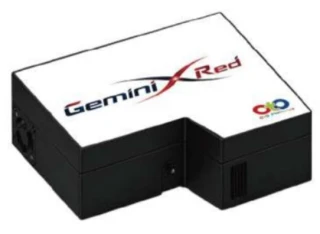
Gemini Red Dual Band 900 to 2500 nm Broadband NIR Spectrometer
Evolve Sensing
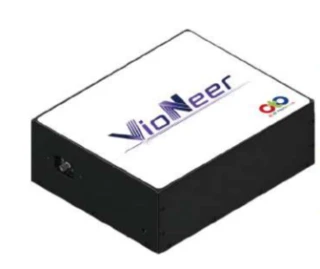
VioNeer Deep UV VUV Spectrometer 155–410 nm Back Thinned CCD
Evolve Sensing

GoldenBullet NIR Series Spectrometer
Evolve Sensing
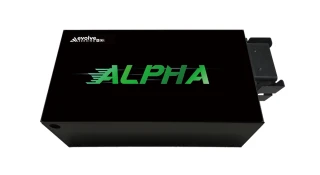
Alpha Ultra-High-Resolution OCT Series Spectrometer
Evolve Sensing
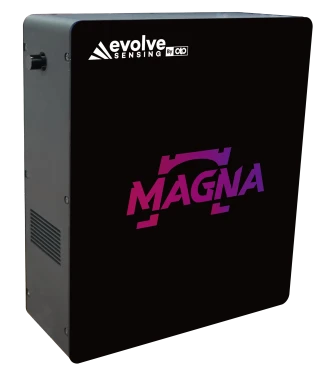
Magna High-Resolution Series Spectrometer
Evolve Sensing
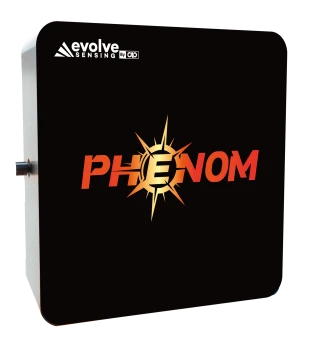
Phenom Vis-NIR High Resolution Series Spectrometer
Evolve Sensing
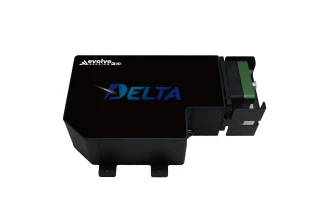
Delta OCT Series Spectrometer
Evolve Sensing
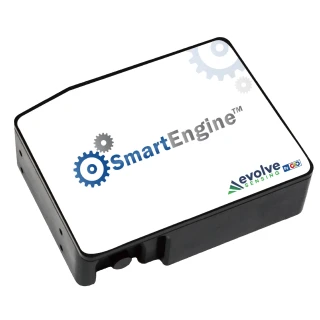
SmartEngine UV-VNIR Series Spectrometer
Evolve Sensing
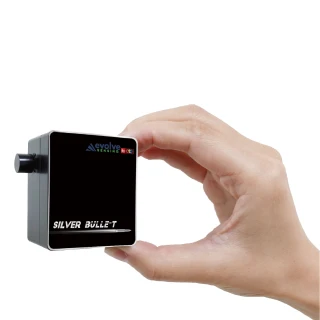
SilverBullet Compact OEM UV-VIS Series Spectrometer
Evolve Sensing
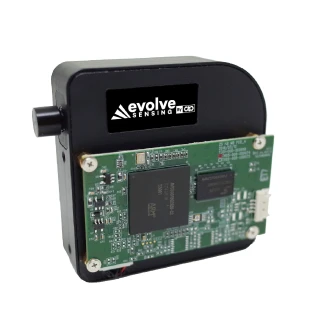
PocketHawk UV-VIS or NIR Series Spectrometer
Evolve Sensing
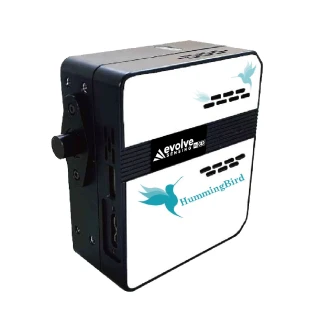
HummingBird Compact OEM UV-VIS Series Spectrometer
Evolve Sensing
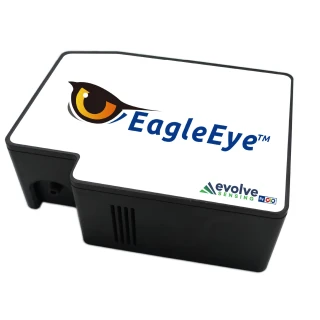
EagleEye UV-VIS Series Spectrometer
Evolve Sensing
Thank You!
Your inquiry has been received.
Create an account by adding a password
Why create an account?
- Auto-complete inquiry forms
- View and manage all your past messages
- Save products to your favorites
- Close your account anytime — no hassle