
Description
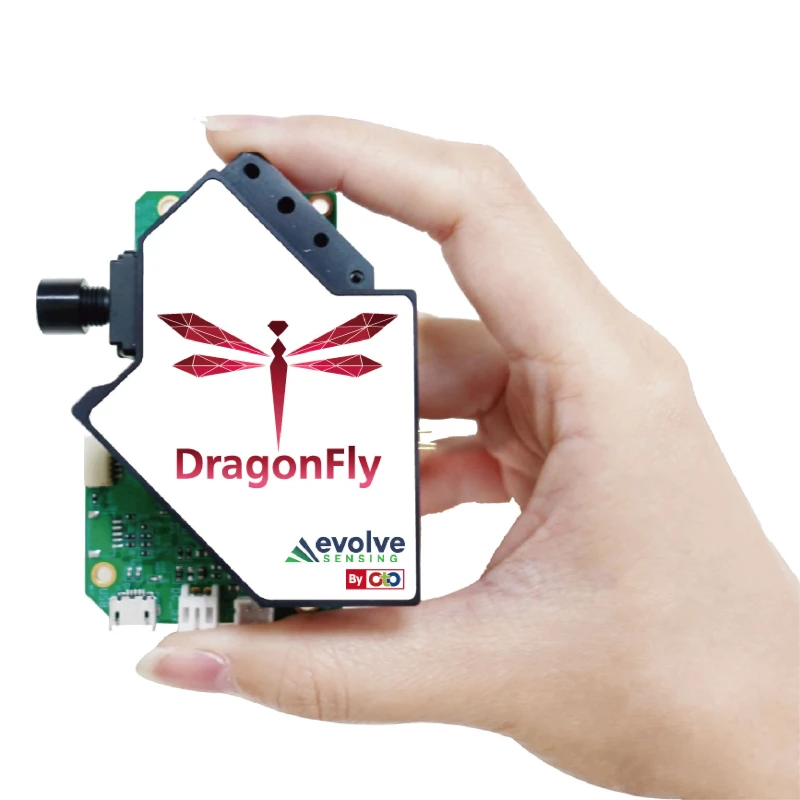
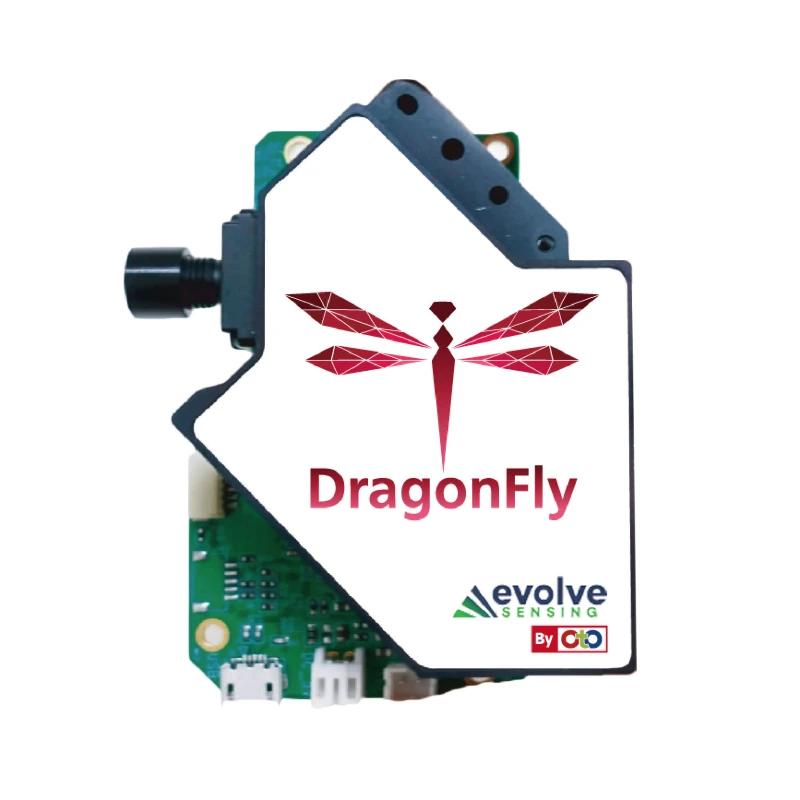
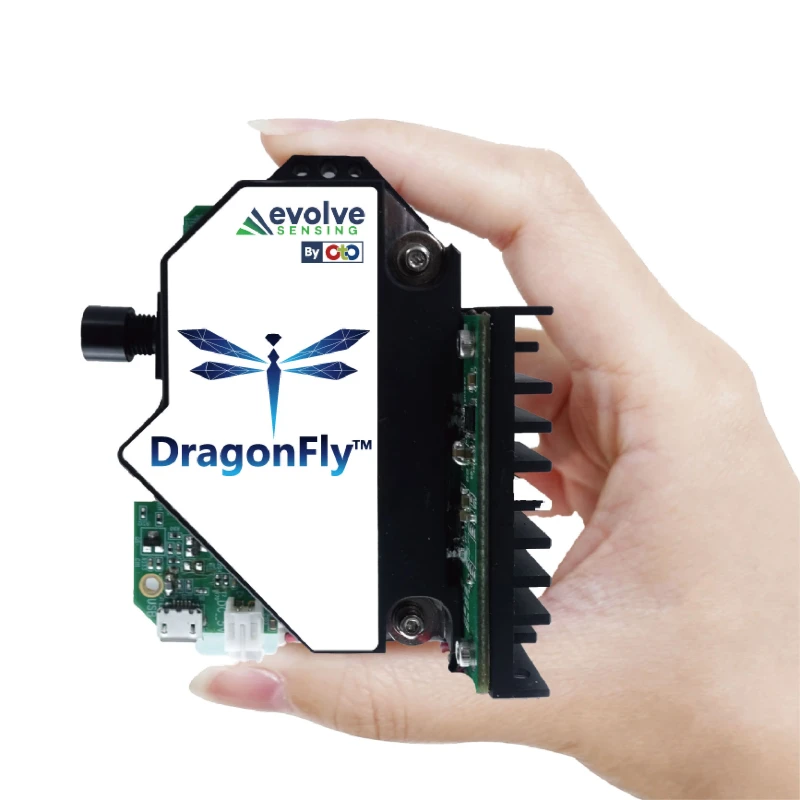
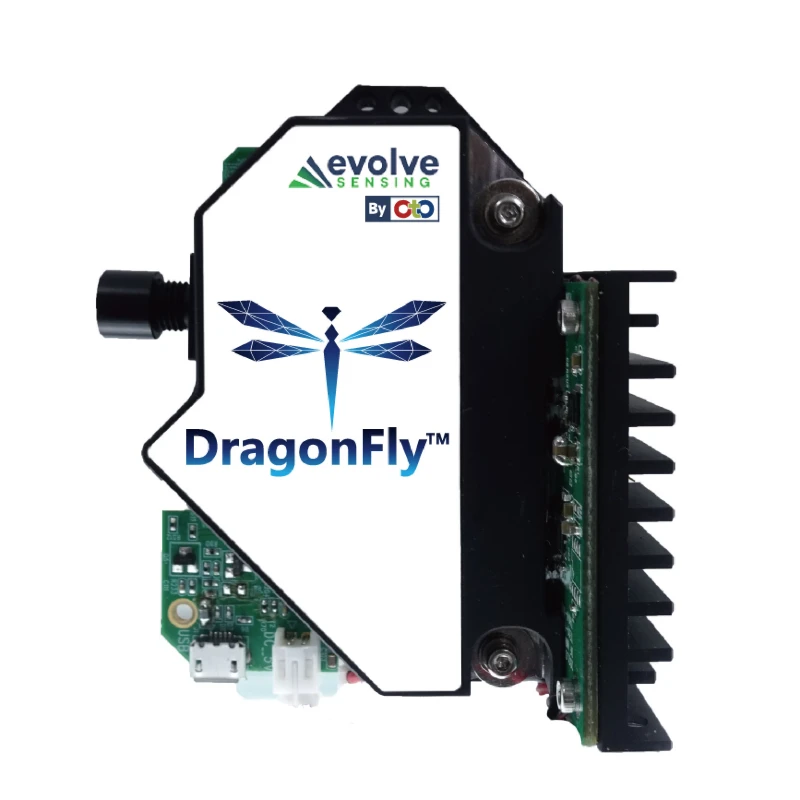
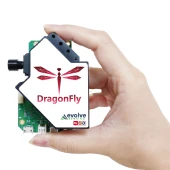
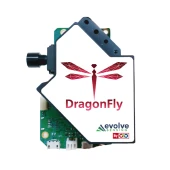
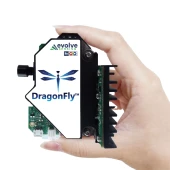
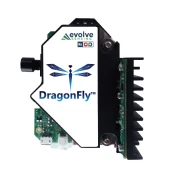
The DragonFlyNIR Spectrometer from Evolve Sensing is a state-of-the-art, compact near-infrared (NIR) spectrometer engineered for high-performance spectral analysis across laboratory, industrial, and OEM environments. Leveraging advanced DLP-based technology, the DragonFlyNIR integrates a programmable digital micro-mirror device (DMD) with a sensitive InGaAs photodiode, delivering precise and reliable NIR measurements in a remarkably small footprint. This innovative design ensures both flexibility and stability, making it an ideal solution for demanding applications where space, speed, and accuracy are critical.
The spectrometer’s flexible scanning architecture significantly enhances signal acquisition efficiency, enabling rapid, configurable measurements with exceptional optical stability. With a broad wavelength range spanning from 900 nm to 2280 nm (model dependent) and optical resolutions between 10 and 13 nm, the DragonFlyNIR is well-suited for a wide array of applications, including material identification, pharmaceutical and food analysis, process monitoring, and environmental or agricultural sensing. Its high signal-to-noise ratio of up to 7000, low stray light (<0.2%), and excellent thermal stability (<0.08 nm/°C) ensure consistent, high-quality results even in challenging environments.
Designed for seamless integration, the DragonFlyNIR offers multiple interface options such as Micro USB and UART, supporting straightforward connectivity for both standalone and embedded system deployments. Its robust construction, combined with a lightweight and compact form factor, allows for easy installation in laboratory benchtops, industrial process lines, or OEM devices. The spectrometer’s rapid minimum integration time of 0.635 ms and advanced 24-bit A/D conversion further contribute to its ability to deliver fast, accurate, and repeatable measurements, making it a versatile tool for modern NIR spectroscopy needs.
DragonFly DLP NIR Series Spectrometer
Specifications
| Wavelength Range (reflectance): | 900 – 2280 nm |
|---|---|
| Resolution: | 12 nm |
| Dimensions: | 71.5 × 57 × 25 mm (DF1514) / 76.7 × 60 × 40 mm (DF19xx) |
| Detector Type: | InGaAs detector (Hamamatsu G12180 series) |
| Cooling: | Passive or 2‑stage TEC (model dependent) |
| Signal-to-Noise Ratio (SNR): | 7000 |
| Thermal Stability: | < 0.08 nm / °C |
| A/D Resolution: | 24-bit |
| Integration / Scan Time Range: | 0.635 ms (minimum, user-configurable; Column, Hadamard, and Slew scan modes) |
| Minimum Scan Time: | 0.000635 s |
| Dynamic Range: | 10,000–100,000:1 (enhanced by Hadamard scanning; 2–7× standard column mode) |
| Stray Light: | < 0.2 % |
| Interfaces: | Micro USB 2.0 + UART (GPIO), status LEDs |
| Connector Type: | SMA905 fiber |
| Power Requirements: | 5 V DC @ 300 mA (typical); 500 mA max with TEC cooling |
| Operating Temperature: | 0 °C – 40 °C |
| Storage Temperature: | –30 – 70 °C |
| Environmental Limits: | 0 – 85 % RH, non-condensing |
| A/D Converter Type: | 24-bit ADC |
Got questions about specs? Use the inquiry form to ask.
 Download Data Sheet

Features
- Advanced digital light processing (DLP) technology with programmable digital micro-mirror device (DMD) chip for flexible, high-efficiency scanning
- Hamamatsu G12180 series 1 mm InGaAs photodiode for superior light detection and low noise
- Hadamard scan mode for enhanced signal-to-noise ratio (2–7× higher than column mode)
- Multiple scan modes: Column, Hadamard, and Slew (Col + Had)
- Fast minimum exposure time: 0.635 ms
- Resolution: 10–13 nm (average, model-dependent)
- Wavelength accuracy: ±1 nm
- Thermal stability: < 0.08 nm / °C
- Low stray light: < 0.2%
- TEC-cooled models (DF1914 / DF1924 / DF1934) maintain sensor temperature near –20 °C
- 32-bit ARM Cortex-M4F RISC microcontroller for fast processing and precision control
- Micro USB and UART interfaces, with LED indicators (green = power, red = scanning)
- SMA905 fiber optic interface (Ø 3.18 mm ferrule)
- Compact, lightweight design with optional protective casing for OEM and system integration
Applications
- Material Identification and Sorting
- Rapid identification and classification of plastics, textiles, grains, and polymers in recycling, quality control, and manufacturing processes. - Pharmaceutical Analysis
- Non-destructive analysis of active pharmaceutical ingredients (APIs), excipients, and tablet coatings for quality assurance and counterfeit detection. - Food and Beverage Quality Control
- Determination of moisture, fat, protein, and sugar content in food products; detection of adulterants and contaminants in grains, dairy, and beverages. - Chemical Composition Analysis
- Quantitative and qualitative analysis of chemical mixtures, solvents, and raw materials in laboratory and industrial settings. - Process Monitoring and Automation
- Real-time monitoring of production lines for process optimization, rapid absorbance measurement, and ensuring product consistency. - Environmental and Agricultural Sensing
- Soil composition analysis, crop health monitoring, and detection of pollutants or contaminants in water and air. - Optical Metrology and Reflectance Analysis
- Measurement of reflectance, absorbance, and transmittance properties of materials for research and development. - OEM Integration and Embedded NIR Systems
- Seamless integration into custom instruments, handheld analyzers, and portable devices for field or in-line applications. - Polymer and Textile Industry Applications
- Identification of fiber types, polymer blends, and quality assessment in textiles and plastics manufacturing. - Forensic and Security Applications
- Detection of illicit substances, explosives, and hazardous materials in security screening and forensic investigations. - Biomedical and Clinical Diagnostics
- Non-invasive tissue analysis, blood component measurement, and medical research applications. - Research and Development
- Versatile tool for academic and industrial R&D in spectroscopy, material science, and analytical chemistry.
Frequently Asked Questions
What is the DragonFly NIR Spectrometer?
What are the wavelength ranges for the different DragonFly models?
How does the Hadamard scan mode benefit the DragonFly spectrometer?
What are the power requirements for the DragonFly spectrometer?
What interfaces are available on the DragonFly spectrometer?
What is the resolution and wavelength accuracy of the DragonFly spectrometer?
What cooling options are available for the DragonFly spectrometer?
Got more questions? Use the inquiry form to ask the supplier directly.
Similar Products
Your inquiry has been received.
Create an account by adding a password
Why create an account?
- Auto-complete inquiry forms
- View and manage all your past messages
- Save products to your favorites
- Close your account anytime — no hassle