


Description
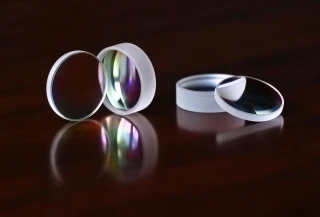
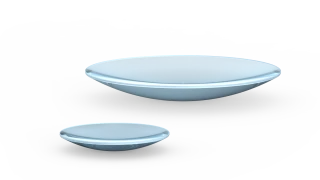
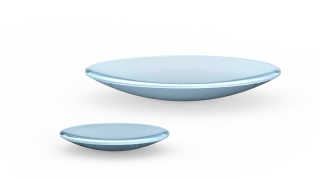
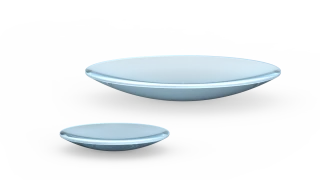
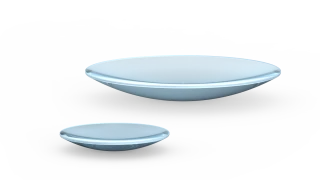
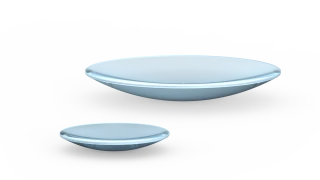
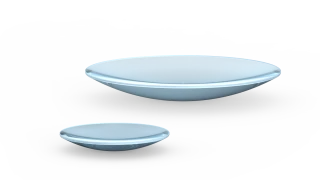
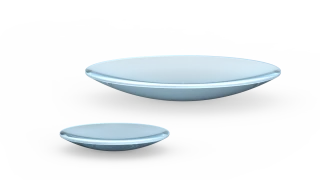
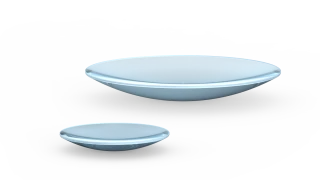
Monocrystalline silicon biconcave lens are precision optical components featuring two concave spherical surfaces, crafted from high-purity monocrystalline silicon—a material renowned for exceptional transmission in the infrared (IR) spectrum (1.2–8 μm). Designed to diverge collimated light beams or expand optical paths, these lenses are manufactured with advanced grinding and polishing techniques to ensure tight dimensional tolerances, superior surface quality, and minimal optical distortion. Ideal for IR imaging, laser systems, and thermal sensing applications, our monocrystalline silicon lens can be customized in size (diameters from 5 mm to 100 mm), curvature, and coatings to meet specific system requirements, balancing high optical performance with mechanical durability for harsh environments.
Optical Monocrystalline Silicon Si Biconcave Lens
Specifications
| Lens Type: | Bi-Concave |
|---|---|
| Material: | Si |
| Diameter: | 12.7 mm |
| Focal Length: | -15 mm |
| Edge Thickness, Te: | 2 mm |
| Diameter Tolerance: | +0/-0.1mm |
| Thickness Tolerance: | ±0.1mm |
| Surface Quality: | 60-40 Scratch-dig |
| Surface Accuracy: | 1/4 lambda |
| Coating: | Custom |
| Concentricity: | <3 arcmin |
| Bevel: | <0.35mm |
Got questions about specs? Use the inquiry form to ask.
 Download Data Sheet

Features
- Material: Made of high-purity silicon, providing excellent infrared transmission.
- Optical Properties: High refractive index (~3.4 at 3 µm) enables effective beam divergence.
- Surface Design: Features two inwardly curved surfaces for controlled light dispersion.
- Infrared Compatibility: Performs well in the IR spectrum (1.2 µm - 7 µm), making it ideal for thermal imaging.
- Lightweight: Silicon’s low density allows for compact and lightweight optical system designs.
- Anti-Reflective Coatings: Often coated to minimize surface reflections and enhance transmission.
Applications
- Laser Optics: Used to expand and shape laser beams in optical setups.
- Infrared Imaging: Essential for thermal imaging systems in security and medical applications.
- Spectroscopy: Applied in IR spectroscopy for precise light control and measurement.
- Optical Corrections: Helps correct optical aberrations in complex optical systems.
- Defense and Aerospace: Utilized in infrared guidance systems and aerospace optical technologies.
Frequently Asked Questions
As a factory with in-house monocrystalline silicon production, what customization options do you offer for silicon biconcave lens?
What coatings are recommended for silicon biconcave lenses in IR systems?
Since you produce your own monocrystalline silicon, how does this ensure quality and lead time for custom biconcave lens?
Got more questions? Use the inquiry form to ask the supplier directly.
Similar Products
Your inquiry has been received.
Create an account by adding a password
Why create an account?
- Auto-complete inquiry forms
- View and manage all your past messages
- Save products to your favorites
- Close your account anytime — no hassle