
Description
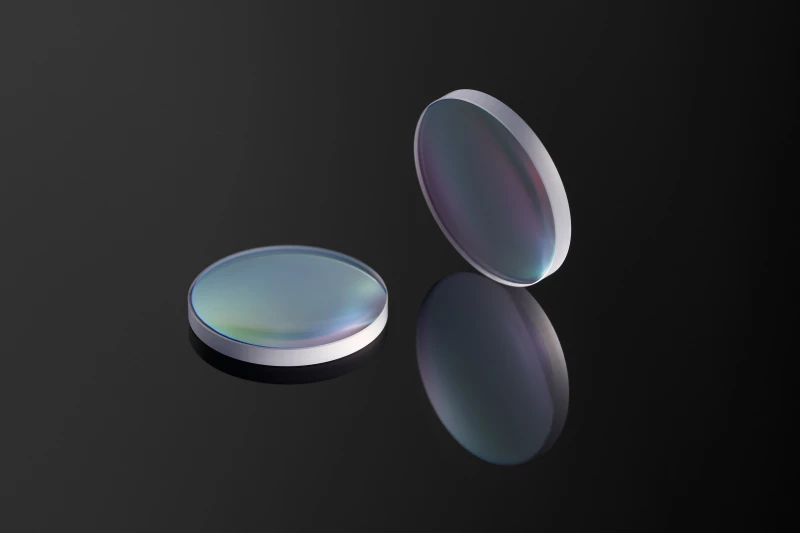
Fused silica is typically used for applications from the ultraviolet (UV) to the near infrared (NIR). Its high transmittance, good heat resistance, and excellent environmental durability make it suitable for use in laser equipment, emission and detection protection equipment, and imaging systems in the UV spectrum.Engineered via advanced grinding, polishing, and coating processes, these lenses deliver superior optical performance—minimizing chromatic aberration, scatter, and absorption—making them ideal for demanding applications where precision, thermal stability, and environmental resilience are critical.Available in configurations like plano-convex, biconvex, plano-concave, and aspherical, fused silica lenses are tailored to focus, collimate, or shape light in systems ranging from high-power lasers to analytical instruments. Their non-porous, chemically inert structure ensures long-term reliability in harsh conditions (e.g., high temperatures, corrosive environments), outperforming traditional glass lenses in extreme operational settings.
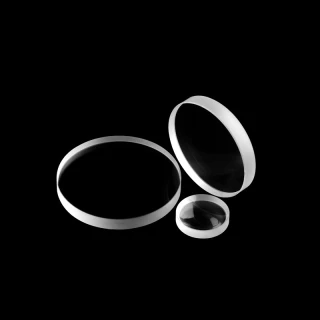
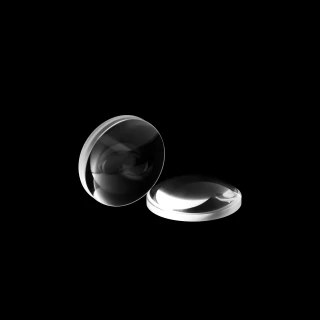
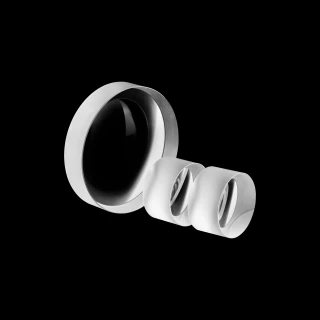
Custom 1064nm Fused Silica Biconvex Lens
Specifications
| Material: | UVFS |
|---|---|
| Diameter: | 50.8 mm |
| Focal Length: | 500 mm |
| Edge Thickness, Te: | 2.5 mm |
| Lens Type: | Bi-Convex |
| Diameter Tolerance: | +0/-0.1mm |
| Thickness Tolerance: | ±0.1mm |
| Surface Quality: | 60-40,40-20,or better |
| Surface Accuracy: | 1/4 lambda |
| Concentricity: | <3 arcmin |
Got questions about specs? Use the inquiry form to ask.
 Download Data Sheet

Features
-
Broad Spectral Transmittance: >90% transmittance from 185 nm (deep UV) to 2.1 μm (NIR), enabling use across multiple wavelength bands
-
Low Chromatic Aberration: Ultra-low dispersion (Abbe number ~67) reduces color fringing, critical for high-resolution imaging/spectroscopy
-
Exceptional Thermal Stability: Low coefficient of thermal expansion (0.55 × 10⁻⁶ /°C) minimizes optical distortion even in temperature-fluctuating environments
-
High Laser Damage Threshold: Resistant to high-power laser radiation (typical threshold: >10 J/cm² @ 1064 nm, 10 ns pulse), suitable for laser processing systems
-
Chemical & Environmental Resistance: Inert to most acids, alkalis, and moisture; non-porous surface resists scratching and contamination
-
Customizable Configurations: Available in various shapes, sizes, coatings (anti-reflective, AR/HR), and mounting options (threaded, unmounted) to match system requirements
Applications
-
Laser Systems: Used in laser cutting, welding, and marking equipment to focus high-power beams; also in laser microscopy and lidar for beam shaping
-
Semiconductor Manufacturing: Integrated into photolithography tools (deep UV wavelengths) to pattern microchip circuits with sub-micron precision
-
Analytical Instruments: Deployed in UV-Vis-NIR spectrometers, fluorescence microscopes, and Raman spectroscopy systems to enhance light collection and wavelength accuracy
-
Aerospace & Defense: Utilized in satellite-borne sensors, missile guidance optics, and night-vision devices for their thermal stability and broad spectral range
-
Medical Devices: Found in UV sterilization systems, ophthalmic equipment, and laser-based surgical tools (e.g., refractive eye surgery) due to biocompatibility and precision
Frequently Asked Questions
Can fused silica lenses be used in deep UV (DUV) applications (e.g., 193 nm)?
What coating options are available for fused silica lens?
Are fused silica lenses suitable for high-power laser applications?
What makes fused silica lens different from borosilicate glass lens?
Got more questions? Use the RFQ form to ask the supplier directly.
Similar Products
Need pricing for this product? Send a quick inquiry
Your inquiry has been received.
Create an account by adding a password
Why create an account?
- Auto-complete inquiry forms
- View and manage all your past messages
- Save products to your favorites
- Close your account anytime — no hassle