


Description
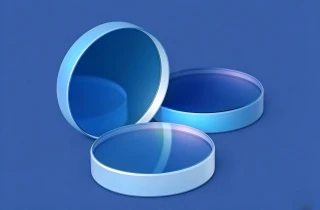
Sapphire spherical lenses are high-performance optical components designed for demanding laser, infrared, ultraviolet, and harsh-environment applications.
Manufactured from single-crystal aluminum oxide (Al2O3), sapphire lenses provide exceptional hardness, thermal conductivity, chemical resistance, and broad optical transmission from UV to mid-IR wavelengths.
Their durability and optical stability make them ideal for aerospace systems, spectroscopy, semiconductor processing, medical devices, fiber optics, and high-power laser applications.
Sapphire spherical lenses are available in plano-convex, plano-concave, bi-convex, and bi-concave geometries with optional anti-reflection coatings optimized for specific wavelength ranges.
Why Use Sapphire Optical Lenses?
Sapphire is one of the hardest and most durable optical materials available, making it ideal for demanding optical environments where conventional glass optics may fail. Sapphire spherical lenses offer:
- Exceptional scratch resistance
- High thermal conductivity
- Broad UV to IR transmission
- Excellent chemical resistance
- High mechanical strength
- Long operational lifetime in harsh environments
Compared to conventional optical glass, sapphire maintains superior performance under high temperatures, high pressures, abrasive environments, and high-power laser exposure.
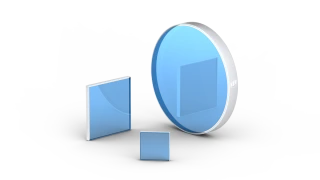
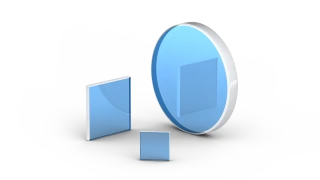
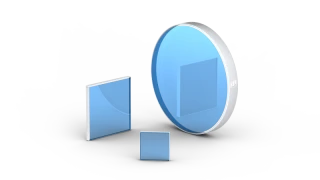
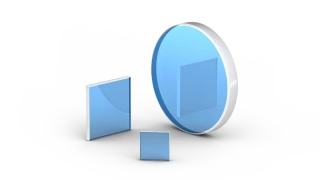
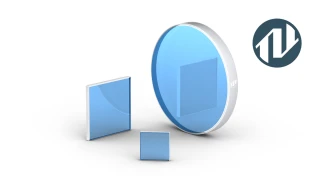
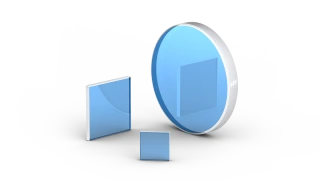
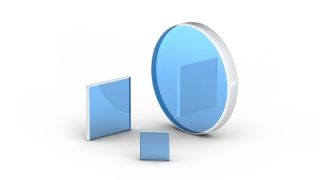
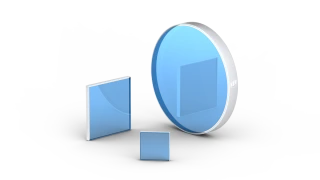
Sapphire Optical Flat Windows
Specifications
| Substrate Material: | N-BK7, Fused Silica, UV Grade Fused Silica (UVFS)), IR Grade Fused Silica (IRFS), Sapphire |
|---|---|
| Diameter (or Largest Dimension): | 200 mm |
| Thickness: | Not Specified |
| Antireflection Coating: | Coated, Uncoated |
| Surface Quality (Scratch-Dig): | 10-5, 20-10, 40-20, 60-40 |
| Surface Flatness: | <= Lambda/8 |
| Diameter Tolerance: | +/-0.1mm (+/-0.005mm for customized high precision) |
| Thickness Tolerance: | +/-0.1mm (+/-0.005mm for customized high precision) |
| Surface Quality: | 60/40 (10/5 for customized high precision) |
| Parallelism: | +/-3 arc minutes (+/-5 arc seconds for customized high precision) |
| Flatness: | up to 1/8 lambda per 25.4mm at 632.8nm for customized high precision |
Got questions about specs? Use the inquiry form to ask.
 Download Data Sheet

Features
Sapphire vs Conventional Optical Glass
Compared to BK7 or fused silica lenses, sapphire spherical lenses provide significantly greater hardness, improved chemical resistance, and superior thermal durability. Sapphire is especially advantageous in abrasive, high-temperature, high-pressure, and chemically aggressive environments where conventional optics may degrade or fail.
Applications
- High-power laser systems
- Infrared optical systems
- UV optical instrumentation
- Fiber optic coupling
- Aerospace and defense optics
- Spectroscopy systems
- Semiconductor processing
- Medical and endoscopic optics
- Harsh-environment imaging systems
- Industrial sensing and metrology
- Inspection and metrology
- Optical imaging
- Microscopy
Frequently Asked Questions
What are sapphire spherical lenses used for?
Why use sapphire instead of glass lenses?
What wavelength range does sapphire transmit?
Are AR coatings available for sapphire lenses?
What types of sapphire lenses are available?
Got more questions? Use the inquiry form to ask the supplier directly.
Similar Products
Your inquiry has been received.
Create an account by adding a password
Why create an account?
- Auto-complete inquiry forms
- View and manage all your past messages
- Save products to your favorites
- Close your account anytime — no hassle