

Description
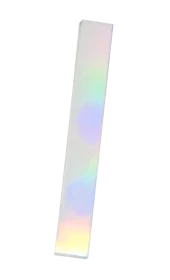
Aperiodically Poled KTP (apKTP) crystals represent a major advance in nonlinear optical materials, specifically engineered for high‑performance quantum light generation. Built on the robust potassium titanyl phosphate (KTP) platform, these crystals use carefully designed, non‑uniform poling patterns instead of the standard uniform periodic poling found in ppKTP. By precisely tailoring the domain structure, apKTP enables fine control over the spontaneous parametric down‑conversion (SPDC) process, allowing quantum researchers to directly shape the joint spectral amplitude and temporal characteristics of photon pairs at the crystal level.
Unlike conventional periodically poled devices, aperiodically poled KTP can incorporate optimized poling sequences, including chirped and custom domain patterns, to produce quantum states with targeted properties. This design freedom supports the generation of spectrally factorable photon pairs with very high purity, engineered entanglement structures, ultrabroadband or narrowband spectra, and highly indistinguishable photons suitable for advanced quantum interference experiments. As a result, apKTP has become a preferred platform for demanding quantum optics setups where control over the joint spectrum and temporal correlations directly impacts system fidelity and scalability.
High Purity apKTP (HP‑apKTP) takes these advantages further by optimizing the crystal specifically for telecom‑band photon generation. Configured as a type‑II nonlinear crystal and typically pumped in the 775–795 nm range (e.g., with Ti:sapphire lasers), HP‑apKTP produces degenerate photon pairs in the low‑loss telecom window. The intrinsic spectral engineering built into the poling structure allows users to achieve very high spectral purity and indistinguishability without relying on external narrowband filters, significantly reducing optical losses and preserving brightness and heralding efficiency. This makes HP‑apKTP especially attractive for long‑distance fiber‑based quantum communication and integrated quantum network experiments.
By directly engineering the nonlinear interaction inside the crystal, apKTP supports applications that require precise quantum state shaping. These include high‑brightness entangled photon sources for quantum key distribution, broadband or narrowband photon generation tailored to specific quantum memories, and multi‑mode or multiplexed photon sources for scalable quantum computing architectures. The ability to generate highly pure, indistinguishable photons with minimal post‑processing also improves Hong–Ou–Mandel interference visibility, enabling more reliable two‑photon gates, boson sampling experiments, and complex interferometric protocols.
For quantum sensing and metrology, aperiodically poled KTP crystals offer the flexibility to engineer bandwidth, group‑velocity matching, and temporal correlations to optimize sensitivity and resolution. Carefully designed apKTP structures can yield ultrabroadband SPDC for high‑axial‑resolution quantum optical coherence tomography, or narrowband, long‑coherence‑time photons for precision timing and phase measurements. Across these diverse use cases, HP‑apKTP provides a robust, room‑temperature, high‑damage‑threshold solution that integrates smoothly with existing laser platforms and fiber‑optic components, making it a powerful, practical tool for cutting‑edge quantum photonics research and development.
High Purity Aperiodically Poled KTP Crystal for Quantum Entangled Photon Sources
Specifications
| Crystal Type: | apKTP (Aperiodically Poled KTP) |
|---|---|
| Phase Mathcing Type: | Type II |
| Mounting: | Unmounted, Mounted |
| Flatness: | Not Available |
| Surface Quality (Scratch-Dig): | Not Available |
| AR Coating: | Both Sides |
| Crystal Type: | High Purity aperiodically poled KTP (HP-apKTP) |
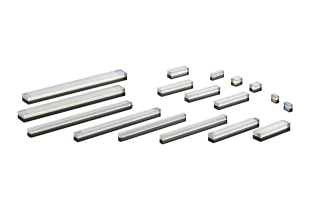
| Height: | 0.5 or 1mm |
| Length: | customizable up to 30mm |
Got questions about specs? Use the inquiry form to ask.
 Download Data Sheet

Features
- Breakthrough Aperiodically Poled KTP (apKTP) Technology – Advanced non-uniform domain engineering (including chirped and custom aperiodic poling) provides unprecedented control over the joint spectrum of down‑converted photons, far beyond conventional periodically poled KTP (ppKTP).
- High-Purity apKTP for Telecom Wavelengths – Raicol’s High Purity apKTP is specifically optimized for telecom bands, enabling degenerate SPDC around 1550 nm when pumped at 775–795 nm, ideal for long‑distance quantum communication and fiber‑based quantum networks.
- Type-II Phase Matching for Ti:Sapphire Pumping – Designed as a Type‑II nonlinear crystal, perfectly suited for Ti:Sapphire laser pumping in the 775–795 nm range, supporting efficient, stable, and well‑defined down‑conversion for quantum optics experiments.
- Engineered Spectral Purity Without External Filters – Custom aperiodic poling patterns shape the SPDC joint spectrum to produce highly pure single photons directly from the source, eliminating the need for narrowband filtering and significantly reducing insertion losses.
- Enhanced Entangled Photon Source Performance – Increased spectral purity and photon indistinguishability improve entangled photon source brightness, fidelity, and stability, outperforming standard ppKTP and periodically poled lithium niobate (ppLN) solutions.
- Ultra-High Hong–Ou–Mandel (HOM) Visibility – Precisely tailored domain structures enable exceptionally narrow HOM dips and very high two‑photon interference visibility, critical for quantum information processing, boson sampling, and quantum interference experiments.
- Custom Joint Spectrum Engineering – Aperiodic poling allows fine control over frequency correlations, supporting factorable (uncorrelated) photon pairs, engineered frequency entanglement, or specific spectral shapes for protocol‑optimized quantum states.
- Generation of Highly Pure Single Photons – Intrinsically factorable photon‑pair states support the direct generation of heralded single photons with high purity, enabling scalable quantum computing and photonic quantum information platforms.
- Tailored Entangled States – Supports the creation of specific polarization, time‑bin, frequency‑bin, and hybrid entangled states by design of the poling profile, enabling application‑optimized sources for quantum communication and sensing.
- Ultrabroadband SPDC Capability – Chirped and non‑uniform poling designs can produce ultrabroad‑spectrum SPDC emission, providing wide tunability and support for ultrafast quantum optics and multiplexed quantum communication schemes.
- Multi-Mode and Multi-Channel Generation – Carefully designed aperiodic structures enable simultaneous generation of multiple spectral or spatial modes, paving the way for high‑dimensional entanglement and multiplexed quantum networks.
- Reduced System Complexity and Loss – By embedding spectral engineering directly into the crystal, apKTP removes or minimizes external filtering stages, simplifying setups, increasing throughput, and improving system signal‑to‑noise ratio.
- High Nonlinear Efficiency with KTP Material Advantages – Maintains the favorable properties of KTP (high nonlinear coefficient, wide transparency range, high optical damage threshold, low photorefractive damage) while adding advanced spectral control via aperiodic poling.
- Optimized for Quantum Communication and Quantum Networks – Telecom‑band operation, low loss, and engineered spectral properties make HP‑apKTP ideal for entangled photon pair sources in quantum key distribution (QKD), quantum repeaters, and fiber‑based quantum links.
- Ideal for Quantum Computing and Photonic Circuits – High spectral purity and indistinguishability directly support multi‑photon interference, cluster‑state generation, and scalable photonic quantum computing architectures on and off chip.
- Advanced Quantum Sensing and Metrology – Engineered quantum states and high‑visibility interference improve the precision and robustness of quantum sensors, quantum metrology setups, and timing or phase‑sensitive measurements.
- Custom Aperiodic Poling Design Service – Poling patterns can be tailored to target specific joint spectral amplitudes, bandwidths, and correlation properties as described in state‑of‑the‑art research (e.g., custom poling per Dosseva et al., Phys. Rev. A 93, 013801 (2016)).
Applications
- Heralded Single-Photon Sources for Quantum Information
Aperiodically poled KTP (apKTP) is widely used to build high-purity heralded single-photon sources based on spontaneous parametric down-conversion (SPDC). The engineered non-uniform poling enables factorable joint spectral amplitudes, minimizing spectral entanglement and eliminating the need for narrowband filtering. This significantly increases heralding efficiency and brightness compared with standard ppKTP or ppLN crystals. - Entangled Photon Pair Generation
apKTP crystals are ideal for generating polarization-, time-bin-, and frequency-entangled photon pairs with precisely tailored spectral properties. Custom aperiodic poling profiles allow control over bandwidth, central wavelength, and spectral correlations, enabling highly indistinguishable entangled states for advanced quantum optics experiments. - High-Purity Telecom-Band Sources (C- and L-Band)
HP-apKTP is optimized for telecom wavelengths, typically using Ti:Sapphire pumping around 775–795 nm to produce degenerate SPDC near 1550 nm. This provides ultra-high spectral purity directly in the low-loss fiber window, crucial for long-distance quantum communication, quantum repeaters, and integration with existing fiber-optic infrastructure. - Quantum Key Distribution (QKD) and Quantum Networks
The high spectral purity and indistinguishability of photons from HP-apKTP make it an excellent platform for entangled-photon QKD protocols (e.g., BBM92, E91) and entanglement distribution in quantum networks. Reduced filtering loss improves key rates, channel reach, and overall security performance in free-space and fiber-based QKD links. - Linear Optical Quantum Computing (LOQC)
apKTP is used as a deterministic source component for multi-photon interference experiments and photonic quantum computing architectures. The ability to engineer narrow Hong-Ou-Mandel (HOM) dips and minimize spectral distinguishability directly translates into higher two-photon and multi-photon interference visibilities, improving gate fidelities and scalability. - Cluster-State and Measurement-Based Quantum Computing
Engineered apKTP sources provide reproducible, high-brightness and high-purity photons required for building large photonic cluster states. Controlled joint spectral properties reduce mode mismatch in complex interferometric networks, supporting robust measurement-based quantum computation and boson sampling experiments. - Quantum Teleportation and Entanglement Swapping
For protocols relying on high-visibility multi-photon interference, such as quantum teleportation and entanglement swapping, apKTP’s shaped joint spectra minimize spectral distinguishability across independently generated photon pairs. This leads to higher teleportation fidelities and more efficient entanglement distribution over quantum networks. - Hong-Ou-Mandel (HOM) Interference and Indistinguishability Tests
apKTP enables exceptionally narrow and deep HOM dips by suppressing unwanted spectral correlations. This is essential for fundamental tests of quantum interference, benchmarking single-photon sources, and verifying indistinguishability in integrated quantum photonics platforms. - Ultrabroadband SPDC Sources
Custom aperiodic and chirped poling patterns in KTP crystals allow generation of ultrabroadband SPDC light with highly controlled spectral envelopes. Such broadband sources are useful for ultrafast quantum optics, temporal-mode encoding, dispersive quantum interferometry, and multiplexed quantum communication schemes. - Frequency-Bin and Time-Bin Entanglement
By tailoring the joint spectral intensity and phase using apKTP, researchers can generate well-defined frequency-bin and time-bin entangled states. These states are advantageous for long-distance fiber transmission, spectral multiplexing, and compatibility with narrowband quantum memories. - Quantum Metrology and Quantum Sensing
apKTP-based SPDC sources provide spectrally engineered photon pairs for quantum-enhanced metrology, including sub-shot-noise interferometry, phase estimation, and ultra-precise timing measurements. High purity and controllable bandwidth are crucial for maximizing quantum advantage in sensing and imaging applications.
Frequently Asked Questions
What is aperiodically poled KTP (apKTP) and how does it differ from standard periodically poled KTP (ppKTP)?
What is Raicol’s High Purity apKTP (HP-apKTP) and what makes it suitable for quantum photonics at telecom wavelengths?
What are the main advantages of using apKTP over ppKTP or ppLN for entangled photon sources and single-photon generation?
Which pump wavelengths and phase-matching configuration are supported by HP-apKTP, and what output wavelengths can I expect?
How does apKTP improve Hong-Ou-Mandel (HOM) interference visibility and quantum interference experiments?
What quantum applications benefit most from Raicol’s HP-apKTP crystals?
Can the poling structure of apKTP be customized for specific SPDC spectra or entangled states?
Got more questions? Use the inquiry form to ask the supplier directly.
Similar Products



Your inquiry has been received.
Create an account by adding a password
Why create an account?
- Auto-complete inquiry forms
- View and manage all your past messages
- Save products to your favorites
- Close your account anytime — no hassle