


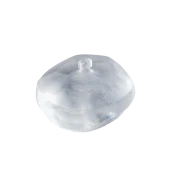
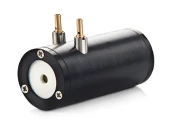
Description
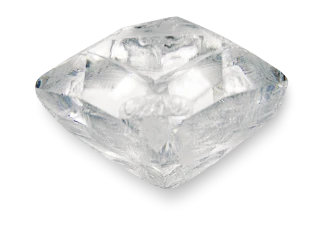
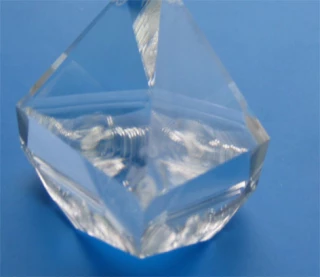
Beta-barium borate (BBO) crystals are among the most widely used nonlinear optical (NLO) materials for high-intensity laser applications, particularly where a broad wavelength range, high damage threshold, and excellent beam quality are critical. Thanks to their unique combination of properties, BBO crystals are ideally suited for efficient frequency conversion processes such as second, third, fourth, and fifth harmonic generation, sum-frequency generation, and optical parametric oscillation. This makes them a preferred choice in advanced laser systems employed in research laboratories, industrial processing, spectroscopy, and emerging photonics technologies.
One of the defining advantages of BBO is its very wide transparency range, extending from the deep ultraviolet through the visible and into the near infrared. This broad transmission window enables a single crystal platform to support frequency conversion from around 190 nm up to approximately 1780 nm, depending on the interaction geometry and pump source. At the same time, BBO exhibits a relatively high nonlinear coefficient compared with many alternative crystals that cover similar wavelength regions. In practical terms, this allows for efficient conversion even at moderate power levels and makes BBO especially attractive when compact or lower-energy laser sources must still deliver substantial output in the UV or other converted wavelengths.
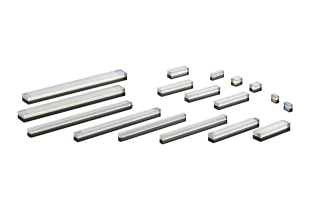
BBO crystals are also renowned for their high optical homogeneity and flat wavefront performance, which help preserve beam quality through the nonlinear interaction. Carefully controlled crystal growth and fabrication techniques yield components with low absorption coefficients at the main harmonic wavelengths of Nd:YAG and other common lasers, enabling high transmission and stable long-term operation. The combination of precision-cut apertures up to 10 × 10 mm and lengths up to 25 mm supports a wide variety of focusing conditions, from tight beams used in laboratory setups to larger apertures needed in higher-energy or industrial laser platforms. With typical specifications of flatness down to λ/10 and wavefront distortion controlled to λ/8 at 633 nm, users can integrate BBO crystals into sophisticated optical systems without compromising the spatial quality of the beam.
For demanding high-power pulsed applications, BBO’s high laser damage threshold is a key differentiator. Properly manufactured and coated crystals routinely withstand intensities on the order of several gigawatts per square centimeter at 1064 nm and around one gigawatt per square centimeter at 532 nm for nanosecond pulse durations. Anti-reflection and dual-band AR coatings with very low residual reflection help to minimize Fresnel losses at the crystal interfaces and reduce the risk of parasitic feedback or ghost reflections. This robustness is especially important in multi-stage harmonic generation chains, where the crystal may be exposed to multiple wavelengths and high peak powers over extended operating periods.
In terms of practical usage, BBO is commonly employed for harmonic generation of Nd:YAG lasers, supporting output at 532 nm, 355 nm, 266 nm, and 213 nm, as well as for higher-order harmonics of Ti:Sapphire and Alexandrite lasers. It is also frequently used for frequency doubling of Argon, Copper Vapor, and Ruby lasers. Beyond harmonic generation, BBO serves as a core material in optical parametric oscillators and amplifiers that extend tunability from the UV across the visible and into the near IR, enabling experiments and applications that require precise wavelength selection. In pump–probe experiments, ultrafast spectroscopy, and quantum optics, BBO’s favorable group-velocity and phase-matching characteristics have made it an industry standard for generating entangled photon pairs and broadband tunable radiation.
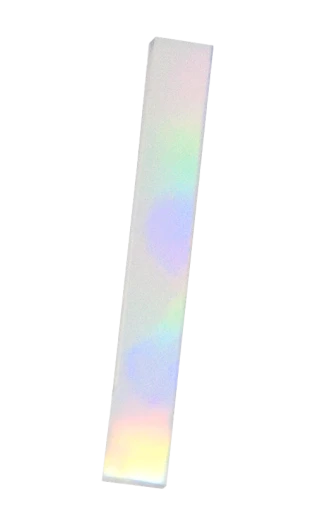
In addition to its nonlinear optical uses, BBO offers valuable electro-optic (EO) properties. When configured as EO cells, BBO can provide fast and precise modulation of laser beams for Q-switching, pulse picking, and intensity or phase modulation. The crystal’s wide transparency window allows such EO devices to operate over a broad spectral range, including deep UV, where many alternative EO materials become highly absorptive. Stable performance over a reasonably wide temperature bandwidth, along with precise control of parallelism, perpendicularity, and surface quality (such as 10/5 scratch-dig), ensures that BBO EO cells can maintain reliable operation in both laboratory and industrial environments.
Overall, BBO crystals and EO cells represent a highly versatile platform for nonlinear and electro-optic functions in advanced photonic systems. Their broad phase-matching range, high nonlinear efficiency, excellent optical quality, large damage threshold, and well-established fabricati
Beta Barium Borate BBO Nonlinear Crystals for SHG OPO Laser Applications
Specifications
| Crystal Type: | BBO (Beta Barium Borate) |
|---|---|
| Phase Mathcing Type: | Type II |
| Mounting: | Mounted, Unmounted |
| Width: | 10 mm |
| Height: | 10 mm |
| Length: | 25 mm |
| Flatness: | <= Lambda/10 |
| Surface Quality (Scratch-Dig): | 10-5 |
| AR Coating: | Both Sides |
| Maximum Aperture: | 10 x 10 mm |
| Maximum Length: | 25 mm |
| Perpendicularity: | up to 5 arc min |
| Parallelism: | up to 5 arc sec |
| Coatings: | AR/AR, DBAR dual band R < 0.2 % |
| Absorption Coefficient @ 1064 Nm: | < 15 ppm/cm |
| Absorption Coefficient @ 532 Nm: | < 50 ppm/cm |
| Absorption Coefficient @ 355 Nm: | < 500 ppm/cm |
| Wavefront Distortion Control: | λ/8 @ 633 nm |
| Guaranteed Laser Induced Damage Threshold @ 1064 Nm: | 5 GW/cm² (10 ns pulses) |
| Guaranteed Laser Induced Damage Threshold @ 532 Nm: | 1 GW/cm² (10 ns pulses) |
| Phase-Matching Range: | SHG, SFD and OPO from 190 to 1780 nm |
Got questions about specs? Use the inquiry form to ask.
 Download Data Sheet

Features
- Wide Transparency Range (190–3500 nm) – High transmission from deep UV through visible to near‑IR, enabling SHG, SFG, OPO, and frequency mixing across a very broad spectral range.
- Excellent UV Performance – Phase matching from 190 nm makes BBO ideal for deep‑UV generation, UV OPOs, and high‑energy harmonic conversion of Nd:YAG and Ti:Sapphire lasers.
- High Nonlinear Coefficient – Strong effective nonlinearities (deff up to ~2 pm/V for SHG) support efficient second, third, fourth, and fifth harmonic generation and difference‑frequency generation.
- High Damage Threshold – Guaranteed laser‑induced damage threshold up to 5 GW/cm² @ 1064 nm and 1 GW/cm² @ 532 nm (10 ns pulses), suitable for high‑peak‑power and high‑repetition‑rate laser systems.
- High Optical Homogeneity and Low Absorption – Low absorption coefficients of < 15 ppm/cm @ 1064 nm, < 50 ppm/cm @ 532 nm, and < 500 ppm/cm @ 355 nm minimize thermal effects and support stable, high‑power operation.
- Precision Wavefront and Surface Quality – Wavefront distortion controlled to λ/8–λ/10 @ 633 nm, with flatness up to λ/10 @ 633 nm and premium 10/5 scratch‑dig for low scatter and excellent beam quality.
- Accurate Angular Tolerances – Perpendicularity up to 5 arc min and parallelism up to 5 arc sec enable tight phase‑matching control and high conversion efficiency in demanding nonlinear setups.
- Versatile Aperture and Length Options – Clear aperture up to 10 × 10 mm and length up to 25 mm, optimized for both compact resonator designs and large‑aperture, high‑energy beam lines.
- Advanced AR and Dual‑Band Coatings – High‑performance AR/AR and DBAR (dual‑band R < 0.2%) coatings available for common harmonic wavelengths (e.g., 1064/532/355 nm), reducing Fresnel losses and parasitic reflections.
- Broad Phase‑Matching Capabilities – Supports Type I and Type II interactions for SHG, SFG, DFG, and OPO from ~190 to 1780 nm, covering Nd:YAG, Ti:Sapphire, Alexandrite, Argon, Cu‑vapor, Ruby, and many other laser sources.
- Electro‑Optic (EO) Cells from BBO – Leveraging BBO’s strong electro‑optic effect and high damage threshold for fast Pockels cells, Q‑switches, cavity dumpers, and pulse pickers in high‑power laser systems.
- High Temporal and Thermal Stability – Wide temperature bandwidth and low walk‑off help maintain stable phase matching over varying operating conditions, crucial for long‑term industrial and scientific use.
- Optimized for Multiple Harmonic Generations – Ideal for 2nd–5th harmonic generation of Nd:YAG lasers, as well as 2nd–4th harmonic conversion of Ti:Sapphire and Alexandrite, with proven performance in commercial harmonic modules.
- Low Photorefractive Effects – Compared to many oxide crystals, BBO exhibits low photorefractive damage, supporting long lifetime under intense CW or pulsed irradiation.
- EO and Nonlinear Expertise from Raicol – Backed by 50+ years of crystal growth experience and Raicol’s leadership in RTP, HGTR‑KTP, and PPKTP, delivering consistent, reproducible BBO performance from R&D to mass production.
- One‑Stop Manufacturing – Complete in‑house chain from crystal growth to cutting, polishing, coating, and EO cell assembly ensures tight quality control and short lead times.
- Mass Production and Custom R&D Capability – Standard configurations for common laser wavelengths alongside fully customized BBO crystals and EO cells for specialized research and OEM integration.
- Fast Delivery and Global Support – Optimized production and logistics provide quick turnaround for prototypes and volume orders, with global technical support for nonlinear and EO cell design.
Applications
Applications of BBO Crystals and Electro-Optic (EO) Cells
Beta-barium borate (BBO) crystals and EO cells are widely used in advanced photonics and laser systems due to their broad transparency range (deep UV to near-IR), high nonlinear coefficient, high damage threshold, and excellent electro‑optic properties. Below is a detailed, SEO‑optimized list of typical and emerging applications for BBO components.
1. Harmonic Generation of Solid-State Lasers
- Second Harmonic Generation (SHG) of Nd:YAG lasers (1064 nm to 532 nm) for green laser sources in industrial and scientific systems.
- Third Harmonic Generation (THG) of Nd:YAG lasers (1064 nm to 355 nm) for UV micromachining, laser marking, and microelectronics processing.
- Fourth Harmonic Generation (FHG) of Nd:YAG lasers (1064 nm to 266 nm) for deep UV applications, including semiconductor inspection and precision photolithography.
- Fifth Harmonic Generation of Nd:YAG lasers (down to ~213 nm) for specialized spectroscopy and UV materials research.
- SHG, THG, and FHG of Ti:Sapphire lasers (typically 800 nm fundamental) to generate tunable visible and UV radiation for ultrafast spectroscopy and nonlinear microscopy.
- Frequency conversion of Alexandrite lasers for visible and UV tunable sources in medical and scientific applications.
- SHG of argon-ion, copper vapor, and ruby lasers to extend their output into new spectral regions for research and materials processing.
2. Optical Parametric Oscillators (OPO) and Optical Parametric Amplifiers (OPA)
- OPO systems pumped by Nd:YAG and Ti:Sapphire lasers to generate widely tunable output from the UV through visible and into the near-IR.
- UV and visible OPO sources for spectroscopy, fluorescence excitation, lidar, and nonlinear optics research.
- Optical Parametric Amplifiers (OPA) for ultrafast pulse amplification and wavelength conversion in femtosecond laser systems.
- Widely tunable femtosecond and picosecond sources used in pump-probe experiments, multidimensional spectroscopy, and time-resolved studies.
3. Deep UV and UV Laser Generation
- Deep UV generation (below 260 nm) for semiconductor wafer inspection and photomask analysis.
- UV laser sources for microelectronics and precision micromachining, including drilling, scribing, and patterning of hard and transparent materials.
- UV excitation for fluorescence spectroscopy and confocal microscopy.
- UV sources for laser-induced breakdown spectroscopy (LIBS) and surface characterization.
4. Electro-Optic Modulation and Q-Switching
- BBO EO cells as Pockels cells for fast amplitude and phase modulation of laser beams.
- Q-switching of solid-state lasers (e.g., Nd:YAG, Nd:YLF, Nd:YVO4) to generate high-peak-power nanosecond pulses.
- Cavity dumping and pulse picking in regenerative amplifiers and mode-locked laser systems.
- Polarization control and fast optical shutters in high-power and ultrafast laser setups.
5. Ultrafast and Nonlinear Optics Experiments
- Frequency mixing and sum-frequency generation (SFG) for creating new wavelengths from two or more laser sources.
- Difference-frequency generation (DFG) to access mid-IR ranges when pumped by suitable visible/near-IR lasers.
- White-light continuum generation and pulse characterization, including autocorrelation and FROG/SPIDER techniques.
- Nonlinear spectroscopy such as pump–probe, time-resolved fluorescence, and multi-photon absorption studies.
6. Precision Measurement, Metrology, and Sensing
- Frequency doubling and mixing in optical frequency metrology and optical comb extension into the UV.
- High-stability reference sources in frequency standards and precision timing systems.
- Laser-based gas sensing and environmental monitoring using tunable UV/visible OPO or SHG sources.
- Lidar and remote sensing where UV and visible wavelengths are required for improved backscatter and species selectivity.
7. Industrial Laser Processing and Manufacturing
- UV and visible micromachining of glass, ceramics, polymers, and thin films enabled by frequency-converted solid-state lasers.
Frequently Asked Questions
What is a BBO crystal and what makes Raicol BBO unique for nonlinear optics?
What wavelength range can Raicol BBO crystals cover for SHG, SFG, and OPO applications?
What are typical laser damage thresholds and absorption coefficients of Raicol BBO crystals?
What are the standard sizes, surface quality, and flatness available for Raicol BBO crystals?
What antireflection (AR) coatings are available on Raicol BBO crystals and how do they perform?
What are common laser applications of Raicol BBO crystals and EO cells?
How do Raicol’s capabilities in crystal growth and EO cell assembly benefit BBO crystal users?
Got more questions? Use the inquiry form to ask the supplier directly.
Similar Products



Your inquiry has been received.
Create an account by adding a password
Why create an account?
- Auto-complete inquiry forms
- View and manage all your past messages
- Save products to your favorites
- Close your account anytime — no hassle