

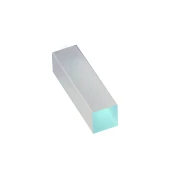
Description
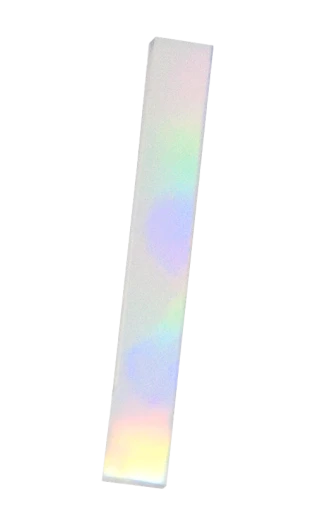
KTP OPO (Potassium Titanyl Phosphate Optical Parametric Oscillator) crystals are engineered for highly efficient conversion of 1064 nm laser radiation into eye‑safe and mid‑IR wavelengths, most notably around 1570–1572 nm. Thanks to their favorable nonlinear optical coefficients, high damage threshold, and excellent thermo‑mechanical stability, these crystals are widely used in advanced laser systems where reliability, conversion efficiency, and compact design are critical. In comparison with many alternative nonlinear materials, KTP OPO crystals offer a unique balance of high nonlinearity, wide transparency range, and robust handling, making them a preferred choice for OEMs and research laboratories alike.
These crystals are specifically optimized for optical parametric oscillation and amplification processes driven by 1064 nm pump lasers, such as Nd:YAG and Nd:YVO4 sources. By exploiting non‑critical phase matching for the eye‑safe signal region around 1572 nm, KTP OPO crystals provide stable and efficient wavelength conversion with minimal sensitivity to angular alignment and temperature fluctuations. The absence of walk‑off in these configurations allows for better spatial overlap of interacting beams, resulting in improved beam quality and higher conversion efficiency than is typically achievable with birefringent nonlinear crystals that suffer from spatial walk‑off.
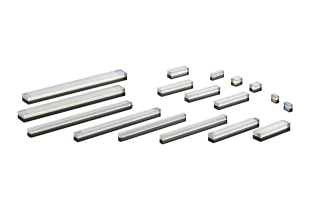
The crystals are available in a broad range of apertures up to 40 × 40 mm and lengths up to 40 mm, enabling scaling from compact, low‑power devices to high‑energy, large‑aperture systems. Multiple OPO architectures are supported, including regular bulk configurations, advanced monolithic designs (single‑ and double‑pass with mirror coatings), as well as plano‑plano and confocal resonator geometries. Monolithic KTP OPO designs typically deliver 20–30 % higher efficiency than conventional OPO setups, thanks to internal cavity integration, optimized coatings, and reduced alignment sensitivity. Confocal OPO configurations further reduce output beam divergence compared with simple plano‑plano cavities, which is advantageous for applications requiring long‑range propagation and tight focusing.
In addition to their performance at 1064 nm to 1570 nm conversion, these KTP OPO crystals can be supplied with walk‑off compensating (WOC) designs optimized around 2.1 µm, expanding their usability into the mid‑infrared regime. This is particularly beneficial for applications that demand high beam quality and stable parametric gain at longer wavelengths, such as mid‑IR spectroscopy, medical laser systems, and certain defense and environmental monitoring platforms. High‑quality anti‑reflection coatings with very low residual reflectivity and precisely controlled wavefront distortion support efficient, low‑loss operation under demanding pulsed conditions.
The typical specifications of these KTP OPO crystals reflect a high standard of optical quality and manufacturing precision. Apertures up to 40 × 40 mm2 and crystal lengths up to 40 mm along the X axis allow for tailored designs across a wide range of pulse energies. Orientation is typically θ = 90° and φ = 0°, with absorption coefficients below 50 ppm/cm at 1064 nm to minimize pump losses. Surface flatness is commonly specified at λ/10 at 633 nm, with optical wedge around 10 arc seconds, face perpendicularity within approximately 10 arc minutes, and cosmetic quality on the order of 10/5 scratch/dig. Dual‑band AR coatings with reflectance below 0.2 % and wavefront distortion controlled to about λ/4 at 633 nm support high‑fidelity beam propagation. Under typical nanosecond‑pulse operation at 1064 nm, damage thresholds of about 600 MW/cm2 (with coating) are achieved, ensuring robust performance in high‑peak‑power environments.
Owing to this combination of nonlinear efficiency, optical quality, and mechanical robustness, KTP OPO crystals are widely integrated into eye‑safe laser sources for laser range finders and laser designators, as well as in OPO and OPA front‑ends for LIDAR and other remote sensing systems. Their ability to deliver low‑divergence, eye‑safe output at 1.5–1.6 µm, together with compatibility with common 1064 nm pump lasers, makes them highly attractive for aerospace, defense, and civil applications where compact, rugged, and efficient wavelength conversion modules are required.
KTP OPO Crystal for Efficient 1064 nm to 1572 nm Laser Conversion
Specifications
| Crystal Type: | KTP (KTiOPO4) |
|---|---|
| Phase Mathcing Type: | Type II |
| Mounting: | Unmounted |
| Flatness: | <= Lambda/10 |
| Surface Quality (Scratch-Dig): | 10-5 |
| AR Coating: | Both Sides |
| Material: | KTP (for OPO 1064 nm to 1570 nm) |
| Input Wavelength: | 1064 nm |
| Signal Wavelength (eye-safe): | 1572 nm |
| Aperture: | up to 40 x 40 mm² |
| Length: | up to 40 mm along X axis |
| Orientation θ: | 90° |
| Orientation φ: | 0° |
| Absorption Coefficient At 1064 Nm: | < 50 ppm/cm |
| Surface Flatness: | λ/10 @ 633 nm |
| Optical Wedge (polarization Along Y Axis): | 10 arc sec |
| Perpendicularity: | 10 arc min |
| Scratch/Dig: | 10/5 |
| AR Coatings: | dual band R < 0.2% |
| Wavefront Distortion Control: | λ/4 @ 633 nm |
| Guaranteed Damage Threshold: | 600 MW/cm² at 1064 nm, 10 ns pulses |
| Non-critical Phase Matching: | for eye-safe signal at 1572 nm |
| Walk-Off Compensation: | design WOC available at 2.1 μm |
Got questions about specs? Use the inquiry form to ask.
 Download Data Sheet

Features
- High-Efficiency Eye-Safe Conversion (1064 → 1572 nm)
Optimized KTP OPO crystals provide highly efficient frequency conversion of 1064 nm Nd:YAG lasers to the eye-safe 1572 nm region and other signal/idler wavelengths, ideal for modern range-finding and remote sensing systems. - Large Clear Aperture up to 40 × 40 mm²
Supports high-energy, large-beam and multi-mode laser systems with apertures up to 40 × 40 mm², enabling higher pulse energies and improved beam quality for demanding industrial, military, and scientific applications. - Flexible Crystal Length up to 40 mm
Crystal lengths up to 40 mm along the X-axis allow optimization of gain, conversion efficiency, and beam quality across a wide range of OPO cavity designs and pump powers. - Multiple OPO Configurations Available
Offered in Regular OPO, Monolithic OPO (single- and double-pass with integrated mirror coatings), and Plano-Plano and Confocal OPO geometries to match diverse system layouts and performance requirements. - Monolithic OPO with 20–30% Higher Efficiency
Integrated monolithic designs reduce intracavity losses and alignment sensitivity, delivering 20–30% higher conversion efficiency than typical non-monolithic OPO setups. - Reduced Beam Divergence with Confocal OPO
Confocal cavity OPO configurations provide lower output beam divergence compared to standard plano-plano OPOs, resulting in improved beam quality and longer effective range in LRF and LIDAR systems. - Noncritical Phase Matching for 1572 nm Signal
Designed for noncritical phase matching (NCPM) at the eye-safe 1572 nm signal wavelength, minimizing angular sensitivity, easing alignment, and improving stability over temperature and time. - No Spatial Walk-Off for Improved Beam Overlap
Engineered to exhibit no walk-off at the 1064 → 1572 nm conversion, enhancing pump–signal–idler overlap, increasing efficiency, and maintaining excellent beam quality. - Walk-Off Compensating (WOC) Design at 2.1 μm
Optional walk-off compensating designs at 2.1 μm enable higher performance for mid-IR generation, medical, and spectroscopy applications where beam overlap is critical. - Low Absorption for High Power Handling
Very low absorption coefficient of α < 50 ppm/cm at 1064 nm minimizes thermal loading, supports high-average-power operation, and improves long-term stability of the OPO system. - High Optical Quality and Surface Accuracy
High-precision fabrication with flatness λ/10 @ 633 nm, optical wedge 10 arc sec, and perpendicularity 10 arc min ensures excellent cavity alignment, minimal aberrations, and stable resonator performance. - Superior Surface Finish and Low Scatter
Manufactured to 10/5 scratch/dig quality, reducing scattering losses and enhancing effective nonlinear interaction length and output power. - Advanced Dual-Band AR Coatings
High-performance, dual-band anti-reflection coatings with R < 0.2% minimize Fresnel losses at pump and signal/idler wavelengths, improving overall system efficiency and reducing intracavity power buildup. - Controlled Wavefront Distortion
Tight control of wavefront distortion to λ/4 @ 633 nm preserves beam quality and mode structure, which is critical for single-mode and diffraction-limited OPO systems. - High Laser Damage Threshold
Guaranteed damage threshold of 600 MW/cm² at 1064 nm (10 ns pulses, with coating) enables use in high-peak-power and Q-switched laser systems without compromising reliability. - Wide Application Range: OPO, OPA, LRF, LIDAR
Ideal for OPO and OPA frequency conversion, laser range finders, laser designators, LIDAR, spaceborne instruments, and other civil and defense applications requiring compact, eye-safe, and efficient sources. - Precise Orientation for Optimized Nonlinear Performance
Oriented at θ = 90°, φ = 0° with polarization along the Y axis to ensure optimal phase matching and consistent nonlinear performance across production batches. - Proven HGTR KTP Technology
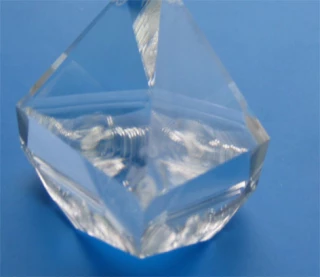
Grown using high-growth-temperature-resistant (HGTR) KTP methods, providing improved homogeneity, reduced inclusions, and enhanced long-term reliability compared to standard KTP crystals. - Eye-Safe Laser Sources at 1.57 µm
Generation of 1570–1572 nm “eye-safe” output from 1064 nm pump lasers for applications requiring reduced ocular hazard and compliance with eye-safety standards. - Laser Range Finders (LRF)
High-efficiency OPO stages in military and industrial laser range finders operating around 1.5–1.6 µm for long-range distance measurement with reduced risk to human eyesight. - Laser Designators and Target Marking
Conversion of 1064 nm Nd:YAG or fiber lasers to 1.57 µm and other NIR/MIR wavelengths for precision target designation, guidance systems, and tactical illumination. - LIDAR and 3D Mapping
Use in eye-safe LIDAR transmitters for topography, forestry, infrastructure monitoring, and autonomous navigation, taking advantage of high conversion efficiency and low beam divergence in confocal OPO configurations. - Atmospheric Sensing and Environmental Monitoring
Tunable OPO/OPA sources for differential absorption LIDAR (DIAL), monitoring of greenhouse gases (e.g., CO₂, CH₄), aerosols, and pollutants in the 1.5–2.5 µm spectral region. - OPO and OPA Pump Stages
Core nonlinear medium in optical parametric oscillators (OPO) and optical parametric amplifiers (OPA) pumped at 1064 nm, providing tunable signal and idler beams from the near-IR to the mid-IR. - Mid-Infrared (Mid-IR) Tunable Sources
Generation of mid-IR wavelengths (typically 2–4 µm and beyond) for spectroscopy, medical diagnostics, materials processing, and defense by exploiting wide transparency range and noncritical phase matching. - Spectroscopy and Chemical Sensing
Narrowband, tunable IR sources for absorption spectroscopy, trace gas detection, and identification of chemical and biological agents in laboratory and field-deployable systems. - Eye-Safe Telecom-Band Experimentation
Development of sources near telecom windows (around 1.5 µm) for experimental photonic systems, component testing, and nonlinear fiber optics research. - Spaceborne and Airborne LIDAR Systems
Robust OPO modules for satellite and airborne platforms performing cloud profiling, wind measurement, terrain mapping, and climate research at eye-safe wavelengths. - Remote Sensing and Stand-Off Detection
Tunable IR radiation for stand-off detection of hazardous materials, explosives, and chemical vapors using active illumination and spectroscopic signatures. - Medical and Biomedical Applications
Generation of specific IR wavelengths for minimally invasive procedures, ophthalmology research, tissue spectroscopy, and photothermal therapy where controlled absorption in water and tissue is required. - Industrial Metrology and Process Control
Use in precision distance measurement, vibrometry, and real-time process monitoring systems that benefit from eye-safe wavelengths and high beam quality. - Nonlinear Optics Research and Development
Platform for studying parametric processes, frequency conversion, entangled photon generation, and advanced nonlinear phenomena using high-quality HGTR KTP crystals. - Defense and Security Systems
Integration in multispectral pointer/illuminator units, active imaging systems, and countermeasure platforms requiring rugged, efficient, and compact eye-safe OPO modules. - Confocal OPO Sources with Low Divergence
Applications requiring long propagation distances and tight focusing, such as high-resolution LIDAR and remote marking, where reduced beam divergence from confocal OPO geometry is critical. - High-Power Pulsed IR Sources
Generation of high-peak-power IR pulses (ns regime) for material interaction studies, nonlinear fiber excitation, and pump-probe experiments, supported by high damage threshold and excellent wavefront control. - Walk-Off Compensated OPO at 2.1 µm
Use of walk-off compensating designs for efficient generation around 2.1 µm in applications such as medical laser systems, mid-IR spectroscopy, and specialty machining. - Compact and Monolithic OPO Modules
Single- and double-pass monolithic OPO designs with integral mirror coatings for OEM integration in rugged, alignment-stable, and maintenance-free laser subsystems.
Applications
Frequently Asked Questions
What is a KTP OPO crystal and what wavelengths can it generate from 1064 nm?
Why choose Raicol KTP OPO crystals over other nonlinear materials for 1570–1572 nm eye‑safe lasers?
What OPO configurations are available (Regular, Monolithic Single/Double Pass, Plano‑Plano, Confocal), and how do they differ?
What are the typical size and optical specifications of Raicol KTP OPO crystals for 1064 to 1570 nm conversion?
How efficient is a Raicol monolithic KTP OPO compared to a standard cavity‑based OPO?
What is the damage threshold and how should KTP OPO crystals be pumped to avoid damage?
What applications are Raicol KTP OPO crystals best suited for and why are they popular for eye‑safe systems?
Got more questions? Use the inquiry form to ask the supplier directly.
Similar Products



Your inquiry has been received.
Create an account by adding a password
Why create an account?
- Auto-complete inquiry forms
- View and manage all your past messages
- Save products to your favorites
- Close your account anytime — no hassle