


Description
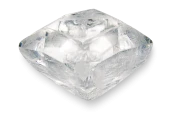
LBO (Lithium Triborate, LiB3O5) is a high‑performance nonlinear optical crystal widely used in frequency conversion of solid‑state and ultrafast lasers. Known for its broad transparency range from the deep UV to the mid‑IR (approximately 160 nm to 2600 nm), high damage threshold, and excellent mechanical and chemical stability, LBO has become a workhorse material wherever reliable and efficient harmonic generation is required. Compared with traditional materials such as KTP or BBO, LBO offers a very attractive balance of nonlinear efficiency, power handling, and environmental robustness, making it suitable for both laboratory research and demanding industrial applications.
In laser systems, LBO crystals are particularly valued for second harmonic generation (SHG), third harmonic generation (THG), and other nonlinear frequency conversion processes of high power diode‑pumped Nd:YAG, Nd:YLF, Ti:Sapphire, Alexandrite, Dye, and ultrashort pulse lasers. The crystal supports both Type I and Type II phase matching over a wide wavelength range, enabling flexible optimization of conversion efficiency for different pump wavelengths and operating regimes. Its wide angular and temperature acceptance bandwidth and relatively small walk‑off angle contribute to stable output and ease of alignment, which is crucial in high‑precision scientific setups as well as OEM laser modules.
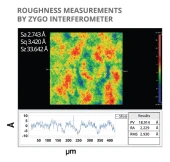
These LBO crystals are manufactured with super‑polished surfaces and extremely low bulk absorption for superior beam quality and long‑term reliability under high average powers. Surface roughness as low as ≤ 3 Å RMS and surface quality down to 2/1 scratch‑dig minimize scattering and parasitic losses, preserving the spatial and temporal quality of the fundamental and converted beams. Bulk absorption at 1064 nm can be as low as a few ppm/cm, which is essential for efficient frequency doubling and tripling in high‑brightness Nd‑based laser systems. This level of optical quality directly translates into higher conversion efficiency, reduced thermal lensing, and improved system stability, even under demanding repetition rates and pulse energies.
To support a wide variety of laser architectures, LBO crystals are available in large apertures up to 50 × 50 mm2 and lengths up to about 70 mm, depending on aperture size and application requirements. This flexibility allows precise tailoring of the crystal geometry for single‑mode or multimode beams, from compact laboratory oscillators to high‑energy amplifiers. The high degree of optical homogeneity and flatness (up to λ/10 at 1064 nm) ensures minimal wavefront distortion, while tight tolerances on parallelism and perpendicularity enable precise phase‑matching and straightforward integration into existing opto‑mechanical mounts.
The combination of high nonlinear coefficient, high laser‑induced damage threshold, and low absorption makes LBO a preferred choice for high‑peak‑power and high‑average‑power systems, including OPCPA stages and ultrafast laser frequency conversion. Typical damage thresholds can reach into the multi‑GW/cm2 regime for nanosecond pulses at fundamental and harmonic wavelengths, supporting reliable long‑term operation at 1064 nm, 532 nm, and 355 nm. With optimized anti‑reflection coatings providing very low residual reflectance over single or dual bands, these LBO crystals deliver efficient throughput, reduced back‑reflections, and enhanced lifetime in both pulsed and CW environments.
Overall, LBO crystals offer a well‑balanced solution for modern nonlinear optical systems, combining broad transparency, high efficiency, and robust physical properties. They are ideally suited for frequency conversion in industrial marking and micromachining lasers, medical and biomedical laser sources, scientific research systems, and OEM instrumentation requiring stable, high‑power UV, visible, or green output derived from infrared pump lasers.
LBO Nonlinear Optical Crystal for Harmonic Generation High Power Lasers
Specifications
| Crystal Type: | LBO (Lithium Triborate) |
|---|---|
| Phase Mathcing Type: | Type II |
| Mounting: | Unmounted |
| Width: | 50 mm |
| Height: | 50 mm |
| Length: | 50 mm |
| Flatness: | <= Lambda/10 |
| Surface Quality (Scratch-Dig): | 10-5 |
| AR Coating: | Not Coated, Both Sides, One side |
| Transparency Range: | 160 nm – 2600 nm |
| Maximum Crystal Aperture: | 50 x 50 mm² |
| Maximum Crystal Length (general): | 50 mm |
| Maximum Crystal Length (typical Spec): | 70 mm (depends on aperture) |
| Surface Roughness: | ≤ 3 Å RMS |
| Flatness: | up to λ/10 @ 1064 nm |
| Parallelism: | up to 5 arc sec |
| Perpendicularity: | up to 5 arc min |
| Scratch/Dig: | up to 0/0 per custom demand |
| AR Coatings (dual Band Standard Reflectance): | R < 0.2%, 0.5%, possible R < 0.1% |
| Bulk Absorption @1064 Nm (max): | < 20 ppm/cm |
| Bulk Absorption @1064 Nm (typical): | < 4 ppm/cm |
| Surface Absorption @1064 Nm (super Polish): | < 2 ppm |
| Bulk Absorption @532 Nm (max): | < 35 ppm/cm |
| Bulk Absorption @532 Nm (typical): | < 8 ppm/cm |
| Surface Absorption @532 Nm (super Polish): | < 2 ppm |
| Wavefront Distortion: | λ/8 @ 633 nm |
| Laser Induced Damage Threshold @1064 Nm: | 2500 MW/cm² |
| Laser Induced Damage Threshold @532 Nm: | 1000 MW/cm² |
| Laser Induced Damage Threshold @355 Nm: | 500 MW/cm² |
| Damage Threshold Test Conditions: | 10 ns pulses @ 10 Hz |
| Surface Quality (super Polished): | roughness ≤ 3 Å RMS and scratch-dig 2/1 |
Got questions about specs? Use the inquiry form to ask.
 Download Data Sheet

Features
- High-Performance Nonlinear Optical Crystal – LBO (Lithium Triborate, LiB3O5) designed for demanding frequency conversion in industrial, scientific, and medical laser systems.
- Broad Transparency Range: 160–2600 nm – Supports efficient operation from deep-UV through visible to mid-IR, ideal for multi-wavelength and tunable laser systems.
- Excellent for Harmonic Generation – Optimized for 2nd and 3rd harmonic generation (SHG, THG) of high-power diode-pumped Nd:YAG, Nd:YLF, Alexandrite, Ti:Sapphire, dye, and ultrashort-pulse lasers.
- OPCPA-Ready Crystal – Widely used in Optical Parametric Chirped Pulse Amplification (OPCPA) setups thanks to high damage threshold, low absorption, and broad phase-matching capabilities.
- High Damage Threshold – Withstands up to 2500 MW/cm2 @ 1064 nm, 1000 MW/cm2 @ 532 nm, and 500 MW/cm2 @ 355 nm (10 ns, 10 Hz), supporting high-peak-power pulsed and high-average-power CW lasers.
- Low Bulk and Surface Absorption – Typical bulk absorption < 4 ppm/cm at 1064 nm and < 8 ppm/cm at 532 nm; surface absorption < 2 ppm for super-polished faces, ensuring high efficiency and thermal stability.
- Super-Polished Optical Surfaces – Surface roughness ≤ 3 Å RMS with scratch/dig down to 2/1 or custom 0/0, delivering minimal scattering, low wavefront distortion, and improved power handling.
- Superior Optical Quality and Homogeneity – High optical homogeneity and wavefront distortion up to λ/8 @ 633 nm for precise beam shaping and low aberrations in high-resolution and ultrafast systems.
- Flexible Phase-Matching Options – Supports both Type I and Type II phase matching over a wide wavelength range, enabling efficient SHG, THG, OPO, OPA, and SFG/DFG configurations.
- Wide Acceptance Angle & Low Walk-Off – Broad angular and temperature acceptance with small walk-off angles for stable alignment, high conversion efficiency, and excellent beam quality.
- Large Aperture and Custom Dimensions – Apertures up to 50 × 50 mm² and crystal lengths up to 70 mm (depending on aperture), suitable for both small R&D setups and large-aperture, high-energy systems.
- High Flatness for Precision Optics – Surface flatness up to λ/10 @ 1064 nm supports tight focusing, high-quality imaging, and low-distortion ultrafast pulse propagation.
- Precision Geometry Tolerances – Parallelism up to 5 arc sec and perpendicularity up to 5 arc min enable accurate phase matching and repeatable alignment in complex optical assemblies.
- Advanced AR Coatings – Dual-band anti-reflection coatings with typical reflectance R < 0.2–0.5% (down to < 0.1% available) reduce Fresnel losses and standing waves for higher system throughput.
- High Damage-Resistant Coatings – Coatings engineered for high LIDT to match the intrinsic robustness of LBO, suitable for industrial-grade and 24/7 operation.
- Excellent Chemical and Mechanical Stability – Non-hygroscopic, mechanically robust crystal with stable performance over time, simplifying handling, storage, and long-term system integration.
- Ideal for Ultrafast and Femtosecond Lasers – Low group-velocity mismatch and broad phase-matching bandwidth make LBO a standard choice for frequency conversion of femtosecond and picosecond pulses.
- Temperature-Tuned Operation – Compatible with temperature-tuned phase matching, allowing fine control of output wavelengths and optimized conversion efficiency.
- Strict Quality Control and Traceability – Every crystal is manufactured under tight quality standards with controlled growth, polishing, and coating processes to ensure consistent, repeatable performance.
- From R&D to Volume Production – Available in prototypes, custom one-offs, and mass-production quantities, ideal for OEM laser manufacturers and research laboratories.
- Backed by Decades of Crystal Growth Expertise – Produced by a global pioneer in nonlinear and EO crystals with over 50 years of experience, ensuring state-of-the-art material quality and reliability.
- One-Stop Crystal Solution – Crystal growth, precision fabrication, super-polishing, coating, and assembly services available from a single source to simplify supply chains and shorten development cycles.
- Fast Lead Times and Application Support – Short delivery times and expert technical support for selecting cut angles, phase-matching configurations, and coatings optimized to your laser source.
Applications
LBO crystals are widely used in industrial, scientific, medical, and defense laser systems where high power, high beam quality, and long-term stability are required. Below is an SEO-optimized list of key applications, reflecting common use cases found across advanced photonics manufacturers and technical literature.
1. Frequency Conversion of Solid-State Lasers- Second Harmonic Generation (SHG) of high-power diode-pumped Nd:YAG and Nd:YLF lasers to generate green (532 nm) and other visible wavelengths for:
- Materials processing and precision micromachining
- Scientific research lasers (pump sources, spectroscopy)
- Laser alignment and pointing systems
- Laser display and projection systems
- Third Harmonic Generation (THG) of Nd:YAG and Nd:YLF lasers (e.g., 355 nm) for:
- UV micromachining and surface structuring
- High-resolution laser marking and engraving
- Semiconductor processing and inspection
- Laser-induced fluorescence and UV spectroscopy
- Fourth and higher harmonic generation using cascaded stages (SHG + sum frequency generation) where LBO is used due to its high damage threshold and excellent UV transparency.
- SHG and THG of Ti:Sapphire lasers for tunable visible and UV sources used in:
- Ultrafast pump–probe experiments
- Time-resolved spectroscopy
- Nonlinear microscopy and multiphoton excitation
- SHG of Alexandrite lasers for tunable visible output in:
- Dermatological and cosmetic medical lasers
- Ophthalmology and photocoagulation systems
- Scientific tunable sources in the red and near-IR
- Frequency conversion of dye lasers (SHG, SFG) to access broad visible and UV wavelength ranges for:
- High-resolution spectroscopy
- LIDAR transmitter tuning
- Atomic and molecular physics research
- Ultrashort pulse frequency doubling of femtosecond and picosecond lasers due to LBO’s wide transparency, low group-velocity walk-off, and high damage threshold.
- Optical Parametric Chirped Pulse Amplification (OPCPA):
- Noncollinear OPCPA stages for high-energy, few-cycle pulse generation
- Broadband parametric amplification in the visible and near-IR
- Pump and signal frequency conversion for high-field physics experiments
- Frequency-resolved optical gating (FROG) and autocorrelators:
- LBO used in SHG-based pulse characterization of femtosecond and picosecond pulses
- Optical Parametric Amplifiers (OPA) pumped by 355 nm, 532 nm, or 1064 nm lasers for:
- Tunable visible and near-IR signal and idler generation
- Broadband ultrafast pulse amplification
- Nonlinear spectroscopy and wavelength-selective excitation
- Optical Parametric Oscillators (OPO):
- Continuous-wave (CW), nanosecond, picosecond, and femtosecond OPOs
- Tunable sources covering near-UV to mid-IR due to broad phase-matching range
- Use in spectroscopy, remote sensing, and gas detection
- Difference-Frequency Generation (DFG) for mid-IR:
- Generation of mid-infrared beams for molecular fingerprint spectroscopy
- Environmental monitoring and industrial process control
- Frequency-converted LIDAR transmitters using LBO-based SHG and OPO stages to access eye-safe and atmospheric transmission windows.
- Raman and fluorescence LIDAR with UV and visible wavelengths generated via SHG/THG in LBO.
- Range-finding and target designation systems where robust, high-peak-power harmonic generation is required.
- Precision metrology and interferometry utilizing stable frequency-doubled sources with low wavefront distortion (λ/8 @ 633 nm typical).
- UV and visible micromachining:
- 355 nm and 266 nm (via cascaded harmonics) for fine-feature machining
- Drilling, scribing, and cutting of glass, ceramics, and polymers
Frequently Asked Questions
What are LBO (Lithium Triborate) crystals and what makes them suitable for nonlinear optics?
What are the main applications of LBO crystals in laser systems?
What are the key optical and physical specifications of these LBO crystals?
What laser damage threshold do your LBO crystals support?
What anti‑reflection (AR) coatings and absorption levels are available for these LBO crystals?
Do you provide both Type I and Type II phase‑matched LBO crystals and what wavelength ranges are supported?
Can you customize LBO crystal size, orientation, and quality for specific laser and OPCPA setups?
Got more questions? Use the inquiry form to ask the supplier directly.
Similar Products



Your inquiry has been received.
Create an account by adding a password
Why create an account?
- Auto-complete inquiry forms
- View and manage all your past messages
- Save products to your favorites
- Close your account anytime — no hassle