
Description
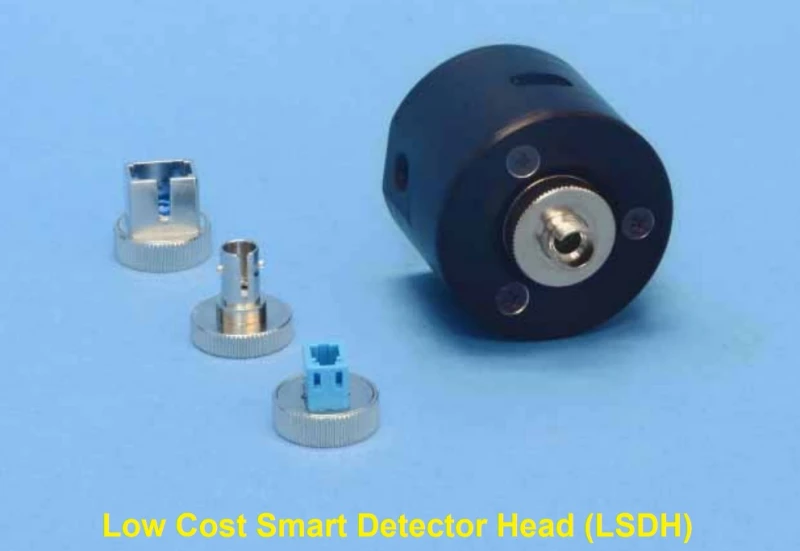
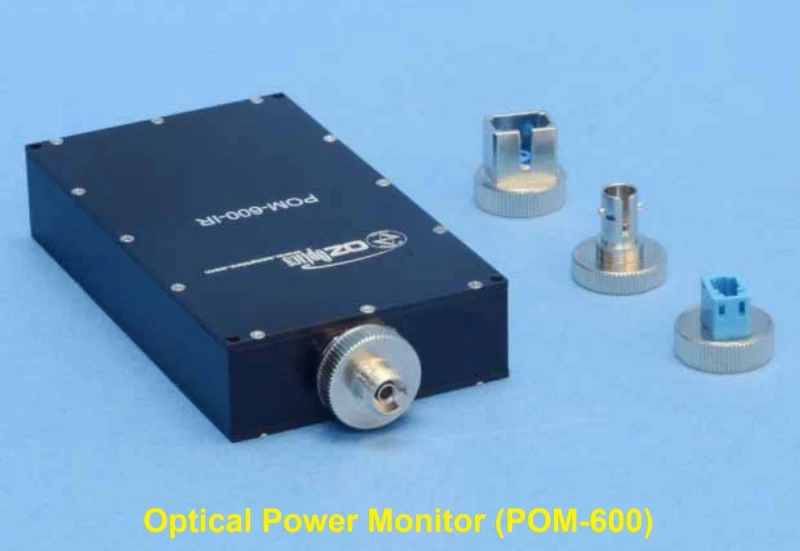
The Low Cost Smart Detector Head / Optical Power Monitor series is designed as a compact, OEM-ready solution for precise optical power measurement across both infrared and visible wavelengths. Offered in round (LSDH) and rectangular (POM‑600) housings, these modules integrate a high‑performance InGaAs or Si photodiode with onboard electronics to deliver stable, linear power readings over a wide dynamic range. Comparable to many benchtop optical power meters and rack‑mount monitoring modules used in fiber‑optic test labs and production lines, these detector heads provide measurement performance in a space‑saving form factor that is ideal for embedding directly into equipment and automated test systems.
Engineered for long‑term reliability and low drift, the smart detector head is particularly well suited for continuous optical power logging in environmental test chambers, burn‑in racks, and passive component qualification setups. With a typical linear dynamic range in excess of 60 dB, the modules can accurately track signals from weak test sources up to relatively high power levels used in telecom and industrial photonics. This makes them effective for applications such as fiber‑optic assembly and alignment, passive device characterization, laser source verification, and general laboratory power measurement where consistent, repeatable readings are critical over extended periods.
The product line supports both infrared (InGaAs, approximately 900–1650 nm) and visible (Si, approximately 450–1000 nm) spectral ranges, enabling coverage of key telecom wavelengths (1310 nm, 1480 nm, 1550 nm, 1625 nm), common YAG and diode laser lines (520 nm, 635 nm, 780 nm, 850 nm, 980 nm, 1064 nm), as well as general lab sources. Each module is built around a 1 mm active area detector, providing a good balance between coupling tolerance and noise performance. Many configurations are supplied with calibration at discrete wavelengths, allowing absolute power measurements traceable to reference standards, while uncalibrated versions are available for users who only require relative power monitoring or who prefer to implement their own calibration procedures to match specific workflows and standards.
Unlike traditional handheld power meters, these smart detector heads are intended for seamless system integration. The round LSDH units feature a USB interface, while the rectangular POM‑600 models provide RS232 connectivity, mirroring interface options often found in lab automation and manufacturing equipment. For high‑volume OEM applications, additional digital communication protocols such as SPI or I²C can be supported on request, allowing direct connection to embedded controllers or custom electronics. Users can operate the modules using the supplied PC‑based graphical interface software for straightforward monitoring and logging, or they can communicate via simple device commands to develop bespoke user interfaces, automated scripts, or integrated control panels within larger software suites.
To maximize flexibility in fiber‑optic environments, the detector heads are available with interchangeable connector receptacles. Standard configurations are supplied with FC, LC, ST, and SC removable receptacles, enabling quick adaptation to different patch cord types without changing the measurement hardware. This plug‑and‑play approach helps minimize downtime in multi‑product test lines and supports a wide range of passive and active components, from pigtails and patch cords to connectors, splitters, and transceivers. The slim, compact housing also makes it easy to mount the modules in dense test fixtures, inside instrument racks, or within custom enclosures where space is limited.
In long‑term remote monitoring installations, such as environmental test systems or burn‑in stations, the robust design of these optical power monitors provides stable performance over time, reducing the need for frequent recalibration and manual intervention. The combination of wide dynamic range, selectable wavelength calibration, and flexible interface options positions these smart detector heads as a cost‑effective alternative to bulkier, more expensive optical power meters seen elsewhere in the photonics industry. Whether deployed as standalone measurement nodes controlled by a host PC or fully embedded into proprietary equipment as an integrated sensor module, they deliver dependable optical power measurement tailored to modern fiber‑optic and laser‑based applications.
Low-Cost Smart Detector Head | Optical Power Monitor
Specifications
| Effective Aperture: | 1 mm |
|---|---|
| Spectral Range: | 0.9 – 1.65 um |
| Cooling Method: | No cooling |
| Detector Type (IR Model): | InGaAs |
| Detector Type (VIS Model): | Si |
| IR Wavelength Range: | 900–1650 nm |
| VIS Wavelength Range: | 450–1000 nm |
| LSDH-IR Dynamic Range: | -53 dBm to +7 dBm |
| LSDH-VIS Dynamic Range: | -53 dBm to +7 dBm |
| POM-600-IR Dynamic Range: | -65 dBm to +10 dBm |
| Dynamic Range (general): | > 60 dB |
| Interface (LSDH Models): | USB |
| Interface (POM-600): | RS232 |
| Optional Interfaces: | SPI or I2C (on demand) |
| Housing (LSDH Models): | Round |
| Housing (POM-600): | Rectangular |
| Calibrated Wavelengths (LSDH-IR-C): | 1064 nm, 1310 nm, 1480 nm, 1550 nm, 1625 nm |
| Calibrated Wavelengths (LSDH-VIS-C): | 520 nm, 635 nm, 780 nm, 850 nm, 980 nm |
| Supplied Receptacles: | FC, LC, ST, SC (removable) |
| OEM Module Display: | No built-in display |
| Calibration Options: | Calibrated at discrete wavelengths or uncalibrated |
Got questions about specs? Use the inquiry form to ask.
 Download Data Sheet

Features
- Cost‑effective OEM optical power monitor – Low cost, display‑less smart detector head designed for seamless integration into OEM systems and automated test setups.
- Wide wavelength coverage (VIS & IR) – Choice of built‑in InGaAs detector for 900–1650 nm IR applications or Si detector for 450–1000 nm visible range, covering most telecom, datacom, and general photonics test needs.
- High linear dynamic range – Greater than 60 dB linear dynamic range (models up to approximately −65 dBm to +10 dBm), enabling accurate measurements from very low to relatively high optical power levels.
- Factory‑calibrated & uncalibrated options – Available as calibrated units at discrete wavelengths commonly used in fiber optics (e.g., 520, 635, 780, 850, 980, 1064, 1310, 1480, 1550, 1625 nm) or as uncalibrated heads for relative power measurements and custom workflows.
- User‑performable calibration – Architecture allows the end‑user to perform their own calibration, simplifying field recalibration, wavelength‑specific optimization, and alignment with existing lab standards.
- Interchangeable optical receptacles – Supplied with removable FC, LC, ST, and SC receptacles, providing flexible connectivity to a wide range of fiber optic patch cords and test configurations.
- Compact, slim form factor – Small, lightweight round (LSDH) and rectangular (POM‑600) housings optimize use in dense test racks, environmental chambers, and embedded systems where space is at a premium.
- USB and RS232 remote interfaces – LSDH models with USB and POM‑600 models with RS232 provide straightforward integration into PCs, controllers, and legacy equipment for automated test and long‑term logging.
- Optional SPI / I²C interfaces for volume OEMs – On‑demand SPI or I²C digital interfaces support direct connection to embedded controllers and custom electronics in high‑volume OEM deployments.
- PC software and open command set – Works with an OZ Optics user graphical interface for quick setup, visualization, and logging, or via documented device commands so developers can build their own GUIs and automation scripts.
- Ideal for long‑term remote power monitoring – Designed for 24/7 power logging in environmental test systems, burn‑in stations, passive component qualification, and reliability testing.
- High stability for extended measurements – Optimized for low drift and stable readings over long intervals, improving confidence in life‑test and burn‑in data compared with generic photodiode heads.
- Versatile application range – Suitable for fiber optic assembly and testing, optical test systems, passive component burn‑in, general optical power measurements, and embedded sensing in industrial or telecom equipment.
- Seamless system integration – OEM‑ready modules with no front‑panel display are easy to embed into test instruments, rack systems, and production tools where remote control and monitoring are preferred.
- Telecom and datacom wavelength support – Calibrated IR versions target key telecom bands (O, E, S, C, L windows), making them suitable as low‑cost alternatives to benchtop optical power meters for fiber‑optic networks.
- Visible range support for R&D and manufacturing – Si detector versions support common laser and LED sources in the visible and near‑IR, ideal for laser alignment, bio‑photonics, sensor testing, and general lab use.
- Robust alternative to benchtop power meters – Provides the core measurement engine of a power meter in a compact OEM package, offering bench‑grade performance in a form factor suited for integration and volume production.
- Compatible products with built‑in display – For standalone use, OZ Optics offers POM‑500 series units with integrated displays, enabling migration between OEM and benchtop setups while maintaining similar measurement characteristics.
- Designed for demanding test environments – Mechanical design and detector choice are intended for long‑term operation in environmental chambers and burn‑in racks, where temperature cycling and extended operation are required.
Applications
- Long-Term Remote Optical Power Monitoring – Ideal for continuous power tracking in fiber networks, labs, production lines, and R&D setups where stable and unattended optical power logging is required.
- Fiber Optic Assembly, Alignment, and Testing – Used in aligning connectors, pigtails, patch cords, and active components by providing accurate real-time feedback during assembly and polishing processes.
- Automated Optical Test Systems (AOTS) – Easily embedded into automated benchtop or rack-mounted test platforms for characterizing optical components, modules, and subsystems across telecom and datacom wavelengths.
- Passive Optical Components Burn‑In and Reliability Stations – Suited for long-duration burn‑in and stress testing of splitters, WDMs, filters, and couplers where robust, stable power monitoring over days or weeks is required.
- General Optical Power Measurements in R&D and Production – Functions as a versatile optical power meter head for research labs, universities, and manufacturing facilities performing routine power checks and characterizations.
- Embedded Monitoring in OEM Systems – Compact USB/RS232 design allows integration into OEM instruments, fiber laser systems, amplifiers, and test racks as an internal, smart power monitoring module.
- Environmental and Thermal Stability Testing – Integrated into environmental chambers and temperature‑cycling setups to monitor power drift and stability of lasers, LEDs, and passive components under varying conditions.
- Laser Diode and Fiber Laser Power Feedback Control – Used as a feedback sensor in closed‑loop control systems to stabilize laser output power over time and temperature.
- Telecom and Datacom Network Component Testing – Suitable for qualification and verification of network components such as transceivers, CWDM/DWDM devices, attenuators, and patch panels in the 900–1650 nm telecom band.
- Visible Optical Source and Component Characterization – With the Si detector option (450–1000 nm), supports testing of visible lasers, LEDs, free‑space optics, biomedical optics, and vision systems.
- Production Line Go/No‑Go Testing – Integrated into automated production test jigs to perform rapid pass/fail power checks on high‑volume optical assemblies.
- Power Logging for Qualification and Certification – Enables long‑term data logging of optical power for device qualification, compliance testing, and generating traceable test reports.
- Optical Attenuation, Insertion Loss, and Stability Measurements – Used with variable or fixed optical attenuators and passive components to measure insertion loss, extinction ratio, and long‑term stability.
- Monitoring in FTTH / PON and Access Networks – Deployed in test points or portable/embedded platforms to monitor optical levels in fiber‑to‑the‑home, GPON, EPON, and other access infrastructures.
- Integration in Optical Sensing and Measurement Systems – Serves as the detection head in fiber‑optic sensor systems (e.g., FBG interrogators, distributed sensing systems) where accurate power readback is needed.
- Laboratory Education and Training Setups – Used in academic labs and training benches to teach principles of optical power measurement, calibration, and fiber handling.
- Field Service and Portable Test Instruments (OEM) – Incorporated into handheld or portable test equipment designs to provide a compact, calibrated power measurement engine.
- Multi‑Wavelength Component and System Testing – Calibrated at key telecom and VIS wavelengths, making it suitable for characterizing broadband sources, WDM systems, and multi‑wavelength devices.
- Relative Power Monitoring and Matching Between Channels – In uncalibrated mode, used for relative measurements such as channel‑to‑channel power matching, balancing, and trend monitoring.
- Quality Control and Incoming Inspection – Deployed in QC stations to verify optical power levels of incoming components, subcontracted assemblies, and finished products before acceptance or shipment.
Frequently Asked Questions
What is the OZ Optics Low Cost Smart Detector Head / Optical Power Monitor and what does it do?
What wavelength ranges and calibration options are available for the LSDH and POM‑600 optical power monitors?
How do I interface and control the LSDH and POM‑600 from my computer or embedded system?
What are common applications for these low cost smart detector heads and optical power monitors?
Which optical connectors are supported and what interchangeable receptacles are available?
How do the LSDH and POM‑600 compare to traditional optical power meters with displays, like the OZ Optics POM‑500?
Can I perform my own calibration and what accuracy considerations should I keep in mind?
Got more questions? Use the inquiry form to ask the supplier directly.
Similar Products

Your inquiry has been received.
Create an account by adding a password
Why create an account?
- Auto-complete inquiry forms
- View and manage all your past messages
- Save products to your favorites
- Close your account anytime — no hassle