


Description
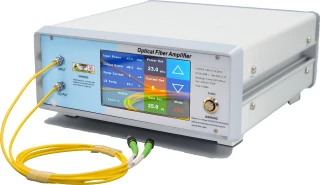
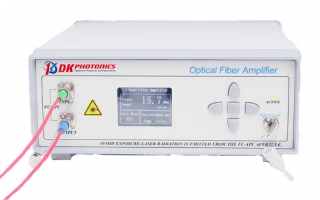
The MARS Series MFAS-R Raman Fiber Amplifier is a high‑performance optical amplification platform engineered for demanding fiber optic networks and precision photonics applications. Designed around a carrier‑grade pump laser, this unit delivers high output power and high gain with low noise, making it ideal for long‑haul transmission systems, distributed sensing, and advanced laboratory setups. The amplifier operates in the C‑band around 1550 nm, providing efficient signal boosting for standard single‑mode fiber infrastructures used in telecom and sensing environments.
At the core of the MFAS-R is an integrated drive and control architecture that combines an automatic temperature control (ATC) circuit with an automatic power control (APC) loop. This combination actively stabilizes output power against ambient variations and input fluctuations, resulting in excellent gain stability and gain flatness across the specified wavelength range. Compared with conventional erbium‑doped fiber amplifiers (EDFAs), Raman fiber amplifiers such as the MFAS-R can offer lower noise figures and more distributed amplification along the fiber link, which is particularly beneficial for ultra‑long‑haul and high‑capacity DWDM systems where low noise and signal integrity are critical.
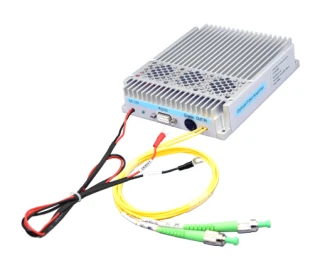
The MFAS-R Raman Fiber Amplifier is available in flexible configurations to fit different integration scenarios. Users can select from modular (M) or benchtop (B) packages, as well as different output power levels specified in milliwatts (for example, MFAS‑R‑P‑400 for a 400 mW output). The amplifier employs standard SMF 9/125 µm fiber with NA = 0.13 on both input and output, supporting seamless connection to existing fiber networks. With typical gains up to approximately 12 dB, gain flatness around 2 dB, and maximum pump powers up to 800 mW, the MFAS-R can be tailored to a wide range of system designs, from moderate‑reach links to more power‑hungry distributed Raman configurations.
Robust optical performance is complemented by a strong focus on safety and reliability. The MFAS-R integrates comprehensive monitoring and protection functions that safeguard both the device and the operator. Real‑time diagnostics, fault detection and automatic shutdown mechanisms help prevent damage from back‑reflections, excessive input levels, or abnormal operating conditions. In addition, high input/output isolation and low return loss contribute to stable system behavior when the amplifier is deployed in complex optical networks with multiple active components.
For network operators and system integrators, remote control capability is an essential requirement. The MFAS-R series incorporates high‑performance microprocessors that enable intelligent management, remote configuration and status monitoring. This facilitates centralized control in carrier‑grade SONET/SDH and other optical transport systems, as well as convenient operation in research laboratories. Its compact footprint of approximately 150 mm × 125 mm × 25 mm allows easy installation in space‑constrained environments or integration into larger instruments and test setups.
The MFAS-R Raman Fiber Amplifier supports a broad spectrum of applications where clean, stable amplification is required. In telecom and data center backbones, it is a strong choice for boosting signals in long‑distance fiber optic communication links, DWDM multiplexed systems and metro networks. In sensing, it can serve as a powerful pump source for distributed temperature and strain measurement systems based on Raman or Brillouin scattering, as well as various interferometric and fiber‑optic sensor arrays. The low‑noise and well‑controlled output characteristics also make the MFAS-R well suited for optical test and measurement, R&D, and other laboratory environments that demand precise optical power control and repeatable performance.
Overall, the MARS Series MFAS-R Raman Fiber Amplifier brings together high output power, strong gain, low noise, and stable, flat amplification in a compact and intelligent platform. Its combination of carrier‑grade components, advanced control electronics, fiber‑friendly interface and comprehensive protection functions makes it a reliable building block for modern optical infrastructures, from carrier networks and CATV systems to cutting‑edge photonics research.
MARS Series Raman Fiber Amplifier
Specifications
| Amplifier Type: | Raman Amplifier |
|---|---|
| Wavelength Range: | 1528 – 1560 nm |
| Max Output Power: | 29 dBm |
| Nominal Gain: | 12 dB |
| Output Fiber Type: | Single Mode |
| Product Series: | MARS Series Raman Fiber Amplifier |
| Model: | MFAS-R |
| Package Options: | B - benchtop, M - module |
| Output Power (PW): | 400–800 mW (examples: 400 mW, 500 mW) |
| Wavelength Range: | 1528–1560 nm |
| Center Wavelength (typical): | 1550 nm |
| Equivalent Noise Figure (min): | -2.0 dB |
| Equivalent Noise Figure (typical): | -1.0 dB |
| Typical Gain: | 12 dB |
| Gain Flatness (max): | 2.0 dB |
| Maximum Pump Power: | 800 mW |
| Degree Of Polarization: | 10 % |
| Input/Output Return Loss (min): | 35 dB |
| Input/Output Isolation (min): | 55 dB |
| Operating Temperature Range: | 0 to 50 °C |
| Storage Temperature Range: | -40 to 85 °C |
| Input Fiber Type: | SMF 9/125 µm, NA = 0.13 |
| Output Fiber Type: | SMF 9/125 µm, NA = 0.13 |
| Output Fiber Length: | > 1 m |
| Optical Connector: | FC/APC |
| Dimensions: | 150(L) × 125(W) × 25(H) mm |
Got questions about specs? Use the inquiry form to ask.
 Download Data Sheet

Features
- High-Performance Raman Fiber Amplification – Advanced distributed Raman gain design for C-band (1528–1560 nm) fiber optic links, ideal for long-haul and ultra-long-haul transmission systems.
- High Output Power Options – Configurable output power levels (e.g., 400 mW, 500 mW and higher) via part numbering scheme (MFAS-R-P-PW), enabling flexible system design and power budgeting.
- High Optical Gain – Typical gain up to 12 dB (or higher in custom configurations), providing strong signal amplification for weak input signals in demanding networks.
- Low Noise Figure – Optimized Raman amplification delivers low equivalent noise figure and improved OSNR, enhancing overall transmission performance compared with traditional EDFAs alone.
- Excellent Gain Flatness – Gain flatness over the 1528–1560 nm range (typ. ≤2 dB), supporting dense WDM / DWDM applications with minimized channel-to-channel power variation.
- Ultra-Low Back Reflection – Input/output return loss up to 55 dB, reducing reflection-induced penalties and improving stability in high‑performance fiber networks.
- High Optical Isolation – Typical input/output isolation around 30–35 dB for reliable decoupling from external reflections and cascaded devices.
- High-Power Pump Lasers – Carrier‑grade pump diodes with max pump power up to 800 mW, delivering robust and stable Raman gain even under demanding operating conditions.
- Excellent Polarization Performance – Polarization degree up to 10% (typical) for improved signal integrity and consistent amplification in systems sensitive to polarization effects.
- Intelligent Control Electronics – Built‑in drive and logical control circuits with high‑performance microprocessors for intelligent operation, monitoring, and diagnostics.
- ATC & APC Stabilization – Integrated Automatic Temperature Control (ATC) and Automatic Power Control (APC) circuits ensure stable output power, wavelength, and long‑term reliability.
- Advanced Protection & Safety – Comprehensive device and user protection including over‑temperature, over‑current, and optical power protection for safe operation in lab and field environments.
- Remote Management Capability – Supports remote control and monitoring (via standard communication interfaces in benchtop or module versions) to enable easy network integration and centralized management.
- Multiple Package Options – Available as benchtop (B) for laboratory use, module (M) for OEM integration, and other package configurations (P) to fit various system designs.
- Telecom-Grade Reliability – Designed for carrier‑class environments, suitable for SONET/SDH, OTN, DWDM, and other high‑reliability telecom applications.
- Optimized for C‑Band Systems – Operating wavelength range of 1528–1560 nm, seamlessly matching standard single-mode C‑band transmission and amplifier chains.
- Wide Operating Temperature Range – Supports operation from 0 to +50 °C and storage from −40 to +85 °C, ensuring dependable performance in field‑deployed systems.
- Standard Single-Mode Fiber Interface – Uses SMF-28 compatible 9/125 µm fiber with NA=0.13 at both input and output for easy integration into existing fiber plants.
- Integrated Output Fiber Pigtail – Output fiber length >1 m for flexible routing inside systems and test setups.
- Industry-Standard Connectors – Equipped with FC/APC optical connectors to minimize back-reflection and simplify connection to test equipment and network gear.
- Compact Footprint – Space-saving form factor (approx. 150 mm L × 125 mm W × 25 mm H) for dense integration in rack systems and OEM platforms.
- Ideal for Long-Haul Fiber Optic Communication – Extends transmission distance, boosts OSNR, and helps overcome fiber loss in metro, long‑haul, and ultra‑long‑haul networks.
- SONET/SDH & OTN Compatible – Fully suited for legacy and modern transport systems, including STM‑64/OC‑192 and beyond.
- Enhanced Fiber Optic Sensing – Excellent for distributed sensing (DTS, DAS, OTDR enhancement, and other Raman‑based sensing) requiring high optical power and low noise.
- Cable TV / HFC Applications – Supports analog and digital CATV, RF over fiber, and HFC networks by improving link budgets and maintaining high signal quality.
- Versatile for Lab & R&D – Suitable for optical lab experiments, amplifier research, and system prototyping
Applications
- Long-Haul Fiber Optic Communication Links
Boosts signal strength in long-distance single-mode fiber networks (C- band 1528–1560 nm), reducing the need for electrical regeneration and improving overall link budget in terrestrial and subsea systems. - SONET/SDH Transmission Systems
Provides low-noise, high-gain Raman amplification for carrier-grade SONET/SDH backbones, metro rings, and access networks where stable output power and high reliability are critical. - DWDM & CWDM Optical Transport Networks
Enhances multi-channel dense and coarse WDM systems with high gain and good gain flatness across the C-band, extending reach and capacity for telecom and data center interconnect applications. - Pre-Amplifier and In-Line Amplifier in OTN
Used as a low-noise pre-amplifier at the receiver end and as an in-line amplifier along the fiber span in optical transport networks, improving receiver sensitivity and OSNR. - Distributed Raman Amplification in Transmission Fiber
Implements distributed Raman gain directly in the transmission fiber to lower noise figure and mitigate fiber attenuation, ideal for ultra-long-haul and high-bit-rate coherent systems. - CATV / HFC (Hybrid Fiber-Coax) Networks
Provides high output power and low noise amplification for analog and digital CATV transmission, supporting long-distance HFC distribution and RF-over-fiber links. - FTTx / PON Backbone and Feeder Links
Extends reach in fiber-to-the-home/building/curb (FTTx) and PON feeder networks, enabling larger split ratios and longer optical distribution networks while maintaining signal quality. - Coherent 100G/200G/400G Transmission Systems
Supports high-order modulation formats and coherent detection systems that demand low-noise amplification and stable pump power over the C-band. - Fiber Optic Sensing (DTS, DAS, OTDR)
Serves as a powerful, low-noise light source and amplifier for Distributed Temperature Sensing (DTS), Distributed Acoustic Sensing (DAS), and long-range OTDR systems, enhancing measurement range and sensitivity. - Pipeline, Power Cable, and Perimeter Monitoring
Enables long-distance Raman-based sensing for security and structural health monitoring of pipelines, high-voltage power cables, railways, and perimeters using distributed sensing technologies. - Structural Health Monitoring of Civil Infrastructure
Used in fiber-based monitoring systems embedded in bridges, tunnels, dams, and buildings, where long-range, low-noise amplification is needed for reliable sensing data. - Laboratory Fiber Optics Experiments
Ideal for research labs conducting experiments in nonlinear fiber optics, fiber Raman scattering, and advanced amplification schemes requiring precisely controlled Raman gain. - Optical Communication Research & Prototyping
Supports prototyping of new fiber communication architectures, modulation formats, and advanced coding schemes that need flexible, high-gain Raman amplification modules. - Optical Network Test Beds and Field Trials
Used in carrier and academic test beds to emulate real-world long-haul and metro network conditions, enabling performance evaluation of new equipment and protocols. - Optical Component Characterization
Provides a stable, amplified C-band source for testing insertion loss, return loss, and nonlinear performance of optical components such as filters, WDM multiplexers, isolators, and switches. - Optical Sensor Interrogation Units
Improves signal levels in interrogators for long-range fiber Bragg gratings (FBG) and other interferometric or scattering-based sensor networks across extended distances. - Remote LIDAR and Atmospheric Sensing Links
Can be integrated into fiber-coupled LIDAR and remote sensing systems requiring enhanced C-band signal power over long delivery fibers in industrial or environmental monitoring setups. - Defense and Security Fiber Links
Enhances secure, long-distance fiber communication links in defense, border security, and critical infrastructure applications where low detectability and high reliability are essential. - Industrial Automation & Process Control Networks
Strengthens optical communication channels in harsh industrial environments (plants, refineries, mines) where long fiber distances and high EMI immunity are required. - Redundant and Protected Optical Paths
Applied in ring and mesh network topologies with protection switching, ensuring consistent amplification and power stability on primary and backup fiber paths
Frequently Asked Questions
What is the MARS MFAS‑R Raman Fiber Amplifier and what does it do?
What are the key technical features and performance specifications of the MFAS‑R Raman Fiber Amplifier?
What are common applications of the MFAS‑R Raman Fiber Amplifier in optical systems?
How do I interpret the MFAS‑R part number (for example MFAS‑R‑P‑PW) and choose the right configuration?
How does the MFAS‑R ensure output power stability and safe operation?
What fiber and connector options are available for the MFAS‑R Raman Fiber Amplifier and how do they affect system integration?
What are the power and environmental requirements for operating the MFAS‑R amplifier safely and reliably?
Got more questions? Use the inquiry form to ask the supplier directly.
Similar Products


Your inquiry has been received.
Create an account by adding a password
Why create an account?
- Auto-complete inquiry forms
- View and manage all your past messages
- Save products to your favorites
- Close your account anytime — no hassle