


Description
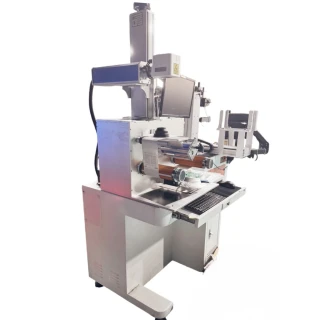
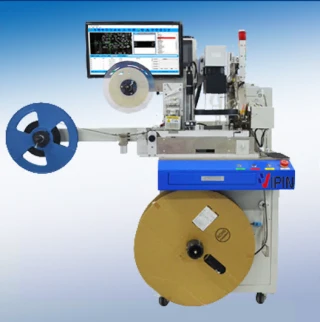
The VIPin-FSD-C05UV/C20FB Visual Laser Marking Machine is a high-precision, automated marking solution designed for manufacturers who require stable, repeatable, and traceable product identification. Combining UV and fiber laser options, this system supports a wide range of materials and applications, from delicate electronic components and PCBs to metal and plastic parts used in automotive, medical, consumer electronics, and industrial tooling. Its integrated CCD visual positioning system ensures that every mark is accurately placed, even on small, complex, or irregularly positioned workpieces.
With available laser powers of 5W UV and 20W/30W fiber at wavelengths of 355 nm and 1064 nm, the VIPin-FSD-C05UV/C20FB can handle both fine, low-heat marking on sensitive substrates and deep, high-contrast engraving on robust materials. The system supports marking fields from 30 × 30 mm up to 300 × 300 mm, giving manufacturers the flexibility to mark single small components, larger panels, or multiple parts in a single cycle. Its manually adjustable Z-axis (0–550 mm) and red-light focus indication simplify setup and changeover between different product sizes or fixture heights, reducing downtime in demanding production environments.
Unlike conventional markers that rely solely on mechanical positioning, this visual laser marking machine uses a 12-megapixel CCD camera for visual alignment and inspection. The camera, combined with dedicated lighting (strip or ring light with digital control), allows the system to detect the exact position, orientation, and surface features of each part before marking. This visual feedback improves mark placement accuracy and reduces scrap caused by misalignment. The integrated alarm function alerts operators if a mark is missed or a nonconforming (NG) condition is detected and automatically stops processing, supporting inline quality control and improving overall yield.
The VIPin-FSD-C05UV/C20FB is engineered for modern automated production lines. It adopts a “laser fixed, product moving” work mode with a linear module feeding method, and can be driven via servo motor, stepping motor, and electric relay control to match various factory automation schemes. The JCZ marking card and VIPin Laser System software support characters, serial numbers, barcodes, QR codes, logos, and complex graphic data, making it ideal for traceability, anti-counterfeiting, and branding applications. Multiple conveyor size options and color choices (black or white) offer additional integration flexibility, while bilingual software (Chinese and English) adapts easily to different operator bases.
From an operational standpoint, this laser marking machine is designed to be easy to use, environmentally friendly, and cost efficient. There are no inks, chemicals, or consumables involved, which eliminates recurring material costs and simplifies maintenance compared with traditional printing methods. The non-contact laser process minimizes mechanical wear and avoids surface deformation, while the repeatability of ±0.1 mm on flat surfaces ensures consistent, professional-looking results across large runs. Its compact footprint (600 × 800 × 1500 mm) and approximate 90 kg weight allow installation in existing production lines without extensive modification, supporting both new projects and retrofit applications.
By combining high-resolution visual positioning, flexible marking ranges, and both UV and fiber laser technologies in a single platform, the VIPin-FSD-C05UV/C20FB provides a robust solution for manufacturers who need reliable, high-throughput marking with tight tolerances. It is well suited for industries where product identification, traceability, and quality assurance are critical, such as PCB manufacturing, connector and cable production, precision metalworking, small plastic parts, medical devices, and consumer electronics. This machine helps streamline production, reduce human error, and achieve clear, permanent marks that meet modern standards for industrial coding and traceability.
Conveyor Belt Laser Marking Machine Industrial Coding and Marking Technology
Specifications
| Work Area X: | 300 mm |
|---|---|
| Work Area Y: | 300 mm |
| Beam Delivery: | Galvo |
| Laser Source: | Fiber |
| Laser Output Power: | 5 W |
| Laser Wavelength: | 355 nm (UV) |
| Voltage Requirement: | 220V - 50Hz |
| Materials: | Stainless Steel, Steel/Iron, Steel Alloy, Aluminum, Anodized Aluminum, Brass, Copper, Gold, Silver, Nickel, Titanium, Platinum, Glass, Plastic, Wood, Paper, Textile, Granite, Marble, Nylon, Acrylic, Plexiglass |
| Air Assist: | Included |
| Fume Extraction Unit: | Included |
| Safety Enclosure: | Optional |
| Repeating Accuracy: | ±0.1mm (Flat Surface) |
| Weight: | Approx 90KG |
| Machine Size: | 600*800*1500mm |
| Power Supply: | Single-phase, AC220V±20%/50HZ, 10A, 2KW |
| Language: | Chinese, English |
| Conveyor System Size: | 1100mm*150mm/1500mm*200mm/1500mm*300mm (optional) |
| Conveyor System Color: | Black/white (optional) |
| Software: | VIPin Laser System |
| Movement Control: | Unit/servo motor/stepping motor/electric relay |
| Feeding Method: | Linear Module |
| Marking Card: | JCZ Card |
| Light Source Control: | Digital Controller |
| Light Source: | Combo Strip Light/Ring Light |
| Style No.: | VIPIN-FSD-C05UV/C20FB |
| Camera Lens: | 12mm |
| Positioning: | CCD Visual Marking Positioning |
| Work Mode: | Laser Fixed |
| Focus Adjustable Mode: | Manual (Red light indicates) |
| Z Axis: | 0-550mm (Adjustable Manually) |
| Marking Range: | 30mm*30mm-300mm*300mm (Optional) |
| Field Lens Range: | 100mm*100mm |
| Laser Power: | 5W/20W or 30W |
| Laser Type: | UV/Fiber |
Got questions about specs? Use the inquiry form to ask.
 Download Data Sheet

Features
- High-Precision Visual Laser Marking – Integrated CCD vision positioning with 1200W high‑pixel camera and 12 mm lens ensures accurate, repeatable marking with ±0.1 mm repeatability on flat surfaces, ideal for fine electronics, PCBs, and micro-components.
- UV and Fiber Laser Options – Dual configuration options with UV (355 nm) and Fiber (1064 nm) lasers and 5W / 20W / 30W output power provide optimal flexibility for marking metals, plastics, PCBs, coatings, and sensitive materials with minimal thermal impact.
- Flexible Marking Area and Field Lens – Standard field lens range of 100 mm × 100 mm and optional marking ranges from 30 mm × 30 mm up to 300 mm × 300 mm, supporting both small, high‑precision logos and large codes or graphics on bigger workpieces.
- Easy Operation and Fast Job Switching – User‑friendly interface and VIPin Laser System software allow multiple marking documents to be saved and recalled quickly, enabling rapid changeover between production lines and product types.
- Versatile Marking Capabilities – Supports marking of characters, letters, serial numbers, barcodes, QR codes, logos, and complex graphics, making it suitable for electronics, medical devices, automotive components, tools, and general industrial traceability.
- Advanced Visual Positioning for PCBs & Components – Dedicated for PCB boards and diverse product surfaces, visual alignment compensates for part deviation and rotation, improving yield and reducing setup time in SMT and assembly lines.
- Clean, Non-Contact, and Consumable-Free – Laser marking is non-contact, generates virtually no pollution, requires no inks, labels, or consumables, significantly reducing ongoing operating costs and maintenance.
- Reliable Process Control & Alarms – Smart detection triggers alarm calls when marking is missed; the system automatically stops processing for NG (no good) parts, helping prevent defective or unmarked products from moving further down the line.
- Manual Z-Axis with Red-Light Focus Indication – 0–550 mm manually adjustable Z-axis and red light focus indicator provide simple, intuitive focusing for different product heights and fixture setups.
- Stable Fixed-Laser Work Mode – The laser head remains fixed while the workpiece is moved via the conveyor and linear modules, enhancing stability, reducing mechanical complexity, and improving suitability for automated production environments.
- Integrated Conveyor System for Inline Marking – Available conveyor sizes of 1100 × 150 mm, 1500 × 200 mm, and 1500 × 300 mm (black or white belt) allow easy integration into inline or offline production with smooth part transfer for continuous marking.
- Robust Motion Control Architecture – High reliability linear module feeding combined with servo motor, stepping motor, and electric relay control ensures smooth, accurate motion suitable for high‑volume, high‑throughput marking applications.
- Industrial-Grade Control Electronics – Utilizes a proven JCZ control card, widely adopted in industrial laser systems, for stable performance, high compatibility with laser sources, and precise control of marking quality and speed.
- Configurable Industrial Lighting – Combination of strip and ring light sources with digital light source controller optimizes illumination for a variety of surface finishes and colors, ensuring consistent vision recognition and marking accuracy.
- Customizable Software & System Integration – Supports software customization and secondary development, enabling integration with MES/ERP, barcode systems, production databases, and custom user interfaces for full traceability and automation.
- Multilingual Interface – Supports Chinese and English, making the system easy to deploy in international factories and multi‑language production environments.
- Compact, Space-Saving Footprint – With a machine size of approximately 600 × 800 × 1500 mm and about 90 kg weight, the system is compact, easy to place on existing lines, and suitable for crowded production floors.
Applications
Applications of Visual Laser Marking Machine VIPin-FSD-C05UV/C20FB
The VIPin-FSD-C05UV/C20FB visual laser marking machine, with its UV (355 nm) and Fiber (1064 nm) laser options, CCD visual positioning, and high repeatability (±0.1 mm), is designed for high-precision, high‑throughput, and flexible marking tasks across many industries. Below is an SEO‑optimized list of common and advanced application areas based on similar UV and fiber visual laser markers used worldwide in manufacturing and traceability.
1. Electronics and PCB Industry
- PCB Marking and Traceability – Non‑contact marking of one‑dimensional and two‑dimensional barcodes, serial numbers, and QR codes on bare and assembled PCBs for full traceability in SMT and assembly lines.
- Marking SMD Components – High‑precision UV marking of small components such as resistors, capacitors, ICs, and connectors without thermal damage.
- IC Chip and Semiconductor Wafer Marking – Fine text and data matrix codes on IC packages, wafers, and substrates for process control and anti‑counterfeiting.
- FPC (Flexible PCB) Marking – Gentle UV marking on flexible circuits and polyimide films with minimal heat‑affected zone.
- Electronic Housing and Enclosure Marking – Logos, ratings, and identification codes on plastic or metal enclosures for consumer electronics and industrial devices.
- Connector and Terminal Marking – Clear alphanumeric and symbol marking on small metallic or plastic connectors, terminals, and plugs.
2. Automotive and Auto Parts
- VIN, Part Number, and Batch Code Marking – Durable fiber laser engraving or etching of identification data on metallic auto components for lifetime traceability.
- Sensor and Electronic Module Marking – High‑contrast QR codes, barcodes, and text on automotive sensors, control units, and PCBs.
- Plastic Interior and Exterior Parts – UV laser marking of switches, buttons, frames, and decorative trims without discoloration or deformation.
- Under‑the‑Hood Component Coding – Corrosion‑resistant marking on engine parts, turbochargers, and brackets for harsh environments.
3. Medical Devices and Healthcare
- UDI (Unique Device Identification) Marking – Permanent, high‑readability codes on medical devices and instruments to meet UDI and regulatory requirements.
- Surgical Instrument Marking – Fine, corrosion‑resistant laser marks on stainless steel and titanium instruments that withstand repeated sterilization.
- Disposable Medical Product Coding – Non‑contact UV marking on syringes, tubes, housings, and plastic consumables without contaminating the product.
- Diagnostic Equipment Components – Logos, scales, and functional markings on housing parts, panels, and connectors in lab and diagnostic devices.
4. Consumer Electronics and Appliances
- Mobile Phone and Tablet Components – IMEI codes, serial numbers, and Logos on metal frames, back covers, buttons, and internal PCBs.
- Wearable Device Marking – High‑precision marking on watches, fitness trackers, and smart bands made of stainless steel, titanium, or polymers.
- Charger, Adapter, and Cable Marking – Safety information, logos, and specifications on plastic and rubber surfaces.
- Home Appliance Panels and Knobs – Durable marking of symbols, indicators, and brand logos on control panels, buttons, and bezels.
5. Metal Parts and Tools
- Industrial Tool Marking – Fiber laser engraving of part numbers, logos, and scales on cutting tools, drill bits, dies, and molds.
- Machine and Equipment Nameplates – High‑contrast codes and text on stainless steel and aluminum nameplates for equipment identification.
- Hardware and Fastener Marking – Small but legible markings on screws, nuts, bolts, bearings, and bushings for sorting and traceability.
- Surface Texturing and Micro‑engraving – Precise patterns and micro‑text on metal parts for functional and decorative effects.
6. Plastics, Polymers, and Non‑metal Materials
- Plastic Housing and Component Marking – UV marking on ABS, PC, PVC, PA, and other plastics with sharp contrast and no consumables.
- Transparent and Translucent Material Marking – High‑precision UV laser marking on clear plastics, light guides, and lenses.
- Cable and Wire Sheath Marking – Permanent legends, meter marks, and identification codes on cable jackets&
Frequently Asked Questions
What is the VIPin-FSD-C05UV/C20FB visual laser marking machine and what applications is it suitable for?
How does the CCD visual positioning system improve laser marking accuracy and productivity?
What are the key differences between the UV and fiber laser versions, and how do I choose the right one?
What marking area and part size can this laser marker handle?
What automation and integration options are available for production lines?
What software functions are provided, and can the system be customized or integrated with MES/ERP?
What are the power, installation, and maintenance requirements, and are there consumables?
Got more questions? Use the inquiry form to ask the supplier directly.
Similar Products


Your inquiry has been received.
Create an account by adding a password
Why create an account?
- Auto-complete inquiry forms
- View and manage all your past messages
- Save products to your favorites
- Close your account anytime — no hassle