


Description
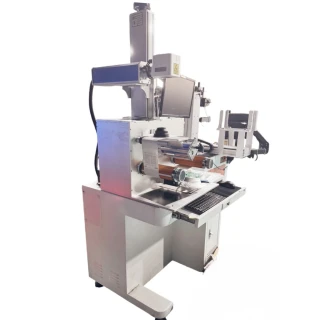
The VIPin 260A PCB UV Fiber Laser Marking Machine Fixed Head with a fixed laser head is engineered for high‑throughput, traceable identification of printed circuit boards in demanding electronics manufacturing environments. Designed around a stable, fixed optical path, it delivers consistent, high‑contrast marking of QR codes, barcodes, text, and graphics directly onto PCBs of various solder mask colors, including white, green, black, blue, and red. By replacing traditional high‑temperature labels and manual labelling processes, this system dramatically reduces ongoing consumable and labor expenses, while improving traceability and long‑term mark reliability.
Unlike paper or polyimide labels that can peel, fade, or delaminate under thermal cycling, reflow, or harsh cleaning agents, the VIPin–260A uses permanent laser engraving. Marks do not drop off, smear, or disappear, even under repeated high‑temperature exposure or mechanical handling. This makes it an ideal solution for SMT lines, assembly plants, and OEM/EMS facilities that need robust traceability throughout the entire product lifecycle. Typical applications include marking 2D codes as small as a few millimeters for panelized PCBs, reinforcement steel sheets, shielding covers, and other small metal or coated components within the electronics assembly process.
Cost‑Efficient Alternative to High‑Temperature LabelsTraditional PCB identification often relies on high‑temperature resistant labels applied manually or semi‑automatically. Over production volumes such as 10 million boards per year, this approach can generate very high recurring costs. Representative label sizes such as 10 × 10 mm and 15 × 40 mm, combined with annual usage in the millions of pieces, can easily amount to several hundred thousand RMB per year in labels alone. Over a 5‑year production horizon, total label expenses can reach into the multi‑million RMB range, before even considering labor.
Manual labelling also requires multiple operators, each with a monthly salary that, when annualized, adds another substantial cost layer. Two operators dedicated to labelling can accumulate significant labor expense over five years, compounding the overall identification cost. When label cost and labor cost are combined, the total 5‑year cost of traditional labelling can be several times higher than the one‑time investment in automated laser marking systems.
By comparison, equipping your line with multiple VIPin 260A PCB UV Fiber Laser Marking Machine Fixed Head systems can replace millions of high‑temperature labels per year. Instead of ongoing expenditure on consumables and manual work, the primary outlay is the equipment itself. A typical configuration of four to five machines can support outputs on the order of 10 million boards annually, with the aggregate machine cost significantly lower than the projected 5‑year total of labels and labor. This long‑term cost advantage, combined with enhanced reliability and automation, makes the laser solution highly compelling for medium‑ and high‑volume manufacturers.
High‑Precision Marking PerformanceThe VIPin 260A PCB UV Fiber Laser Marking Machine Fixed Head delivers fine line marking with a minimum point diameter down to approximately 0.13 mm, enabling compact, high‑density codes and characters. The system supports line widths in the sub‑millimeter range and can generate clear micro‑text and small QR codes where traditional printed labels would be too large or impractical. A minimum QR code size of about 3 × 3 mm is supported, and the system has been tested on both standard 2 × 2 mm codes and reduced 0.8 × 0.8 mm formats, depending on process and code requirements.
Average marking time per code is around 6 seconds, resulting in typical throughputs of approximately 360 cycles per hour for a single system under standard conditions. Over an entire year of production, this supports outputs in the range of over two million marked boards per machine, making the VIPin–260A suitable for integration into continuous production lines. For very high‑volume applications such as 10 million boards per year, multiple systems can be deployed in parallel to reach the required capacity.
The marking head offers a 0–360° engraving angle, which is especially useful for PCBs where code orientation needs to be adapted to panel layout or downstream reading constraints. With repeatability of ±0.03 mm and transition speeds up to 3000 mm/s, the system ensures that each code is placed and formed precisely, enabling reliable reading by standard industrial vision and code‑reading systems even at very small sizes.
PCBA Electronics Assembly Total Solution Provider for Laser Etching on Circuit Boards
Specifications
| Work Area X: | 260 mm |
|---|---|
| Work Area Y: | 260 mm |
| Beam Delivery: | Galvo |
| Laser Source: | Fiber |
| Laser Output Power: | 5 W |
| Laser Wavelength: | 355 nm (UV) |
| Marking Speed: | 3300 mm/sec |
| Voltage Requirement: | 220V - 50Hz |
| Materials: | Stainless Steel, Steel/Iron, Steel Alloy, Aluminum, Anodized Aluminum, Brass, Copper, Gold, Silver, Nickel, Titanium, Platinum, Glass, Plastic, Wood, Paper, Textile, Granite, Marble, Nylon, Acrylic, Plexiglass |
| Air Assist: | Included |
| Fume Extraction Unit: | Included |
| Safety Enclosure: | Included |
| Laser Type: | UV/Fiber |
| Laser Power: | 5W/20W |
| Laser Wavelength: | 355nm/1064nm |
| Laser Cooling Method: | WaterCooling/Air Cooling |
| Minimum Point Diameter: | 0.13mm |
| Engraving Angle: | 0-360° |
| Repeat Accuracy: | ±0.03mm |
| Transition Speed: | 0-3000mm/s |
| QR Code Size (minimum): | 3mm×3mm |
| Laser Lifespan: | ≥15000 hours / ≥50000 hours |
| Laser Spot Size: | 0.04mm / 0.07mm |
| Output Fluctuation: | <3% |
Got questions about specs? Use the inquiry form to ask.
 Download Data Sheet

Features
- High-Speed, High-Throughput PCB Laser Marking
• Average marking time: approx. 6 seconds per code
• Typical throughput: up to ~360 components per hour (cph/h)
• Annual output capacity: up to ~2.376 million boards per system under standard operating conditions - Significant Cost Savings vs. High-Temperature Labels
• Eliminates recurring label material costs (e.g., annual label cost of ~¥395k, ~¥1.975M over 5 years in typical label-based systems)
• Eliminates or greatly reduces manual labeling labor (e.g., up to ~¥540k over 5 years for 2 operators)
• One-time equipment investment (e.g., approx. ¥1.1M for 4 systems) can replace multiple labeling stations and drastically lower total 5‑year cost - Permanent, Non-Contact, High-Contrast Marking
• Laser marking does not peel, drop off, or fade like paper or polymer labels
• Markings are resistant to high temperature, chemicals, abrasion, and cleaning processes
• Suitable for long-term traceability in harsh production and field environments - Flexible Online (Inline) and Offline Configurations
• Online (Inline) Model: Installs at the front of SMT or PCB production lines for continuous, in-line laser marking
• Supports real-time connection to MES for intelligent traceability and automatic data upload
• Offline Model: Ideal for bare boards or assembled boards that require separate marking; no MES connection required
• Supports both bare PCBs and PCBs with mounted components - Stable Laser Head Fixed Design
• Fixed laser head with moving PCB ensures stable focal distance and consistent marking quality
• Especially suitable for small and medium PCB formats with frequent changeovers
• For fixed-head inline model, most stable code reading performance within PCB size up to 200 × 200 mm - Optimized for PCB Sizes up to 260 × 260 mm
• Inline Model: PCB max size up to 200 × 200 mm for highest code reading stability
• Offline Model: PCB max size up to 260 × 260 mm where MES connectivity and in-line reading are not required
• Supports a wide range of PCB thicknesses and panelization layouts commonly used in electronics manufacturing - Dual Laser Options: UV and Fiber for Broad Material Coverage
• UV Laser (5 W) – Imported sources (e.g. American Inno / Shenzhen RFH):
– Wavelength: 355 nm with fine interaction for high-contrast marking on PCBs with various solder mask colors
– Ideal for green, white, black, blue, red solder masks, and other coated surfaces
– Typical laser lifespan: ≥15,000 hours
• Fiber Laser (20 W / 30 W optional) – From leading suppliers (e.g. German IPG / MAX):
– Wavelength: 1064 nm for high-speed metal, steel reinforcement sheets, and shielding cover marking
– Typical laser lifespan: ≥50,000 hours
• Both laser types designed for stable industrial operation with output fluctuation <3% - High Precision Marking for Small Codes and Fine Lines
• Laser spot size UV: approx. 0.04 mm (typical); Fiber: approx. 0.07 mm (typical)
• Minimum point diameter: approx. 0.13 mm for the VIPin‑260A system
• Minimum QR/matrix code size marked: as small as 0.8 × 0.8 mm (depending on laser and substrate)
• Standard supported minimum QR code size (equipment specification): approx. 3 × 3 mm
• Supports micro-scale line widths in the sub‑0.1 mm range for dense PCB designs - Full 360° Marking Capability
• Engraving angle: 0–360° for flexible orientation of text, barcodes, and codes
• Ideal for multi-direction panel layouts and nested PCB arrays - High Repeatability and Positioning Accuracy
• Repeat accuracy: ±0.03 mm for reliable placement of QR codes and data matrix codes in tight PCB areas
• Transition speed up to 0–3000 mm/s for fast movement between marking positions
• Ensures consistent readability for high-density assemblies and small pads - Wide Range of 1D & 2D Code Formats
• 2D Codes: QR Code, Micro QR Code, IQR Code, Data Matrix, GS1 DataMatrix, PDF417
• 1D Barcodes: CODE39, CODE128, ITF, NW-7, JAN (EAN), UPC
• Alphanumeric: English uppercase and lowercase text, serial numbers, lot codes, etc.
• Ideal for electronics manufacturers that must comply with GS1, automotive, industrial, or medical traceability standards - Multi-Color Solder Mask Compatibility
• Engineered to mark PCBs with various solder mask and ink colors: white, green, black, blue, red, and others
• Maintains strong contrast and high readability on common PCB finishes and coatings
Applications
The VIPin‑260A PCB Laser Marking Machine is designed for high‑speed, high‑contrast, permanent identification on printed circuit boards and small electronic components. It supports both UV and fiber laser configurations, providing flexible marking capabilities across different PCB solder mask colors and surface finishes.
1. PCB Identification and Traceability- Unique Board ID Marking – Permanent marking of single 2D codes or combined code + text (QR code, barcode, serial number) on each PCB panel or unit for full life‑cycle traceability.
- Production Batch and Lot Coding – Marking batch numbers, production dates, shift codes, line numbers, and inspection codes for quality control and recall management.
- Panel and Sub‑panel Marking – Precise placement of micro codes on multi‑up PCB panels, break‑off tabs, and individual sub‑boards for panelized manufacturing processes.
- MES / ERP Integration (Inline model) – Online automatic marking at the front of the SMT line with real‑time communication to MES, enabling intelligent process tracking and data collection.
- Work‑in‑Process (WIP) Tracking – Step‑by‑step tracking of boards through solder paste printing, placement, reflow, inspection, assembly, and final test stages.
- QR Code and Micro QR Code Marking – High‑density 2D codes down to approximately 0.8×0.8 mm (UV) or 3×3 mm (standard QR) for applications with extremely limited marking space.
- Data Matrix and IQR Codes – Robust 2D codes suitable for industrial traceability on PCBs, shielding covers, and reinforcement plates.
- Linear Barcodes – CODE39, CODE128, ITF, JAN(EAN), UPC, GS1 Data formats for compatibility with global supply chain and logistics standards.
- Micro‑Marking on Small Areas – Fine laser spot (approx. 0.04–0.13 mm) for marking very small characters, miniature barcodes, and dense 2D codes without damaging pads or traces.
- Code Readability and Verification – Stable marking contrast that supports inline and offline code reading and verification with standard industrial vision systems.
- Multicolor Solder Mask Marking – Clear contrasting marks on PCBs with:
- Green solder mask
- White solder mask
- Black solder mask
- Blue solder mask
- Red solder mask
- FR‑4 and High‑TG PCB Substrates – Permanent marking on standard FR‑4 and high‑temperature laminate materials without delamination or discoloration outside the mark.
- High‑Density Interconnect (HDI) Boards – Fine, low‑damage marking suitable for HDI and advanced multilayer boards where traditional labels are too large or unreliable.
- Surface Finish Compatibility – Marking adjacent to or over areas with ENIG, HASL, OSP, or other common PCB surface finishes without peeling or sticker residue.
- Direct Laser Marking Instead of Adhesive Labels – Elimination of high‑temperature stickers and paper labels traditionally used for PCB traceability and identification.
- Cost Reduction in Labeling – Suitable for manufacturers replacing mass usage of high‑temperature labels (e.g., 10 million pieces/year), greatly reducing:
- Label material costs
- Manual labeling labor costs
- Inventory and logistics for consumables
- Zero Consumables for Marking – Laser marking is non‑contact and consumable‑free, avoiding recurring expenditures on labels, ink, or ribbons.
- No Peeling or Drop‑Off – Permanent marks that do not fall off, crack, or burn like adhesive labels under reflow, wave soldering, or cleaning processes.
- Stable Readability After Harsh Processes – Codes remain readable after:
- Multiple reflow cycles
- Wave soldering
- Cleaning and washing
- Conformal coating, potting, and encapsulation (when properly placed)
- Inline Automatic PCB Marking – Online model installed at the front of the SMT line to mark bare boards before component placement for full process traceability.
Frequently Asked Questions
What is the VIPin 260A PCB UV Fiber Laser Marking Machine Fixed Head and what is it used for?
How does the VIPin‑260A PCB laser marker compare to using high‑temperature labels?
What laser types and technical specifications does the VIPin‑260A offer for PCB marking?
What PCB sizes and production modes (online/offline) are supported by the VIPin‑260A?
What kind of marking content and code types can the VIPin‑260A print on PCBs?
How fast is the VIPin‑260A for PCB QR code and barcode laser marking?
Is the code from the VIPin‑260A PCB laser marker readable for MES traceability and quality control?
Got more questions? Use the inquiry form to ask the supplier directly.
Similar Products


Your inquiry has been received.
Create an account by adding a password
Why create an account?
- Auto-complete inquiry forms
- View and manage all your past messages
- Save products to your favorites
- Close your account anytime — no hassle