


Description
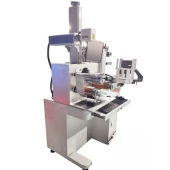
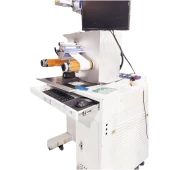
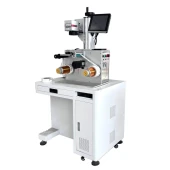
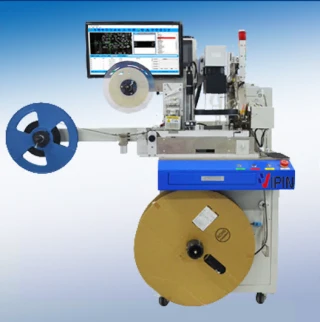
The VIPin Laser Adhesive Label Marker FSD-05UV/20FB is a high‑precision, roll‑to‑roll laser marking and cutting system engineered for continuous production of labels and flexible nameplates. Designed around a UV laser source with an optional fiber configuration, it delivers non-contact, permanent marking on a wide range of sensitive and high‑value materials. This system is particularly suitable for demanding industrial label applications where durability, legibility, and accuracy are critical, such as automotive components, electronics, medical devices, high‑temperature environments, and asset tracking.
Unlike inkjet or conventional label printing technologies, the FSD-05UV/20FB does not deposit ink or toner on the material surface. Instead, the 355 nm UV laser beam alters the material itself by inducing color change, controlled oxidation, micro‑vaporization, or fine engraving. This process creates crisp, high‑contrast marks that resist abrasion, chemicals, UV exposure, and temperature extremes without risk of smudging, fading, or delamination. The result is a clean, low‑maintenance workflow that eliminates consumables such as inks and ribbons while improving consistency and traceability across production batches.
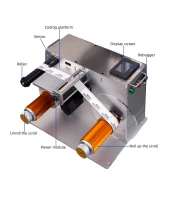
The roll‑fed architecture is designed for streamlined integration into label converting and finishing lines. Material unwinds from the supply roll under closed‑loop tension control, keeping the web stable and preventing stretching or distortion during processing. Ultrasonic or optical web guiding systems align the substrate precisely before it enters the laser processing zone, ensuring that each label, barcode, or panel is marked in the correct position even at continuous feed speeds. This stable web handling is essential for maintaining registration accuracy on narrow webs and high‑density layouts.
Within the processing station, the UV laser performs high‑resolution marking and optional cutting on a broad portfolio of substrates. Typical applications include PET films, metallized polyester, metallized labels, PI high‑temperature labels, automotive flexible nameplates, engineering plastic labels, synthetic paper, paper labels, foam labels, and fabric or cloth tags, as well as standard self‑adhesive paper stocks. The system handles label widths up to 130 mm or 180 mm (depending on configuration) with a generous Z‑axis adjustment range of 0–550 mm for accommodating various material stacks and fixtures. Using a 100 mm × 100 mm field lens, it supports detailed marking of QR codes, Data Matrix codes, serial numbers, micro text, and logos with uniform quality across the marking area.
The FSD‑05UV/20FB supports both kiss‑cutting and through‑cutting operations, enabling it to act as a combined marking and cutting station for finished labels. After marking and cutting, matrix removal and rewinding modules strip away the waste frame while the finished label web is rewound neatly onto a new core. This roll‑to‑roll workflow minimizes manual handling, reduces scrap, and prepares the output for immediate downstream processes such as slitting, laminating, or application to automated labeling lines. The closed and precise handling approach directly contributes to higher throughput and improved line efficiency for short, medium, and long production runs.
To support demanding identification and traceability tasks, the system can be equipped with an optional CCD vision system and a high‑resolution 12 MP camera. This vision‑assisted configuration enables real‑time alignment to pre‑printed graphics, registration marks, or part features, as well as inspection of codes and characters. By coupling the vision system with the JCZ motion and marking control card, the machine can dynamically compensate for material distortion or positional drifts, resulting in highly accurate placement of 2D codes and micro‑features. This makes the platform suitable not only for standard industrial labels but also for precision electronics labels, flexible circuits, and safety‑critical markings.
The motion system is driven by a coordinated combination of servo and stepper motors managed through an intelligent movement control unit and electric relays. This architecture delivers smooth acceleration, precise indexing, and repeatable positioning across the web. The laser itself operates in a “laser fixed” mode, while the material moves beneath the marking head, a proven configuration in modern roll‑to‑roll laser platforms to balance speed with accuracy. With a marking throughput of approximately one piece per second and maximum roll diameters of 260 mm or 300 mm (75 mm shaft diameter), the system is designed to handle frequent changeovers and varied job sizes with minimal downtime.
Operation and job management are handled through the VIPin Laser System software, supporting both Chinese and English interfaces.
VIPin FSD 05UV Roll to Roll UV Laser Label Marking Cutting System
Specifications
| Work Area X: | 180 mm |
|---|---|
| Work Area Y: | 180 mm |
| Beam Delivery: | Galvo |
| Laser Source: | Fiber |
| Laser Output Power: | 5 W |
| Laser Wavelength: | 355 nm (UV) |
| Marking Speed: | 180 mm/sec |
| Voltage Requirement: | Other / Not Specified |
| Materials: | Plastic, Paper, Textile, Acrylic, Metallized Films, Synthetic Paper, Flexible Metal-plastic |
| Air Assist: | Not Specified |
| Fume Extraction Unit: | Not specified |
| Safety Enclosure: | Not Specified |
| Camera Resolution: | 1200 W (12 MP) |
| Machine Weight: | Approx. 118 kg |
| Machine Size: | 600 mm × 800 mm × 1450 mm |
| Language Support: | Chinese, English |
| Software: | VIPin Laser System |
| Movement Control: | Unit/servo motor/stepping motor/electric relay |
| Incoming Materials: | Roll to roll |
| Marking Card: | JCZ Card |
| CCD Vision System: | Optional |
| Marking Capability: | QR codes, Data Matrix codes, detailed text, logos |
| Max Load (FSD-05UV18): | 10 kg |
| Max Load (FSD-05UV13): | 8 kg |
| Power Consumption (FSD-05UV18): | 3 kW |
| Power Consumption (FSD-05UV13): | 2 kW |
| Camera Lens: | 12 mm |
| Style No.: | FSD-05UV13 / FSD-05UV18 |
| Speed: | 1 pcs/s |
| Work Mode: | Laser fixed |
| Focus Adjustment Mode: | Manual (red light indication) |
| Z Axis Travel: | 0–550 mm (manual adjustment) |
| Label Max Width (FSD-05UV18): | 180 mm |
| Label Max Width (FSD-05UV13): | 130 mm |
| Shaft Diameter: | 75 mm |
| Max Roll Diameter (FSD-05UV18): | 300 mm |
| Max Roll Diameter (FSD-05UV13): | 260 mm |
| Field Lens Range: | 100 mm × 100 mm |
| Laser Wavelength: | 355 nm |
| Laser Power: | 5 W |
| Laser Type: | UV (Optional Fiber) |
Got questions about specs? Use the inquiry form to ask.
 Download Data Sheet

Features
- High-Precision UV Laser Marking (Optional Fiber) – 5W, 355 nm UV laser delivers crisp, high-contrast marks on sensitive films, plastics, and labels without burning or warping; optional fiber laser configuration for metals and additional substrates.
- Dedicated Roll-to-Roll Label Processing – Engineered for continuous web materials including PET films, metalized polyester, metallized labels, PI high-temperature labels, synthetic paper, paper labels, foam labels, fabric/cloth tags, and self‑adhesive stocks.
- Clean, Non-Contact & Consumable-Free Marking – No ink, toner, or ribbon required; the laser permanently changes the material’s surface (color change, oxidation, micro‑vaporization, or engraving), eliminating smudging, drying time, and recurring consumable costs.
- Versatile Marking & Cutting Functions – Capable of engraving, serialization, vector graphics, barcodes, kiss‑cutting label shapes, and complete through‑cutting, enabling both decoration and die‑cutting on the same line.
- Roll-Fed Unwinding with Closed-Loop Tension Control – Automatic unwinder with closed‑loop tension systems keeps web movement stable, minimizes stretching, and preserves registration accuracy during high‑speed production.
- Precision Web Guiding with Ultrasonic/Optical Sensors – Continuous web guiding ensures perfect alignment before the laser processing zone, improving cut-to-print registration and reducing material waste.
- Multiple Model Width Options – Two configurations available:
- FSD-05UV13 – Max roll Ø 260 mm, label width up to 130 mm, max load 8 kg, 2 kW power.
- FSD-05UV18 – Max roll Ø 300 mm, label width up to 180 mm, max load 10 kg, 3 kW power.
- Large Working Envelope & Adjustable Z-Axis – 100 mm × 100 mm field lens range and 0–550 mm manually adjustable Z‑axis with red‑light focus indication simplify setup for different label thicknesses and roll configurations.
- Fast Throughput for Industrial Production – Up to 1 piece per second marking speed supports demanding production lines, variable data jobs, and on‑the‑fly labeling for medium to large batch sizes.
- High-Resolution Vision Alignment (Optional CCD) – 12 MP (1200W) camera with 12 mm lens and optional CCD vision system enables automatic mark positioning, print-to-cut registration, defect inspection, and reliable processing of pre‑printed labels.
- Advanced Code & Graphics Support – Accurately marks QR codes, Data Matrix codes, serial numbers, tiny detailed text, and complex logos for product identification, traceability, branding, and anti‑counterfeiting.
- Stable Motion Control Platform – Integrated unit/servo/stepper motors with electric relay control ensure smooth web transport, precise indexing, and consistent cut depth across long production runs.
- Industrial-Grade Marking Control (JCZ Card) – Equipped with a reliable JCZ marking card, widely used in the laser industry for stable performance, fine control of laser parameters, and easy integration with plant automation.
- Dedicated VIPin Laser Control Software – User-friendly VIPin Laser System software supports Chinese and English, variable data printing, code generation, layout editing, and integration with production databases or ERP/MES systems.
- Efficient Matrix Removal & Clean Rewinding – After kiss‑cutting, waste matrix is automatically stripped and the finished web rewound neatly to a new core, ready for downstream slitting, finishing, or direct application.
- Compact Footprint for Production Lines – Machine size of approx. 600 mm × 800 mm × 1450 mm and weight around 118 kg fits easily into existing converting lines, label‑printing workflows, and limited floor spaces.
- Ideal for Demanding Label Applications – Optimized for automotive flexible nameplates, electronics labels, high‑temperature PI labels, industrial asset tags, specialty engineering plastics, and durable identification labels requiring long‑term readability.
- Consistent, High-Quality Marking on Diverse Materials – UV wavelength provides excellent absorption on plastics, films, and coated stocks, producing sharp edges, minimal heat‑affected zones, and high contrast even on small characters.
- Reduced Downtime & Maintenance – Solid‑state UV laser source with no printheads to clog and no ink system to maintain, translating into higher uptime and lower overall operating cost compared to traditional inkjet or thermal transfer.
Applications
Applications of VIPin Laser Adhesive Label Marker FSD-05UV/20FB
The VIPin Laser Adhesive Label Marker FSD-05UV/20FB is a roll-to-roll UV (optional fiber) laser system designed for high‑precision, non-contact marking and cutting of a wide range of label and web materials. Typical applications include permanent, high‑contrast, and abrasion‑resistant identification where conventional inkjet or thermal transfer methods are insufficient or too costly to maintain.
Electronics & Electrical Industry
- High‑temperature PI (polyimide) labels for PCB tracking, component ID, and reflow‑resistant barcodes.
- Serial number and QR/Data Matrix codes on PET and synthetic labels for electronic modules and control boards.
- Insulation film and warning labels on transformers, power supplies, and adapters.
- Anti‑smear, solvent‑resistant asset tags for cleanroom and ESD‑safe tools.
- Durable rating plates and specification labels on electrical panels, inverters, and drives.
Automotive & Transportation
- Flexible automotive nameplates and VIN-related labels on PET, PI, and engineered plastic films.
- Under‑hood and engine compartment labels requiring UV, oil, and heat resistance.
- Barcode and Data Matrix tracking labels for wiring harnesses, sensors, and electronic control units.
- Traceability labels on brake systems, airbags, emissions components, and safety assemblies.
- Interior and exterior instruction labels, warning tags, and certification stickers for vehicles, trucks, and rail systems.
Industrial Machinery & Equipment Identification
- Durable equipment ID plates on synthetic paper, metallized polyester, and engineering plastic labels.
- Safety warnings, lockout/tagout labels, and hazard icons that must remain legible in harsh environments.
- Asset tracking labels with sequential numbers, barcodes, and QR codes for factory equipment and tools.
- Inventory and logistics tags on storage racks, bins, and pallets in warehouses and distribution centers.
- Industrial control panel legends, switch labels, and maintenance instruction plates.
Logistics, Warehousing & Traceability
- High‑speed roll‑fed production of barcode and QR code labels for cartons, pallets, and packaging.
- Shipping, routing, and tracking labels on PET, PP, and paper stock.
- Long‑life inventory labels on metalized films for indoor and semi‑outdoor storage environments.
- Returnable container and tote labels with abrasion‑resistant laser marking for closed‑loop logistics.
- Tamper‑evident and security labels with serial numbers and micro‑text for anti‑counterfeiting.
Branding, Product Labels & Nameplates
- Premium product labels on metallized polyester and metalized paper for cosmetics, beverages, and luxury goods.
- Logo and graphic marking on adhesive labels where crisp edges and high contrast are required.
- Small-format labels with fine text and intricate graphics for consumer electronics and accessories.
- Transparent or partially metallized label marking where ink adhesion is challenging.
- Durable outdoor and industrial brand labels with UV‑stable laser marks.
Medical, Pharmaceutical & Laboratory
- High‑contrast, chemical‑resistant labels for vials, syringes, and medical devices using PET or PI films.
- UDI (Unique Device Identification) codes and Data Matrix codes for medical device traceability.
- Laboratory sample, reagent, and cryogenic storage labels on synthetic papers and films.
- Small batch, variable data production for clinical trials and controlled pharmaceutical packaging.
- Security and authenticity labels for sealed pharmaceutical packaging and medical consumables.
Textiles, Apparel & Garment Tags
- Fabric and cloth care labels with permanent washing instructions and fiber content information.
- Size, brand, and tracking tags for garments, shoes, and fashion accessories.
- Foam and soft-label marking for footwear inserts, sportswear, and protective gear.
- Laser kiss‑cutting of garment hang tags and adhesive fabric labels from roll stock.
- Non‑smearing labels for workwear, uniforms, and rental textiles.
Consumer Goods & Retail
- Price, promotion, and shelf labels on synthetic or paper materials for supermarkets and retail chains.
- Product ID labels for home appliances, power tools, and consumer electronics.
- Warranty and service labels with hidden or micro‑encoded data for after‑sales support.
Frequently Asked Questions
What materials can the VIPin FSD-05UV/20FB Roll-to-Roll Laser Adhesive Label Marker process?
How does the roll-to-roll UV laser label marking and cutting process work?
What are the key technical specifications of the VIPin FSD-05UV/20FB laser label marker?
What types of codes and graphics can the VIPin UV laser label system mark?
What are the advantages of UV laser label marking compared to inkjet or conventional label printing?
How is focusing, alignment, and quality control handled on this laser label marker?
What power and installation requirements are needed for the VIPin FSD-05UV/20FB system?
Got more questions? Use the inquiry form to ask the supplier directly.
Similar Products


Your inquiry has been received.
Create an account by adding a password
Why create an account?
- Auto-complete inquiry forms
- View and manage all your past messages
- Save products to your favorites
- Close your account anytime — no hassle