


Description
Fiber Laser Mirror Gratings, also known as Fiber Bragg Gratings (FBGs) for lasers, are advanced optical components designed to provide precise wavelength reflection and transmission within fiber laser systems. These gratings are inscribed directly into the core of optical fibers, creating a periodic variation in the refractive index that acts as a wavelength-selective mirror. This unique structure enables the FBG to reflect specific wavelengths while allowing others to pass through, making them essential for creating stable and efficient laser cavities.
In fiber laser applications, FBGs serve as both high reflectors (HR) and output couplers (OC), forming the fundamental mirrors of the laser cavity. The high reflector ensures maximum feedback at the desired lasing wavelength, while the output coupler allows controlled emission of the laser beam. By precisely selecting the reflection wavelength, these gratings enable single-wavelength operation and enhance the spectral purity of the laser output. The use of rare earth-doped optical fibers in conjunction with FBGs further amplifies the laser gain, supporting high-power and high-efficiency laser performance.
Fiber Bragg Gratings are widely recognized for their reliability, stability, and compatibility with various fiber types, including double-clad fibers and polarization-maintaining (PM) fibers. Their robust design allows for high power handling, making them suitable for demanding industrial, medical, and research laser systems. Additionally, FBGs are valued for their ultra-precise wavelength matching and broad reflectivity range, which are critical for applications such as fiber lasers, pump lockers, and advanced optical sensing.
The versatility of Fiber Laser Mirror Gratings extends to their adaptability across a wide range of wavelengths, from the near-infrared to the mid-infrared spectrum. Their compact, all-fiber construction ensures low insertion loss and high reliability, even in harsh operating environments. As a result, Fiber Bragg Gratings have become the preferred choice for engineers and system integrators seeking to optimize the performance and stability of modern fiber laser systems.
Fiber Bragg Gratings For Lasers
Specifications
| Center Wavelength Range: | 1018 – 2040 nm |
|---|---|
| FBG Length: | Not Specified |
| Reflectivity: | 30 - 99% |
| Center Wavelength (nm): | 1018nm, 1053nm, 1064nm, 1080nm, 1550nm, 1950nm, 2020nm, 2040nm |
| Wavelength Accuracy: | 0.2nm |
| Reflectivity (HR): | ≥99% |
| Reflectivity (OC): | 3%~20% |
| Bandwidth (HR): | 1~3nm |
| Bandwidth (OC): | 0.2~1nm |
| SLSR: | ≥15dB |
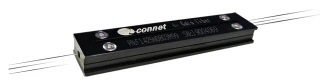
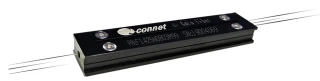
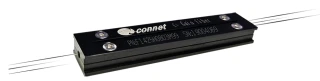
| Recoating/Package: | Polyimide/60x12x6mm (High power: >50W) |
| Fiber Type: | 10/125 DCF, 15/130 DCF, 20/125 DCF, 25/250 DCF, 30/250 DCF, 20/400 DC Fiber, PM or non-PM types |
| Power Handling (core): | 20W, 50W, 100W |
| Fiber Termination: | No connector |
| Pigtail Length At Both Sides: | >0.8 meter (Typical) |
| Operating Temperature: | -40 to +100°C |
| Storage Temperature: | -40 to +100°C |
Got questions about specs? Use the inquiry form to ask.
 Download Data Sheet

Features
- Wide Bandwidth & Reflectivity Range: Supports a broad range of center wavelengths (1018nm, 1053nm, 1064nm, 1080nm, 1550nm, 1950nm, 2020nm, 2040nm) and reflectivity options (≥99% for HR, 3%~20% for OC), making it suitable for various laser applications.
- Ultra-Precise Wavelength Matching: Offers wavelength accuracy of 0.2nm, ensuring stable and reliable laser performance.
- High Power Handling Capability: Designed for high power fiber lasers, with power handling options up to 100W (core), and robust polyimide recoating or 60x12x6mm packaging for >50W applications.
- Compatible with Multiple Fiber Types: Available for 10/125 DCF, 15/130 DCF, 20/125 DCF, 25/250 DCF, 30/250 DCF, 20/400 DC fiber, and both PM (polarization-maintaining) and non-PM fibers.
- Excellent Side Lobe Suppression Ratio (SLSR): SLSR ≥15dB for superior signal quality and reduced noise.
- Flexible Bandwidth Options: HR bandwidth: 1~3nm, OC bandwidth: 0.2~1nm, suitable for various laser cavity designs.
- Long Pigtail Lengths: Standard pigtail length >0.8 meters on both sides for easy integration.
- Wide Operating & Storage Temperature Range: Reliable performance from -40°C to +100°C, ideal for demanding environments.
- No Connector Termination: Supplied with bare fiber ends for maximum customization and low insertion loss.
- Customizable Specifications: Tailored solutions available for wavelength, power handling, fiber type, reflectivity, and bandwidth to meet specific application requirements.
- Typical Applications: Perfect for fiber lasers, pump lockers, and advanced optical sensing systems.
Applications
- Fiber Lasers: Used as high reflectors (HR) and output couplers (OC) to form stable laser cavities with precise wavelength selection, enabling efficient and reliable fiber laser operation.
- Pump Laser Stabilization (Pump Lockers): Employed to stabilize the wavelength of pump lasers in fiber laser systems, ensuring consistent performance and preventing wavelength drift.
- Optical Sensing: Utilized in fiber optic sensors for strain, temperature, and pressure measurements due to their wavelength-specific reflection properties and high sensitivity.
- Telecommunications: Applied in dense wavelength division multiplexing (DWDM) systems for channel selection, filtering, and wavelength stabilization in optical communication networks.
- Medical Lasers: Integrated into medical laser systems for precise wavelength control, enhancing the safety and effectiveness of surgical and therapeutic procedures.
- Industrial Material Processing: Used in high-power fiber lasers for cutting, welding, marking, and engraving applications, benefiting from their high power handling and wavelength stability.
- Laser Spectroscopy: Supports high-resolution spectroscopy by providing narrowband reflection and stable wavelength references.
- Optical Coherence Tomography (OCT): Enhances imaging systems by acting as wavelength-selective mirrors, improving resolution and signal quality.
- Laser Cavity Mirrors: Serves as distributed Bragg reflectors in various laser cavities, including rare-earth-doped fiber lasers (e.g., Yb, Er, Tm, Ho), for efficient feedback and output coupling.
- Wavelength Reference and Calibration: Provides stable and precise wavelength references for calibration of optical instruments and systems.
- Environmental and Structural Monitoring: Deployed in distributed sensing networks for real-time monitoring of infrastructure, bridges, pipelines, and other critical assets.
- Research and Development: Widely used in laboratories for experimental setups requiring precise wavelength control and high reflectivity in fiber-based systems.
Frequently Asked Questions
What are Fiber Laser Mirror Gratings (Fiber Bragg Gratings) and how do they work?
What are the main applications of Fiber Bragg Gratings for lasers?
What wavelength ranges and reflectivity options are available for these Fiber Laser Mirror Gratings?
What fiber types and power handling capabilities do these FBGs support?
What are the key features and advantages of DK Photonics Fiber Laser Mirror Gratings?
How do I specify and order a Fiber Bragg Grating for my laser application?
Got more questions? Use the inquiry form to ask the supplier directly.
Similar Products


Your inquiry has been received.
Create an account by adding a password
Why create an account?
- Auto-complete inquiry forms
- View and manage all your past messages
- Save products to your favorites
- Close your account anytime — no hassle