
Description
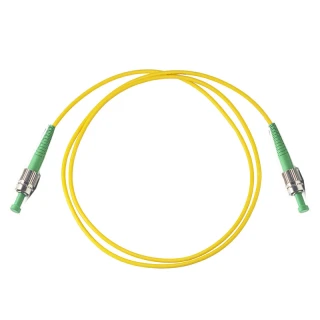
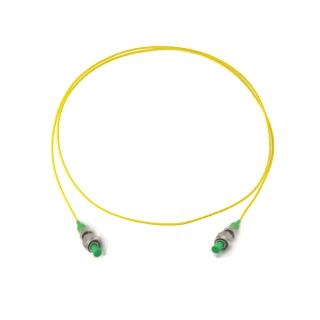
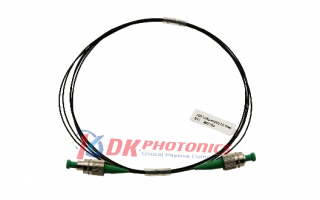
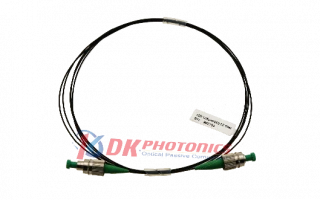
The 850nm Single Mode Patch-Cord from DK Photonics is engineered as a high‑performance interconnect for short‑wavelength single mode applications, where low insertion loss, high return loss, and long‑term stability are critical. Unlike standard multimode 850 nm jumpers commonly used in data‑center environments, this series is based on true single mode fiber optimized around 850 nm, making it ideal for laboratory setups, specialty fiber laser systems, and advanced optical instruments that require well‑controlled mode propagation at this wavelength. Each patch-cord is manufactured with tight process control on geometry and polish quality, helping users achieve repeatable optical performance in demanding R&D and production environments.
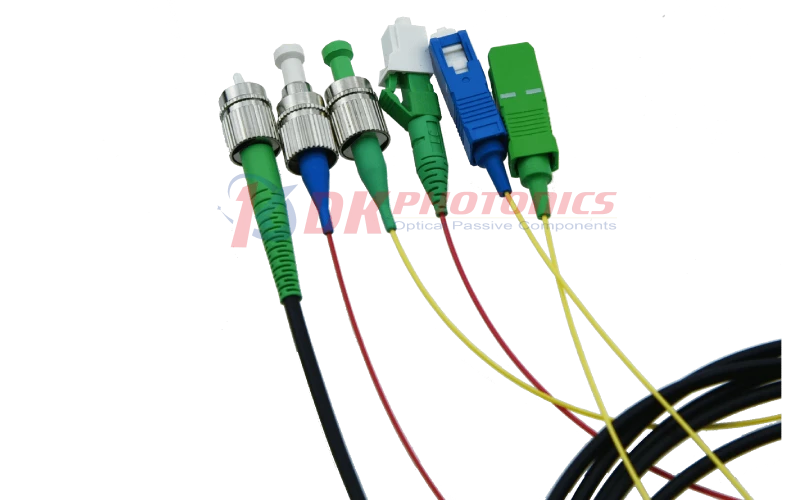
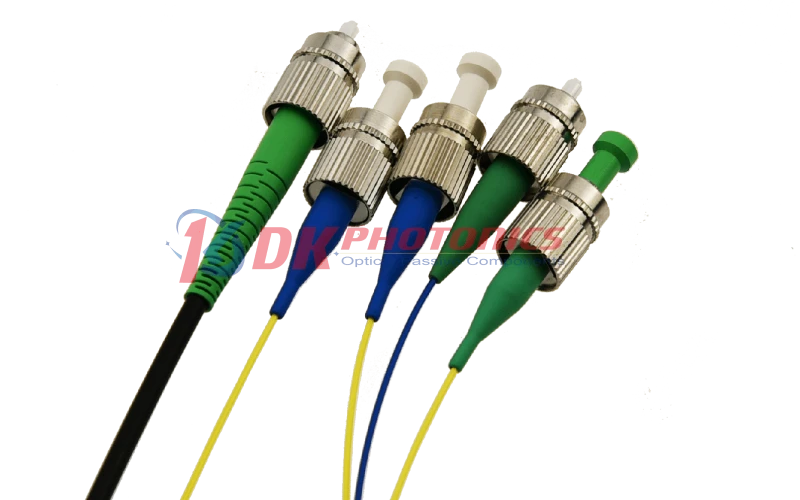
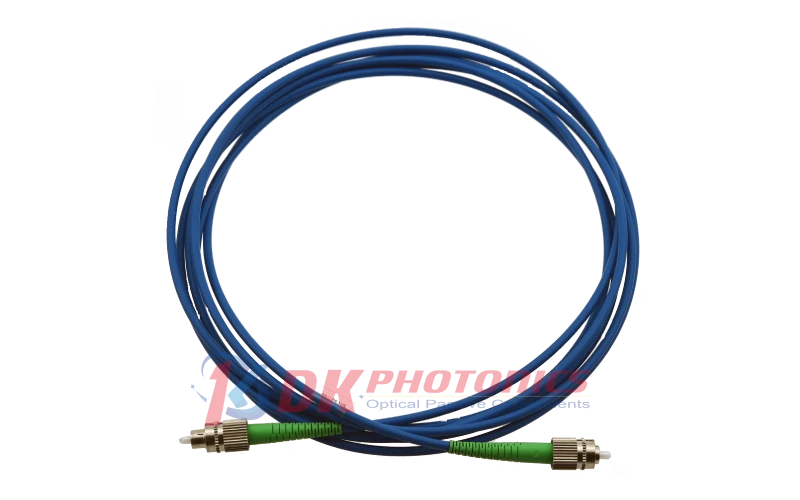
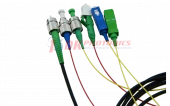
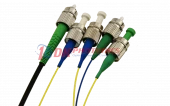
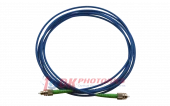
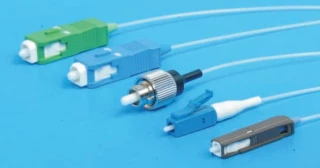
This patch-cord series supports a wide range of industry-standard connector configurations, including FC, LC, SC and others, with PC or APC polishing options to match specific system requirements. The example configuration SMPC‑85‑P‑S78‑90‑20‑FA illustrates the high level of customization available: an 850 nm single mode patch-cord, performance (P) grade, using 780‑HP panda fiber, 0.9 mm loose tube protection, 2 m length, and FC/APC connectors at all ports. By leveraging fibers such as 780‑HP and similar specialty single mode designs, the product offers excellent mode field control and low back‑reflection at 850 nm, which is particularly beneficial in precision measurement setups, coherent detection schemes, and short‑wavelength laser delivery. Typical applications include fiber lasers, fiber‑based instruments, fiber I/O ports in photonic subsystems, as well as optical transmitters and transceivers operating near 850 nm where single mode behavior is required.
Compared with generic single mode patch cords designed for 1310 nm or 1550 nm, 850 nm single mode jumpers must meet tighter tolerances on fiber alignment and connector polish to maintain low insertion loss at the shorter wavelength. DK Photonics addresses this by using high‑grade ferrules, narrow‑key FC connectors (2.0 mm key width where FC is selected), and carefully controlled polishing processes. The result is patch-cords that deliver high return loss, typically ensuring minimal back‑reflection into light sources and sensitive detectors, while maintaining excellent stability over time and under normal handling conditions. This makes the series a compelling choice when migrating benchtop free‑space 850 nm setups into more robust and repeatable fiber‑based architectures, or when upgrading from lower‑grade laboratory jumpers that do not provide consistent performance.
The mechanical design emphasizes robustness and practicality in real‑world use. Users can specify cable jacket diameters such as 0.9 mm loose tube for compact routing inside instruments, or larger diameters for enhanced durability in external and rack‑mount wiring. Lengths are available to customer specification, with a default length accuracy of ±5 cm, sufficient for most laboratory and OEM integration needs. This tolerance simplifies inventory and installation while still providing reliable path length control for typical optical systems. The patch cords are also available as pigtails (single‑ended connectors, SMPig‑ series) for seamless integration inside modules and subassemblies where one end is fusion‑spliced to internal fibers or components.
Ordering is streamlined through a clear part‑number structure (SMPC‑①‑②‑③‑④‑⑤‑⑥), which encodes parameters such as test wavelength, grade, fiber type, cable outer diameter, length, and connector/interface. This coding scheme allows designers and buyers to specify exactly what they need in terms of operating wavelength, connector style, and mechanical configuration, and to quickly replicate proven builds across multiple projects. For customers with non‑standard needs—such as special fiber types, unique connector combinations, non‑standard lengths, or tighter tolerances—DK Photonics offers custom configurations with short lead times. This flexibility, combined with the intrinsic optical performance at 850 nm, makes the 850nm Single Mode Patch-Cord series a robust solution for high‑precision photonics, supporting both cutting‑edge research and volume OEM deployments.
850nm Single Mode Fiber Optical Patch Cord
Specifications
| Wavelength Range: | 780 – 970 nm |
|---|---|
| Cable Length: | 1 m |
| Fiber Core Material: | Silica |
| Mode Field Diameter (MFD): | 5.0 ±0.5 um @ 850nm |
| Test Wavelength: | 780-850 nm |
| Cutoff Wavelength: | 730 nm |
| Insertion Loss: | ≤1.0 dB |
| Return Loss: | ≥40 dB |
| Fiber Type: | 780-HP |
| Numerical Aperture: | 0.13 |
| Repeatability: | ≤0.2 dB |
| Changeability: | ≤0.3 dB |
| Optical Power: | ≤100 mW |
| Durability: | ≥1000 times |
| Operation Temperature: | -5 to +75 ℃ |
| Storage Temperature: | -40 to +85 °C |
Got questions about specs? Use the inquiry form to ask.
 Download Data Sheet

Features
- Optimized for 850 nm Single-Mode Operation – Specifically engineered for 850 nm single-mode transmission, ensuring low-loss, high-fidelity signal delivery in demanding short-wavelength systems.
- Low Insertion Loss – Precision-polished connectors and high-grade 780-HP panda fiber minimize insertion loss, improving overall link budget and system performance.
- High Return Loss – High-quality PC/APC end-face geometry delivers excellent back-reflection performance, reducing noise and improving stability in sensitive optical setups.
- Excellent Stability and Long-Term Reliability – Robust design, tight process control, and high-quality materials ensure consistent performance under continuous operation in lab, industrial, and telecom environments.
- Polarization-Maintaining 780‑HP Panda Fiber (Optional) – Supports PM operation at 850 nm when specified, ideal for coherent systems, interferometry, and fiber laser applications requiring preserved polarization state.
- Multiple Connector Options (FC / SC / LC and Others) – Available with a wide range of connector types and polish styles (PC, APC) to ensure compatibility with existing fiber instruments, transmitters, and transceivers.
- Custom Lengths with High Length Accuracy – Standard length tolerance of ±5 cm; fully customizable lengths available for precise routing in instruments, racks, and optical benches.
- Flexible Cable Constructions – Offered in various outer diameters (e.g., 0.9 mm loose tube and others on request) for easy integration into tight spaces, cable trays, or protective conduits.
- Single Fiber Patch-Cord or Pigtail Configurations – Delivered as standard duplex/patch-cords or single-ended pigtails (SMPig series) to match different connection schemes and packaging needs.
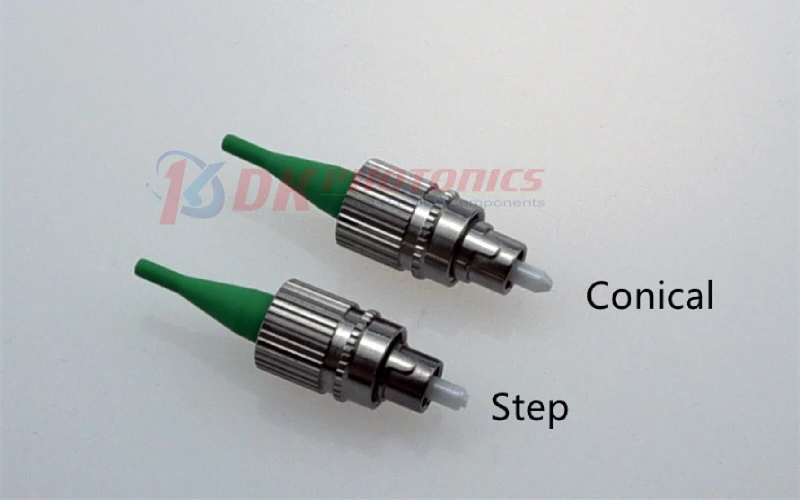
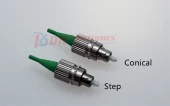
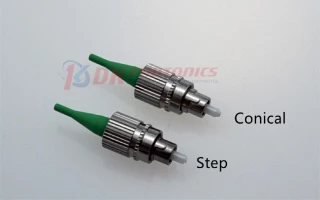
- High-Precision FC Narrow-Key Connectors – FC connectors use a 2.0 mm narrow key for accurate, repeatable alignment, particularly important for PM fiber and high-precision measurement systems.
- Low Polarization Dependent Loss (PDL) – Carefully controlled fiber alignment and connector polishing help minimize PDL, improving performance in polarization-sensitive systems.
- Low Attenuation and High Optical Power Handling – High-purity single-mode fiber and robust connectorization support low attenuation and stable operation at typical optical power levels used in fiber lasers and transmitters.
- Excellent Mechanical Robustness – High-quality jacketing and strain-relief boots provide protection against bending, pulling, and vibration, extending service life in field and lab environments.
- High Repeatability and Interchangeability – Strictly controlled ferrule concentricity and end-face geometry deliver repeatable measurements and easy interchangeability between cables and instruments.
- Clean, Low-Defect Connector End Faces – End faces are polished and inspected to industry standards, supporting low contamination risk and reliable performance with proper handling.
- Compatible with a Wide Range of 850 nm Systems – Ideal for fiber lasers, optical transmitters and transceivers, fiber I/O ports, test and measurement equipment, and short-wavelength optical communication links.
- Ideal for Lab, Production, and Field Use – Suitable for R&D labs, manufacturing test setups, and system integration thanks to stable performance, flexible customization, and robust construction.
- Custom Configurations on Request – DK Photonics can tailor wavelength range, fiber type, connector combination, cable diameter, jacket material, and length to meet unique system requirements with short lead times.
- Clear Part Number Structure for Easy Ordering – The SMPC-①-②-③-④-⑤-⑥ scheme allows quick and precise specification of test wavelength, grade, fiber type, cable OD, length, and connector type, minimizing ordering errors.
Applications
- Fiber Lasers and Amplifiers – Used as low-loss jumper cables for 850 nm single mode fiber lasers, seed lasers, and pre‑amplifier stages, providing stable, high‑return‑loss connections between laser heads, pump modules, and laser control units.
- Fiber Optic Test & Measurement Instruments – Ideal for connecting optical power meters, optical spectrum analyzers (OSAs), OTDRs, tunable laser sources, and BER test sets in R&D labs and production test benches that operate around 850 nm.
- Optical Transmitters, Receivers & Transceivers – Serves as an interface cable between 850 nm single‑mode laser diodes, VCSEL modules, and receiver / transceiver modules in short‑reach and intra‑system optical links.
- Fiber I/O Ports for Photonic Modules – Provides reliable input/output patching between fiber‑coupled modules (such as modulators, isolators, WDMs, splitters, and detectors) and the main system fiber network.
- Laboratory Photonics Experiments – Widely used for routing 850 nm signals on optical tables, integrating with fiber collimators, polarization controllers, and variable optical attenuators in university and industrial research labs.
- Polarization‑Maintaining (PM) Systems – When used with 780‑HP or similar PANDA fibers, supports precise polarization control in interferometers, coherent detection setups, and quantum optics experiments near 850 nm.
- Optical Communication Links at 850 nm – Suitable for specialized single‑mode 850 nm links in data centers, industrial networks, and custom short‑reach communication systems where low insertion loss and high return loss are critical.
- Medical and Biomedical Optics – Used to deliver and collect 850 nm light in medical diagnostic equipment, biophotonic imaging systems, spectroscopy devices, and minimally invasive probes that require stable fiber interconnections.
- Sensing and Measurement Systems – Applied in fiber‑based sensors (temperature, strain, vibration) and 850 nm interrogation units, ensuring repeatable, low‑loss connections between sensing heads and readout electronics.
- Optical Component Characterization – Provides a clean, low‑back‑reflection interface for measuring filters, couplers, splitters, modulators, and other components designed for operation near 850 nm.
- Metrology and Calibration Setups – Used in reference links and calibration paths for optical metrology, guaranteeing stable insertion loss and high return loss for repeatable measurement results.
- Free‑Space to Fiber Coupling – Connects fiber collimators, lens assemblies, and free‑space optical paths to 850 nm single‑mode fibers, enabling compact, low‑loss transitions between free‑space optics and fiber networks.
- Prototyping and System Integration – Ideal for quickly patching between prototype optical boards, sub‑systems, and evaluation modules during the development of new 850 nm photonic products.
- Instrumentation Racks and Patch Panels – Used as front‑panel or rear‑panel jumpers in optical distribution frames, patch panels, and instrumentation racks requiring reliable FC/SC/LC terminations at 850 nm.
- Educational and Training Labs – Well suited for teaching laboratories that demonstrate single‑mode propagation, connector polish types (PC/APC), insertion loss, return loss, and basic fiber‑optic handling at 850 nm.
- OEM Integration in Fiber‑Coupled Modules – Can be integrated as pre‑terminated leads or pigtails in OEM assemblies such as laser heads, fiber‑coupled LEDs, integrated sensors, and compact transceiver modules.
- Reliability and Environmental Testing – Used in burn‑in racks and environmental chambers for long‑term reliability tests of 850 nm optoelectronic components that require highly stable, repeatable fiber connections.
- Custom 850 nm Single‑Mode Interconnects – Tailored for application‑specific interconnects (custom lengths, connector types, and fiber types) in niche photonics systems where standard telecom‑wavelength cords are not suitable.
Frequently Asked Questions
What is an 850nm single mode patch cord from DK Photonics and how is it typically used?
What is the difference between FC/PC and FC/APC connectors on the 850nm single mode patch cord?
How do I correctly specify and order a custom 850nm single mode patch cord from DK Photonics?
What are the typical optical performance parameters of an 850nm single mode patch cord?
Can the DK Photonics 850nm single mode patch cord be customized for polarization‑maintaining (PM) applications?
What length tolerances and mechanical options are available for 850nm single mode patch cords?
How do 850nm single mode patch cords differ from standard 850nm multimode patch cords used in data communications?
Got more questions? Use the inquiry form to ask the supplier directly.
Similar Products
Your inquiry has been received.
Create an account by adding a password
Why create an account?
- Auto-complete inquiry forms
- View and manage all your past messages
- Save products to your favorites
- Close your account anytime — no hassle