
Description
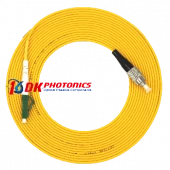
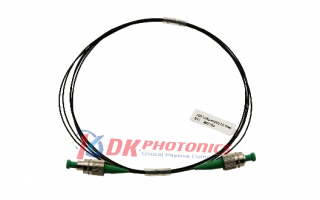
The 2000nm Single Mode Patch Cord from DK Photonics is designed for precision signal delivery in the 1.9–2.1 µm wavelength region, where advanced fiber lasers, medical systems, sensing platforms, and research instruments increasingly operate. Using specialized 2 µm-optimized single mode fiber (such as SM1950 panda fiber in typical configurations), this patch cord ensures well-controlled mode field characteristics, low attenuation, and excellent beam quality. It is engineered to support stable single-mode propagation at around 2000 nm, where standard telecom fibers no longer perform optimally.
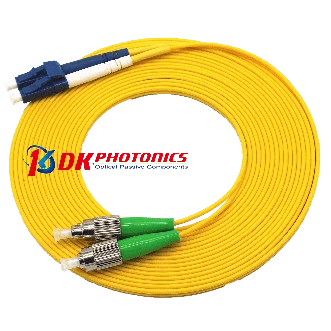
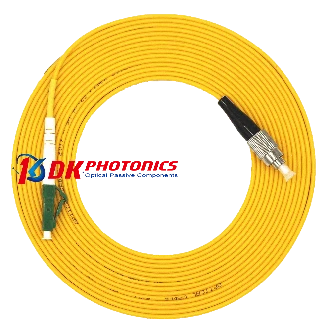
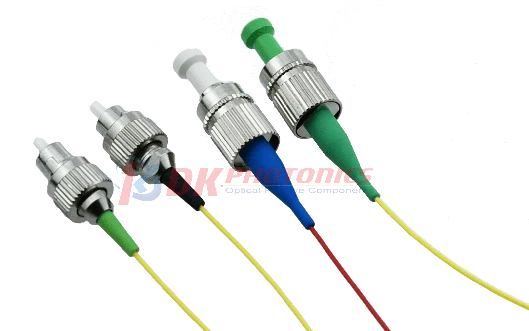
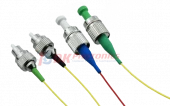
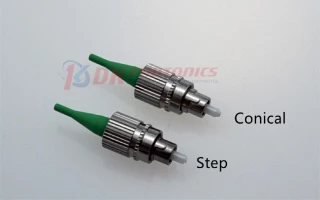
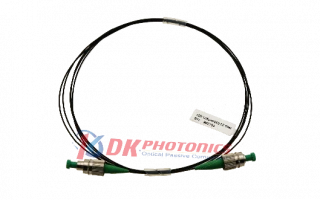
Supplied with a wide selection of connector types—including FC, LC, SC and others—this patch cord integrates smoothly into both new and existing optical setups. Connectors are available in PC and APC polish styles to match specific back-reflection requirements. APC configurations, with their angled end-face, are ideal for high-power and high-sensitivity applications where return loss is critical, while PC options provide robust performance for general-purpose laboratory and system use. Typical assemblies are jacketed with 0.9 mm loose tube, but other diameters and cable structures can be configured to suit routing, protection, or panel-mount requirements.
Compared with general-purpose telecom patch cords, which are optimized for 1310/1550 nm, this 2000nm single mode patch cord is specifically tailored for the mid‑IR edge region around 2 µm. That wavelength band is widely adopted in thulium- and holmium-doped fiber lasers, eye-safe LIDAR, gas spectroscopy, and emerging biomedical systems. By using dedicated 2 µm fibers and tight process control, the patch cord delivers low insertion loss and high return loss at the target operating wavelength, enabling clean, efficient coupling between fiber lasers, amplifiers, fiber-based components, and optical instruments. This ensures that designers and researchers do not need to compromise performance by using out-of-band fibers or ad‑hoc cabling solutions.
Mechanical robustness and long-term reliability are key considerations in applications such as OEM instruments, industrial laser systems, and field-deployed sensing units. The 2000nm Single Mode Patch Cord is built using high-quality fiber and precision-polished connectors to maintain low loss and stable performance over time. Stable connector geometry, controlled ferrule concentricity, and careful strain-relief design help preserve alignment and reduce insertion loss variation due to temperature shifts, vibration, or repeated mating cycles. The patch cord is well suited for integration as a fiber I/O port on 2 µm laser heads, as an interconnect between optical transmitters and transceivers, or as a test lead in R&D labs and production lines.
The product line is available in a range of grades (for example, P-grade for premium performance) and can be customized through the SMPC-… ordering code to fit project-specific needs. Users can select wavelength band, fiber type, connector style (including narrow-key FC for precise keying), connector polish, cable diameter, and fiber length. Standard assemblies offer a length tolerance of ±5 cm, with tighter tolerances available on request for applications where path length matching or timing is critical. This flexibility allows system integrators to standardize on a proven 2000 nm patch cord platform while fine-tuning parameters to each instrument or subsystem.
Thanks to its combination of low insertion loss, high return loss, and excellent stability at 2 µm, the 2000nm Single Mode Patch Cord is an ideal choice for linking 2000 nm fiber lasers to downstream optics, connecting fiber-based components in mid‑IR photonic circuits, or establishing reliable reference paths in calibration setups. Whether used as a simple jumper, a high-quality pigtail with a single connector, or a custom-terminated assembly in a complex optical architecture, this patch cord provides a robust, wavelength-optimized backbone for demanding 2000 nm photonic applications.
2000nm Single Mode Patch-Cord
Specifications
| Wavelength Range: | 1850 – 2200 nm |
|---|---|
| Cable Length: | 1 m |
| Fiber Core Material: | Silica |
| Mode Field Diameter (MFD): | 8.0μm @ 1950 nm |
| Test Wavelength: | 2000 nm |
| Insertion Loss: | ≤0.5 dB |
| Return Loss: | ≥40 dB |
| Fiber Type: | SM1950 |
| Numerical Aperture: | 0.2 |
| Repeatability: | ≤0.2 dB |
| Optical Power: | 100 mW |
| Operation Temperature: | -5 to +75 °C |
| Storage Temperature: | -40 to +85 °C |
| Length Accuracy: | +/-5CM |
Got questions about specs? Use the inquiry form to ask.
 Download Data Sheet

Features
- Optimized for 2000 nm Single-Mode Operation – Precisely engineered for 2.0 µm wavelength applications, ensuring low attenuation and stable performance in mid‑IR and eye‑safe fiber systems.
- Low Insertion Loss – High‑quality fiber and precision connectors deliver minimal insertion loss, maximizing system power budget and signal integrity over short and long runs.
- High Return Loss (Low Back Reflection) – Advanced polishing (PC/APC) and connector design provide excellent return loss, ideal for high‑power fiber lasers and sensitive photonic instruments.
- Excellent Stability and Reliability – Robust construction with tight quality control for long‑term stability under varying temperatures, environmental conditions, and repeated mating cycles.
- Available with Multiple Connector Types – Supports FC, SC, LC and other industry‑standard connectors, including PC and APC end‑face options for broad compatibility with existing infrastructures.
- Customizable Fiber Type and Structure – Options for 2000 nm single‑mode fiber such as SM1950 panda fiber and related specialty fibers, enabling optimization for polarization, bend performance, or specific system needs.
- High‑Quality FC Narrow Key Connectors – FC connectors provided with 2.0 mm narrow key for high alignment accuracy and secure, repeatable connections in laboratory and industrial setups.
- Flexible Jacket and Cable Diameter Options – Offered in 0.9 mm loose tube and other standard outer diameters with PVC or LSZH jackets for easy routing, identification, and protection in racks or equipment.
- Custom Lengths with Tight Tolerance – Standard and customer‑specified lengths available, with default length accuracy of ±5 cm to support precise optical path and timing requirements.
- Single‑Ended Pigtails or Dual‑Ended Patch Cords – Configuration options include SM patch cords with two connectors or SM fiber pigtails with one connector to match various integration scenarios.
- Low Polarization and Mode Distortion – Carefully controlled mode field diameter (MFD specified at 1/e²) helps maintain beam quality, low modal noise, and consistent polarization behavior in 2 µm systems.
- High Mating Durability – Connectors and ferrules designed for many mating cycles with low wear, supporting demanding laboratory use, production testing, and field deployment.
- Compatible with Fiber Lasers and Amplifiers – Engineered for fiber laser output and input ports at around 2.0 µm, as well as for use with optical amplifiers and nonlinear fiber devices.
- Optimized for Test and Measurement – Ideal for fiber instruments, optical power meters, spectrum analyzers, interferometers, and other diagnostic equipment operating in the 2 µm window.
- Ideal for Optical Transmitters and Transceivers – Provides stable, low‑loss interconnects for optical transmitters, receivers, and transceiver modules in research, sensing, and communications at 2 µm.
- Suitable for Fiber I/O Ports and Module Patching – Used as reliable fiber I/O interconnects between modules, benches, and enclosures in OEM photonic systems and lab setups.
- Precision Factory Termination and Polishing – All patch cords are manufactured under tight process control with inspected end faces for minimal scratches, pits, or contamination.
- RoHS‑Compliant Components – Uses materials that meet international environmental standards, supporting integration into compliant end‑products.
- Short Lead Times and Custom Engineering Support – DK Photonics can rapidly design and produce custom 2000 nm single‑mode patch cords according to user‑defined specifications, including special lengths, connector mixes, and fiber types.
- Global Application Coverage – Well‑suited for fiber optic sensing, lidar, medical lasers, spectroscopy, defense, and research applications requiring reliable single‑mode performance at 2000 nm.
Applications
- 2000 nm fiber laser systems – Output coupling, internal cavity routing, and external beam delivery for Thulium- and Holmium-doped fiber lasers.
- Medical and surgical lasers – High-reliability fiber connections for 2 µm lasers used in urology, ENT procedures, lithotripsy, and minimally invasive surgery.
- Mid‑IR spectroscopy and gas sensing – Low-loss connections for 2.0 µm absorption spectroscopy, TDLAS systems, and multi-gas analyzers.
- LIDAR and 3D sensing at 2 µm – Robust patch cords for coherent and direct-detection LIDAR, range finding, and eye‑safer 2 µm remote sensing.
- Optical test and measurement instruments – Connection leads for optical spectrum analyzers, power meters, interferometers, OTDRs, and optical network analyzers operating near 2 µm.
- Fiber laser research and development – Flexible jumpers for laboratory setups, prototype 2 µm laser benches, non-linear optics experiments, and new wavelength development.
- Fiber amplifiers and ASE sources – Input/output pigtails for 2.0 µm EDFAs/TDFAs, pre‑amps, booster amps, and broadband ASE sources.
- Optical transmitters and transceivers – Stable SM connections for 2 µm DWDM/CWDM modules, coherent transceivers, and high‑speed telecom or datacom prototypes.
- Fiber I/O ports for photonic subsystems – Input/output patching for isolators, couplers, WDMs, filters, and integrated photonic modules working around 2000 nm.
- Optical communication links at 2 µm – Point‑to‑point fiber links, experimental 2 µm metro or access networks, and specialty long‑wavelength transmission lines.
- Industrial process monitoring and control – Fiber delivery for 2 µm laser sources used in materials analysis, process spectroscopy, and closed‑loop industrial sensing.
- Environmental and atmospheric monitoring – Remote sensing of H2O, CO2, and trace gases using 2 µm laser sources, with patch cords linking sensors, lasers, and detectors.
- Defense and aerospace photonics – Rugged optical interconnects for 2 µm laser rangefinders, target designation, and advanced sensing payloads.
- Optical coherence tomography (OCT) and imaging – Single‑mode 2 µm links in long‑wavelength OCT, endoscopic imaging, and biomedical diagnostic systems.
- Nonlinear optics and supercontinuum generation – Fiber routing for pump lasers and output collection in 2 µm‑pumped nonlinear fiber experiments and supercontinuum sources.
- Metrology and frequency comb systems – Stable, low‑loss SM connections in 2 µm frequency comb distribution, reference links, and precision timing transfer.
- Optical sensor networks – Connection of interferometric, FBG, and intensity‑based sensors operating around 2 µm for structural health, temperature, and strain monitoring.
- Laboratory fiber routing and patch panels – General‑purpose 2 µm single‑mode jumpers for patch bays, breadboards, and reconfigurable optical test setups.
- OEM integration in photonic equipment – Embedded fiber harnesses and patch cords for OEM laser modules, instruments, and communication subsystems designed for the 2000 nm band.
Frequently Asked Questions
What is a 2000 nm single mode patch cord and when should I use it?
What are the typical insertion loss and return loss of DK Photonics 2000 nm single mode patch cords?
What connector and polish options are available for the 2000 nm single mode patch cords?
Can I order custom 2000 nm patch cords (fiber type, length, jacket, connectors, or pigtails)?
What does the sample part number SMPC‑2000‑P‑S19‑90‑20‑FA mean?
What is the default length accuracy and mechanical stability of these 2000 nm patch cords?
What are the typical applications of DK Photonics 2000 nm single mode patch cords compared with standard telecom patch cords?
Got more questions? Use the inquiry form to ask the supplier directly.
Similar Products

Your inquiry has been received.
Create an account by adding a password
Why create an account?
- Auto-complete inquiry forms
- View and manage all your past messages
- Save products to your favorites
- Close your account anytime — no hassle