

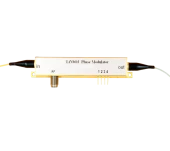
Description
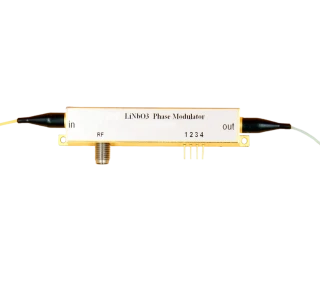
The ROF-PM-2000 Series is a high-performance 2000 nm electro‑optic phase modulator based on lithium niobate (LiNbO₃) waveguide technology, engineered for demanding fiber laser and advanced photonics applications. Utilizing proton‑exchanged optical waveguides with direct fiber‑to‑chip coupling, this modulator delivers a stable, low‑loss solution for precise control of the optical phase at the 2 µm wavelength band. Its design targets applications where low half‑wave voltage, broad DC–200 MHz operating bandwidth, and excellent polarization management are essential, including high‑power 2 µm fiber lasers, coherent combining architectures, and next‑generation free‑space and fiber‑based laser communication systems.
Operating over a wavelength range of 1950–2050 nm, the ROF-PM-2000 Series is optimized for the rapidly growing ecosystem of thulium‑ and holmium‑doped fiber lasers and amplifiers, which are increasingly deployed in materials processing, medical systems, eye‑safer LIDAR, and atmospheric sensing. In comparison with many 1550 nm telecom‑grade phase modulators adapted for 2 µm operation, this device is specifically tailored for the 2 µm band, offering lower insertion loss, higher optical return loss performance, and stable operation at higher optical powers. The device supports a maximum input optical power of +20 dBm at 2000 nm, making it suitable for integration in power‑scaled architectures and pre‑amplifier stages without sacrificing modulation fidelity.
The internal waveguide structure is implemented on LiNbO₃ using proton‑exchange technology, which provides a strong electro‑optic effect, low propagation loss, and good long‑term reliability. The combination of optimized electrode design and low Vπ (typically 5.0 V at 50 kHz) enables efficient phase modulation over DC to 200 MHz, supporting both low‑frequency feedback loops and high‑speed signal formats. This makes the ROF-PM-2000 particularly well suited for Pound–Drever–Hall (PDH) laser frequency stabilization, phase‑sensitive coherent detection schemes, and generation of optical single‑sideband or advanced phase‑encoded formats used in coherent communication and sensing.
Polarization handling is a critical parameter at 2 µm, where fiber and component availability is more limited than in the C‑band. The ROF-PM-2000 Series addresses this through the use of polarization‑maintaining PANDA fibers on both input and output, ensuring a high polarization extinction ratio and stable, repeatable performance in polarization‑sensitive systems. Direct fiber pigtailing to the LiNbO₃ chip minimizes coupling losses and alignment drift, contributing to the specified insertion loss of 3.5–4.5 dB and improving overall link budget and signal quality in multi‑component optical setups.
For straightforward integration into RF and control electronics, the modulator incorporates a shielded SMA female electrical port with a high input impedance greater than 1 MΩ. This high‑impedance design allows easy driving from standard RF sources, function generators, and low‑noise servo controllers without imposing a strict 50 Ω power budget, which is particularly beneficial in frequency stabilization or feedback control applications. With a specified RF terminal input voltage range of −20 V to +20 V, users can implement a wide variety of modulation depths, closed‑loop control schemes, and multi‑tone phase modulation strategies within a single device.
The ROF-PM-2000 Series is built for deployment in laboratory, industrial, and field environments. It offers an operating temperature range from 0 to +70 °C and can be stored between −40 and +85 °C, with relative humidity tolerance from 5% to 90%. These environmental specifications support stable operation on optical benches, in rack‑mounted OEM subsystems, or integrated into transportable laser platforms. The compact package with fiber pigtails and standard FC/PC or FC/APC connectors (as well as user‑specified options) simplifies integration into existing 2 µm optical infrastructures and facilitates straightforward replacements or system upgrades from earlier‑generation phase modulators.
In many cutting‑edge photonics systems, such as coherent beam combining of multiple 2 µm fiber amplifiers, the ROF-PM-2000 can be deployed as a key actuator for active phase control, ensuring constructive interference and improved overall brightness. In PDH‑locked cavity setups, it serves as the phase modulation element to imprint well‑defined sidebands for error signal generation, enabling sub‑kilohertz linewidth stabilization of 2 µm lasers.
ROF PM 2000nm High Speed LiNbO3 Electro Optic Phase Modulator
Specifications
| Aperture Diameter: | Not Specified |
|---|---|
| Peak Optical Power Density: | Not Specified |
| Wavelength Range: | 1950 – 2050 nm |
| Transmission: | Not Specified |
| Extinction Ratio: | Not Specified |
| Center Wavelength: | 2000 nm |
| Insertion Loss: | 3.5–4.5 dB |
| Optical Return Loss: | -45 dB |
| Input Optical Fiber Type: | Panda PM |
| Output Optical Fiber Type: | Panda PM |
| Fiber Optic Interface: | FC/PC, FC/APC, or user specified |
| Operating Frequency Bandwidth: | DC–200 MHz |
| Half-wave Voltage Vπ @ 50 KHz: | 4.5–5.0 V |
| Matching Impedance: | >1 MΩ |
| Electrical Interface: | SMA (f) |
| Maximum Input Optical Power @ 2000 Nm: | 20 dBm |
| RF Terminal Input Voltage Range: | -20 to 20 V |
| Operating Temperature: | 0 to 70 ºC |
| Storage Temperature: | -40 to 85 ºC |
| Humidity (non-condensing): | 5–90 % |
| Modulator Type: | Phase modulator (PM) |
| Operating Bandwidth (model Code): | 200 MHz |
| Input And Output Optical Fibers (model Code): | PP – PM/PMF |
| Connector Options: | FA – FC/APC; FP – FC/PC; SP – user-specified |
Got questions about specs? Use the inquiry form to ask.
 Download Data Sheet

Features
- High-Speed 2000 nm Phase Modulation – Optimized for operation around 1950–2050 nm, ideal for emerging 2 µm fiber laser platforms and advanced infrared photonics applications.
- Low Insertion Loss – Typical insertion loss of 4.5 dB minimizes optical power penalties and helps maintain high system efficiency in demanding laser and communication setups.
- Low Half-Wave Voltage (Vπ) – Typical Vπ ≈ 5.0 V @ 50 kHz enables efficient phase modulation with relatively low drive voltages, reducing RF amplifier requirements and overall system cost.
- Broad Electrical Bandwidth up to 200 MHz – Operating frequency from DC to 200 MHz supports high‑speed phase modulation, frequency stabilization schemes, and complex modulation formats.
- Proton-Exchanged LiNbO₃ Waveguide Technology – Uses advanced lithium niobate proton exchange waveguide fabrication for stable performance, low propagation loss, and high optical damage threshold compared with many bulk or fiber-based alternatives.
- Polarization-Maintaining Fiber Pigtails – Equipped with Panda PM fibers at both input and output, ensuring stable state of polarization (SOP) and high polarization extinction ratio for precise phase control in coherent and interferometric systems.
- Excellent Polarization Extinction Ratio – High PER design (typical of modern PM LiNbO₃ modulators in this class) supports polarization-sensitive applications such as coherent combining and interferometric sensing at 2 µm.
- Low Optical Return Loss – Optical return loss better than −45 dB reduces back‑reflections into upstream lasers, enhancing laser stability and protecting sensitive laser sources.
- Wide Optical Input Power Handling – Supports up to +20 dBm (100 mW) input optical power at 2000 nm, suitable for many 2 µm fiber lasers and high‑brightness sources used in research and industrial systems.
- High Input Impedance RF Port – RF input impedance > 1 MΩ minimizes loading of external drivers, simplifies integration with laboratory signal sources, and supports low‑frequency / DC bias operation.
- SMA-Shielded RF Interface – Standard SMA (female) connector with shielding ensures good RF performance, reliable connections, and compatibility with common function generators and RF drivers.
- Multiple Fiber Connector Options – Available with FC/PC, FC/APC, or user‑specified connectors, allowing low‑reflection APC options for sensitive coherent systems and easy integration into existing fiber networks.
- Compact, Integrable Package – Small form factor modulator housing designed for benchtop and OEM integration into fiber laser, sensing, and communication platforms.
- Stable Operation Over Wide Temperature Range – Operating temperature from 0 to 70 °C supports both laboratory and industrial environments; storage from −40 to 85 °C ensures robustness during shipping and system downtime.
- High Humidity Tolerance – Designed to operate in relative humidity from 5% to 90%, making it suitable for varied environmental conditions when properly integrated.
- Ideal for 2 µm Fiber Lasers – Specifically targeted to 2 µm fiber laser systems for amplitude and phase control, Q‑switching schemes (via phase‑to‑amplitude conversion), and advanced waveform generation.
- PDH Laser Frequency Stabilization – Well‑suited for Pound–Drever–Hall (PDH) locking at 2 µm; its low Vπ and DC–200 MHz bandwidth are ideal for generating modulation sidebands for cavity‑stabilized lasers.
- Laser Coherent Combining and Beam Shaping – High PER and stable PM fibers support coherent beam combining and phase control across multiple channels, enabling power scaling and beam quality optimization at 2000 nm.
- Compatible with Laser Communication Systems – Phase modulation capability up to 200 MHz at 2 µm makes this device suitable for free‑space and fiber‑based optical communication links in the eye‑safer 2 µm band.
- Supports Advanced Photonic Experiments – Applicable to quantum optics, interferometry, LIDAR, spectroscopy, and other research that rely on stable and controllable phase modulation in the 2 µm region.
Applications
Applications of ROF-PM-2000 Series 2000 nm High-Speed Electro-Optic Phase Modulator
The ROF-PM-2000 series 2000 nm lithium niobate (LiNbO3) electro‑optic phase modulator is engineered for precision phase control in 2 μm photonics. With low insertion loss, low half‑wave voltage, high polarization extinction ratio, and DC–200 MHz bandwidth, it is suited for a wide range of advanced fiber‑optic and free‑space systems.
- 2 μm Fiber Laser Phase Modulation and Pulse Shaping
Used to impart controlled phase modulation on 2 μm fiber laser outputs for temporal pulse shaping, frequency chirping, and phase encoding. Ideal for thulium‑ and holmium‑doped fiber laser systems where low insertion loss and PM fiber pigtails (Panda PM) are critical for maintaining polarization and beam quality. - PDH (Pound–Drever–Hall) Laser Frequency Stabilization at 2 μm
Enables generation of phase modulation sidebands required for PDH locking schemes around 2000 nm. The low Vπ and broad DC–200 MHz bandwidth support stable, high‑SNR error signals when locking 2 μm lasers to high‑finesse optical cavities, optical references, or etalons. - Coherent Beam Combining of High‑Power 2 μm Lasers
Provides fast, precise phase control for coherent combining architectures, including tiled and filled‑aperture arrays of 2 μm fiber or bulk lasers. The high polarization extinction ratio and PM fiber interfaces help preserve the coherence and polarization state required for high combining efficiency. - Advanced Laser Communications at 2 μm
Supports phase‑modulated and coherent optical communication formats (BPSK, QPSK, DPSK, and more complex modulation) in the 2 μm band. The DC–200 MHz operating frequency range covers many low‑ to medium‑speed coherent and phase‑encoded communication links used in free‑space optical (FSO) and specialty fiber‑optic systems. - Free‑Space Optical Links and Atmospheric Transmission Experiments
Well suited for experimental 2 μm free‑space optical communication links and atmospheric propagation studies, where eye‑safe wavelengths and reduced scattering are advantageous. The device can impose precise phase modulation for channel encoding, turbulence compensation tests, and adaptive optics research. - High‑Energy and High‑Power Laser Phase Control
Used in high‑energy 2 μm laser chains to adjust and stabilize optical phase for beam quality optimization, temporal shaping, and interference‑based diagnostics. The robust PM fiber interfaces, high return‑loss (ORL ≈ −45 dB), and low insertion loss support integration into high‑power architectures with minimal performance degradation. - Frequency Comb Generation and Spectral Broadening at 2 μm
When driven by appropriate RF waveforms, the phase modulator can generate optical sidebands around a 2 μm carrier, aiding in creation of discrete comb‑like spectra. This is valuable for spectroscopy, metrology, and multi‑wavelength 2 μm sources, especially in conjunction with additional intensity modulation or nonlinear broadening stages. - Coherent Detection and Homodyne / Heterodyne Systems
Facilitates phase dithering, pilot‑tone generation, and phase control in coherent detection setups at 2 μm. The modulator can be used to implement homodyne and heterodyne receivers, local oscillator phase tuning, and offset‑locking schemes between multiple 2 μm lasers. - Optical Phase‑Locked Loops (OPLL) at 1950–2050 nm
Serves as the actuating element in optical phase‑locked loops, enabling high‑speed phase correction of slave lasers relative to a master reference. The low Vπ (typically 5 V at 50 kHz) and high impedance RF input (SMA, >1 MΩ) make it convenient to drive from standard loop filter and RF electronics. - Quantum Optics and Quantum Communication in the 2 μm Band
Provides phase control for quantum key distribution (QKD), quantum state preparation, and entanglement experiments that operate around 2 μm. The device can be used to encode quantum information in the phase of single photons or weak coherent pulses traveling through PM fibers. - Optical Sensing and Interferometric Measurement
Used in interferometers (Mach–Zehnder, Michelson, Sagnac, and fiber‑optic gyroscopes) for phase biasing, active stabilization, and modulation‑based sensing at 2 μm. The high polarization extinction ratio and PM fiber pigtails improve fringe visibility and measurement stability in metrology and sensing applications. - 2 μm Fiber‑Based LIDAR and Ranging Systems
Enables phase or frequency modulation for coherent LIDAR architectures exploiting the 2 μm atmospheric window.
Frequently Asked Questions
What is the ROF-PM-2000 series 2000 nm high‑speed electro‑optic phase modulator?
What are the key optical and electrical specifications of the ROF-PM-2000 phase modulator?
How do I drive and connect the ROF-PM-2000 electro‑optic phase modulator?
Is the ROF-PM-2000 compatible with 2 µm fiber lasers and PDH laser frequency stabilization?
What are the maximum input optical power and RF voltage ratings for the ROF-PM-2000?
How do I order the correct ROF-PM-2000 configuration (connectors, fibers, wavelength, bandwidth)?
What environmental and handling considerations apply to the ROF-PM-2000 LiNbO3 phase modulator?
Got more questions? Use the inquiry form to ask the supplier directly.
Similar Products



Your inquiry has been received.
Create an account by adding a password
Why create an account?
- Auto-complete inquiry forms
- View and manage all your past messages
- Save products to your favorites
- Close your account anytime — no hassle