
Description
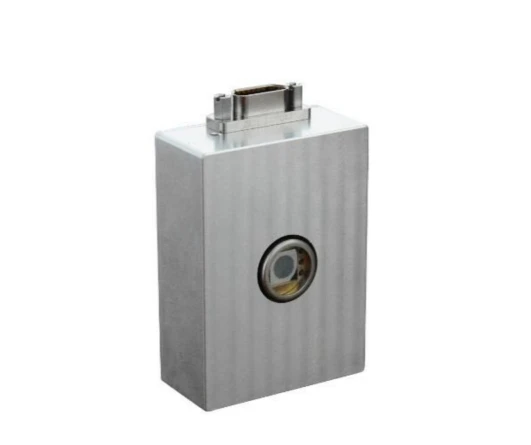
The R-QPD-A/B series four quadrant PIN optical detection modules from Beijing Rofea Optoelectronics are precision beam-position and power-monitoring solutions engineered for demanding laser-based systems. Each module integrates a high-quality imported quadrant photodiode with dedicated low-noise transimpedance amplifiers and a stable power supply stage in a compact housing. By combining detector and electronics in a single, factory-optimized unit, the R-QPD series delivers stable, repeatable performance for both R&D laboratories and OEM system integration where accurate laser spot centering, guidance, and feedback control are required.
Supporting spectral ranges from 400–1100 nm with Si PIN quadrants and 800–1700 nm with InGaAs PIN quadrants, the R-QPD platform covers common laser wavelengths such as 532 nm, 808 nm, 980 nm, 1064 nm, 1310 nm, and 1550 nm. The large 7.98 mm photosensitive area options suit free-space beam alignment and coarse tracking, while the 3 mm variants serve higher-resolution or compact optical layouts. With responsivities up to 0.64 A/W at 900 nm for Si and 0.9 A/W at 1550 nm for InGaAs, these detectors efficiently convert incident laser power into clean electrical signals suitable for closed-loop control, beam steering, and position sensing applications.
The series includes bandwidth options optimized for either precise position readout or high-speed dynamic measurements. Models such as R-QPD-A-20K and R-QPD-B-20K provide bandwidths above 20 kHz and rise times around 17 µs, making them ideal for stable laser collimation, slow to medium speed beam drift monitoring, and fine mechanical alignment in free-space optical paths. For applications where temporal performance is critical, R-QPD-A-20M and R-QPD-B-20M offer bandwidths above 20 MHz with rise times down to tens of nanoseconds, supporting target acquisition, rapid beam tracking, and detection of beat frequency signals used in high-precision angle measurement and interferometric systems.
Each quadrant is equipped with its own low-noise amplification channel, providing four independent outputs through a J30J DB15 connector with an included adapter board to SMA. This configuration enables users to compute beam centroid position, angular deviation, and intensity distribution in real time by simple arithmetic combinations of the four channels. The modules are designed for DC 12 V operation at modest current consumption, and a 50 Ω output impedance ensures straightforward interfacing with oscilloscopes, data acquisition cards, lock-in amplifiers, and digital control electronics in both laboratory and industrial environments.
The R-QPD modules are particularly well suited to laser collimation stages, active alignment systems, and space optical communication terminals where precise pointing and tracking are vital. In laser guidance and directed energy systems, the quadrature output enables closed-loop correction of beam direction and stabilization against vibration and thermal drift. For metrology and high-precision angle measurement, the high-bandwidth variants support heterodyne and beat-note detection, allowing extraction of fine angular information from modulated or multi-frequency optical signals.
To complement the detector hardware, an optional four-channel signal processing and acquisition module is available. It accepts ±5 V inputs from the quadrant outputs and digitizes them with 16-bit resolution and low conversion nonlinearity, enabling accurate reconstruction of spot position and intensity. With input bandwidth up to 10 kHz, sampling rates up to 4 ksps, and data update frequencies from 10 Hz to 4 kHz, this unit bridges the gap between the analog detector module and a PC-based control or monitoring system. A USB 2.0 interface (with optional RS232) and a compact, low-power design simplify integration into existing optical benches and embedded platforms.
Designed to operate reliably from -10 °C to +50 °C in a compact 58 × 42 × 20 mm housing, the R-QPD four quadrant PIN optical detection modules provide a robust, ready-to-use solution for beam alignment, tracking, and position-sensitive detection. Their combination of broad spectral coverage, selectable bandwidth, low noise, and integrated electronics makes them an attractive choice for laser laboratories, optical communication terminals, precision pointing systems, and advanced guidance or metrology platforms where accurate and stable optical position feedback is essential.
R-QPD Four Quadrant PIN Optical Detection Module 400 - 1700nm Fast Response
Specifications
| Diode Type: | Indium Gallium Arsenide (InGaAs) |
|---|---|
| Wavelength Of Operation (Typical): | 900 nm |
| Spectral Range: | 400 – 1100 nm |
| Peak Responsivity (Rmax): | 0.64 A/W |
| Peak Quantum Efficiency: | Not Specified |
| Max Frequency Response: | Other / Not specified |
| Active Area: | 50 mm^2 |
| Dark Current: | Not Specified |
| Package Type: | Custom Package |
| Built-In Amplifier: | Not Specified |
| Product Type: | Four quadrant PIN optical detection module |
| Models: | R-QPD-B-20K, R-QPD-B-20M, R-QPD-A-20K, R-QPD-A-20M |
| Detector Type (R-QPD-B Series): | Si PIN |
| Detector Type (R-QPD-A Series): | InGaAs PIN |
| Light Input: | Free space |
| Wavelength Range (R-QPD-B Series): | 400–1100 nm |
| Wavelength Range (R-QPD-A Series): | 800–1700 nm |
| Responsivity (R-QPD-B Series): | 0.64 A/W @ 900 nm |
| Responsivity (R-QPD-A Series): | 0.9 A/W @ 1550 nm |
| Photosensitive Surface Diameter (R-QPD-B Series): | 7.98 mm |
| Photosensitive Surface Diameter (R-QPD-A Series): | 3 mm |
| Unit Gap (R-QPD-B-20K): | 42 µm |
| Unit Gap (R-QPD-B-20M / R-QPD-A-20K / R-QPD-A-20M): | 45 µm |
| Bandwidth 3 DB (R-QPD-B-20K): | >20 kHz |
| Bandwidth 3 DB (R-QPD-B-20M): | >20 MHz |
| Bandwidth 3 DB (R-QPD-A-20K): | >20 kHz |
| Bandwidth 3 DB (R-QPD-A-20M): | >20 MHz |
| Conversion Gain (R-QPD-B-20K): | 100 kV/W @ 900 nm |
| Conversion Gain (R-QPD-B-20M): | 2.5 kV/W @ 900 nm |
| Conversion Gain (R-QPD-A-20K): | 10 kV/W @ 1060 nm |
| Conversion Gain (R-QPD-A-20M): | 10 kV/W @ 1060 nm |
| Rise Time (R-QPD-B-20K): | 17 µs |
| Rise Time (R-QPD-B-20M): | 35 ns |
| Rise Time (R-QPD-A-20K): | 17 µs |
| Rise Time (R-QPD-A-20M): | 18 ns |
| Saturated Optical Power (R-QPD-B-20K): | 50 µW |
| Saturated Optical Power (R-QPD-B-20M): | 2 mW |
| Saturated Optical Power (R-QPD-A-20K): | 0.5 mW |
| Saturated Optical Power (R-QPD-A-20M): | 0.5 mW |
| Coupling Method (R-QPD-B-20K / R-QPD-B-20M): | DC coupling |
| Coupling Method (R-QPD-A-20K / R-QPD-A-20M): | DC/AC coupling |
| Output Impedance: | 50 Ω |
| Total Output Noise Voltage (R-QPD-B-20K): | <1 mVpp |
| Total Output Noise Voltage (R-QPD-B-20M): | <5 mVpp |
| Total Output Noise Voltage (R-QPD-A-20K): | <2 mVpp |
| Total Output Noise Voltage (R-QPD-A-20M): | <30 mVpp |
| Maximum Output Voltage: | 5 V |
| Operating Voltage: | DC 12 V @ <150 mA |
| Signal Output Port: | J30J DB15 connector, adapter board to SMA |
| Module Size: | 58 × 42 × 20 mm |
| Signal Module – Number Of Channels: | 4 |
| Signal Module – Maximum Input Signal Bandwidth: | 10 kHz |
| Signal Module – Sampling Rate: | max 4 kSPS |
| Signal Module – Data Update Frequency: | typ. 10 Hz, max 4 kHz |
| Signal Module – Input Voltage Range: | ±5 V |
| Signal Module – ADC Resolution: | 16 bit |
| Signal Module – ADC Conversion Nonlinearity: | ±0.2 LSB |
| Signal Module – Data Interface: | USB 2.0 (default), optional RS232 |
| Signal Module – Power Supply Voltage: | +5 V (mini USB) |
| Signal Module – Power Consumption: | <1 W |
| Signal Module – Operating Temperature: | -10 ℃ to +50 ℃ |
| Signal Module – Storage Temperature: | -20 ℃ to +80 ℃ |
Got questions about specs? Use the inquiry form to ask.
 Download Data Sheet

Features
- Wide Spectral Response (400–1700 nm) – Single module family covers both Si PIN (400–1100 nm) and InGaAs PIN (800–1700 nm), ideal for VIS, NIR, and telecom-band (850 nm, 1064 nm, 1310 nm, 1550 nm) laser applications.
- Four-Quadrant PIN Detector for Precise Beam Positioning – Imported high-uniformity 4‑quadrant photodiodes enable accurate beam centering, pointing error detection, and real‑time position tracking in free-space optical paths.
- High Responsivity for Low-Power Signals – Typical responsivity of 0.64 A/W @ 900 nm (Si) and 0.9 A/W @ 1550 nm (InGaAs) ensures efficient conversion of weak optical signals into measurable electrical outputs.
- Fast Response & Wide Bandwidth Options – Models up to >20 MHz (3 dB) bandwidth with rise times down to ~18–35 ns, supporting high‑speed beam tracking, modulation analysis, and beat‑frequency detection for precision angle measurement.
- Large and Small Active Area Options – Choose from 7.98 mm or 3 mm diameter photosensitive areas with small unit gaps (≈42–45 µm) to balance spot size tolerance, alignment ease, and position resolution.
- Integrated Low‑Noise Transimpedance Amplifiers – Built‑in, matched 4‑channel low‑noise amplification reduces design complexity and external electronics, providing stable and repeatable performance across all quadrants.
- High Conversion Gain – Typical conversion gains up to 10 kV/W @ 1060 nm (model‑dependent) allow detection of very low optical powers without needing additional high‑gain external stages.
- Low Noise Output – Total output noise as low as <1 mVpp (low‑bandwidth models) and optimized noise performance on high‑speed versions enhances SNR for precision beam-centroid calculations and angle measurements.
- DC and AC Coupling Options – Support for DC coupling (all models) and DC/AC coupling (selected A‑series) lets users optimize for static beam position measurements or high‑frequency signal extraction, including beat‑frequency and modulation detection.
- Single 12 V Supply Operation – Simplified power requirement of DC 12 V @ <150 mA eliminates the need for multi‑rail supplies, streamlining integration into laboratory setups and OEM systems.
- Four Independent Electrical Outputs – Each quadrant has an independent analog output for flexible processing (sum, difference, normalization) to compute XY position, pointing error, and tracking signals.
- Standardized 50 Ω Output Impedance – 50 Ω matched outputs facilitate direct connection to oscilloscopes, spectrum analyzers, data‑acquisition cards, and RF front‑ends with minimal reflection and signal distortion.
- Compact, Robust Mechanical Design – Small footprint of approximately 58 × 42 × 20 mm supports easy integration into optical benches, breadboards, alignment tools, and embedded photonic systems.
- J30J DB15 Connector with SMA Adapter Board – Combined power and multi‑channel signal via DB15, plus included adapter to SMA, provides both clean lab connectivity and convenient integration into existing RF/DAQ infrastructures.
- Optimized for Laser Collimation and Alignment – Designed for real‑time monitoring of beam centering and tilt, improving collimation setups, optical rail alignment, and long‑distance free‑space propagation systems.
- Ideal for Laser Guidance & Target Tracking – High‑speed models (20 MHz) with four‑quadrant architecture enable dynamic tracking, target acquisition, and closed‑loop guidance control in defense, aerospace, and robotics.
- Suited for Free‑Space Optical Communication – Free‑space input and wide wavelength coverage make the module a strong fit for FSO links, beam‑steering feedback, and alignment monitoring in optical communication terminals.
- High‑Precision Angle Measurement Capability – Supports detection of beat‑frequency signals and sub‑microradian angle changes when used with appropriate optics and processing, making it suitable for interferometric and autocollimation systems.
Applications
Applications of the R-QPD Four Quadrant PIN Optical Detection Module
- Laser beam collimation and alignment – Real‑time monitoring and optimization of laser beam parallelism and pointing; closed‑loop feedback for aligning free‑space optical paths in R&D labs, production lines, and optical test benches.
- Beam position and centroid measurement – High‑accuracy X–Y position detection of laser spots for characterizing beam pointing stability, jitter, wander, and drift in precision optical systems.
- Active beam steering and tracking systems – Feedback sensor for fast steering mirrors, galvanometers, and piezo stages where quadrant signals are used to stabilize or dynamically steer laser beams.
- Free‑space laser communication (FSO) – Fine pointing, acquisition, and tracking (PAT) of communication beams, enabling stable alignment between ground–ground, ground–airborne, and inter‑satellite optical links over 400–1700 nm.
- Laser guidance and homing – Position‑sensitive detection of guidance laser spots for missile seekers, UAV/UGV guidance heads, semi‑active laser homing, and terminal guidance systems.
- High‑precision angle measurement – Use of differential quadrant signals and beat‑frequency detection (R‑QPD‑A‑20M) in autocollimators, angle encoders, and interferometric systems for micro‑rad and sub‑micro‑rad angle resolution.
- Optical tracking and target acquisition – Target capture and tracking in laser tracking telescopes, optical trackers, lidar receivers, and surveillance systems that require fast quadrant‑based position feedback.
- Laser pointing stabilization – Compensation of platform vibration and thermal drift in airborne, naval, and spaceborne optical payloads by feeding quadrant error signals into stabilization controllers.
- Space optical communication terminals – Fine alignment in satellite and deep‑space optical terminals, star trackers, and inter‑satellite links where compact, low‑noise, high‑speed quadrant detection is essential.
- Adaptive optics and wavefront control – Reference beam position sensing in adaptive optics benches for astronomy and high‑power laser systems, supporting wavefront correctors and deformable mirrors.
- Laser scanning and imaging systems – Position feedback in scanning microscopes, confocal systems, OCT setups, and 2D/3D laser scanners to ensure accurate beam placement on samples or detectors.
- Vibration, jitter, and beam wander analysis – Quantitative measurement of mechanical vibration and atmospheric‑induced beam wander by analyzing high‑speed quadrant signals up to 20 MHz bandwidth.
- Optical laboratory automation and alignment tools – Integrated into auto‑alignment modules, motorized stages, and precision mounts for automated optimization of mirrors, lenses, and fiber couplers.
- Laser cavity and resonator alignment – Monitoring intracavity beam position and symmetry for stable resonator alignment in solid‑state, fiber, and diode‑pumped laser systems.
- Gaussian beam profiling and mode quality evaluation – Determination of beam centroid, symmetry, and temporal stability as part of laser M² and spatial mode quality characterization workflows.
- Fiber coupling and alignment monitoring – Alignment of free‑space beams into single‑mode or multi‑mode fibers, with quadrant error signals used to maximize coupled power and maintain long‑term stability.
- Lidar and range‑finding receivers – Spot position detection in lidar telescopes and range‑finders to improve pointing accuracy, boresighting, and overlap alignment between transmit and receive channels.
- Optical metrology and precision positioning – Use in interferometers, displacement sensors, and coordinate measuring setups where beam position indicates mechanical movement at nanometer to micrometer scales.
- Industrial laser processing and micromachining – Real‑time beam position feedback in cutting, drilling, marking, and welding systems to maintain alignment with workpieces and process features.
- Beam overlap and coaxiality measurement – Verification and active control of coaxial alignment between multiple beams (e.g., pump/probe, visible/IR alignment lasers, or multi‑wavelength systems).
- Scientific experiments in physics and photonics – General‑purpose quadrant detection in laboratories for experiments involving optical trapping, atomic/ion physics, cavity QED, and precision spectroscopy.
Frequently Asked Questions
What is the R-QPD four quadrant PIN optical detection module and what is it used for?
What are the main differences between R-QPD-A-20K, R-QPD-A-20M, R-QPD-B-20K, and R-QPD-B-20M?
How do I use the four-quadrant outputs to measure laser beam position and alignment?
Which wavelength ranges and spot sizes are supported and how should I choose between Si and InGaAs versions?
What bandwidth, rise time, and noise performance can I expect from the R-QPD modules?
How do I power and connect the R-QPD module to my data acquisition system?
What are the maximum input optical powers and how can I avoid saturation or damage?
Got more questions? Use the inquiry form to ask the supplier directly.
Similar Products



Your inquiry has been received.
Create an account by adding a password
Why create an account?
- Auto-complete inquiry forms
- View and manage all your past messages
- Save products to your favorites
- Close your account anytime — no hassle