


Description
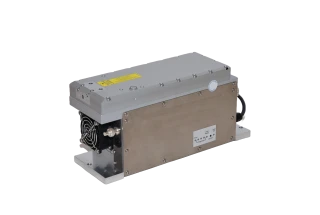
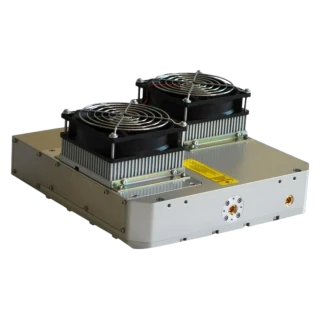
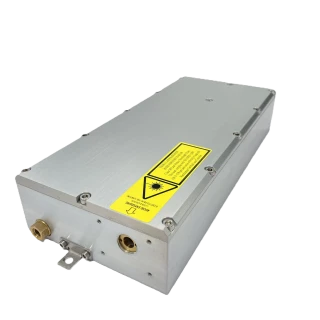
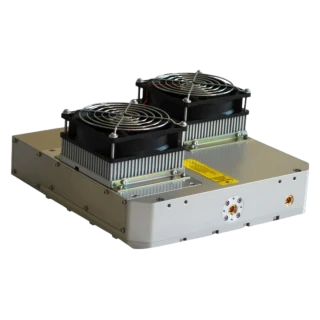
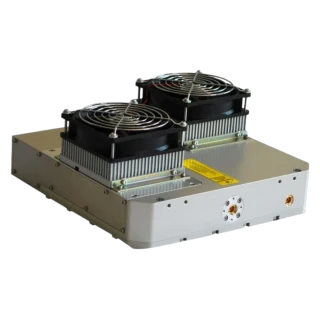
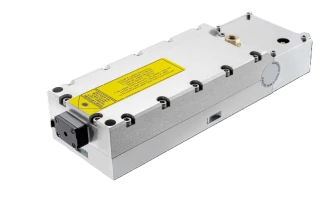
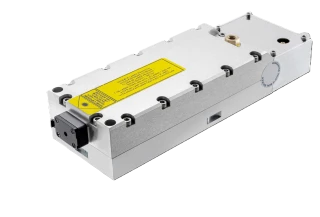
The Quantas-Q-SPARK-532 series is an air-cooled, diode-pumped, Q-switched laser designed for researchers and application specialists. Operating at a wavelength of 532 nm, it delivers pulse energies ranging from 0.5 mJ to 10 mJ, with a repetition rate of up to 100 Hz. With features like remote monitoring, control, and support, along with active or passive Q-switching, this laser provides versatility and reliability for various applications.
Quantas-Q-SPARK-532: High Energy Compact Nanosecond DPSS Laser
Specifications
| Avg. Power: | 0.125 W |
|---|---|
| Wavelength: | 532 nm |
| Repetition Rate: | 0.01 – 0.1 kHz |
| Pulse Duration: | 0.8 ns |
| Pulse-to-Pulse Stability (RMS): | 1.5 % |
| Cooling: | Air |
| Pulse Energy: | 0.5 to 10 mJ |
| Typical Pulse Duration: | <2.0 ns |
| Linewidth: | SLM |
| Power Drift: | ± 3.0 % |
| Beam Divergence: | <1.5 mrad |
| Polarization: | linear, horizontal |
| Jitter (RMS): | 1 µs |
| Transmission Range: | 0.5-95 % |
| Laser Head (W×L×H): | 140 × 277 × 135 mm³ |
| Controller Unit (W×L×H): | 108 × 191 × 59 mm³ |
| Power Adapter (W×L×H) Typical (for +12 VDC Output): | 50 × 125 × 32 mm³ |
| Ambient Temperature:: | 15-30 °C |
| Relative Humidity (non-condensing): | 10-80 % |
| Mains Voltage: | 90 – 230 VAC, single phase, 47 – 63 Hz |
| Q-Switch Type: | passive, Cr:YAG/active, Pockels cell |
Got questions about specs? Use the inquiry form to ask.
 Download Data Sheet

Features
- Wavelength: 532 nm
- Pulse Energy: 0.5 mJ to 5 mJ
- Repetition Rate: Up to 100 Hz
- Shot Lifetime of Pump Diodes: >2 G shots
- Remote Monitoring, Control, and Support
- Built-in Sync Pulse Generator
- Air-cooled
- Active or Passive Q-Switching
Applications
Applications for Air-Cooled Short Pulse Q-Switched Laser
- Laser-Induced Breakdown Spectroscopy (LIBS): High-peak-power nanosecond and sub-nanosecond pulses for elemental analysis of metals, minerals, glass, ceramics, polymers, soils, coatings, and environmental samples.
- Light Detection and Ranging (LiDAR): Compact air-cooled pulsed laser source for range finding, atmospheric sensing, remote mapping, target illumination, and time-of-flight distance measurements.
- Laser Ablation: Efficient pulsed ablation of metals, semiconductors, ceramics, thin films, and composite materials using high pulse energy at 1064 nm and optional harmonic wavelengths.
- Precision Micromachining: Short-pulse processing for micro-drilling, micro-structuring, trimming, patterning, scribing, and surface texturing with reduced thermal effects.
- Time-of-Flight Spectroscopy (TOFS): Sub-nanosecond to nanosecond optical pulses for precise timing experiments, ion generation, and time-resolved measurement systems.
- Time-Resolved Spectroscopy (TRS): Pump source for studying fast photophysical, photochemical, and material dynamics in research laboratories and analytical instruments.
- Raman Spectroscopy: Pulsed excitation source for Raman analysis, time-gated Raman spectroscopy, and fluorescence-suppressed spectral measurements.
- Nonlinear Optics Research: High peak power pulses for harmonic generation, frequency conversion, nonlinear crystal testing, optical limiting, and laser-matter interaction studies.
- OPO and Dye Laser Pumping: Compact pulsed pump laser for optical parametric oscillators, tunable laser sources, and dye laser systems requiring high-energy Q-switched pulses.
- Pump-Probe Experiments: Synchronized short-pulse excitation for ultrafast and fast dynamics studies in materials science, chemistry, biology, and semiconductor research.
- Time-Domain Thermoreflectance (TDTR): Pulsed laser source for thermal conductivity measurements, thin-film thermal characterization, and heat transport studies.
- Photoacoustic Imaging and Spectroscopy: Nanosecond laser excitation for photoacoustic signal generation in biomedical imaging, materials inspection, and chemical sensing.
- Plasma Generation: High-intensity pulsed laser source for laser-induced plasma experiments, plasma diagnostics, breakdown studies, and emission spectroscopy.
- Mass Spectrometry Ionization: Pulsed UV or IR laser source for laser desorption, ionization studies, MALDI research, and time-of-flight mass spectrometry development.
- Semiconductor Inspection and Failure Analysis: Short-pulse laser source for defect analysis, circuit edit support, thin-film removal, wafer inspection, and localized material modification.
- Thin Film Processing: Laser patterning, removal, annealing, and modification of coatings, transparent conductive oxides, semiconductor layers, and functional films.
- Surface Cleaning and Coating Removal: Pulsed laser cleaning of contaminants, oxides, residues, paint, and coatings from sensitive or high-value surfaces.
- Laser Marking and Engraving: High-contrast marking, micro-engraving, serialization, and traceability coding on metals, ceramics, polymers, and electronic components.
- Materials Research: Controlled high-energy pulse delivery for studying ablation thresholds, damage thresholds, photothermal effects, and laser-material interaction mechanisms.
- Optical Breakdown and Damage Testing: Testing of optics, coatings, fibers, crystals, and photonic components under high peak power nanosecond pulse exposure.
- Fluorescence Lifetime and Photoluminescence Studies: Pulsed excitation for lifetime measurements, gated detection, phosphor characterization, and luminescent material analysis.
- Combustion and Flow Diagnostics: Laser-based diagnostics for combustion research, gas-phase spectroscopy, particle analysis, and high-speed flow visualization.
- Particle Image Velocimetry (PIV) and Flow Visualization: Pulsed illumination source for synchronized imaging of particles, aerosols, sprays, and fluid motion.
- Remote Sensing and Atmospheric Measurements: Pulsed laser transmitter for aerosol detection, cloud profiling, gas sensing, and environmental monitoring applications.
- Security and Defense Research: Eye-safe system development, target designation research, range-gated imaging, standoff detection, and high-peak-power pulsed illumination
Frequently Asked Questions
How much pulse energy can the laser deliver at 532 nm?
Does the laser feature adjustable output for varying application needs?
What is the pulse duration for this laser model?
What type of cooling system does the laser use?
What is the maximum repetition rate for this laser?
Is it possible to monitor the pulse energy output?
Can the laser be operated remotely?
How consistent is the pulse energy output of the laser?
Got more questions? Use the inquiry form to ask the supplier directly.
Similar Products
Your inquiry has been received.
Create an account by adding a password
Why create an account?
- Auto-complete inquiry forms
- View and manage all your past messages
- Save products to your favorites
- Close your account anytime — no hassle