

Description
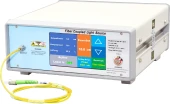
The 1550 nm Nanosecond Fiber Laser is a compact, high‑performance pulsed fiber laser designed for applications that demand precise timing, high peak power, and excellent beam quality in the eye‑safer telecom band. Operating at a central wavelength of 1550 ± 1 nm with an ultra‑narrow spectral width of ≤ 1 nm, this source is ideal for LiDAR, laser ranging, and advanced fiber‑optic sensing systems where stability, reliability, and low noise are critical. Comparable in performance to leading 1.5 μm pulsed fiber lasers on the market, it combines robust engineering with flexible pulse control in both laboratory benchtop and OEM module formats.
This nanosecond laser provides adjustable peak output power from 10 W to 50 W, with customizable higher peak power options on request, making it suitable for both short‑range and long‑range time‑of‑flight and distributed sensing setups. The pulse width is continuously adjustable from 3 ns to 50 ns, enabling optimization of the trade‑off between range resolution, peak power, and average power for different system architectures. With a programmable repetition rate from 1 kHz up to 3000 kHz, the source can be configured for low‑duty‑cycle, high‑peak‑power bursts or higher‑repetition‑rate operation for faster data acquisition. This degree of temporal flexibility rivals many state‑of‑the‑art 1550 nm pulsed fiber lasers used in automotive LiDAR, airborne mapping, and industrial metrology.
Stability and signal integrity are core strengths of this design. Short‑term power stability is better than ±0.02 dB over 15 minutes (approximately ±0.5%), while long‑term stability remains within ±0.05 dB over 8 hours (approximately ±1.2%). Such performance minimizes measurement drift and enhances repeatability in demanding environments, including outdoor remote sensing and long test campaigns on the production floor. The narrow linewidth and stable output help preserve coherence and timing accuracy in time‑resolved measurements, and support precise performance in coherent detection or interferometric sensing schemes around the C‑band.
The laser output is delivered through standard single‑mode or polarization‑maintaining fiber, with options for SMF‑28 or PM1550, terminated in an FC/APC connector to reduce back‑reflection and preserve beam quality. This makes integration straightforward with standard telecom‑grade components, LiDAR transmit optics, and sensing modules. Users can select between SM fiber for general‑purpose applications or PM fiber for polarization‑sensitive detection, coherent LiDAR, and interferometric sensor arrays. The emission band can be factory‑set within 1530–1565 nm on request, allowing compatibility with specific components or wavelength‑division‑multiplexed sensing schemes.
From a system integration standpoint, the 1550 nm Nanosecond Fiber Laser is available in both benchtop and compact module configurations. The benchtop version supports user‑friendly touchscreen control and RS‑232 serial communication, making it well suited to R&D labs, characterization benches, and small‑scale production lines. The module version is engineered for OEM and embedded use, featuring button control and RS‑232 or USB interfaces for straightforward integration into custom electronics and system controllers. Both formats support flexible TTL triggering, with internal and external trigger modes that can be switched as needed, enabling precise synchronization with timing electronics, scanning optics, or detector arrays in LiDAR and ranging systems.
Electrical and environmental design has been optimized for reliable field and lab operation. The benchtop unit operates from a universal AC 100–240 V power input with a typical power consumption of 30 W, while the module runs from a 5 V DC supply at around 15 W, making it directly compatible with compact, battery‑powered, or vehicle‑mounted platforms. The operational temperature range of −5 to +35 °C and humidity range of 0–70% support use in a variety of indoor and semi‑controlled environments, such as test labs, industrial floors, and sheltered outdoor enclosures. This robustness aligns well with typical requirements in mapping LiDAR, perimeter monitoring, and distributed fiber sensing deployments.
Thanks to the combination of adjustable pulse width, high peak power, and programmable repetition rate, this 1550 nm nanosecond fiber laser can be finely tuned for different application scenarios. In direct time‑of‑flight LiDAR, short pulses (down to 3 ns) provide fine range resolution and improved discrimination of closely spaced targets. For long‑distance ranging or high‑loss sensing links, wider pulses and higher peak powers can be used to improve signal‑to‑noise ratio at the receiver. In fiber‑optic sensing, such as distributed temperature or strain measurements along long fiber spans,<
1550nm Nanosecond Fiber Laser
Specifications
| Wavelength: | 1550 nm |
|---|---|
| Average Output Power: | 10 W |
| Pulse Duration: | 3 – 50 ns |
| Max Pulse Repetition Rate: | 3000 kHz |
| Center Wavelength: | 1550 ±1 nm (1530–1565 nm optional) |
| Spectral Width: | ≤1 nm |
| Peak Output Power: | 10–50 W (pulse peak power customizable) |
| Pulse Width: | 3–50 ns (adjustable) |
| Repetition Rate: | 1–3000 kHz (adjustable) |
| Short-term Stability (15 Min): | ≤±0.02 dB (≈±0.5%) |
| Long-term Stability (8 Hr): | ≤±0.05 dB (≈±1.2%) |
| Output Fiber Type: | SMF-28 or PM1550 |
| Fiber Connector: | FC/APC |
| Control Method (Benchtop): | Touchscreen / RS232 serial communication |
| Control Method (Module): | Buttons / RS232 or USB communication |
| Communication Interface (Benchtop): | DB9 female |
| Communication Interface (Module): | DB9 female |
| Trigger Method (Benchtop): | TTL, internal/external |
| Trigger Method (Module): | TTL, internal/external trigger (switchable) |
| Power Supply (Benchtop): | AC 100–240 V, 30 W |
| Power Supply (Module): | DC 5 V, 15 W |
| Module Dimensions (M20): | 125(W) × 150(D) × 20(H) mm |
| Operating Temperature Range: | -5 to +35 °C |
| Operating Humidity Range: | 0–70% |
| Model Series: | NSFL 1550 |
| Available Peak Powers: | 10 W / 30 W / 50 W |
| Output Fiber Type Code: | SM = SMF-28; PM = PM1550 |
| Package Code: | M20 = Module; B1 or B = Benchtop |
| Standard Pulse Width (example Spectrum): | 10 ns |
Got questions about specs? Use the inquiry form to ask.
 Download Data Sheet

Features
- 1550 nm Eye‑Safer Wavelength – Operates at a central wavelength of 1550 ± 1 nm (with optional 1530–1565 nm range), ideal for LiDAR, laser ranging, and fiber optic sensing applications where eye safety and low atmospheric attenuation are critical.
- Adjustable Peak Output Power (10–50 W) – Delivers high nanosecond pulse peak power from 10 W up to 50 W, with customizable peak power on request, enabling flexible system integration for both short‑ and long‑range detection.
- Wide Pulse Width Tunability: 3–50 ns – Continuously adjustable pulse width from 3 ns to 50 ns supports optimization of range resolution, signal‑to‑noise ratio, and target reflectivity across diverse LiDAR and TOF ranging scenarios.
- Adjustable Repetition Rate: 1–3000 kHz – High‑speed operation with a 1 kHz to 3 MHz repetition rate, allowing users to tune between long‑range, high‑energy pulses and shorter‑range, high‑throughput measurement modes.
- Narrow Linewidth & Clean Spectrum – Spectral width of ≤ 1 nm ensures a stable, narrow emission spectrum, reducing timing jitter and improving detection accuracy in coherent and direct‑detection LiDAR systems.
- Outstanding Power Stability – Excellent output stability with short‑term (15 min) drift ≤ ±0.02 dB (≈ ±0.5%) and long‑term (8 h) drift ≤ ±0.05 dB (≈ ±1.2%), guaranteeing repeatable measurements and reliable field performance.
- Nanosecond Pulse Source for LiDAR & Ranging – Optimized for nanosecond‑class pulsed operation, making it an ideal master source for automotive LiDAR, 3D mapping, topographic surveying, and laser rangefinders.
- Fiber Optic Sensing Ready – Compatible with common sensing platforms, enabling high‑resolution distributed fiber optic sensing (DAS/DTS/DFOS) and point sensing where precise timing and power stability are required.
- Single‑Mode or Polarization‑Maintaining Output – Available with SMF‑28 (single‑mode) or PM1550 (polarization‑maintaining) fiber, allowing users to select the optimal output type for coherent detection, interferometry, and polarization‑sensitive sensing.
- Standard FC/APC Fiber Connector – Uses a low‑back‑reflection FC/APC connector for stable coupling, minimal return loss, and easier integration with common 1550 nm photonics components.
- Flexible Triggering Options – Supports TTL internal/external trigger modes (switchable in module version), simplifying synchronization with detectors, scanners, and system timing electronics.
- Multiple Control Interfaces – Benchtop units provide touchscreen control and RS‑232 communication; module versions support buttons plus RS‑232 or USB communication through a standard DB9 female interface for easy OEM integration.
- Compact Module and Benchtop Configurations – Offered as a compact M20 module (approx. 125 W × 150 D × 20 H mm) for OEM systems or as a B1 benchtop unit for laboratory and R&D use, covering both experimental and industrial deployment.
- Universal Power Supply Options – Benchtop version runs from a wide‑range AC 100–240 V power input (≈ 30 W), while the module version uses a DC 5 V supply (≈ 15 W), easing integration into mobile, rack, or embedded platforms.
- Industrial‑Grade Environmental Performance – Designed for ‑5 to +35 °C operating temperature and 0–70% humidity, ensuring stable performance in both controlled laboratory environments and demanding field conditions.
- Configurable Output Power & Fiber Type by Model – Ordering options allow selection of 1550 nm center wavelength, 10 / 30 / 50 W maximum peak power, SMF‑28 or PM1550 fiber, and module (M20) or benchtop (B/B1) package, simplifying system design and customization.
- Optimized for High Signal‑to‑Noise Ratio – Short, high‑peak‑power pulses and low spectral width help achieve a high SNR in time‑of‑flight detection, enabling more accurate distance and velocity measurements.
Applications
Applications of 1550 nm Nanosecond Fiber Laser
The 1550 nm Nanosecond Fiber Laser is a versatile, eye-safer wavelength source with adjustable power, pulse width, and repetition rate (1–3000 kHz). It is optimized for high-peak-power nanosecond pulses in standard and polarization-maintaining single mode fibers (SMF-28 / PM1550). These features make it ideal for a wide variety of industrial, scientific, defense, and sensing applications.
- LiDAR (Light Detection and Ranging)
Used as a high-peak-power, eye-safer 1550 nm source for long‑range 3D LiDAR in automotive, UAV, and mapping systems. The adjustable repetition rate and pulse width allow optimization of range resolution, detection sensitivity, and scanning speed. - Laser Ranging and Time-of-Flight Distance Measurement
Provides short, stable nanosecond pulses for precision time-of-flight (TOF) distance measurements. Suitable for surveying, topography, obstacle detection, and industrial position monitoring where accurate range information is required. - Fiber Optic Sensing
Serves as a pulsed light source for distributed and point fiber sensors such as OTDR, DTS, DAS, and FBG interrogation systems. The narrow linewidth and stable power enhance measurement accuracy and long-distance sensing performance. - Optical Time Domain Reflectometry (OTDR)
Acts as a high‑peak‑power 1550 nm pulse source in OTDR instruments for characterization of optical fibers, detection of breaks, splices, and bends over tens to hundreds of kilometers. - Distributed Temperature and Strain Sensing (DTS / DSS)
Used in Rayleigh, Brillouin, and Raman-based distributed sensing systems for monitoring temperature and strain in pipelines, power cables, civil structures, and oil & gas wells. - Fiber Bragg Grating (FBG) Interrogation and Sensing
Provides a stable pulsed source for interrogating FBG arrays used in structural health monitoring, vibration sensing, and load/pressure measurements in aerospace, civil, and energy infrastructures. - Coherent and Polarization-Sensitive Sensing
With PM1550 output options, the laser supports coherent detection schemes and polarization-sensitive sensor networks used in distributed acoustic sensing, geophysical monitoring, and perimeter security. - Eye-Safe Rangefinders and Target Designation
Ideal for military and industrial rangefinder modules operating around 1550 nm. The nanosecond pulse regime and adjustable peak power enable long-range performance while remaining in the eye-safer spectral region. - 3D Mapping, Surveying, and Remote Sensing
Used in airborne and terrestrial 3D scanners for topographic mapping, forestry, coastal monitoring, and infrastructure inspection. The flexible pulse parameters support varying altitude and resolution requirements. - Autonomous Vehicles and Robotics Perception
Functions as the primary emitter in perception LiDAR systems for self-driving cars, mobile robots, and AGVs, offering robust object detection, collision avoidance, and environment mapping in challenging outdoor conditions. - Atmospheric and Environmental Monitoring
Serves as a source for atmospheric backscattering measurements, aerosol and cloud profiling, and other remote sensing tasks in meteorology and environmental research at 1.5 µm. - Optical Component and System Testing
Used for testing and characterization of fiber amplifiers, passive components, optical switches, and integrated photonic devices at 1550 nm, particularly where pulsed operation is required. - Nonlinear Fiber Optics Experiments
Provides controlled nanosecond pulses at telecom wavelength for studying nonlinear effects in optical fibers such as self-phase modulation, stimulated Brillouin scattering, and four-wave mixing. - Telecommunications Research and Development
Employed as a pulsed source in R&D of WDM systems, optical time-division multiplexing, signal processing, and advanced modulation formats in the C-band. - Optical Coherence and Interferometric Measurements
Used for time-gated and interferometric measurement setups where controlled pulse width and power stability at 1550 nm are essential for high signal-to-noise ratio and precise timing. - Industrial Alignment, Positioning, and Profiling
Supports high-precision alignment systems, optical profilers, and dimensional metrology tools that rely on nanosecond pulsed 1550 nm beams for accurate detection of surfaces and edges.
Frequently Asked Questions
What is the 1550 nm nanosecond fiber laser and what are its key features?
What are the typical applications of this 1550 nm nanosecond fiber laser?
What output powers, pulse widths, and repetition rates are available and are they adjustable?
What control interfaces and trigger options does the laser provide?
What are the fiber type, connector, and output beam characteristics?
What are the electrical, mechanical, and environmental specifications (benchtop vs. module)?
How do I choose and order the correct model of the 1550 nm nanosecond fiber laser?
Got more questions? Use the inquiry form to ask the supplier directly.
Similar Products


Your inquiry has been received.
Create an account by adding a password
Why create an account?
- Auto-complete inquiry forms
- View and manage all your past messages
- Save products to your favorites
- Close your account anytime — no hassle