
Description
An optical amplifier is a device which receives some input signal light and generates an output signal with higher optical power. Typically, inputs and outputs are laser beams (very rarely other types of light beams), either propagating as Gaussian beams in free space or in a fiber. The amplification occurs in a so-called gain medium, which has to be “pumped” (i.e., provided with energy) from an external source. Most optical amplifiers are either optically or electrically pumped.
Different kinds of amplifiers differ very much e.g. in terms of saturation properties. For example, rare-earth-doped laser gain media can store substantial amounts of energy, whereas optical parametric amplifiers provide amplification only as long as the pump beam is present. As another example, semiconductor optical amplifiers store much less energy than fiber amplifiers, and this has important implications for optical fiber communications.
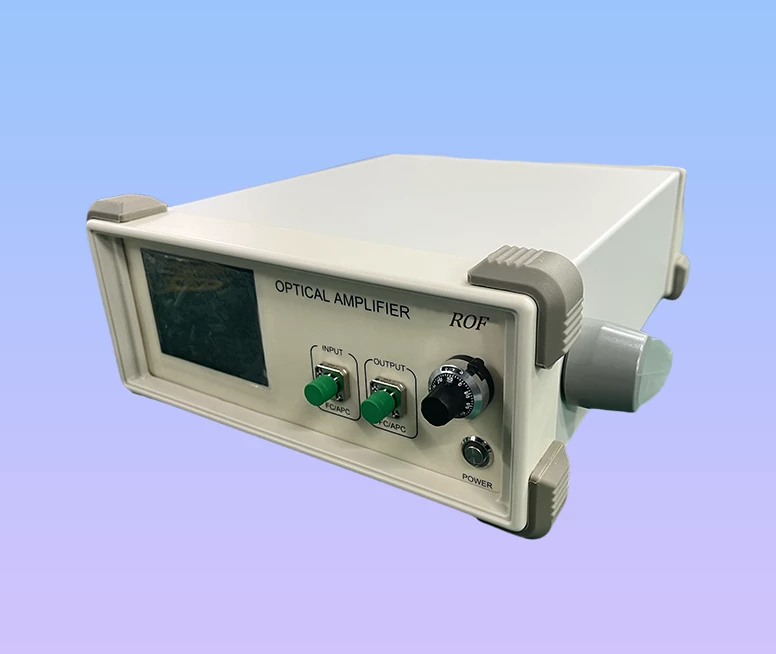
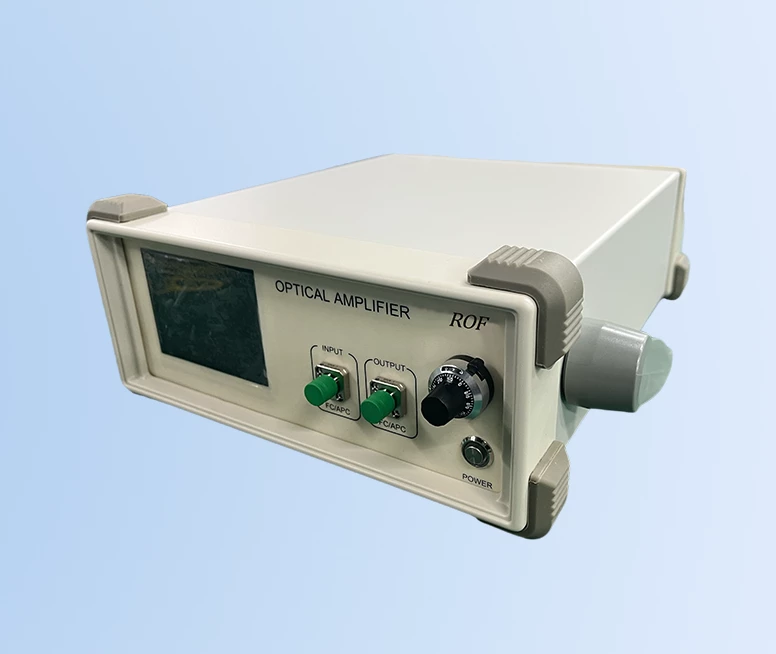
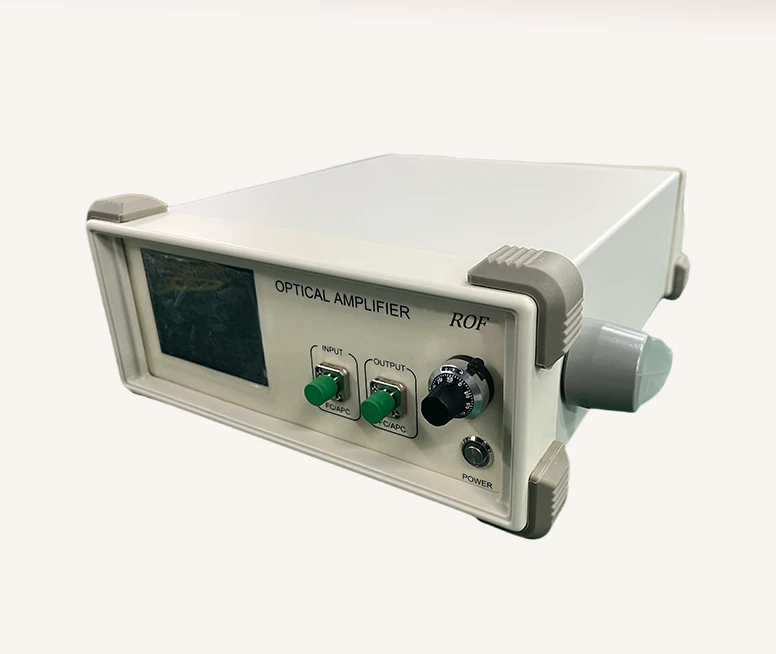
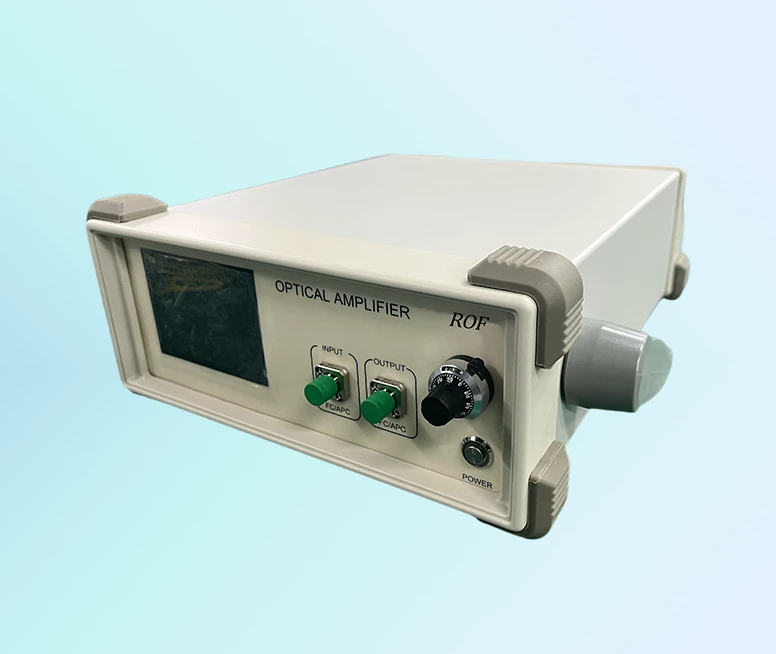
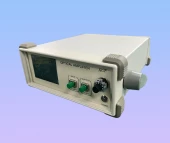
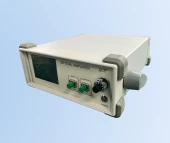
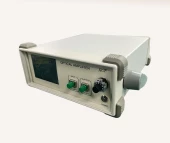
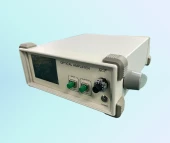
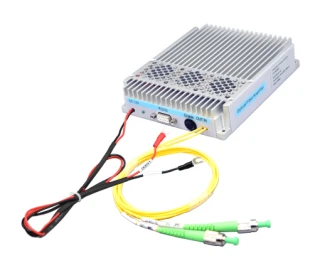
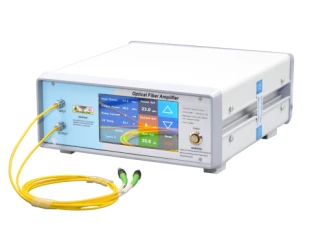
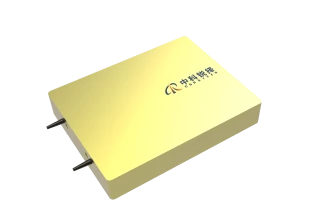
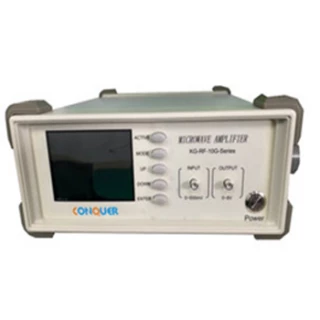
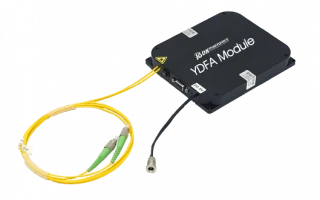
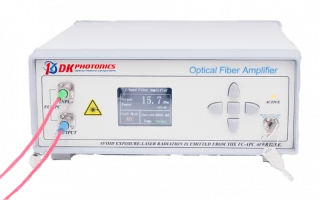
Rof Electro-optic modulator EDFA Optical Amplifier Erbium Doped Fiber Amplifier YDFA Amplifier
Specifications
| Amplifier Type: | Not Specified |
|---|---|
| Wavelength Range: | 1525 – 1565 nm |
| Min Input Power: | -3 dBm |
| Max Output Power: | -40 dBm |
| Output Fiber Type: | Other (see Data Sheet) |
| Operating Wavelength Range: | 1525-1565 nm |
| Operating Wavelength Range: | 1050-1100 nm |
| Input Minimum Optical Power: | -40 dBm |
| Input Minimum Optical Power: | -10 dBm |
| Input Minimum Optical Power: | -3 dBm |
| Saturated Output Optical Power: | 0 dBm |
| Saturated Output Optical Power: | 17/20/23 dBm |
| Saturated Output Optical Power: | 30/33/37 dBm |
| Saturated Output Optical Power: | 30/33 dBm |
| Noise Figure: | 4.5 dB |
| Noise Figure: | 5.0 dB |
| Noise Figure: | 5.5 dB |
| Noise Figure: | 5 dB |
| Input Optical Isolation: | 30 dB |
| Output Optical Isolation: | 30 dB |
| Fiber Type: | SMF-28 or PM |
| Fiber Type: | HI1060 |
| Output Connector: | FC/APC |
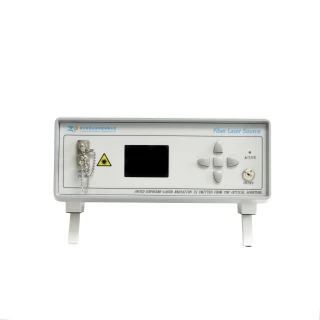
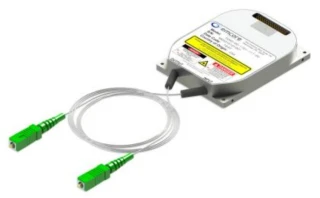
| Dimensions (Module): | 90x70x18 mm |
| Dimensions (Module): | 150x125x20 mm |
| Dimensions (Desktop): | 320x220x90 mm |
Got questions about specs? Use the inquiry form to ask.
 Download Data Sheet

Features
- Low noise
- ACC, AGC, APC Option
- SM and PM fiber Option
- Automatic shut off pump protection
- Remote control
- Desktop, module package are optional
Applications
- An amplifier can boost the (average) power of a laser output to higher levels (→ master oscillator power amplifier = MOPA).
- It can generate extremely high peak powers, particularly in ultrashort pulses, if the stored energy is extracted within a short time.
- It can amplify weak signals before photodetection, and thus reduce the detection noise, unless the added amplifier noise is large.
- In long fiber-optic links for optical fiber communications, the optical power level has to be raised between long sections of fiber before the information is lost in the noise.
Frequently Asked Questions
What types of optical amplifiers does Beijing Rofea Optoelectronics Co., Ltd. manufacture?
What are the key features of the fiber amplifiers offered by Beijing Rofea Optoelectronics Co., Ltd.?
What are the typical applications of the optical amplifiers?
What is the operating wavelength range for the EDFA and YDFA amplifiers?
What is the minimum input optical power required for the amplifiers?
What are the dimensions of the amplifier packages?
How does an optical amplifier work?
Got more questions? Use the RFQ form to ask the supplier directly.
Similar Products
Need pricing for this product? Send a quick inquiry
Your inquiry has been received.
Create an account by adding a password
Why create an account?
- Auto-complete inquiry forms
- View and manage all your past messages
- Save products to your favorites
- Close your account anytime — no hassle