
Description
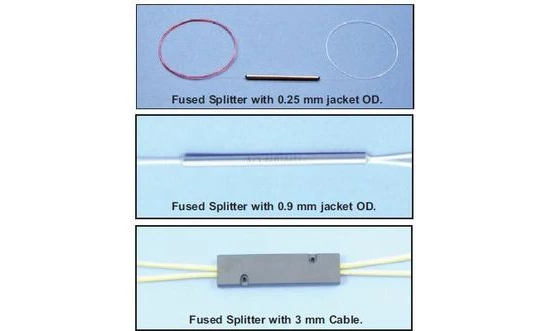
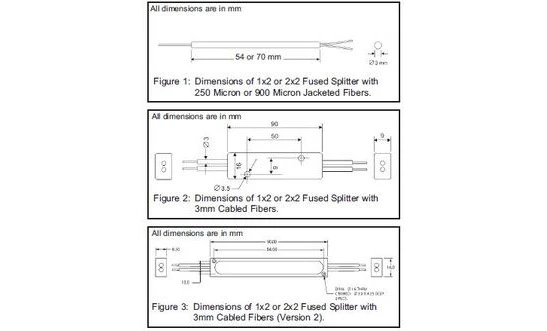
Fused couplers are used to split optical signals between two (or more) fibers or to combine optical signals from two (or more) fibers into one fiber. They are constructed by fusing and tapering the fibers together. This method creates a simple, rugged, compact method of splitting or combining optical signals. Typical excess losses are as low as 0.2 dB, while split ratio tolerances range from ±5% to ±0.5% at design wavelengths depending upon the splitting ratio. These devices are bidirectional and offer low backreflection and insertion losses.
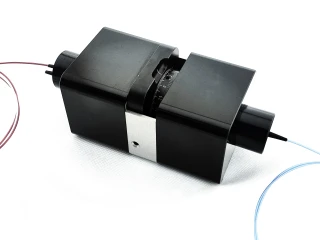
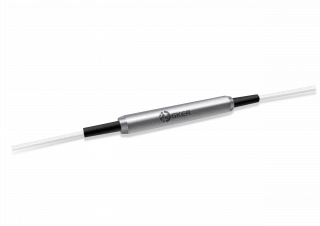
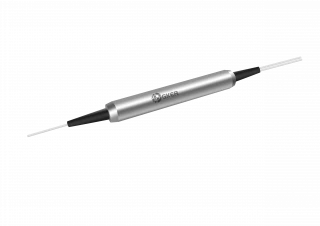
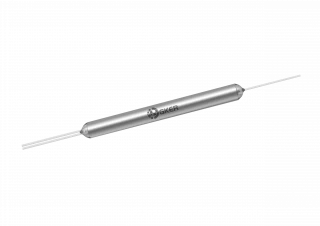
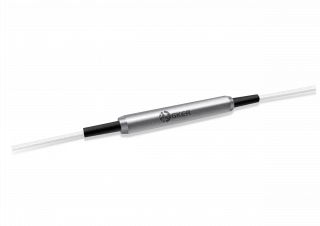
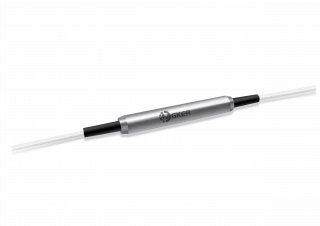
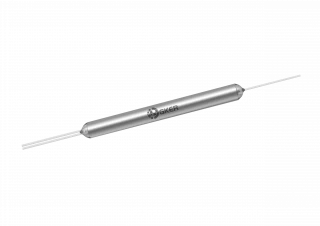
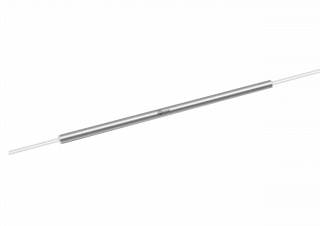
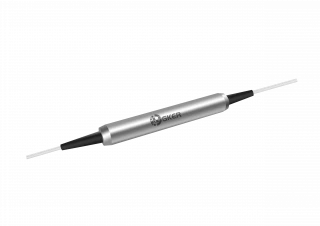
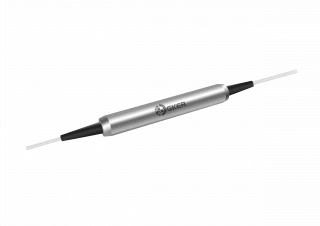
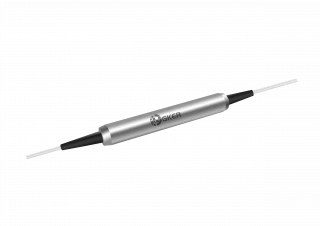
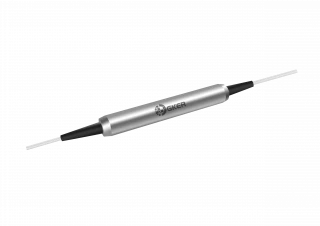
Polarization Maintaining Fused Fiber Couplers and Splitters
Specifications
| Wavelength Range: | 780 - 2005 nm |
|---|---|
| Directivity: | 55 dB |
| Bandwidth: | ±1.25 % of center wavelength, ±20 nm |
| Return Loss: | <50 dB |
| Directivity: | <55 dB |
| Operating Temperature: | 0°C to 70°C |
| Storage Temperature: | -40°C to 85°C |
Got questions about specs? Use the inquiry form to ask.
 Download Data Sheet

Features
- Low loss and cost
- Broad bandwidth
- Good uniformity
- Small package
- High directivity
- Wide variety of wavelengths 780 nm–2005 nm
Applications
- Optical amplifiers
- Fiber lasers
- Power monitoring
- Fiber gyroscopes
- Coherent communications
Frequently Asked Questions
What are the features of these devices?
What are Polarization Maintaining Fused Fiber Couplers and Splitters used for?
What are some applications of these devices?
What is the range of split ratio tolerances at design wavelengths?
What is the typical excess loss of these devices?
Got more questions? Use the RFQ form to ask the supplier directly.
Similar Products
Need pricing for this product? Send a quick inquiry
Your inquiry has been received.
Create an account by adding a password
Why create an account?
- Auto-complete inquiry forms
- View and manage all your past messages
- Save products to your favorites
- Close your account anytime — no hassle