
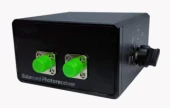
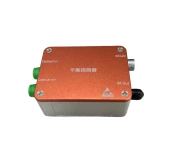
Description
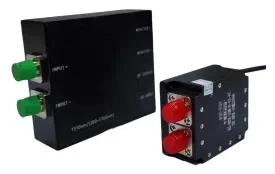
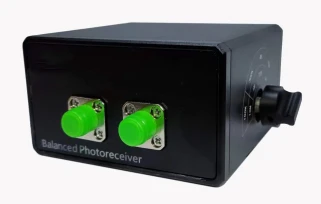
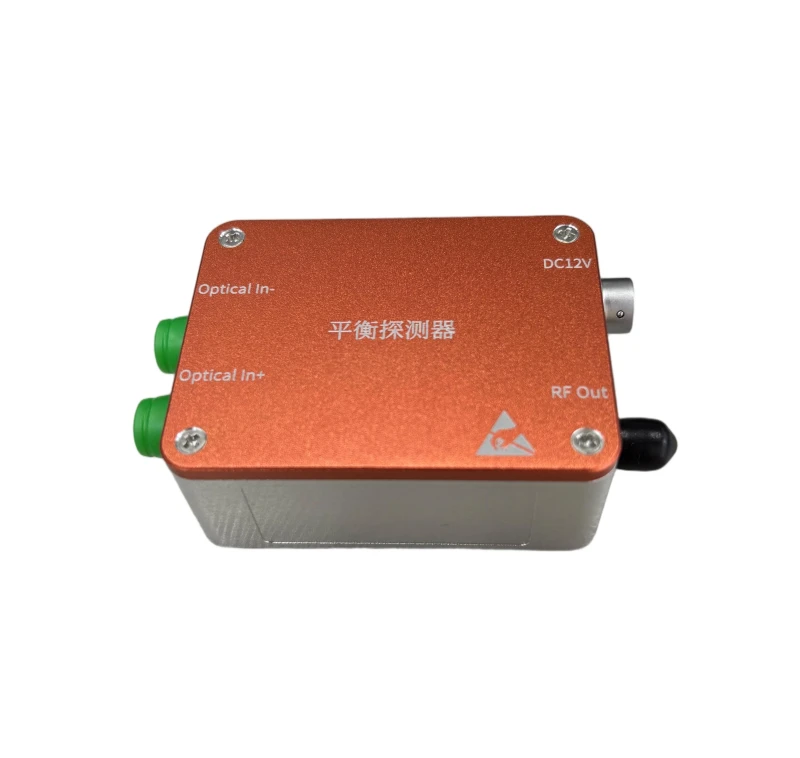
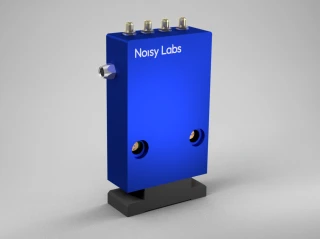
ROF-BPR Series Balanced Photodetectors – High-Gain, Low-Noise Balanced Light Detection Modules
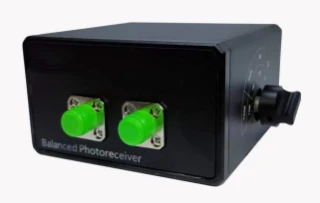
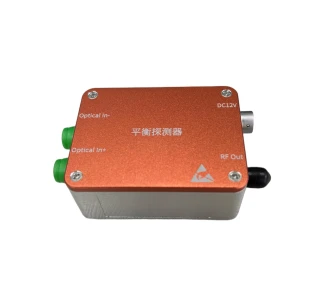
The ROF-BPR Series balanced photodetectors are high‑performance, amplification‑integrated balanced light detection modules designed for demanding optical measurement and sensing systems. Each module integrates a pair of precisely matched photodiodes with an ultra‑low‑noise transimpedance amplifier, providing excellent common‑mode noise suppression and substantially improving the system signal‑to‑noise ratio (SNR). With multiple spectral ranges from the visible to the near‑infrared (400–1100 nm and 850–1650 nm) and a broad selection of fixed bandwidths up to 2.5 GHz, the ROF-BPR Series offers a highly adaptable platform for both research and industrial applications.
Balanced photodetection is widely used in coherent and interferometric optical systems to suppress laser intensity noise, environmental disturbances, and common‑mode electronic noise. The ROF-BPR modules are engineered to excel in such environments: by subtracting the photocurrents from two matched detectors, the modules effectively cancel the common‑mode component while preserving the differential signal of interest. This architecture is especially valuable in swept‑source optical coherence tomography (SS‑OCT), heterodyne and homodyne detection schemes, optical delay and phase measurements, and high‑precision LiDAR. Compared with conventional single‑ended detectors, the ROF-BPR Series can deliver significantly higher SNR, better stability, and improved measurement dynamic range.
The product family spans a wide range of 3 dB bandwidth options, including 10 MHz, 80 MHz, 200 MHz, 350 MHz, 400 MHz, 500 MHz, 1 GHz, 1.6 GHz, 2 GHz, and 2.5 GHz models. This modular bandwidth selection allows users to match the detector response precisely to the temporal characteristics of their system while minimizing excess noise and unnecessary complexity. Lower‑bandwidth models, such as 10 MHz and 80 MHz devices, are well suited for applications like low‑frequency interferometry and slower swept‑source OCT systems, where ultra‑low noise and high gain are critical. Higher‑bandwidth versions up to 2.5 GHz are tailored for fast swept‑source OCT, advanced coherent communication experiments, high‑speed LiDAR, and time‑resolved optical measurements, where rapid signal dynamics must be faithfully captured.
Typical operating wavelengths offered across the series include 850 nm, 1064 nm, 1310 nm, and 1550 nm, covering the most widely used bands in fiber‑optic communications, biomedical imaging, and ranging. Specific models are optimized for different windows, such as 1064 nm and 1310 nm for third‑generation SS‑OCT systems and 850 nm / 1550 nm variants for LiDAR and free‑space optical setups. The spectral response ranges of 400–1100 nm and 850–1650 nm enable use with a variety of laser sources and broadband emitters, making the ROF-BPR modules suitable for both laboratory prototyping and integration into commercial instruments. Carefully matched photodiodes and wavelength‑optimized circuitry help maintain a high common‑mode rejection ratio, typically greater than 25 dB and reaching over 30 dB in SS‑OCT‑focused models.
Within the series, the high‑gain, fixed‑bandwidth balanced photodetectors have been specially optimized for modern swept‑source OCT architectures. These versions combine ultra‑low input‑referred noise with high transimpedance gain (on the order of 104 V/W into 50 Ω for certain configurations), enabling detection of extremely weak interferometric signals while preserving fine structural information in biological tissue or precision materials. The availability of monitor outputs with amplitudes up to 10 Vpp in selected models further simplifies system integration and real‑time signal diagnostics. By providing stable, high‑amplitude electrical outputs, these detectors help reduce the need for additional amplification stages and facilitate direct interfacing with data acquisition systems and high‑speed digitizers.
The ROF-BPR-10M sub‑series illustrates the careful optimization of the ROF-BPR family. For example, models covering 900–1400 nm and 1200–1700 nm spectral ranges are available with typical operating wavelengths at 1064 nm, 1310 nm, and 1550 nm. Responsivities can reach around 0.7 A/W at 1064 nm and 0.9 A/W at 1550 nm, ensuring efficient conversion of optical power into electrical signals even at modest input levels. These detectors offer DC–10 MHz or 10 kHz–10 MHz bandwidths, with RMS noise voltages below 1 mV and sensitivities down to approximately –40 dB, making them ideal for narrowband interferometry and low‑frequency coherent detection. Saturation optical powers on the order of several hundred microwatts and maximum high‑impedance output swings up to roughly 3.8 Vpp provide a comfortable dynamic range for many precision measurement setups.
ROF BPR Series Balanced Photodetector Low Noise High Gain LiDAR OCT
Specifications
| Central Wavelength: | 400 – 1100 nm |
|---|---|
| Quantum Efficiency (typical): | Not Specified |
| Quantum Efficiency (max): | Not Specified |
| Active Area Size: | Not Specified |
| Angle Of Incidence (AOI): | Not Specified |
| Max Total Input Power: | 0.8 mW |
| 3dB Bandwidth: | 2500 MHz |
| AC High Pass Cutoff: | Not Specified |
| Output Impedance: | Not Specified |
| Dark Noise Clearance (min): | Not Specified |
| DC Output Voltage: | Not Specified |
| RF Input Frequency: | Not Specified |
| RF Input Power (max): | Not Specified |
| Series: | ROF-BPR |
| Spectral Range: | 400–1100 nm, 850–1650 nm |
| Typical Wavelengths: | 850/1064/1310/1550 nm |
| Available 3 DB Bandwidths: | 10 MHz / 80 MHz / 200 MHz / 350 MHz / 400 MHz / 500 MHz / 1 GHz / 1.6 GHz / 2 GHz / 2.5 GHz |
| Common Mode Rejection Ratio (series, High-gain Type): | >30 dB |
| Common Mode Rejection Ratio (BPR-10M): | >25 dB (30 dB typ.) |
| High Gain (series, 50 Ω): | 14.5×10^3 V/W |
| Monitor Output Voltage: | up to 10 Vpp |
| Noise Characteristic: | ultra-low noise |
| ROF-BPR-10M-A2-FC-DC/AC Spectral Response Range: | 1200–1700 nm |
| ROF-BPR-10M-A1-FC-DC/AC Spectral Response Range: | 900–1400 nm |
| ROF-BPR-10M-A2-FC-DC/AC Typical Wavelengths: | 1310 nm / 1550 nm |
| ROF-BPR-10M-A1-FC-DC/AC Typical Wavelength: | 1064 nm |
| ROF-BPR-10M-A2-FC-DC/AC Responsivity: | 0.9 A/W @ 1550 nm |
| ROF-BPR-10M-A1-FC-DC/AC Responsivity: | 0.7 A/W @ 1064 nm |
| ROF-BPR-10M-A2-FC-DC/AC 3 DB Bandwidth: | DC–10 MHz / 10 kHz–10 MHz |
| ROF-BPR-10M-A1-FC-DC/AC 3 DB Bandwidth: | DC–10 MHz / 10 kHz–10 MHz |
| ROF-BPR-10M-A2-FC-DC/AC Gain @ High Impedance: | 10×10^3 V/W |
| ROF-BPR-10M-A1-FC-DC/AC Gain @ High Impedance: | 0.7×10^3 V/W |
| Noise Voltage (RMS, Both 10M Models): | <1 mV RMS |
| Sensitivity (ROF-BPR-10M-A2-FC-DC/AC): | -40 dB |
| Sensitivity (ROF-BPR-10M-A1-FC-DC/AC): | -35 dB |
| Saturated Optical Power (ROF-BPR-10M-A2-FC-DC/AC): | 400 μW |
| Saturated Optical Power (ROF-BPR-10M-A1-FC-DC/AC): | 800 μW |
| Maximum Output Amplitude @ High Impedance: | 3.8 Vpp |
| Maximum Damage Optical Power: | 10 mW |
Got questions about specs? Use the inquiry form to ask.
 Download Data Sheet

Features
- Wide Spectral Range (400–1100 nm & 850–1650 nm) – Supports visible to near‑infrared operation, ideal for multi‑wavelength laser systems and broadband optical measurements.
- Optimized for Key Telecom & Laser Wavelengths – Typical models tailored for 850, 1064, 1310, and 1550 nm, matching the most common wavelengths used in LiDAR, OCT, fiber‑optic sensing, and communication test setups.
- Integrated Balanced Photodetector Architecture – Incorporates two carefully matched photodiodes and a precision transimpedance amplifier on one module, minimizing optical and electronic mismatch for superior differential detection.
- Ultra‑Low‑Noise Transimpedance Amplifier – High‑performance TIA design provides very low input‑referred noise, enabling detection of weak optical signals and improving overall system sensitivity.
- High Signal‑to‑Noise Ratio & Laser Noise Suppression – Balanced detection effectively cancels common‑mode noise and laser intensity noise, delivering a significantly improved signal‑to‑noise ratio (SNR) compared with single‑ended detectors.
- High Common‑Mode Rejection Ratio (CMRR) – CMRR > 25 dB for the standard series and up to >30 dB (typ.) for OCT‑optimized models, greatly reducing common‑mode disturbances from laser RIN, environmental fluctuations, and interferometric background.
- Broad Bandwidth Options up to 2.5 GHz – Multiple 3 dB bandwidth configurations available: 10 MHz, 80 MHz, 200 MHz, 350 MHz, 400 MHz, 500 MHz, 1 GHz, 1.6 GHz, 2 GHz, and 2.5 GHz, suitable for both low‑frequency and high‑speed coherent detection and timing applications.
- DC to RF Operation – Configurations offering DC–10 MHz, DC–80 MHz, DC–200 MHz, DC–400 MHz, 50 kHz–1 GHz, 50 kHz–1.6 GHz, 50 kHz–2 GHz, and 1 MHz–2.5 GHz support ultra‑slow interferometry as well as high‑speed swept‑source OCT and LiDAR.
- High Gain for Weak Signal Detection – Fixed‑gain series offers up to 14.5 × 10³ V/W (50 Ω) and high‑impedance gains up to 10 × 10³ V/W, providing large electrical output from low‑power optical inputs for improved measurement resolution.
- Adjustable and Optional Gain Versions – Selectable gain and different gain configurations allow users to optimize between dynamic range, saturation power, and noise performance for specific experimental setups.
- Monitor Output up to 10 Vpp – Certain high‑gain OCT‑optimized models integrate a convenient monitor signal output (up to 10 Vpp) for real‑time alignment, power monitoring, and system calibration without additional electronics.
- Optimized for Third‑Generation SS‑OCT Systems – Specially tuned balanced detection modules for swept‑source OCT (SS‑OCT) deliver very high gain, ultra‑low noise, and high common‑mode suppression at 1064 nm and 1310 nm, matching modern high‑speed OCT scanners.
- Application‑Ready for LiDAR & OCT – Bandwidth/wavelength combinations are pre‑matched for typical uses: models are recommended for LiDAR (short pulses, high bandwidth) and OCT/optical delay measurement (broadband, interferometric), reducing selection time and design effort.
- Support for Coherent & Heterodyne Detection – Balanced design with wide bandwidth makes the ROF‑BPR series an excellent front‑end for heterodyne, homodyne, and coherent detection systems, including FMCW LiDAR and coherent communication experiments.
- Sensitivity Down to –40 dB Optical Levels – Very low noise and high gain allow detection of very weak interferometric signals (e.g., –40 dB sensitivity in certain 10 MHz models), enabling long‑range and deep‑tissue measurements.
- Low RMS Output Noise – Output noise < 1 mV RMS on key models ensures a clean electrical signal for ADCs, oscilloscopes, and spectrum analyzers, reducing the need for heavy post‑processing or averaging.
- High Saturated Optical Power Window – Typical saturated optical power levels of 400 µW to 800 µW per channel balance high gain with practical dynamic range, accommodating common laser sources without immediate saturation.
- Maximum Damage Threshold up to 10 mW – Robust input stage tolerates occasional power spikes up to 10 mW (model‑dependent), improving reliability and reducing risk of damage in real‑world laboratory and industrial conditions.
Applications
- High‑Resolution Optical Coherence Tomography (OCT)
Ideal for time‑domain, spectral‑domain, and swept‑source OCT systems requiring ultra‑low noise and high common‑mode rejection. The balanced detection architecture improves signal‑to‑noise ratio, enabling deeper tissue penetration and finer axial resolution in ophthalmic, dermatologic, intravascular, dental, and industrial OCT imaging. - Swept‑Source OCT (SS‑OCT) Detection
Optimized for third‑generation SS‑OCT systems at 1064 nm and 1310 nm. The high‑gain, low‑noise, broadband response from DC to multi‑GHz bandwidths supports rapid wavelength sweeps and high‑speed A‑scan acquisition for medical imaging, biometry, and inline material inspection. - LiDAR and 3D Time‑of‑Flight Ranging
Suitable for coherent and direct‑detection LiDAR at 850 nm, 1064 nm, 1310 nm, and 1550 nm. The balanced photoreceiver suppresses laser relative intensity noise and common‑mode interference, improving range accuracy and detection sensitivity for autonomous vehicles, UAV mapping, industrial safety scanners, and traffic monitoring systems. - Coherent Optical Communication Receivers
Used as a balanced front‑end in coherent receivers for advanced modulation formats (QPSK, QAM, DP‑QAM). The high bandwidth (up to 2.5 GHz and higher variants) and high CMRR enable precise I/Q detection, phase‑sensitive demodulation, and improved bit‑error rate in metro, long‑haul, and data‑center interconnects. - Homodyne and Heterodyne Laser Detection
Excellent for heterodyne and homodyne detection schemes in precision metrology and sensing. The amplification‑balanced photodetector combines two matched photodiodes with a low‑noise TIA to extract weak beat signals in the presence of strong local oscillator power, enhancing frequency resolution and measurement stability. - Optical Delay and Interferometric Measurements
Designed for high‑precision optical path‑length and delay measurements in fiber interferometers, Mach‑Zehnder and Michelson setups. Common‑mode noise rejection minimizes environmental and source fluctuations, improving phase stability and enabling accurate vibration analysis, surface profiling, and refractive index measurements. - Laser Ranging and Frequency‑Modulated Continuous‑Wave (FMCW) Sensing
Supports FMCW LiDAR and other frequency‑chirped ranging systems where the beat frequency between transmitted and reference signals must be detected with high SNR. The selectable bandwidths (10 MHz to 2.5 GHz) allow optimization for different sweep rates and range resolutions. - Quantum Optics and Quantum Key Distribution (QKD)
Applicable in balanced homodyne and heterodyne detection for quantum optics experiments and continuous‑variable QKD. The ultra‑low noise and high gain support measurement of quadrature amplitudes and weak entangled or squeezed states, while balanced detection reduces technical noise to approach the shot‑noise limit. - Laser Noise Characterization and RIN Measurements
Well suited for relative intensity noise (RIN) and phase noise analysis of lasers across 400–1100 nm and 850–1650 nm ranges. Balanced detection suppresses common laser fluctuations, enabling precise characterization of low‑noise sources used in metrology, sensing, and high‑speed communications. - Optical Metrology and Precision Displacement Sensing
Used in interferometric displacement and vibration sensors in industrial, aerospace, and semiconductor applications. High CMRR (>25–30 dB) and stable gain enhance the detection of nanometer‑scale motions in precision stages, MEMS devices, and structural health monitoring systems. - Fiber Sensing and Distributed Measurement Systems
Suitable for coherent fiber‑optic sensing techniques such as phase‑sensitive OTDR, distributed acoustic sensing (DAS), and distributed temperature or strain sensing. Balanced detection improves dynamic range and reduces noise in long‑haul fiber measurements for oil & gas, perimeter security, and utility infrastructure monitoring. - Laser Doppler Vibrometry and Flow Measurement
Employed in laser Doppler velocimetry and vibrometry setups to detect interference between reference and scattered beams. The wide selectable bandwidth supports measurement of high‑frequency Doppler shifts in mechanical vibration, turbine flow, ultrasonic motion, and acoustic analysis. - Optical Frequency Comb and Spectroscopy Readout
Works as a balanced detector for optical frequency comb stabilization, dual‑comb spectroscopy, and coherent spectroscopy. The ability to detect low‑level beat notes with high SNR is critical for precision spectroscopy, gas sensing, and frequency‑reference locking.
Frequently Asked Questions
What is the ROF-BPR series balanced photodetector and what applications is it designed for?
How does a balanced photodetector like the ROF‑BPR reduce laser noise and improve signal‑to‑noise ratio?
Which ROF‑BPR model should I choose for my OCT or LiDAR application?
What are the typical spectral range, bandwidth, and gain specifications of the ROF‑BPR balanced detectors?
How much optical power can the ROF‑BPR balanced detector handle and what are the saturation and damage levels?
What electrical interfaces, monitoring outputs, and coupling options are available for the ROF‑BPR series?
Can the ROF‑BPR balanced photodetector be customized or integrated into existing optical systems?
Got more questions? Use the inquiry form to ask the supplier directly.
Similar Products
Your inquiry has been received.
Create an account by adding a password
Why create an account?
- Auto-complete inquiry forms
- View and manage all your past messages
- Save products to your favorites
- Close your account anytime — no hassle