
Description
ROF-BPR Series Balanced Photodetector Modules – Low‑Noise, High‑Gain Detection for Advanced Optical Systems
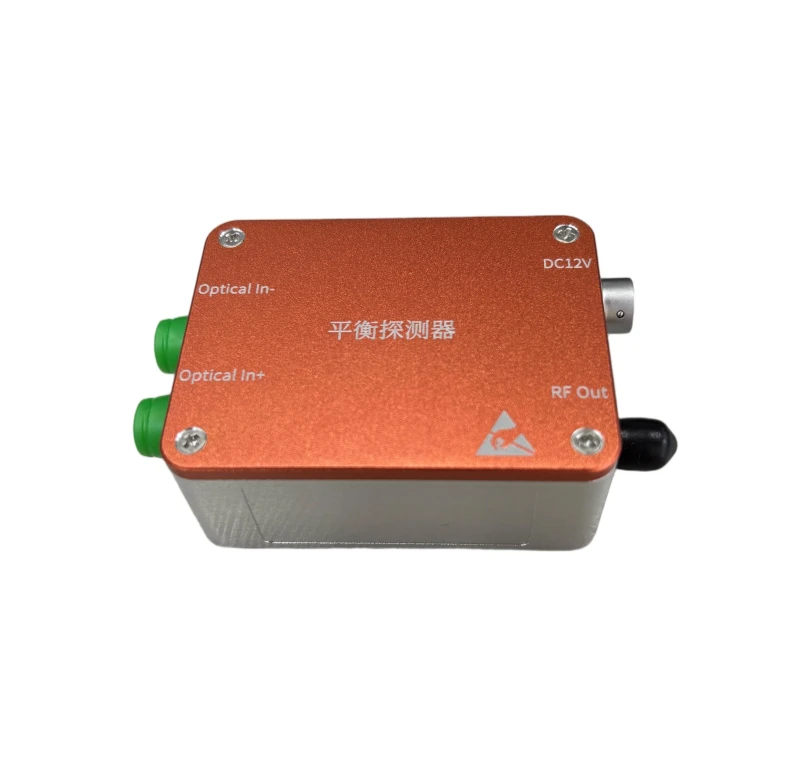
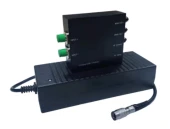
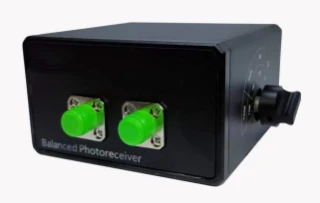
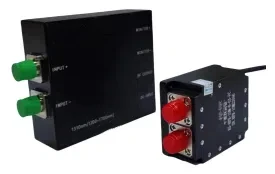
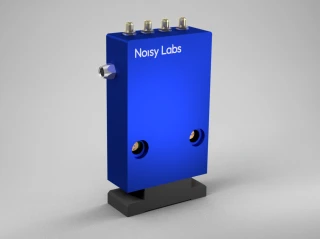
The ROF-BPR Series balanced photodetector modules are high‑performance, integrated balanced receivers designed for precision optical measurements in demanding applications such as LiDAR, optical delay measurement, and optical coherence tomography (OCT), including swept‑source OCT (SS‑OCT). Each module incorporates two carefully matched photodiodes and an ultra‑low‑noise transimpedance amplifier (TIA), delivering excellent laser relative intensity noise (RIN) suppression and common‑mode noise rejection. Compared with conventional single‑ended photodetectors or discrete balanced detector assemblies, the ROF-BPR Series offers a compact, turnkey solution that simplifies system design while significantly improving signal fidelity and stability.
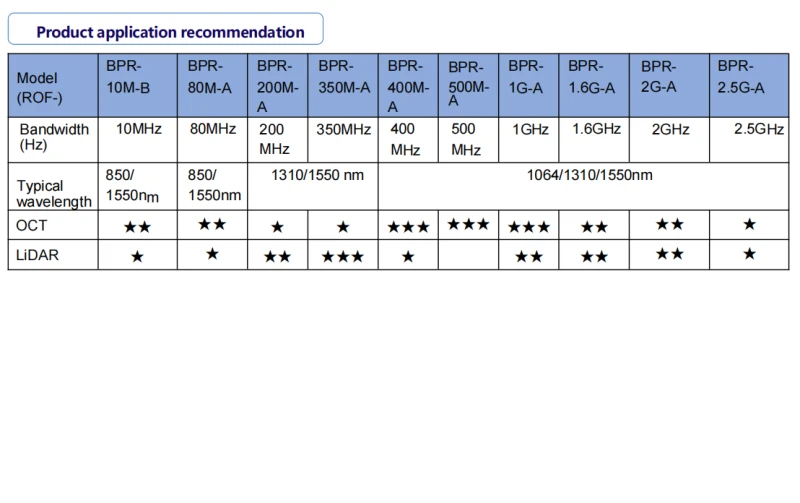
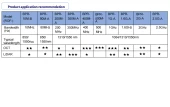
Covering broad spectral ranges of 400–1100 nm and 850–1650 nm with typical operating wavelengths at 850 nm, 1064 nm, 1310 nm, and 1550 nm, these modules support a wide variety of laser sources used in modern industrial and scientific systems. Multiple fixed 3 dB bandwidth options are available – from DC–10 MHz up to 2.5 GHz – enabling users to select an optimal trade‑off between sensitivity, noise performance, and temporal resolution. Models such as ROF‑BPR‑10M, 80M, 200M, 350M, 400M, 500M, 1G, 1.6G, 2G and 2.5G are optimized for specific wavelength and bandwidth combinations, giving system designers fine control over detection dynamics in both time‑domain and frequency‑domain architectures.
A key advantage of the ROF-BPR Series is its high common‑mode rejection ratio (CMRR), typically greater than 25 dB and up to around 30 dB in the bandwidth‑fixed, high‑gain models. This high CMRR enables efficient suppression of common‑mode noise from laser intensity fluctuations, environmental interference, and electronic pickup, which is critical in heterodyne and homodyne detection schemes. In swept‑source OCT and other coherent detection systems, the result is a significantly enhanced signal‑to‑noise ratio (SNR), allowing the detection of extremely weak interference signals superimposed on strong background light. The modules also offer high gain – on the order of 10×10³ V/W in certain configurations – and ultra‑low noise voltage (typically below 1 mV RMS), providing excellent electrical output levels even at low incident optical powers.
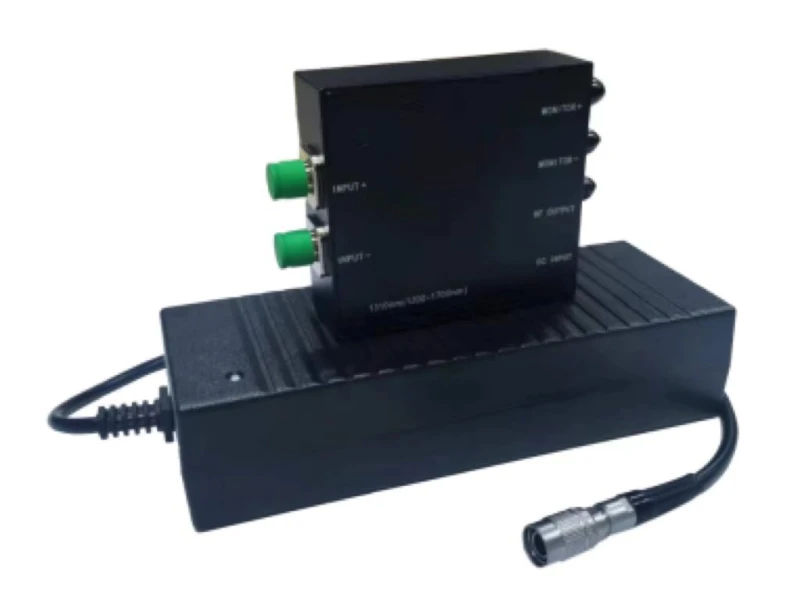
Within the series, bandwidth‑fixed, high‑gain balanced detectors are specially optimized for third‑generation SS‑OCT systems operating around 1064 nm and 1310 nm. These variants feature DC–10 MHz, DC–80 MHz, DC–200 MHz, DC–400 MHz, 50 kHz–1 GHz, 50 kHz–1.6 GHz, 50 kHz–2 GHz, and 1 MHz–2.5 GHz options to accommodate different A‑scan speeds and sweep rates, while maintaining low noise and wide dynamic range. Some models integrate a dedicated monitor output (up to approximately 10 Vpp), allowing real‑time observation or feedback control of the detected signal without disturbing the main measurement channel. This is particularly valuable in high‑speed OCT, interferometric sensing, and coherent communication test setups where stable referencing and diagnostics are required.
The ROF‑BPR Series is suitable for a broad range of precision applications. In LiDAR systems, mid‑ to high‑bandwidth models (such as 200 MHz to multi‑GHz versions) support rapid pulse detection and high‑resolution time‑of‑flight measurements, while balanced detection mitigates laser noise and improves ranging accuracy over long distances. For optical delay measurement and interferometric metrology, the combination of balanced detection, high CMRR, and selectable bandwidth helps resolve minute phase and path‑length changes with high repeatability. In OCT imaging, especially at 1064 nm, 1310 nm, and 1550 nm, the low‑noise, high‑gain design directly enhances axial resolution and imaging depth by maximizing fringe visibility and minimizing electronic noise floors.
Individual models within the family are tailored to specific spectral needs. For example, ROF‑BPR‑10M‑A series devices cover 900–1400 nm or 1200–1700 nm with typical operation at 1064 nm, 1310 nm, and 1550 nm, offering responsivities around 0.7–0.9 A/W and saturation powers in the hundreds of microwatts range. This balance of responsivity, saturation power, and gain enables both high sensitivity and sufficient dynamic range for use with modern swept sources and narrow‑line lasers. Maximum output amplitudes on the order of several volts peak‑to‑peak at high impedance make direct interfacing with standard oscilloscopes, data acquisition cards, and imaging electronics straightforward, reducing the need for additional amplification stages.
ROF BPR Series Balanced Photodetector Module Low Noise High Gain OCT LiDAR
Specifications
| Central Wavelength: | 850 – 1650 nm |
|---|---|
| Quantum Efficiency (typical): | Not Specified |
| Quantum Efficiency (max): | Not Specified |
| Active Area Size: | Not Specified |
| Angle Of Incidence (AOI): | Not Specified |
| Max Total Input Power: | 10 mW |
| 3dB Bandwidth: | 2500 MHz |
| AC High Pass Cutoff: | Not Specified |
| Output Impedance: | Not Specified |
| Dark Noise Clearance (min): | Not Specified |
| DC Output Voltage: | Not Specified |
| RF Input Frequency: | Not Specified |
| RF Input Power (max): | Not Specified |
| Series: | ROF-BPR |
| Spectral Range: | 400–1100 nm, 850–1650 nm |
| Typical Wavelengths: | 850 / 1064 / 1310 / 1550 nm |
| Available 3 DB Bandwidth Options: | 10 MHz / 80 MHz / 200 MHz / 350 MHz / 400 MHz / 500 MHz / 1 GHz / 1.6 GHz / 2 GHz / 2.5 GHz |
| Common Mode Rejection Ratio (general Series): | >25 dB |
| Common Mode Rejection Ratio (fixed-gain Series): | >30 dB |
| High Gain (fixed-gain Series): | 14.5×10^3 V/W @ 50 Ω |
| ROF-BPR-10M-A2-FC-DC/AC Spectral Response Range: | 1200–1700 nm |
| ROF-BPR-10M-A1-FC-DC/AC Spectral Response Range: | 900–1400 nm |
| ROF-BPR-10M-A2-FC-DC/AC Typical Wavelength: | 1310 nm / 1550 nm |
| ROF-BPR-10M-A1-FC-DC/AC Typical Wavelength: | 1064 nm |
| ROF-BPR-10M-A2-FC-DC/AC Responsivity: | 0.9 A/W @ 1550 nm |
| ROF-BPR-10M-A1-FC-DC/AC Responsivity: | 0.7 A/W @ 1064 nm |
| ROF-BPR-10M-A2-FC-DC/AC 3 DB Bandwidth Options: | DC–10 MHz / 10 kHz–10 MHz |
| ROF-BPR-10M-A1-FC-DC/AC 3 DB Bandwidth Options: | DC–10 MHz / 10 kHz–10 MHz |
| ROF-BPR-10M-A2-FC-DC/AC CMRR: | >25 dB (30 dB typ.) |
| ROF-BPR-10M-A1-FC-DC/AC CMRR: | >25 dB (30 dB typ.) |
| ROF-BPR-10M-A2-FC-DC/AC Gain @ High Impedance: | 10×10^3 V/W |
| ROF-BPR-10M-A1-FC-DC/AC Gain @ High Impedance: | 0.7×10^3 V/W |
| ROF-BPR-10M-A2-FC-DC/AC Noise Voltage (RMS): | <1 mV RMS |
| ROF-BPR-10M-A1-FC-DC/AC Noise Voltage (RMS): | <1 mV RMS |
| ROF-BPR-10M-A2-FC-DC/AC Sensitivity: | -40 dB |
| ROF-BPR-10M-A1-FC-DC/AC Sensitivity: | -35 dB |
| ROF-BPR-10M-A2-FC-DC/AC Saturated Optical Power: | 400 μW |
| ROF-BPR-10M-A1-FC-DC/AC Saturated Optical Power: | 800 μW |
| ROF-BPR-10M-A2-FC-DC/AC Maximum Output Amplitude @ High Impedance: | 3.8 Vpp |
| ROF-BPR-10M-A1-FC-DC/AC Maximum Output Amplitude @ High Impedance: | 3.8 Vpp |
| Maximum Damage Optical Power: | 10 mW |
Got questions about specs? Use the inquiry form to ask.
 Download Data Sheet

Features
- Wide Spectral Coverage (400–1100 nm, 850–1650 nm)
Supports multiple spectral ranges with typical operation at 850 / 1064 / 1310 / 1550 nm, covering the most common telecom, LiDAR, and OCT wavelengths. - Integrated Balanced Photodetector Architecture
Incorporates two precisely matched photodiodes and an ultra‑low‑noise transimpedance amplifier in a single compact module, simplifying system design and alignment. - Superior Common‑Mode Noise Rejection
Balanced detection design delivers a high Common Mode Rejection Ratio (CMRR > 25 dB, typ. 30 dB), effectively suppressing laser intensity noise, RIN, and environmental common‑mode disturbances. - Ultra‑Low‑Noise, High‑Gain Performance
Optimized analog front‑end provides ultra‑low input‑referred noise and high responsivity gain up to 14.5 × 10³ V/W (50 Ω), enabling detection of very weak optical signals with improved system SNR. - Multiple Fixed Bandwidth Options
Available 3 dB bandwidths: 10 MHz / 80 MHz / 200 MHz / 350 MHz / 400 MHz / 500 MHz / 1 GHz / 1.6 GHz / 2 GHz / 2.5 GHz, allowing precise matching of detector speed to specific LiDAR, OCT, and metrology requirements. - Flexible Frequency Response (DC and AC‑Coupled Models)
Supports various frequency ranges including DC–10 MHz, DC–80 MHz, DC–200 MHz, DC–400 MHz, 50 kHz–1 GHz, 50 kHz–1.6 GHz, 50 kHz–2 GHz, 1 MHz–2.5 GHz, enabling optimization for time‑domain or frequency‑domain applications. - Optimized for Third‑Generation SS‑OCT
High‑gain, low‑noise design specifically optimized for swept‑source OCT (SS‑OCT) at 1064 nm and 1310 nm, providing high fringe contrast and extended imaging depth. - Dedicated LiDAR and OCT Models
Product matrix tailored for LiDAR and optical coherence tomography with recommended bandwidths per model, ensuring correct detector selection for ranging, imaging, and heterodyne detection tasks. - High Output Amplitude and Monitor Port
High‑gain output with up to 3.8 Vpp (high impedance) and an additional monitor signal output (up to 10 Vpp) for real‑time diagnostics, alignment, and system calibration. - Excellent Responsivity at Telecom and NIR Wavelengths
High responsivity up to 0.9 A/W @ 1550 nm and 0.7 A/W @ 1064 nm (depending on model), maximizing conversion efficiency from optical power to electrical signal. - High Sensitivity with Low RMS Noise
RMS noise < 1 mV and optical sensitivity down to about –40 dB, enabling detection of low‑level interferometric signals in OCT, delay measurement, and coherent detection. - Balanced Detection for Laser Noise Reduction
Differential detection scheme cancels common‑mode intensity noise from lasers and amplifiers, yielding a significantly improved signal‑to‑noise ratio compared with single‑ended photodetectors. - High Saturation and Damage Threshold
Handles typical saturated optical powers in the hundreds of µW range (e.g., 400–800 µW) and a maximum damage power around 10 mW, providing headroom for higher input levels while maintaining linearity. - Models for Both 900–1400 nm and 1200–1700 nm Ranges
Dedicated variants cover 900–1400 nm (e.g., 1064 nm) and 1200–1700 nm (e.g., 1310/1550 nm), ensuring optimal performance across key NIR bands used in fiber and free‑space systems. - AC / DC Coupling Options
Configurable as DC‑coupled for low‑frequency and interferometric measurements, or AC‑coupled for high‑speed communication and LiDAR, minimizing baseline drift as required. - Compact, Integrated Module for Easy System Integration
All photodiodes, TIA, biasing, and balancing electronics integrated into a single module with standardized optical (e.g., FC) and electrical interfaces for quick drop‑in integration. - Customizable Configurations
Supports various customized solutions, including wavelength optimization, gain adjustment, bandwidth modification, and packaging adaptations for OEM and research systems.
Applications
- High‑Sensitivity LiDAR (Light Detection and Ranging)
Optimized balanced detection for time‑of‑flight and coherent/FMCW LiDAR systems in autonomous vehicles, UAV mapping, environmental monitoring, and industrial safety scanners, providing reduced laser intensity noise and extended detection range. - Coherent and FMCW LiDAR Receivers
Ideal for coherent heterodyne and frequency‑modulated continuous‑wave LiDAR front‑ends, where high common‑mode rejection and low noise are critical for accurate phase, Doppler, and velocity measurements. - Optical Coherence Tomography (OCT)
Designed for third‑generation swept‑source OCT (SS‑OCT) and spectral‑domain OCT systems at 1064 nm, 1310 nm, and 1550 nm, improving depth resolution and imaging sensitivity for ophthalmology, cardiology, dermatology, and intravascular imaging. - Swept‑Source OCT (SS‑OCT) Detection Modules
High‑gain, ultra‑low‑noise balanced detection specifically optimized for swept‑source interferometric detection, enabling high‑speed A‑scan and B‑scan imaging in medical and industrial OCT platforms. - Optical Delay and Path Length Measurement
Balanced photoreceiver for precise optical delay line characterization, interferometric path length measurements, and timing calibration in fiber‑optic links and laboratory interferometers. - Fiber‑Optic Interferometry
Suited for Mach‑Zehnder, Michelson, Sagnac, and Fabry–Pérot interferometers, improving fringe visibility and phase stability in precision metrology, sensing, and coherent detection experiments. - Fiber‑Optic Gyroscopes (FOG)
Used as a low‑noise detection module in closed‑loop fiber‑optic gyroscopes to enhance sensitivity and stability for navigation, inertial measurement units (IMU), and guidance systems. - Coherent Optical Communication Receivers
Balanced front‑end for coherent detection in advanced modulation format systems (QPSK, QAM) at 1310 nm and 1550 nm, enabling improved OSNR and reduced phase noise in high‑capacity fiber‑optic links and metro/access networks. - Homodyne and Heterodyne Detection
Ideal for homodyne and heterodyne optical receivers that mix signal and local oscillator fields, supporting precision phase, frequency, and amplitude measurements in communication and test setups. - Laser Noise and RIN Suppression Measurements
Balanced photodetection for relative intensity noise (RIN) characterization and laser noise suppression experiments in research labs and laser manufacturing, leveraging high CMRR to cancel common‑mode fluctuations. - Laser Stabilization and Feedback Control
Employed in feedback loops for diode, fiber, and solid‑state laser stabilization (intensity and frequency control), offering highly linear, low‑noise monitoring of differential optical signals. - Quantum Optics and Quantum Communication
Suitable for balanced homodyne and heterodyne detection of quantum states of light, including squeezed states and entangled photon pairs, in quantum key distribution (QKD), continuous‑variable quantum optics, and quantum metrology. - Low‑Light‑Level and Shot‑Noise‑Limited Detection
High‑gain, ultra‑low‑noise performance enables near shot‑noise‑limited measurements in photon‑starved applications such as single‑photon‑sensitive experiments and weak optical signal detection. - Optical Metrology and Precision Measurements
Used in displacement, vibration, and surface profile metrology systems that rely on interferometric techniques, providing enhanced sensitivity and dynamic range for nanometer‑scale measurements. - Optical Sensing and Structural Health Monitoring
Balanced readout for interferometric fiber‑optic sensors (FBG, Fabry–Pérot, and phase‑sensitive sensors) in structural health monitoring of bridges, tunnels, pipelines, and aerospace components. - Frequency Comb and Ultrafast Laser Diagnostics
Enables precise detection of optical frequency comb beats and ultrafast pulse characterization, supporting stabilization and analysis of mode‑locked and femtosecond lasers in research and industrial systems. - Terahertz Time‑Domain Spectroscopy (THz‑TDS) Optics Front‑End
Used as a near‑infrared balanced detector for photoconductive antenna excitation and electro‑optic sampling reference channels in THz time‑domain spectroscopy setups. - Optical Spectrum and Interferogram Acquisition
Provides balanced detection for Fourier‑transform and interferometric spectrometers, improving dynamic range and noise performance for spectral analysis in R&D and production testing.
Frequently Asked Questions
What is the ROF-BPR Series balanced photodetector and what applications is it designed for?
Which models and bandwidth options are available in the ROF‑BPR balanced photodetector series?
What wavelength ranges are supported, and how do I choose between 850 nm, 1064 nm, 1310 nm, and 1550 nm versions?
How does the ROF‑BPR balanced photodetector improve signal‑to‑noise ratio compared with a single photodiode?
What are the key electrical performance parameters (gain, CMRR, noise, and output) of the ROF‑BPR modules?
What is the maximum input optical power and how can I avoid damaging the ROF‑BPR balanced detector?
How do I integrate the ROF‑BPR balanced photodetector into an OCT or LiDAR system, and what customization options are available?
Got more questions? Use the inquiry form to ask the supplier directly.
Similar Products
Your inquiry has been received.
Create an account by adding a password
Why create an account?
- Auto-complete inquiry forms
- View and manage all your past messages
- Save products to your favorites
- Close your account anytime — no hassle