

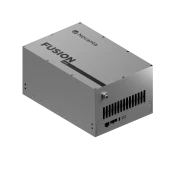
Description
The FUSIONultra configurable multi‑wavelength laser light engine is an OEM‑ready illumination platform engineered for the most demanding fluorescence imaging, life science, and scientific R&D applications. Designed to rival and surpass conventional multi‑line laser combiners and LED light sources, it delivers high dynamic range excitation with ultra‑stable output and exceptional spatial uniformity. Whether you are building an advanced fluorescence microscope, high‑content screening system, flow cytometer, or other automated analytical instrument, FUSIONultra provides the performance and flexibility needed for next‑generation imaging and quantification.
Unlike traditional fixed‑configuration light engines, FUSIONultra is built on a modular architecture that supports a broad spectral range and scalable multi‑watt output per laser line. Users can configure combinations of high‑performance diode pumped solid state (DPSS) lasers and single‑ or multi‑mode diode lasers within a single protective housing, enabling precise matching of wavelengths and power levels to specific fluorophores and assay requirements. This flexibility makes it ideal for complex, multiplexed fluorescence experiments where excitation efficiency, cross‑talk management, and signal‑to‑noise ratio are critical.
The platform incorporates proprietary ULTRALOQ™ technology to ensure outstanding power and pointing stability across a wide operating temperature range, minimizing drift, fluctuations, and the need for frequent recalibration. Compared to many conventional laser combiners and solid‑state sources, this results in improved reproducibility of quantitative measurements, more consistent exposure conditions between experiments, and superior long‑term reliability for 24/7 instrumentation. Dynamic power switching enables rapid transitions among laser lines and power levels, supporting high‑speed imaging workflows and fast acquisition sequences in demanding screening or live‑cell applications.
FUSIONultra is also engineered to optimize beam quality and illumination homogeneity, addressing key limitations found in many multi‑laser and LED illumination systems. Enhanced spatial coherence and minimal modal dispersion are achieved through a compact 50 µm multi‑mode fiber core, while optional non‑circular fiber geometries are available for optimal mode scrambling. These design choices effectively suppress modal artifacts, ringing, and hot spots at the sample plane, leading to uniform excitation across the field of view. Built‑in beam shaping and despeckling modules further reduce speckle and spatial noise, which is especially important for high‑resolution, quantitative imaging where even subtle illumination inhomogeneities can compromise data quality.
With its broad spectral breadth, FUSIONultra can excite an extensive range of common and advanced fluorophores and fluorescent proteins used in cell biology, neuroscience, genomics, proteomics, and material science. The platform supports higher power configurations at challenging wavelengths such as 561 nm, enabling robust excitation of yellow‑orange fluorophores and dyes that are often underpowered in competitive systems. This capability, combined with multi‑watt output options for each line, ensures strong signal levels without requiring excessive exposure times, thereby improving throughput while helping to reduce photobleaching and phototoxicity when properly integrated into the optical design.
Purpose‑built for seamless OEM integration, the FUSIONultra light engine is designed to accelerate system design cycles and simplify instrument assembly. Its compact, robust housing consolidates multiple laser sources, beam conditioning optics, and optional modules into a single, serviceable unit. This reduces alignment complexity and mechanical sensitivity compared with ad‑hoc multi‑laser assemblies. Instrument developers benefit from consistent optical outputs, predictable thermal behavior, and straightforward fiber coupling options, including support for both single‑mode and multi‑mode delivery, enabling straightforward integration into microscopes, scanners, and custom optical paths.
In advanced imaging systems, the combination of ULTRALOQ™ stability, high‑power multi‑wavelength output, and sophisticated beam conditioning translates directly into improved image contrast, better resolution of fine cellular and sub‑cellular structures, and higher confidence in quantitative results. By eliminating many of the typical sources of illumination‑related artifacts—such as speckle, modal noise, and thermal drift—FUSIONultra allows researchers and instrument manufacturers to fully leverage modern high‑sensitivity detectors, super‑resolution techniques, and complex multi‑channel imaging protocols.
FUSIONultra Configurable Multiwavelength Laser Light Engine for Fluorescence Imaging Systems
Specifications
| Wavelength: | 561 nm |
|---|---|
| Max Output Power: | 1000 mW |
| Cooling Method: | Air-Cooled, Heat sink |
| Tunability: | Multi-Wavelength Tunable |
| Control Interface: | Analog Control, Digital Control, RS232/RS485 |
| Laser Light Engine Type: | Configurable multi-wavelength (up to 10 laser lines available) |
| Output Power Per Laser Line: | Scalable multi-watt with 1W per each laser line |
| Laser Technologies: | Diode and DPSS (diode pumped solid state) |
| Fiber Core Type: | Multi-mode |
| Fiber Core Diameter: | 50 µm |
| Fiber Core Shapes: | Non-circular options for mode scrambling |
| Wavelength Options: | 405 – 638 nm, including higher power at 561 nm |
| Technology Feature: | ULTRALOQ™ for performance stability |
| Beam Conditioning Options: | Optional built-in beam shaping and despeckling modules |
| Spatial Coherence: | Enhanced with minimal modal dispersion |
| Fiber Configuration Options: | Single-mode and multi-mode |
| Operating Temperature Behavior: | Stable performance across broad temperature range |
Got questions about specs? Use the inquiry form to ask.
 Download Data Sheet

Features
- Configurable Multi-Wavelength Laser Light Engine – OEM-ready, modular platform that combines diode-pumped solid-state (DPSS) and single or multi-mode diode lasers in virtually any wavelength and power configuration, all within a single protective housing.
- Broad Spectral Coverage for Diverse Fluorophores – Wide wavelength range to efficiently excite an equally broad range of fluorophores, including higher-power options at challenging lines such as 561 nm for advanced fluorescence imaging and confocal microscopy.
- Scalable Multi-Watt Output per Laser Line – High-power, multi-watt output available on each laser line (diode and DPSS) to support demanding applications such as high-content screening, spinning disk confocal, TIRF, and super-resolution techniques.
- High Dynamic Range Excitation – Enables both low-light and high-intensity illumination regimes with excellent linearity and control, ideal for quantitative imaging, ratiometric measurements, and sensitive life science assays.
- Dynamic Power Switching & Fast Modulation – Rapid, precise power control well-suited for high-speed fluorescence excitation, time-lapse imaging, FRAP, photoactivation, optogenetics, and multiplexed imaging workflows.
- Ultra-Stable Output with ULTRALOQ™ Technology – Multiple ultra-stable laser sources combined with proprietary ULTRALOQ™ control deliver exceptional power stability and repeatability across a broad operating temperature range for long-term, drift-free imaging.
- Enhanced Spatial Coherence & Minimal Modal Dispersion – Carefully engineered optical path and fiber delivery (including compact 50 µm multi-mode cores) maintain high spatial coherence and minimize modal dispersion to resolve fine cellular and sub-cellular structures.
- Optimized Mode Scrambling & Uniform Illumination – Selection of circular and non-circular fiber cores designed for optimal mode scrambling to suppress modal artifacts, eliminate hot spots, and maximize illumination uniformity across the field of view.
- Integrated Beam Shaping and Despeckling Option – Optional built-in beam shaping and despeckling modules eliminate spatial noise, reduce speckle, and enhance quantification accuracy for widefield, confocal, and light-sheet microscopy.
- High-Throughput Imaging & Faster Acquisition Speeds – High optical power, fast switching, and stable output enable shorter exposure times and higher frame rates, significantly increasing throughput in automated imaging and screening systems.
- Unmatched Image Quality & Contrast – Uniform, stable illumination with low noise and minimized speckle improves signal-to-background ratio, contrast, and reproducibility, supporting publication-grade imaging and precise quantitative analysis.
- Single-Mode and Multi-Mode Fiber Delivery – Flexible fiber coupling options (including 50 µm multi-mode and other core geometries) for straightforward integration into microscopes, flow cytometers, endoscopes, and custom optical setups.
- Seamless OEM Integration – Designed as an OEM-ready light engine with standardized interfaces, robust housing, and straightforward electrical and software control for easy integration into commercial instruments and automated platforms.
- Compact, Modular Architecture – Advanced building-block design allows lasers, fibers, and optional modules (beam shaping, despeckling) to be configured and serviced independently, simplifying customization and future upgrades.
- Temperature-Robust Performance – Engineered thermal management and ULTRALOQ™ stability algorithms maintain consistent power and beam characteristics over wide temperature ranges, minimizing recalibration and downtime.
- Low Maintenance & High Reliability – Solid-state architecture with long-lived diode and DPSS sources reduces service intervals, total cost of ownership, and instrument downtime for core facilities and OEM deployments.
- Ideal for Advanced Life Science & R&D Applications – Optimized for confocal and widefield microscopy, high-content screening, flow cytometry, cytometry by time-of-flight preparation, fluorescence lifetime and FRET studies, optogenetics, and general scientific R&D.
- Future-Proof, Configurable Platform – Easily adaptable to new fluorophore sets and emerging imaging modalities by reconfiguring wavelengths, power levels, and fiber options without changing the overall system footprint.
Applications
- High-Speed Fluorescence Microscopy – Optimized for widefield, confocal, spinning disk, and TIRF fluorescence microscopy where high dynamic range excitation, fast acquisition speeds, and ultra-stable multi-line laser output are required.
- Live-Cell Imaging & Time-Lapse Experiments – Ideal for gentle, stable illumination of live cells and organoids over long imaging sessions, maintaining focus, intensity, and spectral stability to minimize photobleaching and phototoxicity.
- Super-Resolution Microscopy (SIM, STORM, PALM, STED) – Provides coherent, multi-watt laser lines with excellent spatial mode quality and despeckled output for advanced super-resolution techniques demanding precise beam shaping and stability.
- Spinning Disk Confocal & High-Content Screening (HCS/HCA) – Supports high-throughput screening platforms in pharma, biotech, and core facilities, delivering rapid, uniform multi-wavelength excitation across large fields of view.
- Flow Cytometry & Imaging Flow Cytometry – Multi-wavelength, stable excitation for simultaneous detection of multiple fluorophores in analytical and cell-sorting cytometers, including instruments requiring 405 nm, 488 nm, 561 nm, 640 nm, and NIR lines.
- Genomics, Proteomics & Cellomics Assays – Reliable illumination for DNA/RNA sequencing workflows, FISH, in situ hybridization, protein localization, and multiplex immunofluorescence assays demanding precise, repeatable excitation intensities.
- Calcium & Voltage Imaging in Neuroscience – High-speed, dynamically controlled excitation for fluorescent indicators (e.g., GCaMP, voltage-sensitive dyes) used in neuronal activity mapping, brain slice imaging, and in vivo neuroimaging.
- Optogenetics & Photoactivation Studies – Supports precise, multi-line excitation for activation, silencing, and manipulation of light-sensitive ion channels and proteins in neuronal and cellular systems, with dynamic power switching for fine control of stimulation protocols.
- FRAP, FLIP, and Photoablation Experiments – High-power, tightly controlled laser lines for targeted photobleaching, recovery kinetics measurements, and localized photodamage in advanced cell biology and biophysics studies.
- FRET, FLIM & Ratiometric Imaging – Broad spectral coverage and highly stable intensity profiles make the system ideal for quantitative ratiometric assays, FRET studies, and lifetime imaging sensitive to even minor fluctuations in excitation.
- Single-Molecule & Single-Particle Imaging – Low-noise, spatially coherent beams enable precise excitation of single fluorophores and nanoparticles in biophysical, nanophotonics, and surface chemistry research.
- Structured Illumination & Patterned Excitation – Enhanced spatial coherence, minimal modal dispersion, and optional beam shaping modules support SIM and other structured-illumination techniques used to boost resolution and contrast.
- Multiplexed Immunofluorescence & Tissue Imaging – Multiple configurable laser lines excite broad fluorophore panels for highly multiplexed imaging of tissue sections, tumor microenvironments, and spatial biology applications.
- Core Facility & Shared Instrument Platforms – Robust, OEM-ready light engine for multi-user environments that demand minimal downtime, reproducible performance, easy integration, and long-term stability.
- OEM Integration into Commercial Microscopes – Modular, compact laser light engine designed for integration by microscope and imaging system manufacturers seeking a single, multi-wavelength illumination module for various instrument tiers.
- Digital Pathology & Whole-Slide Imaging – Stable, uniform illumination across large specimen areas for fluorescence whole-slide scanners, virtual microscopy, and automated pathology workflows.
- Microplate Readers & Automated Screening Systems – High-speed, multi-wavelength excitation for fluorescence-based plate readers, cytometers-in-a-box, and integrated drug discovery platforms requiring rapid switching between channels.
- Raman & Spectroscopic Applications – Coherent, narrow-linewidth laser sources suitable for select Raman, photoluminescence, and spectroscopic measurements where multi-line excitation or flexible fiber delivery is beneficial.
- Industrial & Semiconductor Inspection – Uniform, despeckled illumination for fluorescence-based or laser-scattering inspection of wafers, microstructures, and precision components requiring high spatial uniformity.
Frequently Asked Questions
What is the FUSIONultra configurable multi‑wavelength laser light engine used for?
Which laser wavelengths and power levels are available on the FUSIONultra platform?
How does the ULTRALOQ™ technology improve imaging stability and data quality?
What are the fiber delivery options, and how do they affect illumination uniformity?
How does the integrated despeckling and beam shaping improve fluorescence imaging?
Is the FUSIONultra suitable for OEM integration and high‑throughput systems?
How is laser power controlled and switched between lines during fast imaging?
Got more questions? Use the inquiry form to ask the supplier directly.
Similar Products


Your inquiry has been received.
Create an account by adding a password
Why create an account?
- Auto-complete inquiry forms
- View and manage all your past messages
- Save products to your favorites
- Close your account anytime — no hassle