


Description
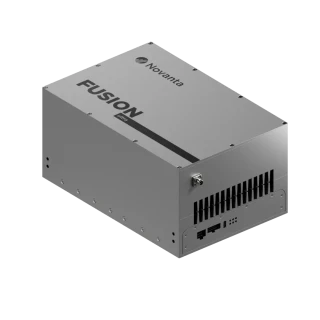
The Novanta OPUS DPSS Continuous Wave Laser Series is engineered for demanding OEM applications that require a precise, stable and compact light source. Designed for 24/7 operation in system-integrated environments, these diode-pumped solid-state (DPSS) lasers deliver mid to high continuous-wave output powers with exceptionally low amplitude noise. Typical use cases include semiconductor inspection, wafer defect analysis, particle counting, confocal and super-resolution microscopy, Raman spectroscopy, metrology, holography, fine material processing and a wide variety of analytical and diagnostic instruments where measurement repeatability and low signal uncertainty are essential.
Available at key wavelengths of 532 nm, 660 nm and 1064 nm, the OPUS series combines high optical power with outstanding beam quality and stability. The output powers reach up to 6000 mW at 532 nm, up to 1500 mW at 660 nm, and into the multi‑watt to 10 W regime at 1064 nm, making the platform suitable for both precision measurement and light industrial micromachining. A low M2 value (typically < 1.1–1.2) and well-controlled beam diameters support tight focusing, efficient fiber coupling and uniform illumination of the sample. These characteristics place the OPUS family in the same performance class as other premium DPSS CW platforms used in high‑end inspection and instrumentation systems worldwide.
A key differentiator of the OPUS design is its patented optomechanical architecture that suppresses amplitude noise and enhances long-term stability. In applications such as semiconductor defect inspection or airborne particle counting, even small power fluctuations can generate false positives or degrade measurement confidence. By minimizing RMS noise and ensuring excellent power stability over time, the OPUS lasers help to reduce measurement errors and improve overall system yield. This robust stability is maintained across the available power range, enabling users to operate at the optimal point for their process without sacrificing noise performance.
From an integration standpoint, the OPUS series is purpose-built for OEMs. The laser head and driver feature a compact footprint with a high power-to-size ratio, simplifying mechanical design and allowing the lasers to be installed in space-constrained instruments or multi-channel platforms. High wall-plug efficiency and carefully optimized thermal management enable air-cooled operation in environments where water cooling is impractical or prohibited. This reduces system complexity, lowers total cost of ownership and enhances reliability in continuous-duty deployments. The rugged mechanical design is intended for long operational lifetimes, supporting applications that must run around the clock with minimal intervention.
Flexible beam delivery options further increase the versatility of the OPUS family. The excellent beam quality and stability support efficient coupling into both multimode and single-mode optical fibers, allowing designers to route light precisely to the point of use within complex instruments or distributed processing stations. This is particularly advantageous in advanced inspection tools, microscopy platforms and industrial workstations where the laser may need to be decoupled from the motion stages or placed remotely for thermal and mechanical isolation. By combining high power, low noise and fiber-coupling capability, the OPUS series serves as a scalable light engine for a broad range of photonics-based systems.
Compared with many conventional DPSS CW lasers on the market, which often trade off size, thermal requirements or stability at higher powers, the OPUS series is positioned as a balanced solution that addresses all three simultaneously. Its combination of high optical output, low RMS noise, compactness and efficient air cooling makes it a strong candidate for next-generation inspection, analytical and processing platforms that demand high throughput and stringent measurement reliability. For OEMs and system designers seeking a mid-power DPSS laser that can support both current and future performance requirements, the Novanta OPUS DPSS Continuous Wave Laser Series offers a modern, robust and integration-friendly solution.
opus Series
Specifications
| Wavelength: | 532 nm |
|---|---|
| Max Output Power: | 6000 mW |
| Cooling Method: | Air-Cooled, Fan-cooled, Passive cooling, Active cooling, Heat sink |
| Tunability: | Fixed Wavelength |
| Control Interface: | Digital Control |
| Laser Type: | DPSS continuous wave |
| Model Family: | opus DPSS continuous wave laser series |
| Wavelength (opus 532): | 532 nm |
| Wavelength (opus 660): | 660 nm |
| Wavelength (opus 1064): | 1064 nm |
| Power (opus 532): | Up to 6000 mW |
| Power (opus 660): | Up to 1500 mW |
| Power (opus 1064): | 2 - 10 W |
| Beam Diameter (opus 532): | 1.85 ± 0.2 mm |
| Beam Diameter (opus 660): | 0.85 ± 0.1 mm |
| Beam Diameter (opus 1064): | 1.85 ± 0.2 mm |
| Spatial Mode: | TEM00 |
| Ellipticity: | < 1:1.15 |
| Bandwidth (opus 532): | 45 ± 10 GHz |
| Bandwidth (opus 660): | 30 GHz |
| Bandwidth (opus 1064): | 80 GHz |
| Divergence (opus 532): | < 0.5 mrad |
| Divergence (opus 660): | < 1.5 mrad |
| Divergence (opus 1064): | < 1.0 mrad |
| M² (opus 532): | < 1.1 |
| M² (opus 660): | < 1.2 |
| M² (opus 1064): | < 1.15 |
| Power Stability RMS (opus 532): | < 0.2% |
| Power Stability RMS (opus 660): | < 1.0% |
| Power Stability RMS (opus 1064): | < 0.1% |
| Cooling: | Air cooling |
| Fiber Coupling Options: | Multimode (MM) and single-mode (SM) |
| Operating Mode: | Continuous wave |
| Design: | Patented low-noise, high-stability design |
| Wall Plug Efficiency: | High (for improved thermal management) |
Got questions about specs? Use the inquiry form to ask.
 Download Data Sheet

Features
- Patented Low-Noise DPSS Design – Proprietary cavity design actively suppresses amplitude noise, delivering ultra-stable continuous-wave output and helping eliminate false positives in semiconductor inspection, particle counting, and other precision metrology applications.
- Multiple Wavelength Options (532 / 660 / 1064 nm) – Opus DPSS CW laser series available at 532 nm, 660 nm, and 1064 nm to support a wide range of applications including Raman spectroscopy, fluorescence excitation, wafer inspection, micromachining, and fine material processing.
- High Output Power – Up to 6000 mW at 532 nm, up to 1500 mW at 660 nm, and 2–10 W at 1064 nm, enabling high signal-to-noise performance and fast throughput in demanding OEM and industrial environments.
- Exceptional Power Stability – Power stability down to < 0.1–0.2% RMS (model dependent) for reliable, repeatable results in 24/7 operation, reducing recalibration frequency and improving overall system accuracy.
- Ultra-Low Intensity Noise – Engineered for very low RMS noise across the entire available power range, ensuring clean, low-noise signals critical for high-precision analytical, diagnostic, and inspection systems.
- Near-Diffraction-Limited Beam Quality – High-quality TEM00 beam with M² typically < 1.1–1.2 and low divergence (< 0.5 mrad at 532 nm, < 1.0 mrad at 1064 nm), ideal for tight focusing, long working distances, and efficient fiber coupling.
- Excellent Beam Geometry – Well-controlled beam diameters and low ellipticity (< 1:1.15) provide consistent spot sizes and uniform illumination, simplifying integration into imaging, scanning, and beam steering sub-systems.
- Compact, OEM-Friendly Form Factor – Small laser head and driver with a high power-to-footprint ratio, minimizing space requirements in integrated instruments such as semiconductor inspection tools, bio-analytical platforms, and industrial workstations.
- High Wall-Plug Efficiency – Efficient DPSS architecture significantly reduces electrical power consumption, aiding in overall system energy savings and simplifying power supply and thermal design at the system level.
- Air-Cooled Thermal Management – Designed for efficient air cooling, enabling deployment in environments where water cooling is not feasible or permitted and reducing system complexity, cost, and maintenance.
- Rugged Optomechanical Construction – Robust housing and stable optomechanical platform engineered for long operational lifetime under continuous use, ensuring high uptime in demanding industrial and OEM environments.
- 24/7 Continuous Operation – Optimized for high reliability and round-the-clock duty cycles, making the opus series highly suited for production tools, automated inspection lines, and mission-critical measurement systems.
- Flexible Beam Delivery & Fiber Coupling – Compatible with single-mode (SM) and multimode (MM) fiber coupling solutions, supporting easy integration into remote beam delivery, scanning heads, and compact optical modules.
- Ease of System Integration – Designed with the OEM integrator in mind, offering simple electrical and mechanical interfaces, compact driver electronics, and standardized mounting schemes for rapid system design-in.
- Fast Warm-Up and Stable Operation – Optimized thermal and electronic control for quick start-up and rapid achievement of stable operating conditions, maximizing productive system uptime.
- Intelligent Control & Monitoring – Supports advanced control electronics and monitoring (e.g., power control, status signals, interlocks), enabling closed-loop system integration, diagnostics, and health monitoring.
- Remote Service & Diagnostics – Remote service capabilities allow monitoring, troubleshooting, and performance optimization without on-site intervention, reducing downtime and service costs.
- Low Total Cost of Ownership – Long lifetime design, high efficiency, and reduced cooling infrastructure requirements combine to lower operating costs over the life of the instrument.
- Ideal for High-Precision Applications – Tailored for laser-based diagnostic, analytical, micromachining, and fine material processing applications where beam stability, low noise, and tight process control are essential.
- Backed by Novanta / Laser Quantum Expertise – Engineered by Laser Quantum within Novanta’s photonics portfolio, benefiting from field-proven designs used in leading OEM systems worldwide.
Applications
- Semiconductor Inspection & Metrology
Ideal for advanced wafer and mask inspection systems, defect review, and overlay metrology where ultra‑low amplitude noise and high power stability are critical to avoid false positives and achieve nanometer‑scale measurement accuracy. - Particle Counting & Contamination Monitoring
Provides stable, high‑brightness illumination for airborne and liquid particle counters, cleanroom monitoring, and environmental contamination analysis, ensuring repeatable counting performance and reliable thresholding in industrial and research settings. - Laser‑Based Diagnostic Instrumentation
Suited for high‑end diagnostic platforms such as hematology analyzers, blood and biofluid analyzers, and clinical cytometry systems that require continuous‑wave, low‑noise excitation sources for consistent and reproducible diagnostic results. - Analytical Spectroscopy (Raman, SERS, LIBS)
Opus 532 nm, 660 nm, and 1064 nm models offer excellent beam quality and stability for Raman and surface‑enhanced Raman spectroscopy, as well as complementary spectroscopic techniques where narrow linewidth and high power density improve signal‑to‑noise ratios. - Confocal & Multiphoton Microscopy
Provides high‑power, diffraction‑limited beams for confocal fluorescence imaging, live‑cell microscopy, and advanced optical sectioning, enabling high contrast, high resolution imaging in demanding biomedical and materials research applications. - Flow Cytometry & Cell Sorting
Delivers low noise and stable power essential for multi‑parameter flow cytometers and fluorescence‑activated cell sorters (FACS), supporting precise quantification of fluorescence intensities and accurate population discrimination in OEM cytometry instruments. - Optical Tweezers & Trapping
The single‑mode, low‑divergence beam of the opus series is well suited for optical trapping of particles, cells, and micro‑structures, enabling stable optical tweezers setups in biophysics, microfluidics, and soft‑matter research. - Precision Micromachining & Micro‑Fabrication
High power and excellent beam quality support fine material processing tasks such as micromachining of metals and polymers, thin‑film patterning, drilling of micro‑holes, and structuring of glass and semiconductor materials with minimal heat‑affected zones. - Thin‑Film Solar, LED & Display Inspection
Provides uniform, stable illumination for inspection of photovoltaic cells, LEDs, OLED panels, and flat‑panel displays, detecting micro‑defects, layer inhomogeneities, and particle contamination during production. - Holography, Interferometry & Coherent Metrology
Low noise and excellent coherence properties make the opus laser suitable for digital holography, interferometric surface profiling, and precision displacement sensing, where phase stability directly impacts measurement quality. - Surface & Materials Characterization
Supports spectroscopic ellipsometry, scatterometry, and other materials characterization techniques requiring stable, continuous‑wave illumination to monitor film thickness, refractive index, and surface roughness in semiconductor and optics manufacturing. - Laser‑Induced Fluorescence (LIF) & Spectral Imaging
Offers reliable excitation for LIF‑based diagnostics in combustion research, flow visualization, and chemical sensing, as well as for hyperspectral and multispectral imaging systems in environmental, industrial, and life‑science applications. - OEM Integration in 24/7 Industrial Systems
Engineered for high duty cycle operation, the compact, air‑cooled opus platform integrates seamlessly into industrial tools for round‑the‑clock operation in semiconductor fabs, metrology tools, and automated inspection lines. - Quantum Optics & Fundamental Research
The combination of single‑mode output, low pointing and power noise, and excellent beam quality is advantageous for experiments in quantum optics, atomic and molecular physics, and precision spectroscopy that demand long‑term stability. - Machine Vision & High‑Precision Alignment
Acts as a stable, high‑brightness illumination source for machine vision systems, laser alignment tools, and positioning systems where consistent beam parameters improve detection robustness and alignment accuracy. - Nonlinear Optics & Frequency Conversion
High optical power density and good beam quality support pumping of nonlinear crystals for frequency doubling, mixing, and optical parametric generation, enabling access to additional wavelengths.
Frequently Asked Questions
What is the Novanta Laser Quantum opus DPSS continuous wave laser series and what wavelengths are available?
What are the key performance specifications of the opus 532, opus 660, and opus 1064 lasers?
Which applications are opus DPSS CW lasers best suited for?
How is the opus laser series optimized for OEM integration and system design?
What makes the opus lasers low noise and why is that important for inspection and analytical systems?
What cooling and power efficiency features do opus DPSS lasers offer?
Are fiber coupling and remote service options available for the opus laser family?
Got more questions? Use the inquiry form to ask the supplier directly.
Similar Products


Your inquiry has been received.
Create an account by adding a password
Why create an account?
- Auto-complete inquiry forms
- View and manage all your past messages
- Save products to your favorites
- Close your account anytime — no hassle