
Description
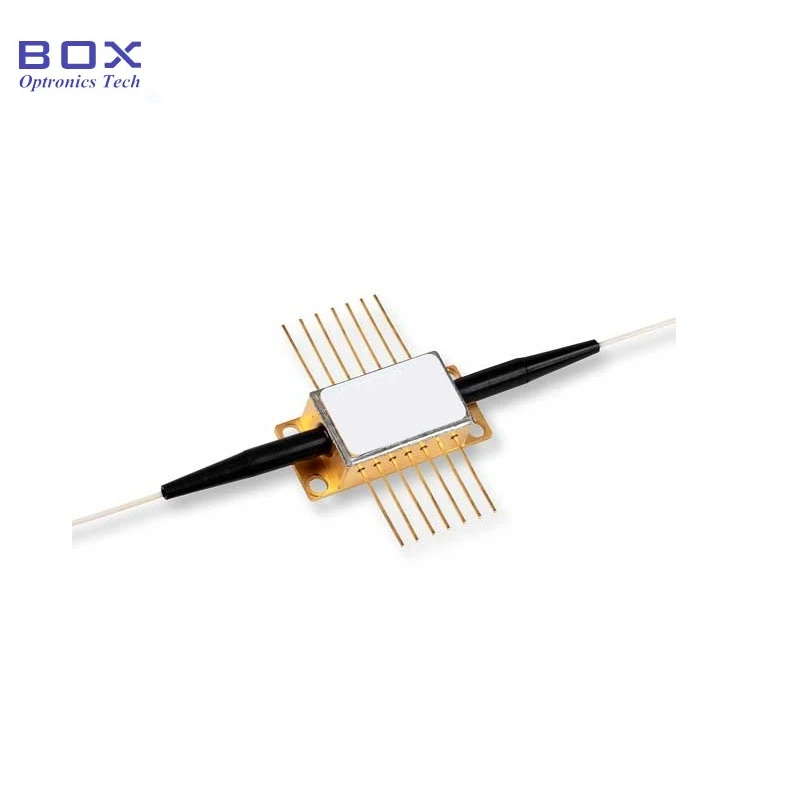
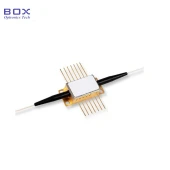
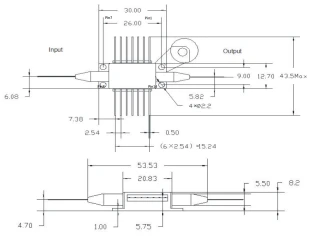
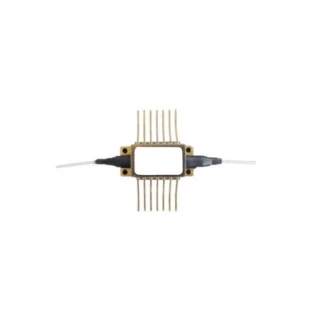
This 1060nm semiconductor optical amplifier (SOA) is a high-performance optical signal amplification module designed for professional optical systems. It adopts a standard 14PIN butterfly package, featuring low noise figure, low polarization dependence, and high reliability compliant with Telcordia GR-468 and RoHS standards.
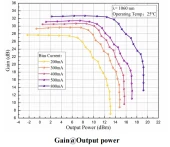
Equipped with SMF-28e fiber and FC/APC connector, it ensures stable and low-loss transmission. At 25°C, typical small signal gain reaches 25dB, saturation optical power up to 15dBm, -3dB gain bandwidth of 50nm, and noise figure as low as 8dB. With built-in TEC and 10KΩ thermistor, it supports precise temperature control for stable long-term operation.
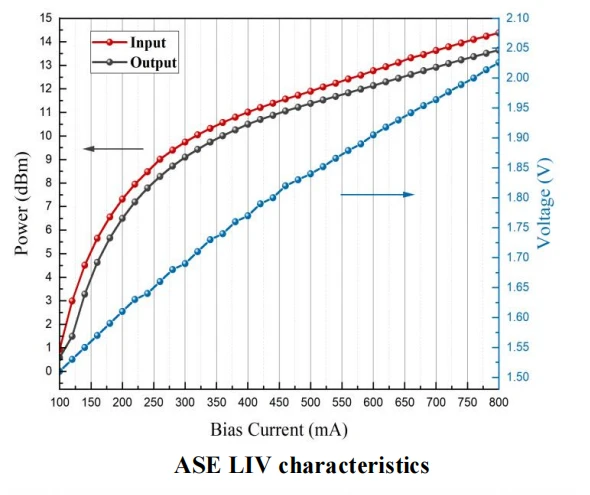
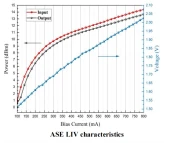
Operating current is 400mA (max 600mA), forward voltage ≤2.0V, and total power ≤4W. Widely used in fiber link loss compensation, medical OCT systems, swept-frequency sources and tunable lasers, it is an ideal choice for high-gain, low-noise optical amplification applications.
Tel/Whatsapp:+86-18476865009
1060nm Semiconductor Optical Amplifier
Specifications
| Operating Wavelength: | 1060 nm |
|---|---|
| 3dB Optical Bandwidth: | 50 nm |
| Saturation Output Power: | 15 dBm |
| Small Signal Gain@λc(Over C-Band @ Pin = -25 DBm): | 25 dB |
| Noise Figure: | 8 dB |
| Polarization Dependent Gain: | 20 dB |
| Fiber Type: | SM or PM fiber |
| Connector Type: | FA : FC/APC or SA : SC/APC |
Got questions about specs? Use the inquiry form to ask.
 Download Data Sheet

Features
- 14PIN Butterfly package;
- Low Noise Figure & Low polarization dependence;
- SMF-28e fiber with FC/APC connector.
- Reliability: Telcordia GR-468. RoHS
Applications
- Loss compensation for fiber optical connection and switch;
- Medical OCT;
- Sweep frequency source, tunable laser.
Frequently Asked Questions
What is the main function of the 1060nm Semiconductor Optical Amplifier?
What are the key features of the 1060nm Semiconductor Optical Amplifier?
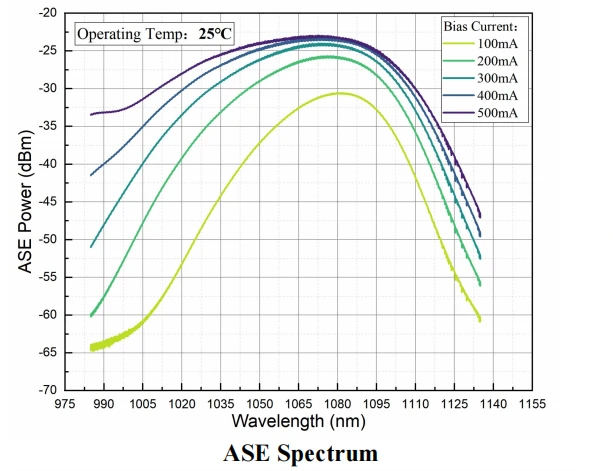
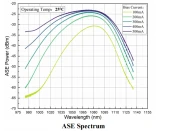
What is the ASE spectral performance of this 1060nm SOA? At 25°C operating temperature, the ASE spectrum spans approx
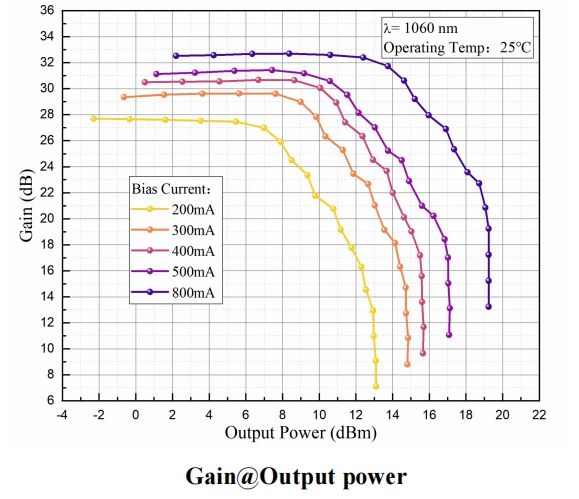
What is the small-signal gain and saturation performance at 1060nm?
How does bias current affect the gain and saturation output power?
Got more questions? Use the RFQ form to ask the supplier directly.
Similar Products
Need pricing for this product? Send a quick inquiry
Your inquiry has been received.
Create an account by adding a password
Why create an account?
- Auto-complete inquiry forms
- View and manage all your past messages
- Save products to your favorites
- Close your account anytime — no hassle