

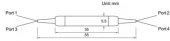
Description
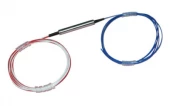
LFIBER's polarization maintaining optical circulator with high extinction ratio is a passive component based on the Faraday effect, transmitting light signals from one port to the next sequential port with low loss, but at the same time blocking any light transmission to the previous port.
By using polarization maintaining fiber (PMF), it is able to maintain the same state of polarization (SOP) of the light signals. The 3-port polarization maintaining optical circulator (high extinction ratio) can work on both slow-axis and fast-axis linear polarizations, or just transmit one principal polarization state in only one direction and block the orthogonal state in both directions.
Polarization-Maintaining Fiber Optical Circulator
Specifications
| Type Of The Device: | Circulator |
|---|---|
| Operating Wavelength: | 1310 nm |
| Max Power: | 0.3 W |
| Min Isolation: | 40 dB |
| Product: | Polarization-Maintaining Optical Circulator |
| Supported Center Wavelengths: | 1064 nm, 1310 nm, 1550 nm |
| Type: | Type A, Type B |
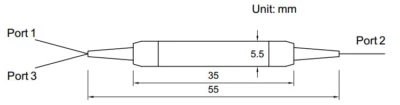
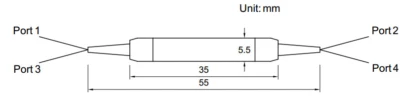
| Port Type Options: | 3 Port, 4 Port |
| Center Wavelength (Type A/B): | 1310 nm or 1550 nm |
| Center Wavelength (Type C): | 1064 nm |
| Operating Wavelength Range (1310/1550 Type): | ±30 nm |
| Operating Wavelength Range (1310/1550 Other Type): | ±20 nm |
| Operating Wavelength Range (1064 Nm Type): | ±5 nm |
| Typical Insertion Loss At 23°C (1310/1550, 3 Port, Type A): | 0.7 dB |
| Typical Insertion Loss At 23°C (1310/1550, 4 Port, Type A): | 1.1 dB |
| Typical Insertion Loss At 23°C (1310/1550, 3 Port, Type B): | 0.6 dB |
| Typical Insertion Loss At 23°C (1310/1550, 4 Port, Type B): | 1.0 dB |
| Typical Insertion Loss At 23°C (1064 Nm, 3 Port): | 1.8 dB |
| Typical Insertion Loss At 23°C (1064 Nm, 4 Port): | 2.2 dB |
| Max. Insertion Loss At 23°C (1310/1550, 3 Port, Type A): | 0.9 dB |
| Max. Insertion Loss At 23°C (1310/1550, 4 Port, Type A): | 1.3 dB |
| Max. Insertion Loss At 23°C (1310/1550, 3 Port, Type B): | 0.8 dB |
| Max. Insertion Loss At 23°C (1310/1550, 4 Port, Type B): | 1.2 dB |
| Max. Insertion Loss At 23°C (1064 Nm, 3 Port): | 2.1 dB |
| Max. Insertion Loss At 23°C (1064 Nm, 4 Port): | 2.5 dB |
| Typical Peak Isolation At 23°C (1310/1550 Type A): | 46 dB |
| Typical Peak Isolation At 23°C (1310/1550 Type B): | 30 dB |
| Typical Peak Isolation At 23°C (1064 Nm): | 30 dB |
| Min. Isolation At 23°C (1310/1550 Type A): | 40 dB |
| Min. Isolation At 23°C (1310/1550 Type B): | 20 dB |
| Min. Isolation At 23°C (1064 Nm): | 25 dB |
| Min. Extinction Ratio At 23°C (Type A, 1310/1550): | 22 dB (default), 28 dB optional |
| Min. Extinction Ratio At 23°C (Type B, 1310/1550): | 20 dB (default), 28 dB optional |
| Min. Extinction Ratio At 23°C (1064 Nm): | 20 dB (default), 28 dB optional |
| Min. Cross Talk: | 50 dB |
| Min. Return Loss: | 50 dB |
| Max. Optical Power (CW): | 300 mW |
| Max. Tensile Load: | 5 N |
| Operating Temperature Range: | -5 to +70 °C |
| Storage Temperature Range: | -40 to +85 °C |
| Axis Alignment (standard): | Slow axis working, fast axis blocked |
| Both Axis Operation: | Available on request (3-port only) |
| Package Dimension Example: | Φ5.5 × 35 mm |
| Fiber Types: | PM1550, PM1310, PM980 |
| Pigtail Types: | 250 µm bare fiber, 900 µm loose tube |
| Standard Fiber Length Options: | 0.5 m, 0.8 m, 1.0 m (custom available) |
| Connector Options: | None, FC/UPC, FC/APC, SC/UPC, SC/APC, LC/UPC, LC/APC |
| Routing (Type A & Type B Basic): | 1→2, 2→3 |
| Routing (Type A): | 1→2, 2→3, 3→4 |
| Routing (Type B): | 1→2, 2→3, 3→4, 4→1 |
Got questions about specs? Use the inquiry form to ask.
 Download Data Sheet

Features
- High-Performance Polarization-Maintaining Design – Engineered for stable polarization transmission at 1064 nm, 1310 nm, and 1550 nm, ideal for precision fiber optic systems where maintaining polarization state is critical.
- Low Insertion Loss for Maximum Signal Throughput – Typical insertion loss as low as 0.6–0.7 dB (3-port at 1064/1310/1550 nm) minimizes system loss and improves overall link budget and measurement accuracy.
- High Isolation for Superior Channel Separation – Typical peak isolation up to 46 dB and minimum isolation up to 40 dB (at 23 °C) effectively suppresses back reflections and crosstalk between ports, enhancing EDFA, Raman amplifier, and sensing performance.
- Excellent Extinction Ratio for Polarization Control – Minimum extinction ratio of 22 dB (default) or optional ≥28 dB on 3-port versions ensures clean polarization states, crucial for coherent detection, interferometry, and polarization-sensitive measurements.
- High Return Loss and Low Crosstalk – Minimum return loss of 50 dB and crosstalk better than 50 dB reduce back-reflection–induced noise, improving signal-to-noise ratio in high-precision fiber optic systems.
- 3-Port and 4-Port Configurations – Available in both 3-port and 4-port topologies to support a wide variety of architectures, including circulator-based isolators, add/drop functions, and multi-stage amplifier or sensor layouts.
- Flexible Polarization Axis Options – Standard options include:
- Slow axis working, fast axis blocked
- Fast axis working, slow axis blocked
- Both axes working (3-port only)
- Rugged, Stable, and Highly Reliable – Designed for high reliability and long-term stability with stable operation from -5 °C to +70 °C and storage from -40 °C to +85 °C, suitable for lab, field, and OEM integration.
- Compact Package for Easy Integration – Small cylindrical package (e.g., Φ5.5 × 35 mm) fits easily into dense optical modules, benchtop instruments, and fiber optic systems where space is limited.
- Robust Fiber and Connector Options – Supports multiple PM fiber types such as PM980, PM1310, and PM1550, with 250 μm bare fiber or 900 μm loose tube pigtails, standard lengths (0.5 m, 0.8 m, 1.0 m) or custom lengths, and connectors including FC/UPC, FC/APC, SC/UPC, SC/APC, LC/UPC, LC/APC.
- High Power Handling for Demanding Applications – Rated for up to 300 mW CW optical power, supporting many EDFA, Raman, and test setups common in R&D and production environments.
- Optimized for EDFA, Raman, and Sensing Systems – Ideal for:
- EDFA & Raman amplifier configurations – for pump routing, gain flattening, and monitoring
- Fiber optic sensor systems – including interferometric and distributed sensing
- Fiber optic instruments – such as OTDRs, measurement benches, and polarization analysis setups
- Precision Port Routing – Standard non-reciprocal routing enables:
- 3-Port / Type A & B: 1 → 2, 2 → 3
- 4-Port / Type A: 1 → 2, 2 → 3, 3 → 4
- 4-Port / Type B: 1 → 2, 2 → 3, 3 → 4, 4 → 1
- Accurate Axis Alignment – Unless otherwise specified, the slow axis of the PM fiber is aligned to the connector key, simplifying system integration and ensuring consistent polarization orientation across assemblies.
- Customizable Specifications – Device parameters such as wavelength, fiber type, package size, pigtail length, connector style, and extinction ratio can be customized to match specific OEM or research requirements; higher extinction ratio and dual-axis operation available on request (3-port).
- Industry-Compatible Performance – Performance levels (low IL, high isolation, high ER, and high return loss) are comparable with leading polarization-maintaining optical circulators on the global market, ensuring compatibility and easy replacement in existing systems.
Applications
- Polarization-Maintaining EDFA Systems – Used as a unidirectional routing element in PM erbium-doped fiber amplifiers at 1310 nm and 1550 nm, enabling amplified signal extraction and re-injection while preserving polarization state for coherent and high-bit-rate transmission systems.
- Raman Fiber Amplifiers – Deployed in distributed and discrete Raman amplifiers to separate pump and signal paths, combine multi-wavelength pumps, and manage counter‑propagating/ co‑propagating beams in polarization-maintaining architectures.
- Coherent Optical Communication Links – Integral in polarization‑maintaining transceiver modules and coherent detection units to direct LO (local oscillator) light and signal paths, ensuring stable polarization for QPSK, QAM, and higher‑order modulation schemes at 1550 nm.
- PM Fiber Laser Cavities (1064 nm) – Used inside single-frequency and narrow-linewidth Yb‑doped or Nd‑doped PM fiber lasers to define unidirectional laser cavities, separate forward and backward propagating light, and protect seed sources from back reflections.
- Fiber Laser Pump/Signal Management – Applied to route pump, seed, and output signals between gain fibers and feedback components (FBGs, mirrors, isolators) while maintaining polarization for high-power pulsed and CW fiber lasers at 1064 nm.
- Mode-Locked and Ultrafast Fiber Lasers – Supports unidirectional operation in PM mode‑locked oscillators and amplifiers, improving pulse stability and repetition‑rate consistency by suppressing parasitic back reflections and maintaining polarization.
- Optical Coherence Tomography (OCT) – Employed in polarization‑sensitive OCT systems to route reference and sample arm returns, maximizing interference visibility by maintaining polarization along the entire fiber path, especially at 1310 nm bands.
- Interferometric Fiber Sensor Systems – Used in Mach–Zehnder, Michelson, and Sagnac interferometer‑based sensors (temperature, strain, acoustic, and current sensors) to create stable, polarization‑maintaining interferometric loops with high extinction ratio and low insertion loss.
- Distributed Fiber Sensing (DTS, DAS, DSS) – Integrated in coherent OTDR, phase‑sensitive OTDR, and Brillouin‑based systems to separate forward and backward Rayleigh/Brillouin/Raman scattering signals while preserving polarization for higher SNR and longer sensing ranges.
- Gyroscopes and Sagnac Interferometers – Key component in polarization‑maintaining fiber optic gyroscopes (FOGs) to route counter‑propagating light in the Sagnac loop, improving bias stability, scale factor linearity, and long‑term drift.
- Quantum Key Distribution (QKD) and Quantum Optics – Utilized in polarization‑encoded quantum communication setups to route single photons or entangled photon pairs between different channels while preserving polarization, crucial for high‑fidelity quantum state transmission.
- Polarization-Sensitive Measurement Instruments – Incorporated into polarization analyzers, PM optical time‑domain reflectometers (OTDRs), and test benches to ensure controlled polarization routing across multiple ports in R&D and production testing.
- Optical Signal Routing in PM Networks – Functions as a compact, low‑loss routing element in laboratory and field PM fiber networks to direct signals among multiple nodes (3‑port or 4‑port configurations) at 1064 nm, 1310 nm, and 1550 nm.
- Back-Reflection Isolation and System Protection – Deployed before sensitive sources or detectors to divert back-reflected or backscattered light to a dump or monitor port, protecting lasers, EDFAs, and coherent receivers while maintaining a defined polarization state.
- Multi-Wavelength PM Systems – Used in systems operating around both 1310 nm and 1550 nm windows to separate or combine different wavelength channels in a defined propagation direction, enabling complex PM architectures with multiple optical paths.
- Laser Frequency Stabilization and Metrology – Applied in PM reference cavities and frequency locking setups to create stable unidirectional feedback paths, minimize polarization‑induced drifts, and improve long‑term frequency stability in precision metrology.
- Nonlinear Fiber Optics Experiments – Enables controlled routing of high‑power polarized signals in experiments involving supercontinuum generation, four‑wave mixing, and parametric amplification, where precise polarization management is essential.
- Optical Circuits and Integrated Testbeds – Serves as a building block in fiber‑based optical circuits and integrated photonics test setups, directin
Frequently Asked Questions
What is a polarization-maintaining fiber optical circulator?
A polarization-maintaining fiber optical circulator is a passive component that transmits light signals from one port to the next sequential port with low loss, while blocking any light transmission to the previous port. It maintains the same state of polarization (SOP) of the light signals using polarization maintaining fiber (PMF).
What are the features of the polarization-maintaining fiber optical circulator?
The features of the polarization-maintaining fiber optical circulator include low insertion loss, high isolation and extinction ratio, and high reliability and stability.
Can the polarization-maintaining fiber optical circulator work on both slow-axis and fast-axis linear polarizations?
Yes, the polarization-maintaining fiber optical circulator can work on both slow-axis and fast-axis linear polarizations, or it can transmit one principal polarization state in only one direction and block the orthogonal state in both directions.
Are there any specifications for the polarization-maintaining fiber optical circulator?
Yes, the specifications include the type (3-port or 4-port), center wavelength (1310nm or 1550nm), operating wavelength range, insertion loss, isolation, extinction ratio, cross talk, return loss, optical power, tensile load, operating temperature, and storage temperature.
Is customization available for the polarization-maintaining fiber optical circulator?
Yes, the polarization-maintaining fiber optical circulator is customizable. Customers can contact Lfiber's sales department for availability and product customization options.
Got more questions? Use the inquiry form to ask the supplier directly.
Similar Products

Ascentta High Directivity Ultra-broadband 3-port Optical Circulator
Ascentta

Ascentta Isolator Hybrid: Tap Coupler + Isolator
Ascentta
Ascentta’s Optical TGG-Type Isolator Array
Ascentta

Ascentta Isolator-WDM Hybrid (IWDM)
Ascentta
Isolator Array (1310, 1480, 1550, 1590nm)
Ascentta
4-channel Circulator Array
Ascentta
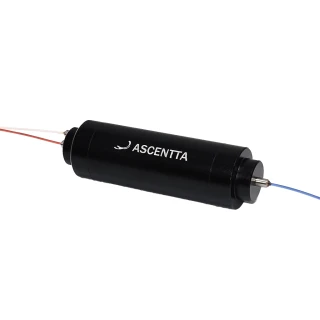
Ascentta Single Mode Polarization Insensitive Optical Circulator (635nm or 532nm, 780nm, 850nm)
Ascentta
Ascentta Polarization Dependent Free Space Circulator (1310nm, 1480nm, 1550nm, 1590nm)
Ascentta
Ascentta Polarization Maintaining (PM) Fiber Optic Isolator (1310nm, 1480nm, 1550nm, 1590nm, 1625nm)
Ascentta
Ascentta Polarization Insensitive C+L Band Fiber Isolator
Ascentta
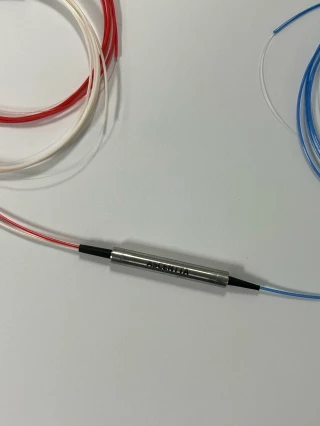
Ascentta Polarization Maintaining (PM) Fiber Circulator (1310nm | 1480nm | 1550nm | 1590nm)
Ascentta
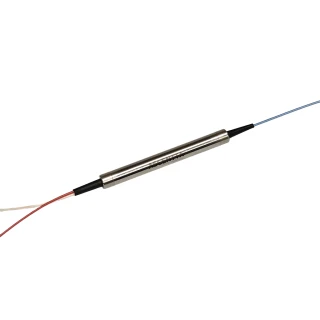
Ascentta Ultra-Broadband Polarization Insensitive Fiber Circulator (1290-1620nm)
Ascentta
Thank You!
Your inquiry has been received.
Create an account by adding a password
Why create an account?
- Auto-complete inquiry forms
- View and manage all your past messages
- Save products to your favorites
- Close your account anytime — no hassle