Description

Specs listed are for the single-stage version only. For dual-stage specs, review datasheet.

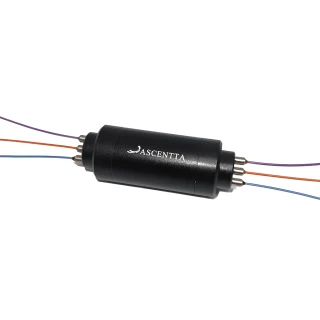
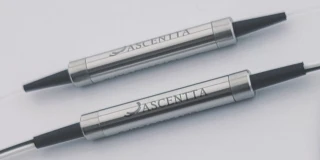
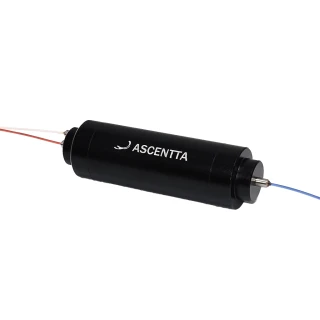
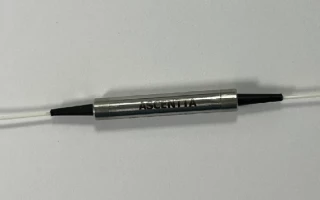
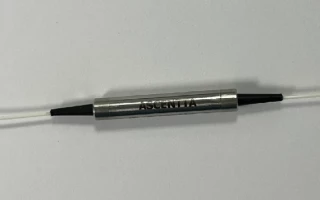
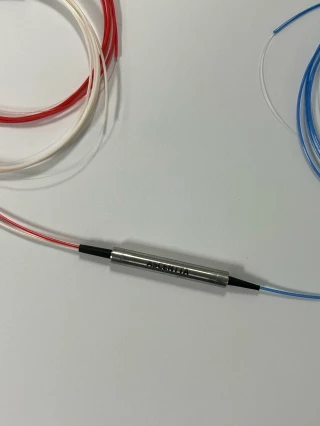
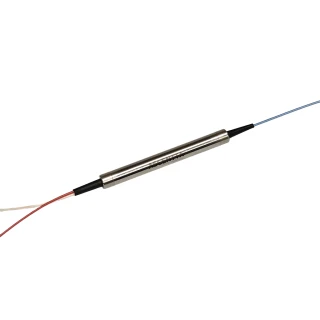
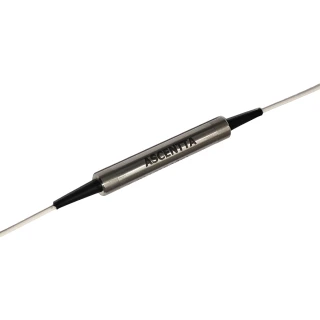
With excellent operating parameters and precise, stable tap ratio, Ascentta’s Tap + Isolator hybrids are excellent components for systems that require signal or power monitoring, splitting/combing, or other tap coupler features at the same point as isolation. The hybrid does not shirk either role, with high isolation and low insertion loss as well as low PMD, low PDL, and low ripple. Furthermore, at a small size of 5.5mm diameter by 35mm length, it is small enough for nearly system.

Available for 1310 and 1550nm, in single-stage and dual-stage, and with a wide range of tap ratios.

Ascentta Isolator Hybrid: Tap Coupler + Isolator

Specifications

Type Of The Device: Isolator, Other
Operating Wavelength: Not Specified
Max Power: 0.3 W
Min Isolation: 31 dB
Insertion Loss (signal): 0.8 dB (max)
PDL: 0.15 dB (max)
PMD: 0.1 dB (max)
Return Loss: 55 dB (min)
Dimensions (ODxL): 5.5 mm x 35 mm
Manufacturer Part Number (MPN): TISO-15-S-01-L-10-FA
FindLight SKU: FL-23563

Got questions about specs? Use the inquiry form to ask.

Document icon Download Data Sheet Download icon

Features

  • High isolation
  • Low insertion loss
  • Compact form factor
  • Low PMD and PDL

Applications

  • Systems Testing
  • EDFA
  • Infrared laser systems
  • Telecommunications

Export & Trade Information

ECCN: EAR99
HTS Code: 9027.90.8400
Estimated US Tariff: 0%

Importing, tariffs & codes (Quick Guide) →

Frequently Asked Questions

What is the TISO hybrid isolator tap coupler and what does it do?
The TISO hybrid device from Ascentta is a fiber optic component that combines an optical isolator and a tap coupler in a single compact package. It is designed for 1310 nm or 1550 nm operation and provides high isolation on the main signal path while simultaneously extracting a small percentage of the optical power (tap) for monitoring or feedback. This helps protect laser sources from back‑reflections, stabilize system performance, and allow real‑time power monitoring in fiber optic transmitters, EDFAs, and other optical communication or sensing systems.
What are the key specifications and performance characteristics of this hybrid isolator tap coupler?
Key optical specifications include: - Operating wavelengths: 1310 ± 15 nm or 1550 ± 15 nm (single stage); 1310 ± 30 nm or 1550 ± 30 nm (dual stage) - Isolation (all SOP, 23 °C): 31 dB min / 40 dB typ for single stage, 45 dB min / 50 dB typ for dual stage - Insertion loss (signal channel, all SOP, 23 °C): 0.6 dB typ / 0.8 dB max for single stage, 0.8 dB typ / 1.0 dB max for dual stage - Tap port insertion loss (all SOP): 16.2–18.0 dB for 2% tap, 12.1–14.0 dB for 5% tap - Ripple: ≤ 0.5 dB - Polarization dependent loss (PDL): ≤ 0.15 dB - Polarization mode dispersion (PMD): ≤ 0.1 ps (≤ 0.25 ps for non‑compensated single stage) - Return loss: ≥ 55 dB - Optical power handling: up to 300 mW - Operating temperature: −5 to +70 °C; storage: −40 to +85 °C - Package size: 5.5 mm diameter × 35 mm length.
How do I specify and order a custom TISO hybrid tap coupler isolator (part number format)?
Ascentta uses the format TISO–[Wavelength]–[Stages]–[Tap Ratio]–[Fiber Type]–[Fiber Length]–[Connector]. Common options include: - Wavelength: 13 = 1310 nm, 15 = 1550 nm, X = other wavelengths on request - Stages: S = single stage, D = dual stage - Tap ratio: 01 = 1%, 02 = 2%, 03 = 3%, 05 = 5%, X = other custom ratios - Fiber type: B = SMF‑28, 250 µm; L = SMF‑28, 900 µm; X = others - Fiber length: 10 = 1.0 m, 15 = 1.5 m, 20 = 2.0 m, 30 = 3.0 m, X = other lengths - Connector: NE = none, FA = FC/APC, FC = FC/PC, SA = SC/APC, SC = SC/PC, ST = ST/PC, LA = LC/APC, LC = LC/PC, X = others Because connector choice can slightly affect insertion loss, return loss, and PDL, it is recommended to confirm your exact configuration and any special requirements directly with Ascentta sales before ordering.
What is the difference between single‑stage and dual‑stage hybrid isolator tap couplers, and which should I choose?
Single‑stage TISO hybrids offer lower insertion loss on the main signal path (typically ~0.6 dB) with isolation of about 31 dB minimum. Dual‑stage hybrids use two isolation stages to provide significantly higher isolation (≥45 dB, typically ~50 dB) at the expense of slightly higher insertion loss (typically ~0.8 dB). Choose single stage when your system is power‑sensitive and can tolerate moderate isolation, such as short‑reach links or lower‑gain amplifiers. Choose dual stage when you need strong protection from back‑reflections or feedback, for example in narrow‑line lasers, high‑gain EDFAs, or long‑haul optical communication systems where reflected light can destabilize the source or degrade OSNR.
How is the tap coupler used in this hybrid device and what tap ratios are available?
The built‑in tap coupler splits a small percentage of the forward signal power to a tap port, allowing you to monitor or control the optical power without inserting a separate coupler. Standard factory options include 1%, 2%, 3%, and 5% tap ratios, each characterized over all states of polarization. For example, the specified insertion loss ranges for the tap port are 16.2–18.0 dB for 2% and 12.1–14.0 dB for 5%. These taps are commonly used for automatic power control, performance monitoring, and safety interlock circuits in telecom, CATV, and fiber laser systems. Custom tap ratios can also be requested if you need a different monitoring level.
In what applications is a hybrid isolator plus tap coupler used, and why combine them in one package?
Hybrid isolator tap couplers like the TISO series are widely used anywhere you need both isolation and power monitoring in a compact form factor. Typical applications include EDFA input and output stages, fiber laser sources, transmitters in WDM systems, CATV distribution, and fiber‑optic sensor interrogation units. Integrating the isolator and tap coupler reduces the number of splices and components, which lowers overall insertion loss, improves reliability, saves space, and simplifies assembly compared to using a discrete isolator and a separate fiber coupler. The 5.5 × 35 mm package is especially suitable for high‑density modules and OEM integration.
Are there any limitations regarding polarization, power handling, and environmental conditions for this hybrid isolator?
The TISO hybrid is designed to be largely insensitive to input state of polarization, with low PDL (≤0.15 dB) and very low PMD (≤0.1 ps, or ≤0.25 ps for non‑compensated single‑stage parts). It supports continuous optical power levels up to 300 mW, which is suitable for most telecom and many fiber laser seeding or amplifier applications. The specified operating temperature range is −5 °C to +70 °C, with storage from −40 °C to +85 °C. For deployments in harsher environments, very high power levels, or wavelengths outside 1310/1550 nm, users should consult Ascentta to verify whether a customized version or different product family is more appropriate.

Got more questions? Use the inquiry form to ask the supplier directly.

Similar Products

Add to Cart