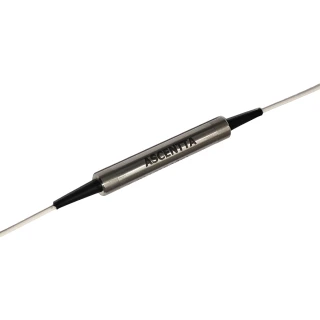
What is the Ascentta three‑channel TGG optical isolator array and what problem does it solve?
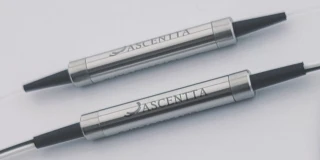
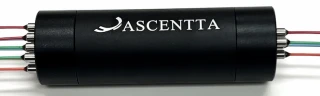
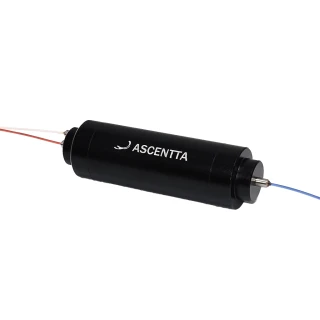
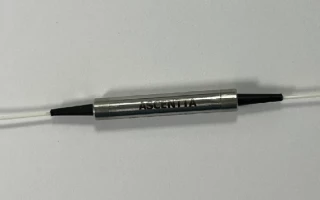
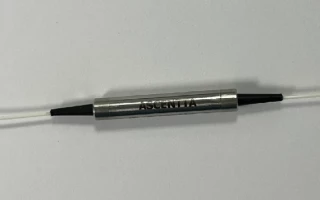
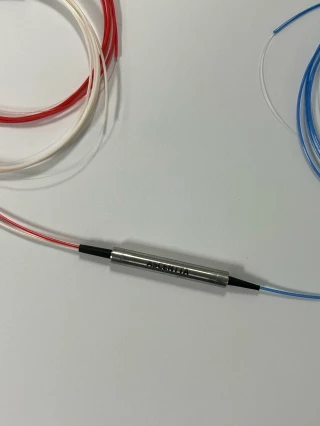
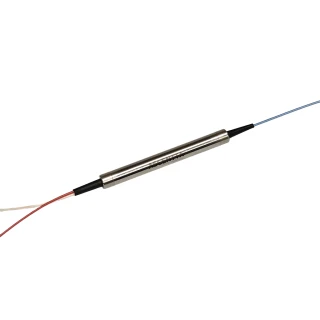
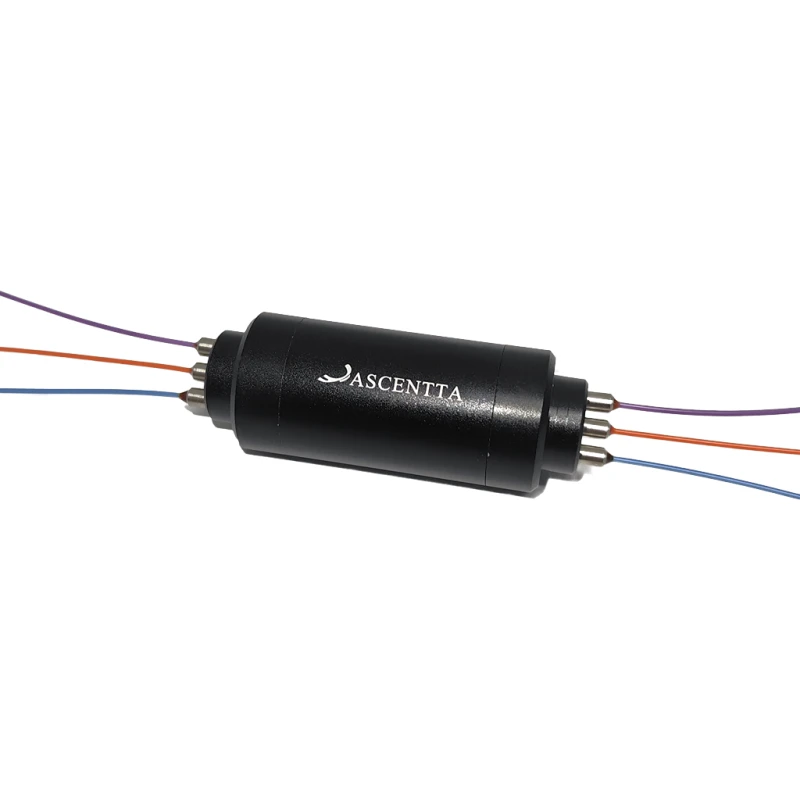
The Ascentta three‑channel optical isolator array is a compact, fiber‑pigtailed TGG (terbium gallium garnet) Faraday isolator module that integrates up to three independent optical isolators in a single cylindrical package (Ø24 mm, length 65–95 mm depending on wavelength). It is designed to block back‑reflected light while transmitting forward‑propagating light at selected wavelengths from 405 nm to 1060 nm. By combining three channels and a common magnetic structure, it saves space in crowded optical benches or racks and reduces mutual magnetic interference that would occur if three discrete isolators were mounted side‑by‑side. This makes it well‑suited for multi‑wavelength laser systems, OEM instruments, medical and industrial lasers, and sensing platforms where stability and footprint are critical.
Which wavelengths, fiber types, and configurations are available for the three‑channel isolator array?
Each of the three channels can be specified independently by wavelength and fiber type. Supported center wavelengths span 405, 532, 635, 650, 780, 850, 980, 1030, and 1060 nm, covering common diode, DPSS, and fiber‑laser lines. You can choose among:
- Single‑mode (SM) units at 532, 635, 650, 780, 850, 980, 1030, and 1060 nm
- Polarization‑maintaining (PM) units at 405, 532, 635, 650, 780, 850, 980, 1030, and 1060 nm (fast axis blocked, connector key aligned to slow axis)
- Multimode (MM) units at 635, 650, 780, 850, 980, 1030, and 1060 nm
Channel A, B, and optional C can therefore mix SM, PM, and MM fibers and different wavelengths within a single VISA array. For exact fiber models (e.g., Corning SMF‑28‑type, HI‑1060, PM‑980, MM core sizes), connector style (FC/APC, FC/PC, etc.), and custom wavelengths, Ascentta supports custom configurations on request.
What are the typical isolation, insertion loss, and power handling specifications of this isolator array?
Performance depends on wavelength and fiber type, but typical values are:
Single‑Mode units (532–1060 nm):
- Typical isolation: 23–27 dB (min 20–22 dB)
- Max insertion loss: 2.3 dB at shorter wavelengths, down to ~1.2 dB at longer wavelengths
- PDL: ≤0.2 dB, PMD: ≤0.2 ps
- Return loss: ≥45 dB
- Standard optical power handling: 50–250 mW depending on wavelength
Polarization‑Maintaining units (405–1060 nm):
- Typical isolation: 21–27 dB (min 19–22 dB)
- Max insertion loss (fast axis blocked): 2.3–1.2 dB from UV‑violet to near‑IR
- Extinction ratio: ≥16–20 dB
- Return loss: ≥45 dB
- Standard optical power handling: 30–250 mW (wavelength‑dependent)
Multimode units (635–1060 nm):
- Typical isolation: ~23 dB (min ~20 dB)
- Max insertion loss: 1.8 to 1.2 dB
- PDL: ≤0.2 dB, PMD: ≤0.2 ps
- Return loss: ≥40 dB
- Optical power handling: up to 1000 mW (1 W) standard
All figures are specified at 23 °C and for parts without connectors. As with most fiber isolators from Ascentta and other vendors, adding fiber connectors will slightly degrade IL, RL, PDL, or ER. Higher‑power versions are available on request.
How does the TGG three‑channel isolator array compare to using three separate discrete fiber isolators?
Compared with three separate single‑channel isolators from Ascentta or similar manufacturers, the three‑channel TGG array offers:
- Space savings: All three channels are integrated into a single Ø24 mm cylindrical housing with a shared magnet structure, significantly reducing footprint in OEM modules and optical tables.
- Simplified magnetic environment: The internal magnetic design is optimized to prevent mutual interference between channels; discrete, closely mounted isolators can interact and degrade isolation.
- Cleaner wiring and assembly: Only one mechanical mount and one protective housing to design around, simplifying alignment and fiber routing.
- Similar optical performance: Isolation, insertion loss, and return loss are comparable to equivalent single‑channel devices from Ascentta and other established isolator vendors, while offering the convenience of a multi‑channel format.
For applications requiring three or more wavelengths or parallel channels, the array can reduce cost of integration and long‑term alignment issues relative to three discrete components.
In which applications is the Ascentta three‑channel TGG isolator array typically used?
This three‑channel isolator array is targeted at multi‑wavelength and multi‑channel laser systems where protection from back‑reflections and tight packaging are critical. Typical applications include:
- Fiber lasers and DPSS lasers at 532, 780, 980, 1030, and 1060 nm
- Multi‑line diode laser modules at 405, 635, 650, 850, and 980 nm
- OEM medical and aesthetic lasers where footprint and thermal stability matter
- Industrial material processing and marking systems using multiple IR/visible lines
- Optical sensing and spectroscopy instruments needing several isolated channels in one compact assembly
- Telecom, datacom, and test/measurement setups requiring stable isolation across multiple fibers
The availability of SM, PM, and MM channels in one platform allows engineers to tailor the array to specific system architectures that commonly mix delivery, pump, and reference channels.
What mechanical, thermal, and connector considerations should I keep in mind when integrating this isolator array?
Mechanically, the array is housed in a cylindrical package of 24 mm diameter with length from 65 to 95 mm, determined by the longest wavelength in the configuration. It is intended for rigid mounting in optical instruments or laser heads. Thermally, the specified operating temperature range is +10 to +50 °C, with storage from 0 to +60 °C; performance (isolation and insertion loss) is guaranteed at 23 °C, so adequate heat sinking and temperature control are recommended for demanding systems.
Connector considerations:
- Standard specifications are for bare‑fiber pigtails; adding FC/APC, FC/PC, or other connectors will slightly increase insertion loss and reduce return loss and PDL/ER performance, as is typical for fiber‑optic components.
- On PM versions, the connector key is aligned to the slow axis; correct polarization alignment in your system depends on respecting this orientation.
When planning a design, reserve enough space for fiber bend radius at both ends of the cylinder and consider magnetic compatibility with nearby components, even though the internal design minimizes crosstalk between the three channels.
How do I specify and order a custom three‑channel TGG isolator array from Ascentta?
Ordering is done via a configuration‑based part number (VISA series). You define:
1) Number of channels: two or three (Channel A, Channel B, and optional Channel C).
2) Wavelength for each channel: choose from 405, 532, 635, 650, 780, 850, 980, 1030, or 1060 nm, or inquire about nearby custom wavelengths.
3) Fiber type per channel: single‑mode, polarization‑maintaining, or multimode fibers according to your system requirements.
4) Connector type and pigtail length: e.g., FC/APC or FC/PC, bare fiber, and desired cable length.
5) Any special requirements: higher power handling, tighter isolation or IL specs, or extended temperature range.
For detailed configuration and a formal quotation, Ascentta recommends contacting their sales/engineering team directly via sales@ascentta.com or telephone, providing your desired wavelengths, fiber types, and application notes so they can optimize the array for your system.

 Download Data Sheet