
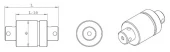
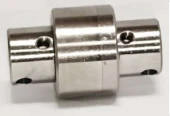
Description
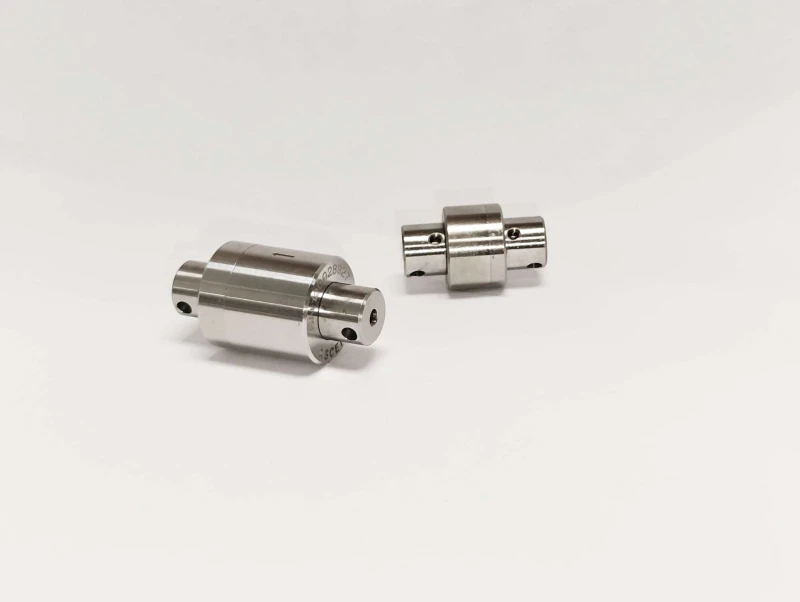
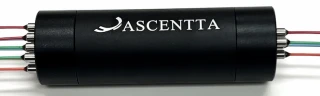
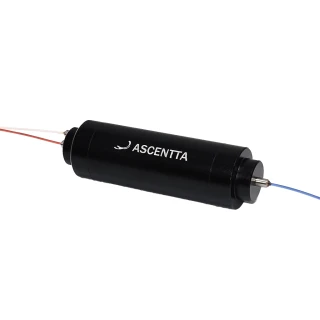
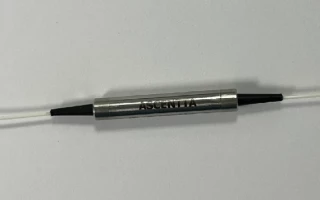
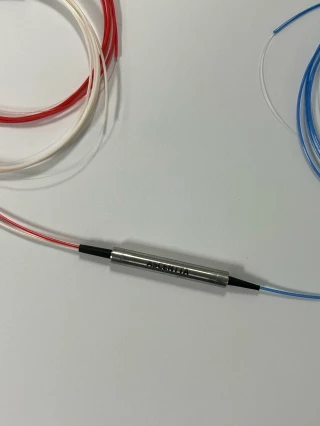
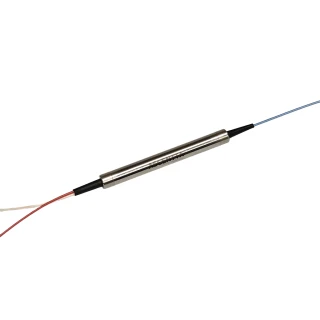
The Polarization-Dependent 3-Port Circulator Core (TGG Type) by Ascentta Inc. is engineered for precise optical signal routing in demanding photonics applications. Designed to operate across key wavelengths—532 nm to 1064 nm—this compact circulator core utilizes the Faraday effect in TGG (terbium gallium garnet) material to provide superior isolation and directionality for linearly polarized light.
With an impressive minimum isolation of up to 22 dB and typical insertion loss as low as 0.3 dB, it guarantees high-performance operation while minimizing signal degradation. The circulator supports transmission directions 1→2 and 2→3, with excellent extinction ratios and directivity up to 30 dB, ensuring minimal crosstalk and high signal fidelity.
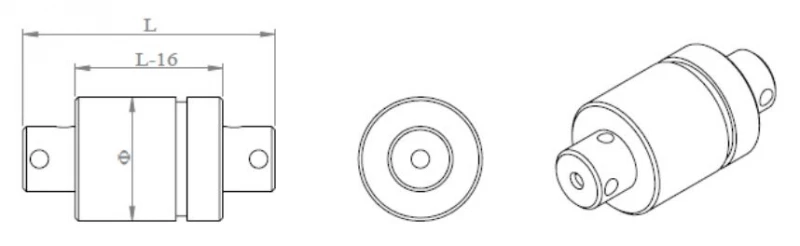
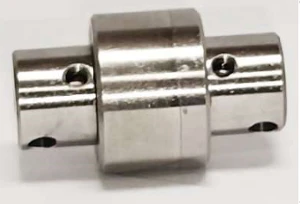
Available in a cylindrical package with varying apertures and dimensions to meet specific design requirements, this circulator is ideal for integration into OEM systems. It is particularly well-suited for laser systems, biomedical instrumentation, and optical sensing setups requiring precise polarization control.
Custom specifications, aperture sizes, or wavelength configurations are possible.
Ascentta Polarization Dependent Free Space Circulator (532nm 635nm 780nm 850nm)
Specifications
| Type Of The Device: | Circulator |
|---|---|
| Operating Wavelength: | 532 nm |
| Max Power: | 5 W |
| Min Isolation: | 21 dB |
| Insertion Loss (23℃, All SOP*) (1→2, Or 2→3) Max: | 0.6 dB |
| Extinction Ratio Min.: | 28 dB |
| Directivity (1→3, Or 3→1) Min.: | 30 dB |
| Clear Aperture: | 1.8 mm |
| Operation Temperature: | +10 to +50 °C |
| Storage Temperature: | 0 to +60 °C |
| Package Dimensions (Cylinder): | 10x50 mm |
| Manufacturer Part Number (MPN): | VCIRC-3-PD-532-25-03-16-27 |
| FindLight SKU: | FL-21772 |
Got questions about specs? Use the inquiry form to ask.
 Download Data Sheet

Features
- Wavelength Versatility: Supports 532 nm to 1064 nm operations
- Low Insertion Loss: Typical values down to 0.3 dB for optimal performance
- High Isolation: Minimum 20–22 dB, with typical values up to 27 dB
- Excellent Extinction Ratio: ≥28 dB for precise polarization discrimination
- Superior Directivity: Minimum 30 dB for high signal integrity
- Customizable Design: Multiple aperture sizes, power handling, and dimensions available
Applications
- Laser Systems: Enables non-reciprocal signal routing in high-precision laser setups
- Optical Instrumentation: Ideal for systems requiring polarization-sensitive components
- Biomedical Imaging: Enhances accuracy and clarity in diagnostic devices
- Fiber Optic Sensing: Maintains signal directionality and polarization in sensing environments
- Quantum Optics and Research: Supports experimental setups with strict polarization control
Export & Trade Information
| ECCN: | EAR99 |
|---|---|
| HTS Code: | 9027.90.8400 |
| Estimated US Tariff: | 0% |
Frequently Asked Questions
What are the operating wavelengths of the Circulator Core?
What is the Transmitting Direction?
What are the Isolation values for each wavelength?
What are the Insertion Loss values for each wavelength?
What is the Extinction Ratio for each wavelength?
What is the Directivity for each wavelength?
What are the package dimensions for each wavelength?
What are the operating and storage temperatures?
What is the fiber type, fiber length, and connector type?
What is the State Of Polarization (SOP)?
Got more questions? Use the inquiry form to ask the supplier directly.
Similar Products



Your inquiry has been received.
Create an account by adding a password
Why create an account?
- Auto-complete inquiry forms
- View and manage all your past messages
- Save products to your favorites
- Close your account anytime — no hassle