
Description
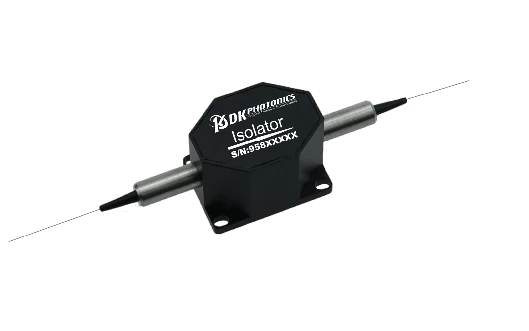
The 635nm TGG Based Optical Isolator from DK Photonics is a high‑performance, free‑space Faraday isolator specifically engineered for visible red laser applications around 635 nm. Built on a high‑quality terbium gallium garnet (TGG) crystal, this device delivers a stable 45° polarization rotation under a strong magnetic field, effectively allowing light to pass in the forward direction while strongly attenuating any light traveling backward. By suppressing back reflections and backscattering, it protects delicate laser sources from destabilizing optical feedback, improving output stability, extending laser lifetime, and maintaining consistent beam quality in demanding environments.
Unlike generic broadband isolators, this model is spectrally optimized for the 635 nm band, providing higher isolation and lower insertion loss at the target wavelength. The carefully designed magneto‑optic assembly and precision AR‑coated optics help achieve low insertion loss to maximize transmitted power while maintaining high return loss and excellent extinction of reverse‑propagating light. As a result, the isolator is well suited for integration into laboratory benches, OEM instruments, and production systems where power stability, mode purity, and repeatable performance are critical.
Engineered for Reliability and Environmental StabilityTGG is widely recognized in the photonics industry as the preferred magneto‑optic material for visible and near‑infrared Faraday isolators because of its high Verdet constant, low absorption, and superior thermal performance compared to alternatives such as Ce:YAG or BK7‑based designs. In this 635 nm isolator, the TGG crystal is precisely aligned and bonded within a robust magnetic and mechanical housing that ensures long‑term stability over a broad range of operating conditions. Careful thermal design helps maintain consistent Faraday rotation and isolation even as temperature fluctuates, making the device suitable for both laboratory and industrial environments.
The overall assembly is manufactured to provide excellent environmental reliability, including resistance to mechanical shock and vibration as typically encountered in field‑deployed or rack‑mounted systems. Optical surfaces are treated with durable, low‑loss coatings to minimize degradation over time, while the housing design supports stable alignment and minimal drift. This allows system integrators and researchers to rely on consistent isolation performance without frequent recalibration or component replacement.
Optimized for Fiber Lasers, Amplifiers, and Measurement SystemsThe 635 nm TGG Based Optical Isolator is particularly well suited for protecting red diode lasers, frequency‑doubled sources, and fiber‑coupled visible lasers operating near 635 nm. In fiber‑optic amplifier chains, placing an isolator at the output or between stages reduces the risk of back reflections entering the gain medium, which can otherwise lead to noise, power fluctuations, or even catastrophic damage. In test and measurement setups, the isolator helps maintain the stability and linearity of optical systems by preventing stray reflections from perturbing the source or sensitive detector modules.
Typical application areas include fiber optic amplifiers, visible fiber lasers, biomedical and life‑science instruments, laser alignment and positioning systems, spectroscopy setups, and general laboratory test benches. In instrumentation and metrology, where measurement repeatability is paramount, the isolator contributes to more stable baselines and improved signal‑to‑noise ratio by decoupling the laser from downstream optics and sample interfaces. Its performance characteristics make it a strong choice for both prototype development and volume OEM integration.
Flexible Configurations and Power Handling OptionsDK Photonics designs its isolator platforms to be scalable across a wide range of operating wavelengths and power levels. For the 635 nm TGG isolator, standard configurations are optimized for low to moderate continuous‑wave powers, such as 0.1 W typical for many diode‑based visible systems, while the broader product family covers powers from hundreds of milliwatts up to high‑power regimes on the order of tens to over a hundred watts at other wavelengths. The internal optical design minimizes thermal lensing and absorption within the TGG crystal, supporting reliable operation in both laboratory and industrial duty cycles.
The device can be specified with polarization‑insensitive or polarization‑maintaining architectures, depending on the system’s polarization requirements and fiber design. Combined with low insertion loss and high return loss, these options enable designers to select an isolator configuration that best matches their
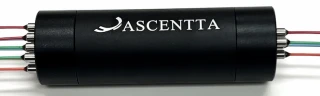
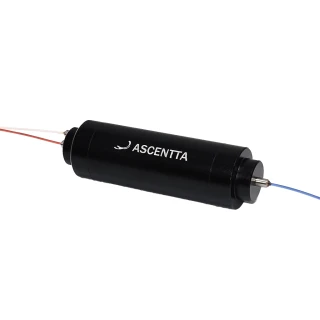
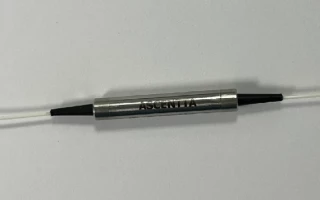
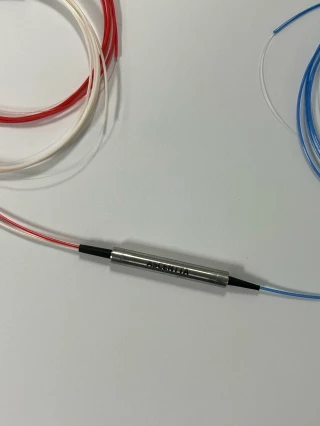
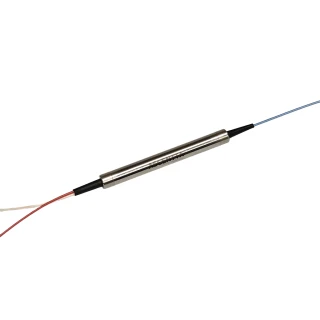
635nm TGG Based Optical Isolator
Specifications
| Type Of The Device: | Isolator |
|---|---|
| Operating Wavelength: | 635 nm |
| Max Power: | 0.1 W |
| Min Isolation: | 25 dB |
| Operating Wavelength Range: | ±5 nm |
| Typ. Peak Isolation: | 30 dB |
| Typ. Insertion Loss: | 1.6 dB |
| Max. Insertion Loss (at 23°C): | 2.0 dB |
| Min. Return Loss: | 45 dB |
| Fiber Type: | 630-HP or other |
| Operating Temperature: | 0 to +70 ℃ |
| Storage Temperature: | -40 to +85 ℃ |
| Dimensions: | 37x24x24 mm |
Got questions about specs? Use the inquiry form to ask.
 Download Data Sheet

Features
- Optimized for 635 nm Wavelength
Engineered specifically for 635 nm red light sources, ensuring precise isolation performance for diode lasers and related photonic systems. - TGG (Terbium Gallium Garnet) Faraday Rotator Crystal
Utilizes high‑quality TGG as the Faraday rotator material, providing strong magneto‑optic effect, excellent optical transparency, and stable isolation over a wide range of operating conditions. - High Optical Isolation
Delivers very high isolation to effectively suppress back reflections and backscattering, protecting delicate laser cavities, LD drivers, and optical amplifiers from feedback‑induced instability and damage. - Low Insertion Loss
Precision optical design and advanced coating technology minimize insertion loss, improving overall system efficiency and maintaining high output power at 635 nm. - High Return Loss / Low Back Reflection
Carefully polished and AR‑coated optical surfaces provide high return loss, helping to reduce optical feedback and noise in sensitive measurement and communication systems. - Excellent Environmental Stability and Reliability
Rugged construction, optimized thermal design, and proven TGG stability deliver consistent performance over temperature, humidity, and mechanical stress, suitable for demanding industrial, medical, and laboratory environments. - Polarization‑Insensitive and PM Fiber Options
Available in polarization‑insensitive (PI) or polarization‑maintaining (PM) fiber configurations, allowing integration into both unpolarized and polarization‑critical 635 nm laser systems. - Wide Power Handling Range
Supports power handling from hundreds of milliwatts up to high‑power continuous‑wave levels (typical 0.3 W to tens of watts; higher custom options available), ideal for low‑power diode modules through to high‑power laser systems. - Fiber‑In / Fiber‑Out Configuration
Fully fiber‑pigtailed input and output for easy integration into fiber‑based setups, minimizing free‑space alignment effort and improving long‑term stability. - Multiple Fiber Types Supported
Compatible with common 630–650 nm single‑mode and PM fibers (e.g., 630‑HP and equivalents) as well as custom fiber types on request, enabling straightforward matching to existing networks and laser designs. - Customizable Connector and Pigtail Options
Offered with standard connectors (FC/PC, FC/APC, SC/PC, SC/APC, or others on request) and various pigtail diameters (250 μm bare, 0.9 mm loose tube, etc.) and lengths, simplifying plug‑and‑play integration. - Compact and Robust Package
Small‑form‑factor housing designed for easy system integration and mounting. Package dimensions can be adapted for OEM requirements; contact DK Photonics for current mechanical drawings and special form factors. - Low PDL and High PER (for PM Versions)
Low polarization‑dependent loss and high polarization extinction ratio (PER) for PM configurations ensure minimal signal distortion and stable polarization performance in polarization‑sensitive applications. - Cost‑Effective Performance
Optimized design and manufacturing provide a favorable balance of high isolation, low loss, and reliability at competitive cost, suitable for volume OEM integration and cost‑sensitive projects. - Broad Application Compatibility
Ideal for 635 nm fiber laser systems, fiber amplifiers, test and measurement setups, optical instrumentation, biomedical and imaging lasers, metrology systems, and general photonic R&D using 635 nm sources. - Custom Wavelength and Power Options Available
While optimized for 635 nm, DK Photonics can design similar TGG‑based isolators for other visible and near‑IR wavelengths (approx. 500–2100 nm) and custom power levels; detailed specifications can be tailored to your project. - Quality Assured by DK Photonics
Manufactured and tested under strict quality control at DK Photonics’ facility in Shenzhen, China, with full performance characterization and rapid engineering support for custom and OEM requirements.
Applications
Applications of 635nm TGG Based Optical Isolator
- Diode and Solid-State Laser Protection
- Prevention of back-reflected light into 635 nm diode lasers and DPSS lasers to enhance lifetime and stability
- Isolation of seed lasers in master oscillator power amplifier (MOPA) configurations
- Output stage isolation for high-brightness red laser modules and laser engines
- Protection of sensitive laser drivers and control electronics from optical feedback
- Fiber Laser and Fiber Amplifier Systems
- Optical feedback suppression in 600–700 nm fiber amplifier chains
- Isolation between pre‑amplifier and power amplifier stages
- Return‑loss improvement in pump & signal combining networks
- Protection of high‑gain fiber amplifiers from backscattering in delivery fibers
- Optical Communication and Datacom at Visible Wavelengths
- Feedback isolation in short‑reach visible fiber links and visible-light communication (VLC) systems
- Use in CATV, hybrid fiber‑coax and free‑space optical links employing 635 nm sources
- Transmitter protection in test access networks and laboratory fiber loops
- Test, Measurement and Instrumentation
- Integration into optical spectrum analyzers, tunable laser sources and swept‑source modules around 635 nm
- Isolation in optical time‑domain reflectometers (OTDR) and optical power meters to improve dynamic range
- Use in interferometric test benches and metrology rigs to suppress parasitic reflections
- Stabilization of high‑precision measurement setups in R&D laboratories and production lines
- Optical Sensing and Metrology
- Integration in fiber‑optic sensing systems (FBG, Fabry–Pérot, interferometric sensors) operating near 635 nm
- Use in displacement, strain, vibration and pressure sensors requiring stable laser interrogation
- Back‑reflection suppression in distributed sensing setups using visible sources
- Free‑Space Optics and Beam Delivery
- Free‑space laser delivery for alignment, pointing and tracking systems using 635 nm beams
- Protection of laser sources in scanning, beam‑steering and gimbal‑mounted optics
- Integration in collimated free‑space paths for laboratory experiments and optical tables
- Microscopy, Imaging and Bio‑Photonics
- Laser isolation for fluorescence and confocal microscopy systems using 635 nm excitation
- Stabilization of laser sources in flow cytometry and cell‑sorting instruments
- Use in OCT variants and biomedical imaging setups operating in the red spectral region
- Minimization of feedback in multi‑channel imaging platforms with shared light sources
- Material Processing and Micro‑Machining
- Source isolation in low‑ and medium‑power 635 nm laser processing systems
- Use in laser marking, micro‑engraving and scribing of polymers, thin films and sensitive substrates
- Protection of laser cavities from reflections at workpiece and tooling interfaces
- Holography and Interferometry
- Isolation in holographic recording setups using stable 635 nm sources
- Use in Michelson, Mach–Zehnder, Sagnac and other interferometers to maintain coherence and fringe contrast
- Reduction of spurious etalon effects in precision optical path arrangements
- Laser Display, Projection and Entertainment
- Red channel isolation in RGB laser projectors and show laser systems
- Protection of projector laser modules from reflections off screens, optics and scanning mirrors
- Stabilization of beam quality and output power in multi‑wavelength display systems
- Quantum Optics and Research Experiments
- Use in quantum optics, atom/ion trapping and cold‑atom experiments requiring 635 nm reference or pump beams
- Isolation in single‑photon source and detection setups to reduce background and feedback
- Integration into custom laboratory fiber networks and experimental optical benches
- OEM Integration and System-Level Use
- Integration into OEM laser engines, measurement modules and fiber‑optic subsystems
- Use in production test stations and automated inspection platforms that rely on stable 635 nm lasers
- General‑purpose back‑reflection suppression in any compact or ruggedized fiber‑optic device at 635 nm
Frequently Asked Questions
What is the DK Photonics 635nm TGG based optical isolator and what does it do?
What are the typical applications of a 635nm TGG based optical isolator?
What are the key performance advantages of DK Photonics 635nm TGG based isolators compared with standard visible isolators?
What power handling options are available for the 635nm TGG based optical isolator?
What fiber and connector options can I choose for the DK Photonics 635nm isolator?
How do I specify and order a custom 635nm TGG based optical isolator from DK Photonics?
What should I consider when integrating a 635nm optical isolator into my laser or fiber system?
Got more questions? Use the inquiry form to ask the supplier directly.
Similar Products



Your inquiry has been received.
Create an account by adding a password
Why create an account?
- Auto-complete inquiry forms
- View and manage all your past messages
- Save products to your favorites
- Close your account anytime — no hassle